
Scientists have formally named an extinct spadefoot toad, Spea labreae, recovered from the fossil-rich asphalt deposits of La Brea Tar Pits in Los Angeles — a site excavated for more than a century that continues to yield animals nobody knew existed. The announcement marks only the second Ice Age amphibian ever formally identified in North America, placing this small, burrowing toad in unexpectedly rare scientific company.
A Toad Hidden in Plain Sight for Decades
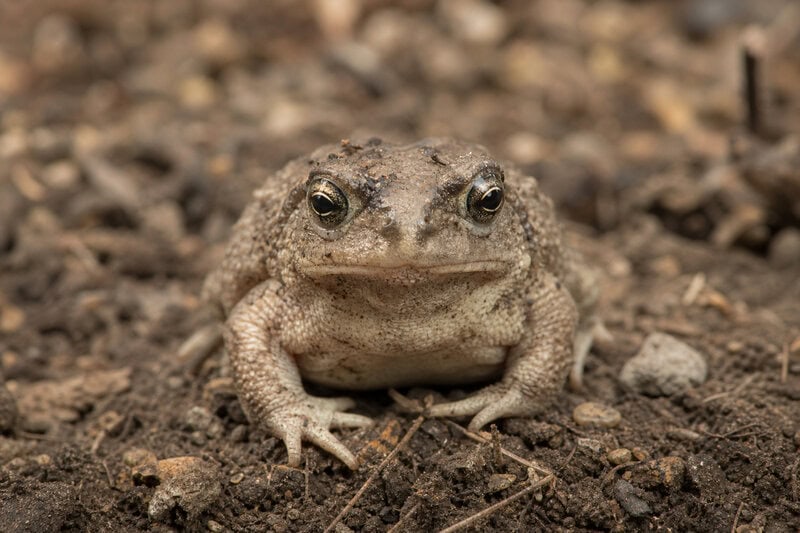
The bones of Spea labreae were almost certainly sitting in museum collections for years, quietly overlooked among the more charismatic megafauna — Columbian mammoths, saber-toothed cats, dire wolves — that define La Brea’s public identity. Small vertebrates with delicate skeletons rarely attract the same curatorial urgency as a mammoth tusk, and fossil amphibians occupy a particularly neglected corner of Pleistocene paleontology. That neglect is precisely what makes this discovery instructive: even the most intensively studied fossil site in the Western Hemisphere still holds undescribed species.
The only other Ice Age amphibian previously identified in North America was a tree frog, which underscores how thin the continent’s Pleistocene amphibian record actually is. According to La Brea Tar Pits, the formal description of Spea labreae adds a genuinely new lineage to that sparse record — one that did not survive into the modern era.
What La Brea Tar Pits Actually Are — and Why They Preserve So Much
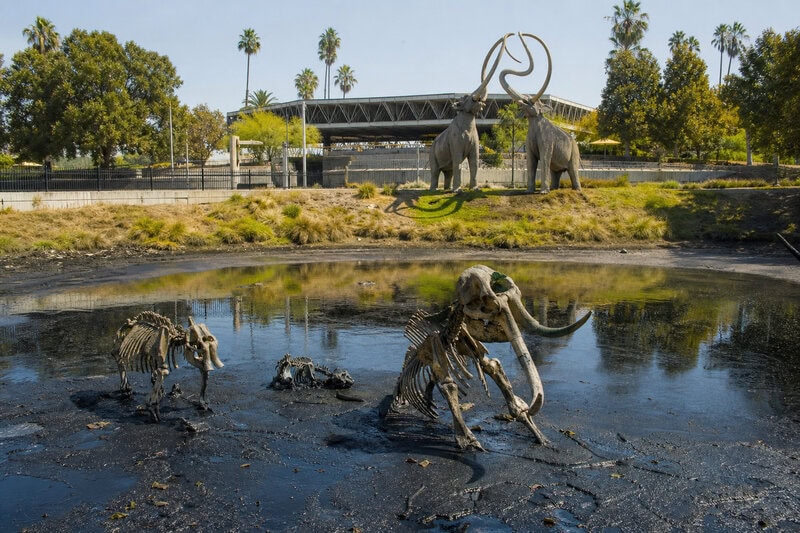
Despite the name, La Brea Tar Pits is not a single lake of tar. It is a complex of natural asphalt seeps in Hancock Park, Los Angeles, where crude oil has migrated to the surface for tens of thousands of years, forming sticky pools that trapped and preserved the remains of animals that became mired in them. The word “tar” is a popular misnomer — the substance is asphalt, a heavy petroleum residue — but its preservative effect is genuine and remarkable.
Asphalt is an exceptional preservative for bone. It coats skeletal material, excludes oxygen, and inhibits the bacterial decay that would otherwise destroy organic remains. The result is a collection of more than 3.5 million fossils representing over 600 species. Most specimens date to between roughly 10,000 and 50,000 years ago, spanning the late Pleistocene epoch — the geological period commonly known as the Ice Age — when the Los Angeles Basin enjoyed a cooler, wetter climate than it does today.
The fossil record at La Brea is nonetheless biased in a significant way. Heavier animals sink deeper into asphalt and are far easier to detect during excavation. Small vertebrates — rodents, lizards, snakes, and especially amphibians with their fine, fragile bones — are routinely missed in the field or misidentified once collected. That taphonomic bias, the systematic filtering of which organisms get preserved and found, is a known limitation of the site’s record and directly explains why a toad could remain undescribed for so long.
Meet Spea labreae: The Spadefoot Toad That Rewrites the Amphibian Record
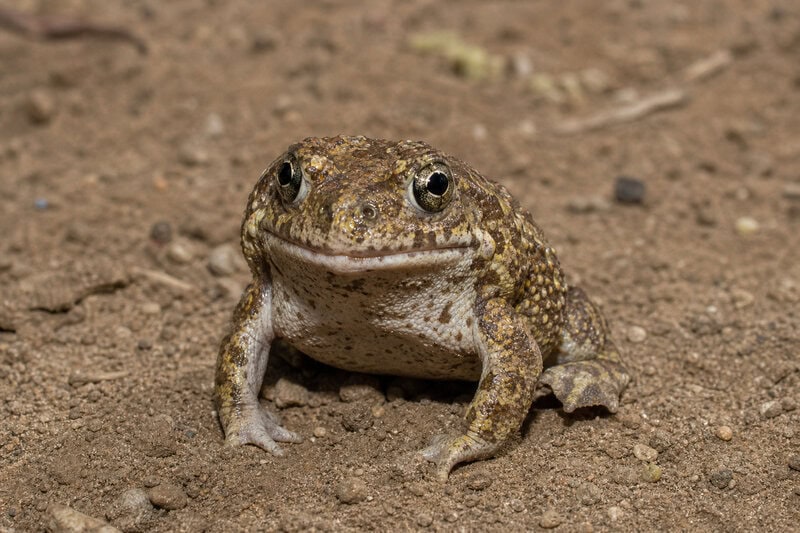
Spadefoot toads belong to the family Scaphiopodidae, a group of burrowing amphibians found across North America. Their common name comes from the hard, keratinous projection — the “spade” — on each hind foot, which the animals use to dig rapidly backward into soil. They are drought-tolerant by the standards of amphibians, capable of remaining underground for extended periods and emerging explosively to breed in temporary pools after rainfall. Living members of the genus Spea, to which the new species belongs, include four recognized species distributed across western North America today.
Spea labreae is named directly after La Brea Tar Pits, following the standard scientific convention of honoring a species’ type locality — the place where the defining specimens were collected. As described in coverage of the formal species description, researchers determined that the fossil bones possessed anatomical features distinct from every known living or previously described fossil spadefoot toad. Such features typically involve elements like the ilium — a key pelvic bone frequently preserved in anurans, the taxonomic order encompassing frogs and toads — or bones of the skull such as the frontoparietal, where genus- and species-level differences in amphibians are reliably expressed. The identification of those unique characteristics is what legally and scientifically constitutes a new species under the International Code of Zoological Nomenclature.
Being only the second Ice Age amphibian ever formally named in North America is not simply a matter of filling a gap. It is an indication that the gap itself was larger than most researchers had assumed.
How Scientists Identify a New Species from Fossil Bones
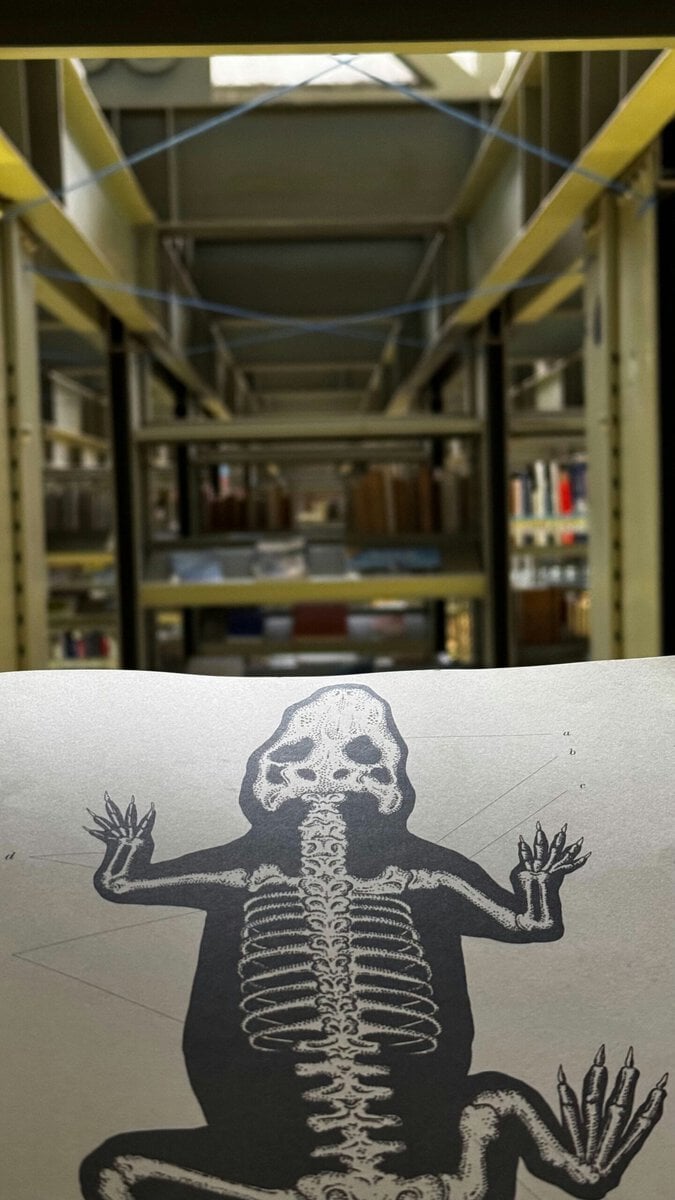
Naming a new species from fossil amphibian material is painstaking work. Researchers must compare minute skeletal details — bone proportions, surface textures, the geometry of articular surfaces — against both modern reference skeletons of living species and published descriptions of all previously named fossil forms. Because herpetologists who focus specifically on fossil material are relatively few, backlogs of unidentified or misidentified small-vertebrate specimens accumulate in natural history museum collections over decades. New species are, in a very real sense, sometimes waiting in drawers rather than in the ground.
Comparative osteology — the direct study and comparison of skeletal anatomy — is the traditional and well-established basis for such identifications. Some researchers now supplement this approach with micro-CT scanning, a non-destructive imaging technique that reveals internal bone architecture without cutting into irreplaceable specimens. Whether micro-CT analysis was applied to the Spea labreae type material has not been confirmed in publicly available reporting and should not be assumed.
One firm limitation applies to all La Brea amphibian material: soft tissue does not survive in asphalt deposits. Scientists cannot directly determine the coloration, vocalizations, or precise behavioral repertoire of Spea labreae. Any ecological inferences about the species are necessarily derived from comparison with its living relatives, a method that is standard in paleontology but inherently involves some uncertainty.
What a Toad Tells Us About Ice Age Los Angeles
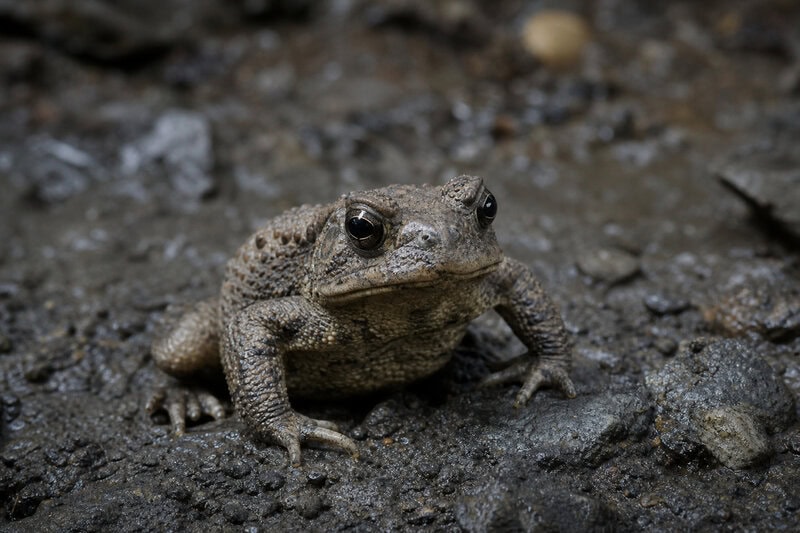
Amphibians are among the most sensitive ecological indicators in the vertebrate world. Because they breathe partly through their skin, require external water sources for reproduction, and cannot regulate their own body temperature, their presence or absence in a fossil assemblage carries meaningful information about the climate and hydrology of a place at a specific moment in time.
The presence of a spadefoot toad at La Brea during the late Pleistocene is therefore indirect but substantive evidence that the Los Angeles Basin supported seasonal wetlands or temporary ponds capable of sustaining amphibian breeding populations. Modern Los Angeles receives roughly 15 inches of rain annually, and no native breeding population of Spea toads exists in the coastal Southern California region today. The nearest living spadefoot populations are found in drier inland areas. The implication is that the late Pleistocene climate of the region was meaningfully different from the present — wetter, more seasonally variable, or both.
Spea labreae shared its world with the animals La Brea is most famous for: Columbian mammoths, American lions, short-faced bears, ground sloths, and the dire wolves and saber-toothed cats whose skulls line museum walls worldwide. As reporting on the discovery notes, placing the toad inside that richly documented Pleistocene ecosystem gives scientists an unusually detailed context for interpreting its habitat requirements — a luxury not available for fossil amphibians found at less thoroughly excavated sites.
What drove Spea labreae to extinction remains an open and genuinely contested question. The end of the Pleistocene, roughly 11,700 years ago, saw the collapse of many large-mammal populations across North America. The causes — whether climate change following the retreat of glaciers, the arrival and hunting pressure of human populations, or some combination of both — are actively debated and should not be presented as resolved. The same uncertainty applies to the disappearance of this toad.
Why This Discovery Matters Beyond La Brea
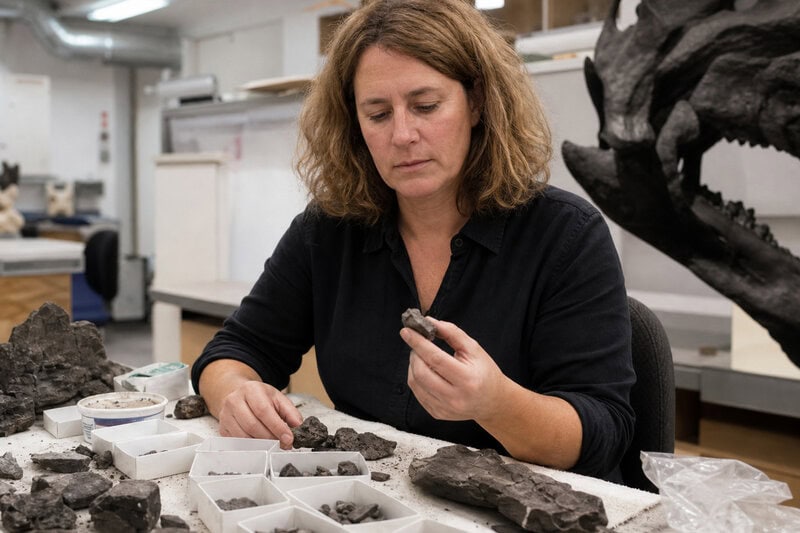
The identification of Spea labreae carries implications that extend well past a single site or a single species. It is a concrete demonstration that even the world’s most intensively excavated fossil localities contain undescribed biodiversity — and that the Ice Age vertebrate record of North America is considerably more incomplete than the sheer volume of La Brea’s collections might suggest.
That incompleteness has particular relevance given the current state of living amphibians. Amphibians are today the most threatened vertebrate class on Earth, with roughly 40 percent of known species assessed as at risk of extinction by the IUCN Red List. Fossil discoveries like Spea labreae add historical depth to that crisis: they document lineages already lost, potentially before science had a chance to describe them, and they raise the question of how many more undescribed extinct species remain in collections worldwide.
For researchers and institutions overseeing La Brea, the discovery reinforces a specific argument: systematic reanalysis of existing collections may be as scientifically productive as new fieldwork. The bones were already there. The site was already famous. The species was unknown anyway. That outcome makes a persuasive case for investing resources in the painstaking work of small-vertebrate identification — a discipline that rarely generates headlines but clearly still generates discoveries.
The naming of the species after La Brea — labreae — permanently anchors this extinct lineage to Los Angeles in the scientific literature. It gives the city’s natural history a deeper, stranger timeline than most residents might realize: beneath the freeway noise and the museum’s bubbling asphalt pools, an entire toad lineage lived, thrived, and vanished, leaving bones that went unnamed for decades after their recovery.
What Scientists Still Don’t Know — and What Comes Next
Researchers have not yet determined the full temporal range of Spea labreae within the La Brea deposits. Whether the species persisted until the very end of the Pleistocene or disappeared considerably earlier is unknown, and answering that question could meaningfully inform the debate over extinction causes. A species that vanished 40,000 years ago tells a different story than one that survived until 12,000 years ago.
Several logical next steps exist for researchers. Micro-CT analysis of the type specimen could reveal additional anatomical detail without damaging irreplaceable material. Reexamination of unidentified anuran material held in natural history museum collections across North America — material almost certainly sitting in storage at multiple institutions — could extend the known range of the species or surface additional undescribed taxa. Phylogenetic analysis using anatomical data could place Spea labreae precisely within the Spea family tree and clarify how closely it relates to surviving species.
Perhaps the most consequential open question concerns geographic distribution. La Brea is the known and named type locality, but whether Spea labreae ranged more broadly across Ice Age western North America — or was genuinely restricted to the Southern California coastal region — has not been established. Additional fossil sites examined with small-vertebrate expertise could change that picture entirely.
The discovery of Spea labreae is less an endpoint than a prompt. It signals that the Ice Age amphibian record of North America is considerably thinner than scientists had reason to assume, and that patient, meticulous work on small-bone collections may yet produce further surprises from one of the world’s most famous — and, it turns out, most incompletely known — fossil sites.