
A small beetle, no larger than a thumbnail, has been entombed in amber for roughly 100 million years — and the structures preserved inside its fossilized body have just rewritten what scientists thought they knew about when firefly-like glow first evolved. The specimen, dating to the mid-Cretaceous period, retains both elaborately structured sensory antennae and fully intact abdominal light-emitting organs in a single individual, a combination researchers describe as exceptionally rare in the entire fossil record.
A Single Fossil, Two Extraordinary Organs
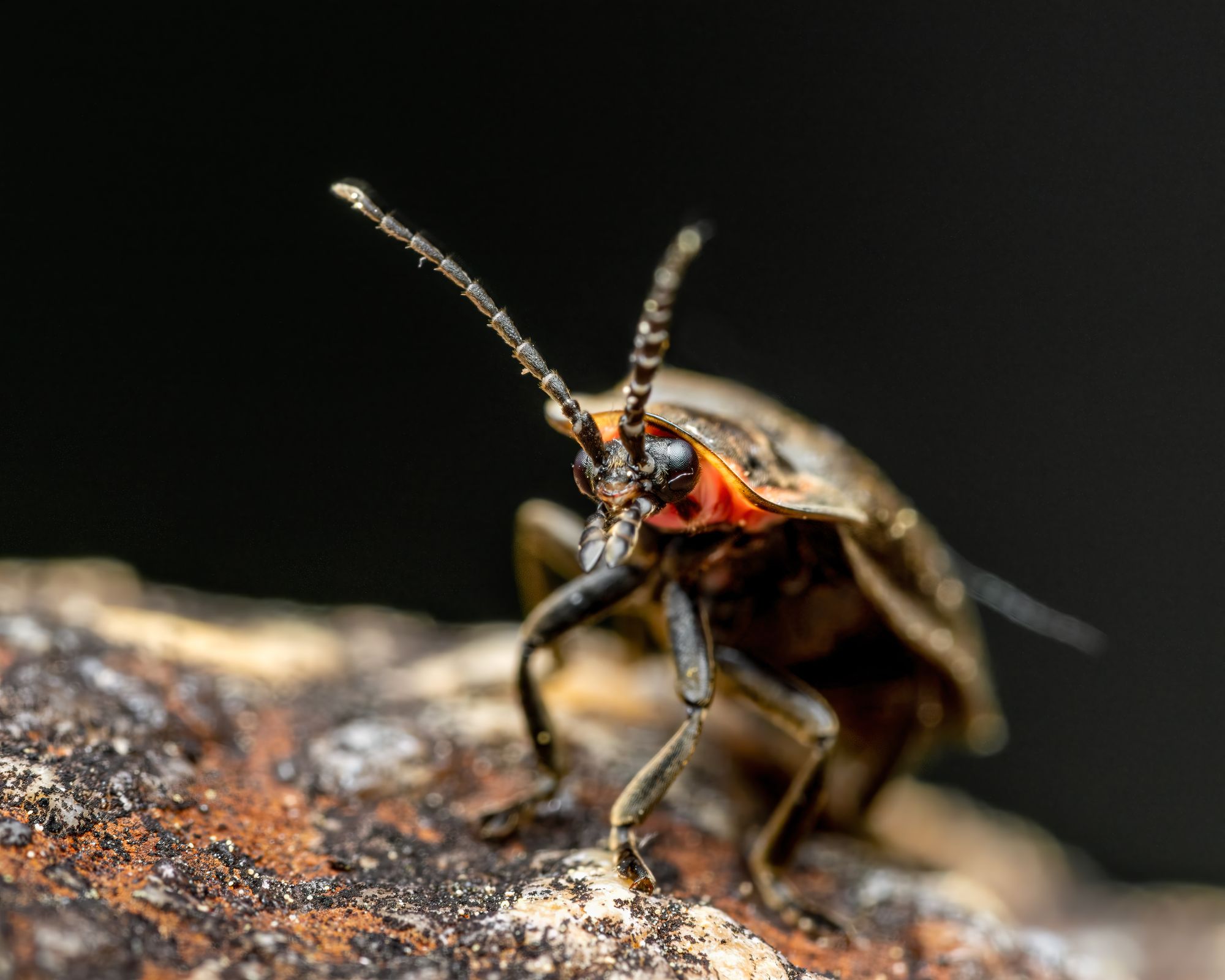
The discovery, reported in Proceedings of the Royal Society B, centers on a lampyroid beetle — a member of the broader superfamily that includes fireflies and their closest relatives, but predating the emergence of true fireflies themselves. According to the study published in the Royal Society’s journal, the specimen preserves direct physical evidence of two distinct biological systems: chemosensory antennae capable of detecting chemical signals in the environment, and a lantern organ in the abdomen consistent with bioluminescent function.
That dual preservation is the scientific crux of the find. It pushes the direct, structural evidence for firefly-like bioluminescence back to approximately 100 million years ago — tens of millions of years earlier than previously documented fossil material had allowed researchers to confirm with confidence. Before this specimen, scientists could model the deep evolutionary history of bioluminescence in firefly relatives using molecular data, but lacked physical, anatomical proof that these organs existed in such ancient forms.
Classifying the fossil as a lampyroid rather than a true firefly is not a technicality — it is a meaningful scientific distinction. Lampyroids represent an earlier branching point on the evolutionary tree, meaning the fossil documents the origins of firefly-like traits without claiming that today’s backyard fireflies are themselves 100 million years old. What it does establish is significant: the biological toolkit underlying both the glow and the chemical communication of modern fireflies was already assembled when non-avian dinosaurs still roamed the planet.
What Bioluminescence Actually Is — and Why Fossilizing It Is So Difficult
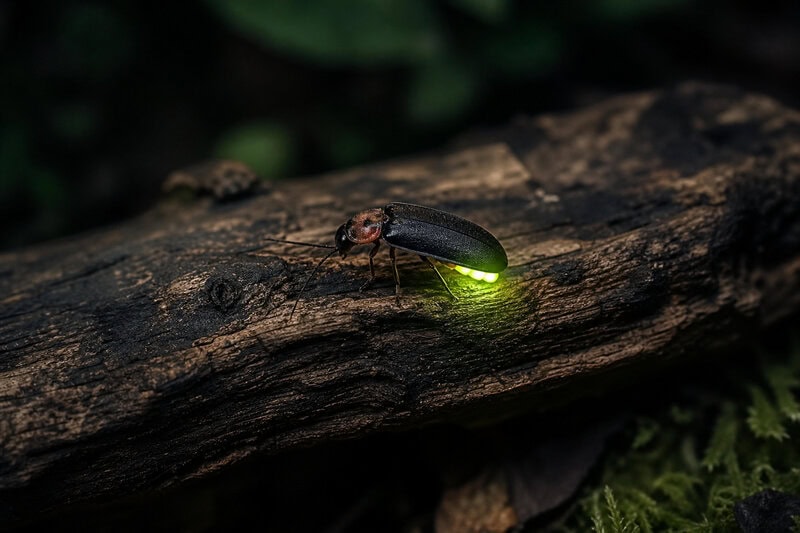
Bioluminescence is the production and emission of light by a living organism through a chemical reaction. In fireflies and their relatives, this reaction typically involves a small molecule called luciferin — the light-producing substrate — and an enzyme called luciferase, which catalyzes the reaction and causes luciferin to release energy as visible light. The reaction takes place inside specialized photocyte cells packed into a dedicated organ in the insect’s abdomen, commonly called the lantern.
The problem for paleontologists is that soft tissues almost never survive across geological time. Chemical compounds degrade, cells collapse, and the fine anatomical structures that distinguish a light-producing organ from ordinary abdominal tissue are typically lost long before a specimen reaches a museum drawer. This is why direct fossil evidence for bioluminescence is so scarce: researchers cannot simply infer a lantern organ from the presence of a related species; they need the structural preservation of the organ itself.
Amber — fossilized tree resin — is one of the very few preservation pathways capable of delivering that level of detail. When ancient resin entombs an insect rapidly and completely, it can seal fine anatomical features against the degradation that destroys virtually all other fossil soft tissue. The Cretaceous specimen benefited from exactly this process, retaining structures delicate enough that researchers could identify both the antennae’s elaborated morphology and the abdominal organ’s architecture, as detailed in coverage of the research by Phys.org.
Reading the Antennae: A Window Into Ancient Chemical Sensing
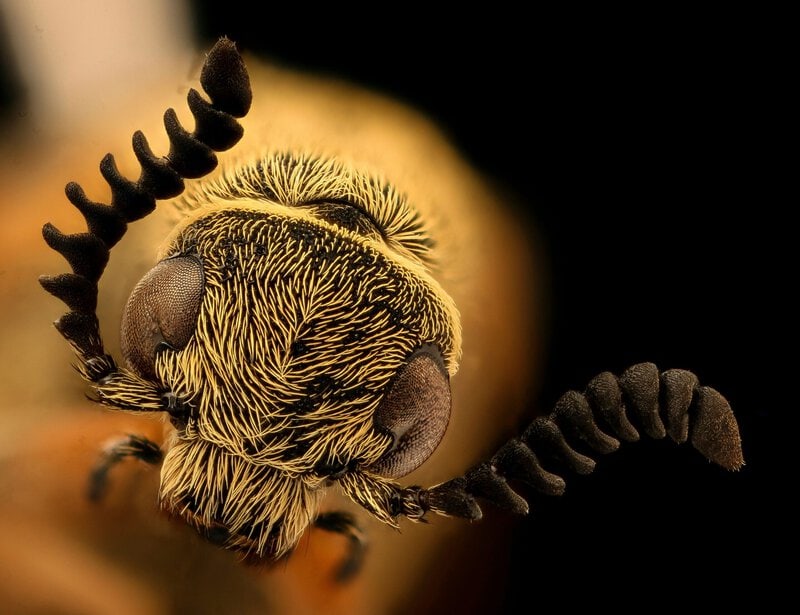
Alongside the light organ, the fossil’s antennae drew significant attention from researchers. They are described in the study as highly elaborate — a morphological descriptor that, in modern beetles, correlates with heightened chemosensory capacity: the ability to detect, distinguish, and interpret chemical signals drifting through the environment, including pheromones released by potential mates.
In living lampyroids, antennal complexity is not merely decorative. A more architecturally elaborate antenna typically supports a greater density of sensory receptors, each tuned to detect specific chemical compounds at vanishingly low concentrations. The presence of such structures in a 100-million-year-old specimen suggests that sophisticated chemical sensing was not a late refinement layered onto an already-glowing beetle lineage — it was an early and foundational adaptation, present from near the beginning of the group’s documented history.
This chemosensory evidence matters precisely because it complements rather than duplicates the light-organ evidence. Taken together, the two preserved systems indicate that this ancient beetle was capable of both producing signals and receiving them — a functionally integrated communication system, not merely one half of the equation. Whether those signals served mate attraction, predator deterrence, or prey luring remains unknown from morphology alone, but the infrastructure for all of those possibilities was evidently in place.
The Cretaceous Context: A World Already Wired for Signals
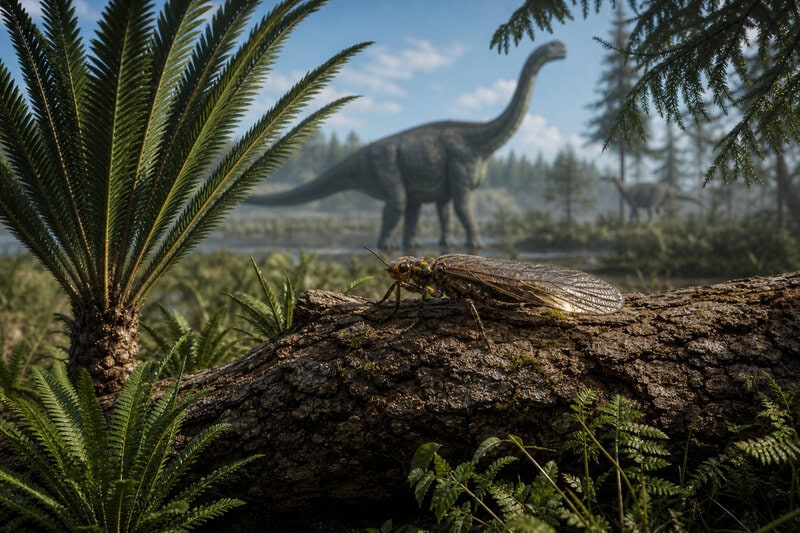
The mid-Cretaceous, approximately 100 million years ago, was among the most ecologically eventful periods in the history of animal life. The rise of flowering plants was reshaping terrestrial ecosystems, creating new niches, new food sources, and intensified competition among insects for mates, territory, and resources. Evolutionary biologists regard this period as a crucible for insect diversification — the process by which single ancestral lineages split into many ecologically distinct species — and insect sensory and signaling systems are considered a key engine of that process.
A beetle lineage capable of both producing light and detecting chemical signals would have possessed a significant ecological advantage in that environment: the ability to locate mates at night, coordinate behavior across distances, and potentially deter or manipulate other organisms. The lampyroid fossil adds a concrete, anatomically grounded data point to that broader evolutionary narrative.
Researchers emphasize that direct fossil evidence for insect sensory systems is rare precisely because the relevant structures — antennae with fine receptor arrays, soft abdominal organs — are among the least likely to survive fossilization. Each confirmed example therefore carries disproportionate scientific weight, serving as a calibration point for evolutionary timelines that must otherwise rely entirely on molecular estimates.
Why ‘Lampyroid’ Matters: Precision in Evolutionary Claims
Paleontologists are careful about the language they use when placing fossil organisms on an evolutionary tree, and the distinction between a lampyroid and a true firefly illustrates why that precision matters. Lampyridae — the family containing what most people think of as fireflies — is a subset of the broader lampyroid superfamily, which also includes several related beetle families, some bioluminescent and some not. A fossil classified at the superfamily level represents an earlier node in the tree, before the lineage had split into its modern constituent families.
This means the fossil does not demonstrate that modern firefly species are 100 million years old. What it demonstrates is that the biological infrastructure underlying their defining characteristics — light production and sophisticated chemical sensing — predates the emergence of modern firefly genera by a significant margin. That is a more precise and ultimately more scientifically defensible claim, and it is the claim the researchers make.
Molecular clock studies — which use mutation rates in the DNA of living species to estimate when evolutionary lineages diverged — have previously suggested deep Mesozoic roots for firefly relatives. The new amber fossil is broadly consistent with those estimates, though researchers note that reconciling direct fossil evidence with molecular clock inferences remains an ongoing challenge, because the two methods carry different assumptions and different sources of uncertainty.
What Remains Open — and What Could Resolve It
Several significant questions remain unanswered. Researchers have not determined which ecological function the light organ in this specific specimen primarily served — mate signaling, aposematism (the use of light as a warning signal to deter predators), or aggressive mimicry to lure prey — because distinguishing among these roles from preserved anatomy alone is not currently possible. Each function is documented in living lampyroids, and none can be ruled out for this fossil.
The evolutionary relationship between chemosensory elaboration and bioluminescent signaling in ancient lampyroids is also unresolved. It is plausible that elaborate antennae and light organs co-evolved as an integrated mating system — each trait reinforcing the other’s value — but it is equally possible they arose at different times for different ecological reasons and were only later co-opted into a unified communication strategy. The fossil is consistent with either scenario.
Extending the timeline further — or identifying the earliest ancestor in which either trait first appeared — will require additional amber fossils from the Cretaceous and Jurassic periods. Such specimens have not yet been reported in peer-reviewed literature, and their discovery, if it occurs, would represent a further step in a research program that the current find has meaningfully advanced.
Why This Matters Beyond Fireflies
The broader significance of the specimen extends well past the evolutionary history of a single insect family. Insect signaling systems — chemical, visual, and acoustic — are thought by evolutionary biologists to have been a primary driver of arthropod diversification, the process that made insects the most species-rich group of animals on Earth. Fossils that document these systems at specific geological moments allow researchers to test, rather than merely assume, hypotheses about the pace and pattern of that diversification.
This amber fossil is a rare example of direct structural evidence connecting ancient anatomy to inferred behavior — showing not just that a lineage existed at a given time, but that it was already doing something behaviorally sophisticated. That category of evidence is precisely what paleontologists have long sought, because it bridges the gap between morphology and ecology in a way that simple presence-or-absence fossil data cannot.
For anyone who has watched fireflies on a summer evening, the fossil also offers something less technical but no less striking: the knowledge that a small beetle was already doing essentially the same thing — glowing and sensing its way through a dark Cretaceous forest — 100 million years ago, in a world that looked nothing like ours but was already, in this small flickering way, recognizable.