
A vast ocean current system located thousands of miles from California’s coastline is slowing down — and new research suggests the consequences could reshape the state’s storm seasons in profound ways, potentially making its most powerful rain events even more destructive by the end of this century.
An Ocean Half a World Away May Be Reshaping California’s Storms
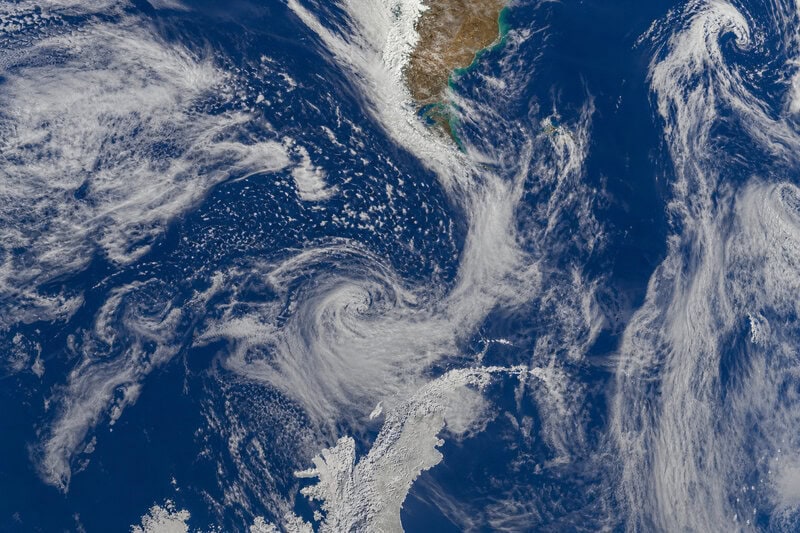
The Atlantic Meridional Overturning Circulation — known among scientists as AMOC — moves through the Atlantic Ocean, functioning like a planet-scale conveyor belt that helps regulate temperature and weather patterns across the entire Northern Hemisphere. A new study now identifies AMOC’s ongoing slowdown as a potential driver of intensified atmospheric rivers striking the California coast, drawing a direct line between a weakening Atlantic current and the flood risk facing Pacific communities. For most Californians, the connection is not just unfamiliar — it is genuinely counterintuitive, and that is precisely what makes it worth understanding.
What Is AMOC — and Why Should Californians Care?
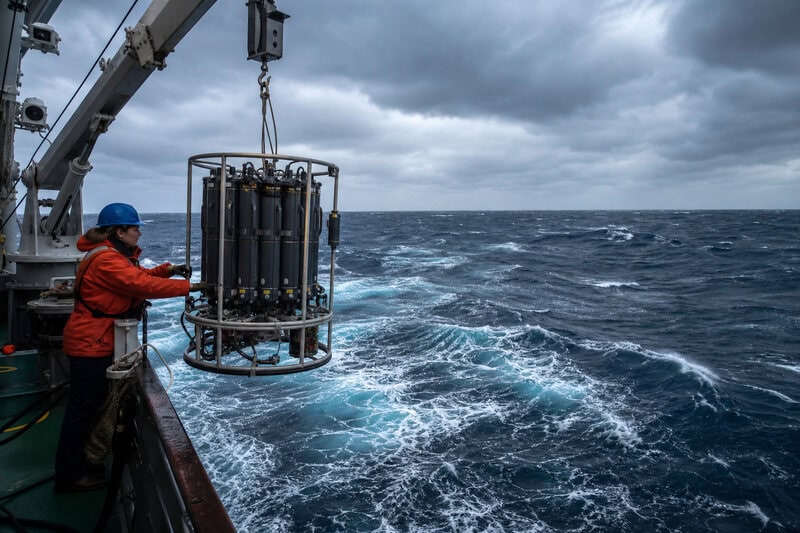
The Atlantic Meridional Overturning Circulation is a system of ocean currents that carries warm surface water northward through the Atlantic and returns cold, dense water southward along the ocean floor. Scientists regard it as one of the most powerful climate regulators on Earth, influencing European winters, tropical rainfall patterns, and sea levels along the U.S. East Coast. Emerging research now suggests its reach extends even further — all the way to the storm systems that drench California each winter.
There is broad scientific agreement that AMOC has already weakened compared to pre-industrial levels. What remains an area of active study and legitimate debate is the precise timeline and magnitude of future slowdown, and the full range of downstream consequences that weakening will produce. The new study contributing to this debate identifies one such consequence that had received relatively little prior attention: the potential amplification of atmospheric rivers along the California coast.
Scientists studying AMOC’s broader effects have increasingly flagged its potential to trigger weather disruptions far outside the Atlantic basin — and this research extends that analysis to the Pacific coast in meaningful new ways.
How Atlantic Disruption Can Fuel Pacific Storms
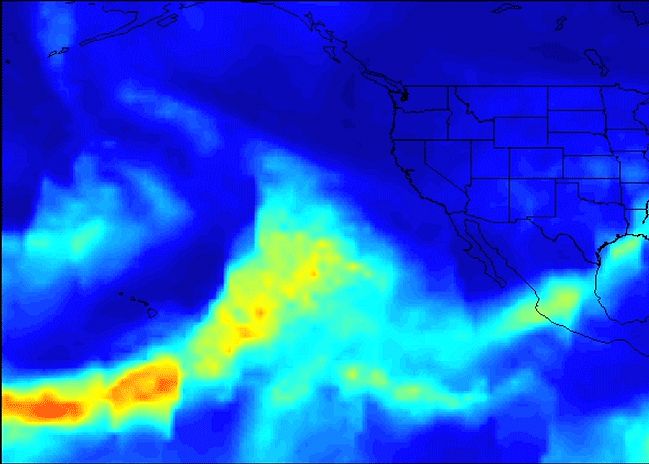
Atmospheric rivers are long, narrow bands of concentrated water vapor — sometimes called “rivers in the sky” — that can stretch thousands of miles and carry as much water as 15 Mississippi Rivers. A single powerful atmospheric river event can deliver the majority of a region’s annual rainfall in just a matter of days, and these storms already account for the bulk of California’s precipitation each year.
The mechanism connecting AMOC to these Pacific storms runs through the jet stream. When AMOC weakens, it alters the temperature gradient between the tropics and the poles — the fundamental engine that drives large-scale atmospheric circulation. That shift reorganizes and can strengthen the jet stream, the high-altitude river of wind that steers storm systems across North America. A disrupted jet stream can funnel more intense atmospheric rivers directly toward the California coast, increasing both the frequency and severity of major rain events.
Critically, the same climate dynamics may also produce longer dry spells between storm events. The new study’s projections suggest California could be pushed not simply toward more total rainfall, but toward a more volatile and unpredictable cycle of drought and deluge — a pattern that strains water infrastructure and emergency systems in fundamentally different ways than a steady increase in precipitation would.
What the New Study Actually Found
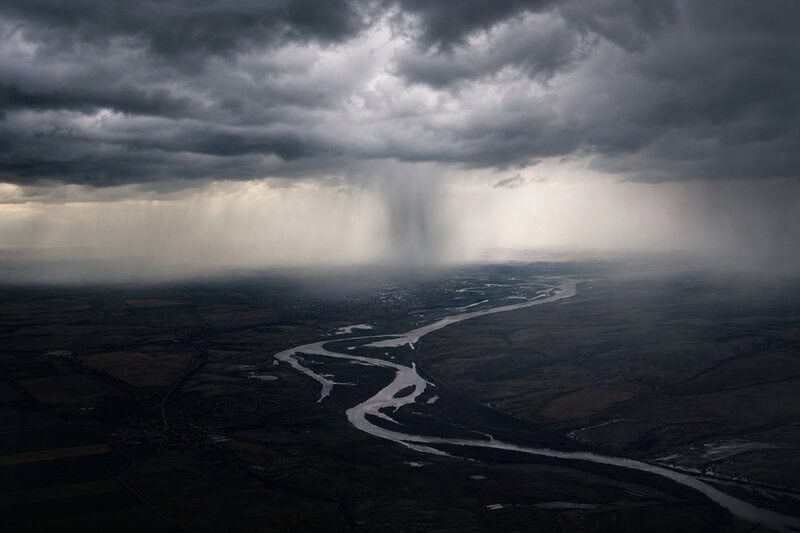
The research finds that a slowing Atlantic Ocean current is projected to intensify powerful storms in California while simultaneously reducing snowfall over Greenland — a pairing of effects that illustrates how far AMOC’s reach extends across the hemisphere. The study’s projections center on changes expected by the end of the century, though researchers note that some intensification of storm patterns could materialize well before that horizon as the current continues to weaken.
What distinguishes this work from prior AMOC research is its geographic scope. Scientists have long studied the circulation’s effects on European weather and Atlantic-basin climate; this study fills a meaningful gap by extending that analysis to the Pacific coast, establishing a clearer evidentiary link between Atlantic ocean dynamics and California’s weather extremes.
It is equally important to be clear about what the study does not claim. Climate projections at regional scales carry inherent uncertainty, and this research represents a contribution to an emerging — not fully settled — body of scientific literature. Its findings should be understood alongside the broader scientific consensus on climate change and extreme weather, not as a definitive standalone prediction.
California’s Already Volatile Weather — Under Added Pressure
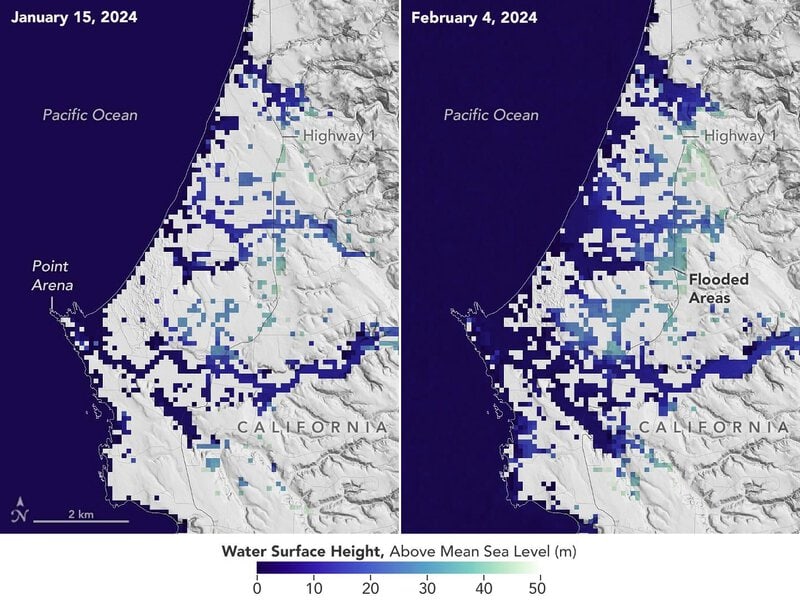
California does not need a weakening AMOC to face serious storm risk. Atmospheric rivers currently deliver an estimated 30 to 50 percent of the state’s annual precipitation, which means even modest changes to their intensity, duration, or frequency carry enormous consequences for water supply, infrastructure, and public safety. Levees, flood-control channels, and emergency management systems across the state were largely designed for a climate that is already changing beneath them.
California has experienced historically destructive atmospheric river sequences in recent years, offering a vivid preview of what more intense storm seasons could look like in practice. Roads washed out, reservoirs overwhelmed, and communities isolated — these are not hypothetical future scenarios but recent lived experiences for millions of Californians. The question the new research raises is whether such events could become more frequent and more severe than even current climate projections anticipate.
Atmospheric rivers could take California on a wild ride of powerful storms as climate change makes the state alternately wetter and drier — and AMOC slowdown, according to the new study, could amplify that volatility further. These projected impacts represent study findings and emerging research, not established certainties.
Greenland, the Atlantic, and a Cascade of Ripple Effects

The study’s finding that a weakening AMOC would also reduce snowfall over Greenland is more than a footnote — it is a window into how interconnected Earth’s climate systems truly are. Less snow over Greenland means less sunlight reflected back into space, a process scientists call albedo feedback, which accelerates regional warming and can contribute further to the very conditions that weaken AMOC in the first place. The slowdown, in this sense, contains its own self-reinforcing dynamics.
Taken together, the contrasting projected effects — stronger storms in California, reduced snowfall in Greenland — illustrate a core principle of climate science: a single disruption in one part of the Earth system does not produce uniform effects everywhere. It produces a cascade of different, sometimes opposite, outcomes across continents and ocean basins, each rippling outward in ways that researchers are still working to map in full detail.
The AMOC story is one of the clearest available illustrations of how deeply connected the planet’s climate systems are — and how a change in one ocean basin can set off consequences thousands of miles away, including, as this research suggests, on California’s doorstep.
Uncertainty, Urgency, and What Comes Next
The emerging research on AMOC and California storms adds a significant and previously underappreciated variable to the state’s climate risk picture. Planners, policymakers, and infrastructure managers already grappling with the effects of climate change now have an additional dynamic to weigh — one that originates in the Atlantic Ocean but could shape the lived experience of millions of Californians before the end of this century.
The distinction between what is known and what remains contested matters here. Scientific consensus holds that AMOC is weakening and that atmospheric rivers are becoming more impactful under climate change. The direct causal link between AMOC slowdown and intensified California storms is a newer, still-developing area of research — findings to be weighed thoughtfully alongside the broader scientific literature, not settled conclusions to be treated as certain.
What the research offers, even under that caveat, is a clear reminder that climate risk does not respect the boundaries we draw on maps. California’s flood future is being written not only by local conditions and Pacific Ocean temperatures, but potentially by a circulation system on the far side of a continent — one that most of the state’s residents have never heard of, and that policymakers are only beginning to factor into long-range planning.
A weakening Atlantic Meridional Overturning Circulation, according to new research, could make California’s most powerful atmospheric river storms even stronger by the end of the century — a finding that links the fate of one ocean to the flood risk of a distant coast, and underscores just how surprising, and how global, the consequences of a changing climate can be.