
Of all the birds wading the Nile’s marshy margins and all the primates ranging the Egyptian desert, ancient Egyptians elevated exactly two species to embody their god of wisdom and the moon — and a new study suggests the selection criteria may have been written in moonlight all along. The sacred ibis and the hamadryas baboon, animals from entirely different branches of the animal kingdom, share a striking visual trait: a pale, silver-white coloration that closely mirrors the luminous quality of moonlight. Researchers now argue that this resemblance was not coincidence but the product of careful, repeated observation by a civilization that spent its nights under open skies.
Who Was Thoth, and Why Did He Need Two Bodies?
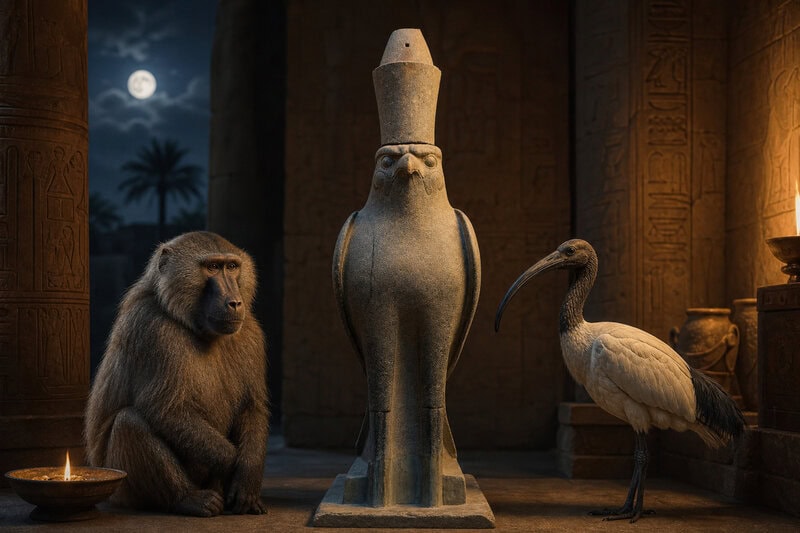
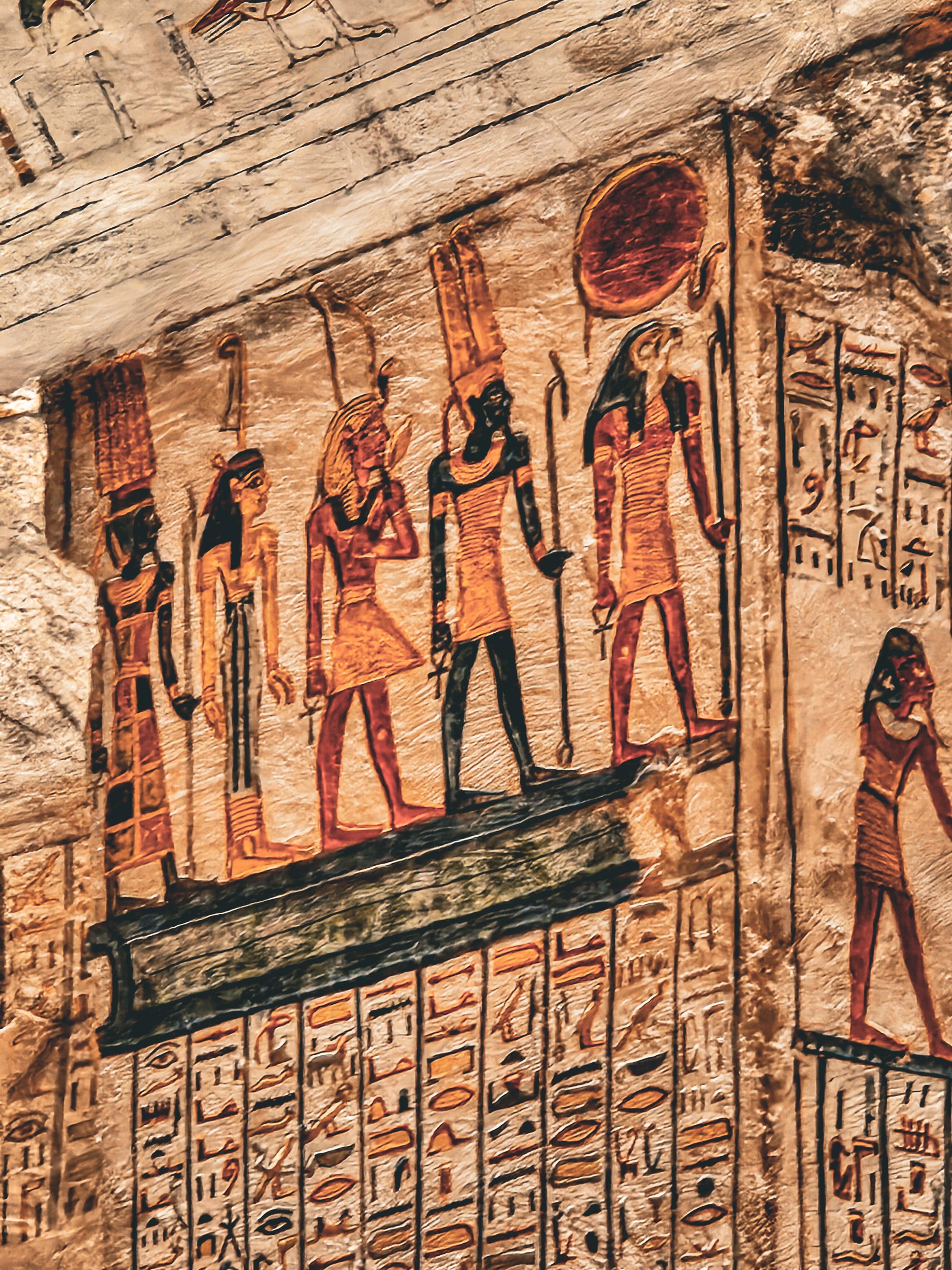
Thoth was the Egyptian god of writing, wisdom, and magic — the divine record-keeper who maintained cosmic order through knowledge, language, and the measurement of time. He tracked the movements of celestial bodies, invented hieroglyphic script according to Egyptian tradition, and presided over the judgment of the dead by recording the weight of souls against the feather of Ma’at. In a pantheon populated by gods of war, fertility, and the sun, Thoth occupied a singular intellectual niche.
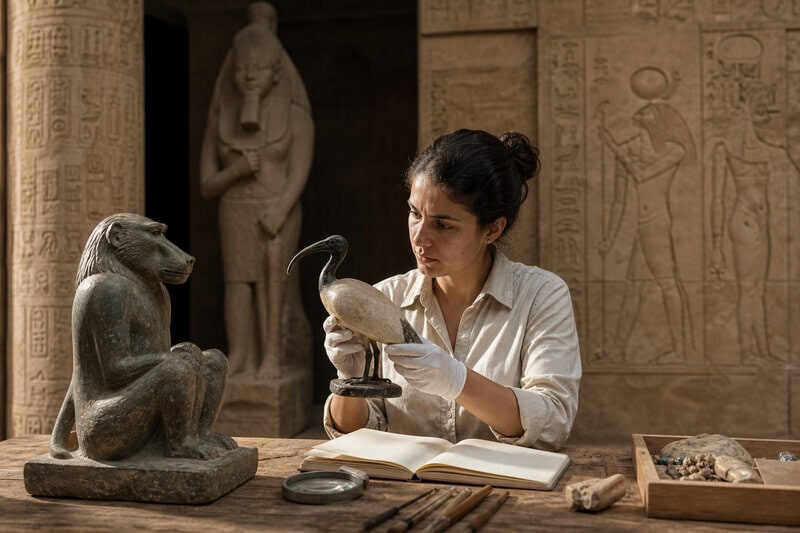
What made Thoth theologically unusual, however, was not his portfolio but his dual animal form. Unlike most Egyptian deities associated with a single animal manifestation, Thoth had two distinct animal manifestations — the sacred ibis and the hamadryas baboon — a duality that has puzzled Egyptologists for generations. The baboon is most prominently associated with Thoth in his lunar role, the form in which he was venerated as god of the scribes whose observations of the sky were inseparable from the keeping of written records. The ibis form dominated his depiction as scribe of the afterlife, recording the verdict at the weighing of the heart.
This dual embodiment was not merely decorative iconography. Both animals were mummified in enormous numbers — excavations at sites like Hermopolis and Saqqara have yielded hundreds of thousands of ibis and baboon mummies — and kept in temple complexes where priests maintained intimate, sustained knowledge of their behavior and appearance. The Egyptians were not working from hearsay or distant rumor. They knew these animals across generations of close observation, which makes the consistent selection of these two species, from among available alternatives, all the more deliberate and consequently all the more worth explaining.
The Selection Problem: Why These Two, From All Available Options?
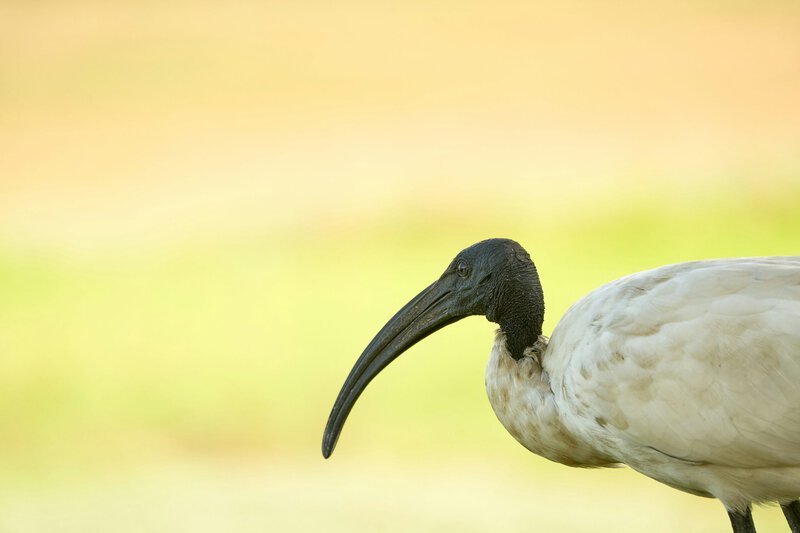
The choice becomes genuinely puzzling when you consider how many alternatives were available. Ancient Egyptians knew of at least three ibis species inhabiting the Nile region — the sacred ibis, the glossy ibis, and the hadada ibis — yet they chose specifically the white-plumaged sacred ibis to embody Thoth. The glossy ibis is a rich, iridescent dark brown; the hadada is grey-green with a metallic sheen. Both are visually striking birds, but neither is pale, and neither was selected.
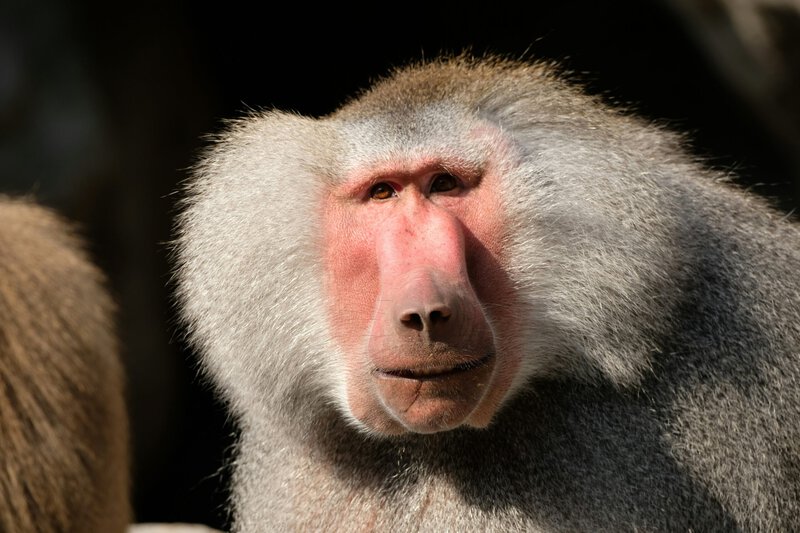
Similarly, two baboon species were known to ancient Egyptians, but only the hamadryas baboon — distinguished by its dramatic silver-grey mantle of fur — was elevated to divine status as Thoth’s animal manifestation. The olive baboon, also present in the region, carries a warmer, brownish coat that does not produce the same luminous quality under low light.
In both cases, the selected species is the paler, more silvery one. That this pattern holds consistently across two entirely different taxonomic groups — one a wading bird, one a primate — makes it statistically harder to dismiss as coincidence. Traditional explanations have leaned on behavioral and morphological cues: the ibis’s crescent-shaped beak, which mirrors the form of the crescent moon, and the baboon’s documented habit of vocalizing and orienting toward the rising sun, a behavior ancient Egyptians interpreted as worship or reverence. These explanations remain valid, well-documented, and uncontested by the new research. But none of them fully accounts for why coloration consistently predicted which species was chosen over its relatives. The new study takes that gap seriously.
The Science: What the New Research Actually Found
The study found that the sacred ibis and the hamadryas baboon share a coloration profile that closely resembles moonlight, offering a testable perceptual explanation for why both animals were chosen to symbolize the lunar god Thoth. The finding provides new insight into the perceptual and symbolic logic underlying ancient Egyptian religious thought, suggesting that the assignment of divine status to these particular species was grounded in a repeatable visual observation rather than purely narrative or mythological reasoning.
The researchers applied colorimetric analysis — the systematic, quantitative measurement of an object’s color properties — to compare the reflectance profiles of the two animals against the spectral quality of moonlight. Moonlight is not simply dim sunlight. It has a specific cool, blue-shifted luminance quality that differs perceptually from the warm tones of firelight or torchlight. The pale silver-white plumage of the sacred ibis and the silver-grey mantle of the hamadryas baboon both fall within a color range that would have appeared strikingly moon-like to human observers under natural nighttime conditions along the Nile.
The underlying logic the researchers invoke belongs to a category well-documented across ancient religious systems: sympathetic or analogical reasoning, in which objects or creatures that visibly resemble a divine force are understood to partake in or embody that force. The moon is pale and silver; these animals are pale and silver; therefore these animals carry lunar essence. This is not mystical thinking in a dismissive sense — it is a coherent observational framework that ancient cultures applied with considerable consistency across many domains.
Importantly, the researchers frame this as a complementary explanation rather than a replacement for behavioral and mythological accounts. The coloration hypothesis adds a measurable, scientific mechanism to an existing body of textual and artistic evidence, and the study explicitly distinguishes correlation from proof of ancient intent. What the research demonstrates is that the coloration match exists, is specific, and is consistent enough across two unrelated species to warrant serious consideration as a contributing factor in the selection process.
Moonlight and Animal Behavior: The Broader Ecological Context
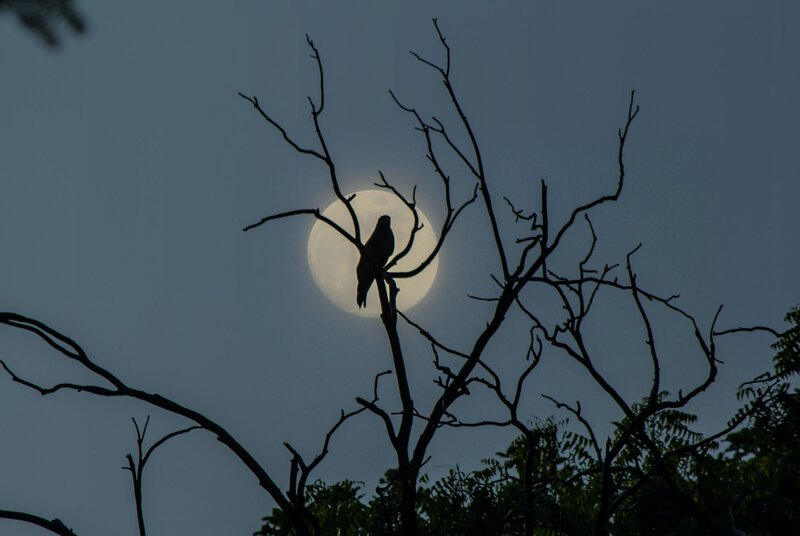
Moonlight is not a passive backdrop in ecology. It directly and measurably shapes the nocturnal behavior of many species, influencing foraging patterns, predator avoidance, reproductive signaling, and social interaction. Ancient Egyptians living along the Nile — without artificial lighting, spending long hours outdoors during warm nights — would have had abundant and unavoidable opportunity to observe how different animals appeared and behaved under lunar illumination across every season.
The hamadryas baboon’s silver mantle is particularly striking under low-light conditions. The long, pale fur surrounding the adult male’s head and shoulders functions partly as a social signal, making the animal visually prominent within a group. Under moonlight, this effect is amplified considerably. An adult male hamadryas baboon moving through a moonlit landscape is a luminous, conspicuous figure in a way that an olive baboon simply is not. For people living in sustained proximity to these animals across generations, this perceptual difference would have been immediately and repeatedly apparent.
The sacred ibis produces a similar effect in twilight and moonlit settings along wetland margins. White birds stand out sharply against dark water and dark vegetation in low light; darker ibis species recede into the background. The field of archaeoethnozoology — the study of human-animal relationships in ancient cultures — increasingly recognizes that sensory experience, including how animals look and sound under specific environmental conditions, shaped the symbolic and sacred roles assigned to those animals across ancient societies. This study sits squarely within that growing research tradition, and strengthens its evidential foundation.
What This Means for Understanding Egyptian Religious Logic
The lunar-coloration hypothesis carries implications that extend well beyond a single deity. If the same perceptual logic — pale coloration as lunar analogy — explains the selection of two unrelated species for a single god, it raises the possibility that similar reasoning shaped the animal associations of other Egyptian deities in ways scholars have not yet fully examined. Sacred animals in ancient Egypt were selected and maintained with a degree of taxonomic care that modern observers often underestimate, and the mummification record shows consistent species discrimination rather than opportunistic or interchangeable selection.
Egyptologists broadly accept that animal cults were neither naïve nor arbitrary. The new study adds a scientific mechanism — colorimetric correspondence with lunar luminance — to what was previously understood primarily through textual sources, artistic analysis, and behavioral observation. The distinction matters for how scholars and general audiences interpret ancient religion. Rather than projecting irrationality onto past cultures, the evidence increasingly supports the view that ancient Egyptians were careful empiricists who encoded observable natural patterns into their theology. The divine, at least in this case, appears to have been inferred from nature rather than invented in its absence.
What Remains Uncertain and Where Research Could Go Next
The study’s authors are explicit about the limits of their conclusions. Demonstrating that two animals share a coloration profile consistent with moonlight does not prove that ancient Egyptians consciously articulated that resemblance as their stated reason for selecting those species. Ancient intent is notoriously difficult to recover archaeologically. No papyrus has yet been found recording a priest explaining that the hamadryas baboon was chosen because its coloration matched the moon. The coloration match is a testable, evidence-supported hypothesis — not a verified account of ancient decision-making.
Behavioral explanations, including the ibis’s crescent-shaped bill and the baboon’s dawn-greeting vocalizations, remain legitimate and fully compatible with the new findings. The most defensible position — and the one the researchers appear to take — is that multiple factors operated together: coloration, behavior, morphology, myth, and ecological familiarity all likely contributed in ways that cannot now be cleanly separated.
Future research could extend colorimetric analysis to other Egyptian sacred animals and their associated deities to test whether lunar-coloration correspondence is unique to Thoth or part of a broader perceptual logic running through Egyptian animal theology more widely. If similar patterns emerge for other deity-animal pairings, the hypothesis gains considerably more explanatory force and begins to describe something systematic rather than something specific to one god.
For now, the study stands as a well-reasoned, evidence-supported contribution to a centuries-old question. The moon did not literally choose the ibis and the baboon. But for people living under open skies along the Nile — watching these pale creatures glow against dark water and darker rock, watching a baboon’s silver mantle catch the full moon’s light — the association would not have required a theologian to explain it. It would have simply looked true.