
A small bone fragment pulled from the frozen ground of Antarctica in 1985 spent roughly four decades sitting in a museum storage drawer, catalogued as a probable marine reptile and left undisturbed — until a fresh examination revealed it to be something far more significant: the first dinosaur fossil ever recovered from the continent. That 82-million-year-old tail vertebra, now identified as belonging to a titanosaur sauropod, has quietly rewritten what scientists thought they knew about the animals that once roamed the southernmost landmass on Earth.
A Bone in a Drawer: The 40-Year Wait
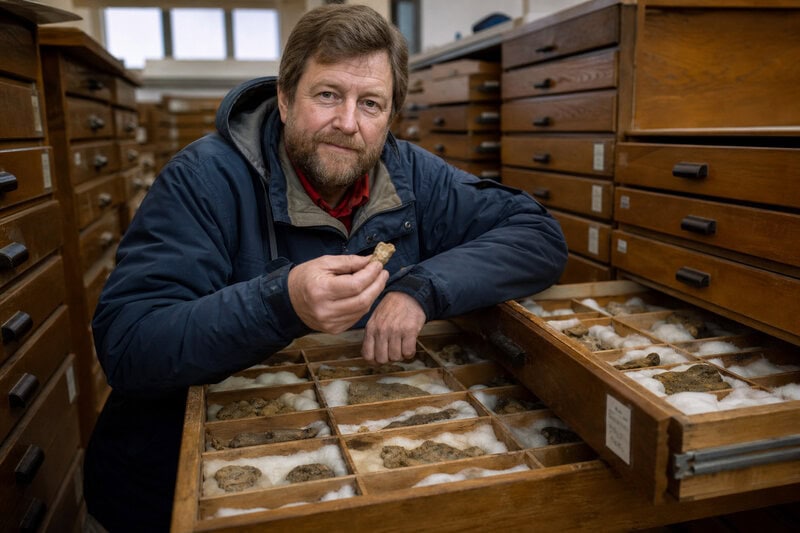
In 1985, geologist Mike Thomson collected the small bone fragment from James Ross Island — one of Antarctica’s more accessible fossil-bearing locations — and logged it as belonging to a large reptile, most likely a marine species. Under the brutal conditions of Antarctic fieldwork, that was a defensible call. What Thomson could not have known was that the fragment was a fossilized tail vertebra from a long-necked, plant-eating dinosaur that had walked the continent during the Late Cretaceous period, roughly 82 million years ago.
The specimen then disappeared into institutional storage, where it remained unexamined for approximately 40 years. When researchers finally took a second look, the reclassification made it the first confirmed dinosaur fossil ever found in Antarctica, according to Smithsonian Magazine. The case illustrates a quiet but important truth in paleontology: transformative discoveries sometimes require not a new expedition, but a second look at something already collected.
How a Fossil Gets Misidentified in the Field
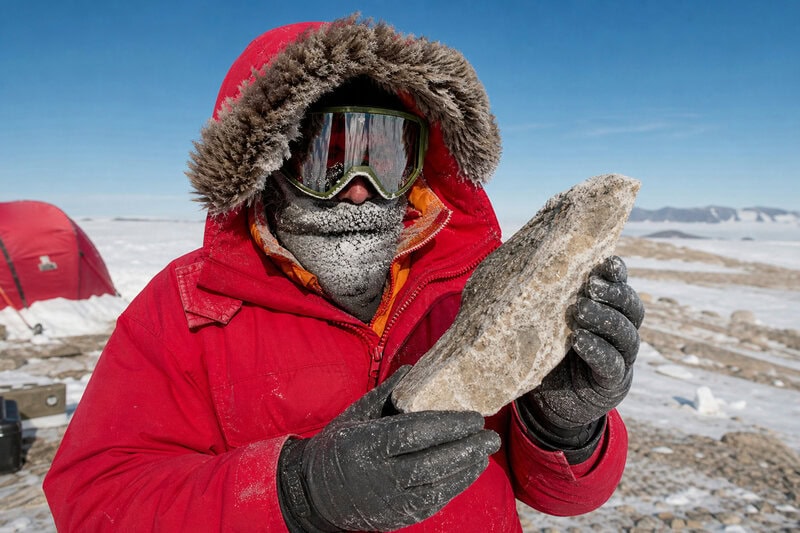
Antarctic fieldwork is conducted under extreme time pressure, sub-zero temperatures, and logistical constraints that make fine anatomical analysis nearly impossible on-site. Thomson’s initial classification as a large reptile was an understandable error, not a careless one. In 1985, marine reptiles such as plesiosaurs were already documented in Antarctic Cretaceous sediments, giving him a plausible reference category. Dinosaurs, by contrast, were considered entirely absent from the continent at the time — there was simply no established expectation that one might turn up.
Confirmation bias in fossil cataloguing is a documented risk in paleontology: when a collector expects a certain fauna, ambiguous specimens tend to be assigned to known groups rather than flagged for further study. The vertebra’s small size and fragmentary preservation compounded the problem. Titanosaur sauropods are known to produce vertebrae that can superficially resemble those of large aquatic reptiles when a bone is incomplete, making a misidentification under field conditions even more understandable in retrospect.
The specimen was found within the Lopez de Bertodano Formation, a geological unit on James Ross Island that has also yielded marine reptile and invertebrate fossils. That sedimentary context further reinforced the assumption that whatever Thomson had found belonged to the ocean, not the land.
What Antarctica Looked Like 82 Million Years Ago
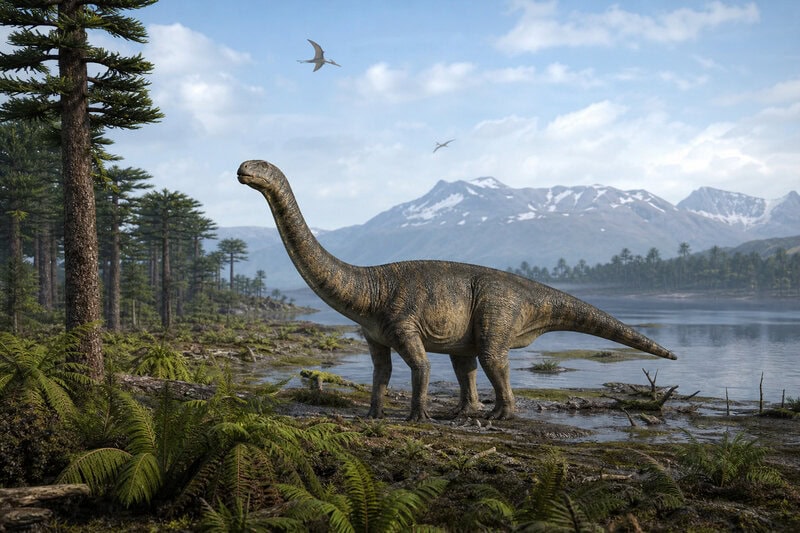
To understand why a large terrestrial dinosaur might have lived in Antarctica, it helps to picture the continent as it actually was during the Late Cretaceous epoch — roughly 100 to 66 million years ago. Antarctica was not the ice-locked landmass it is today. Paleoclimatologists estimate it was a forested, temperate environment connected to South America via a land corridor that allowed animals to move between continents. Average polar temperatures were warm enough to support diverse terrestrial ecosystems, including large herbivorous dinosaurs, though the challenge of extended seasonal darkness would still have shaped ecological life in significant ways.
Titanosaurs — the group to which the newly identified vertebra belongs — were among the most geographically widespread dinosaur lineages on Earth during this period. Confirmed fossils have been found across South America, Africa, Europe, and Asia. Antarctica was a conspicuous gap in that global map, one that Thomson’s reidentified specimen now begins to fill. The Natural History Museum describes the fossil as rare evidence that long-necked sauropod dinosaurs existed in Antarctica, a finding that aligns with the broader picture of titanosaur dispersal across the southern landmasses of the Cretaceous world.
Inside the Identification: What the New Research Found
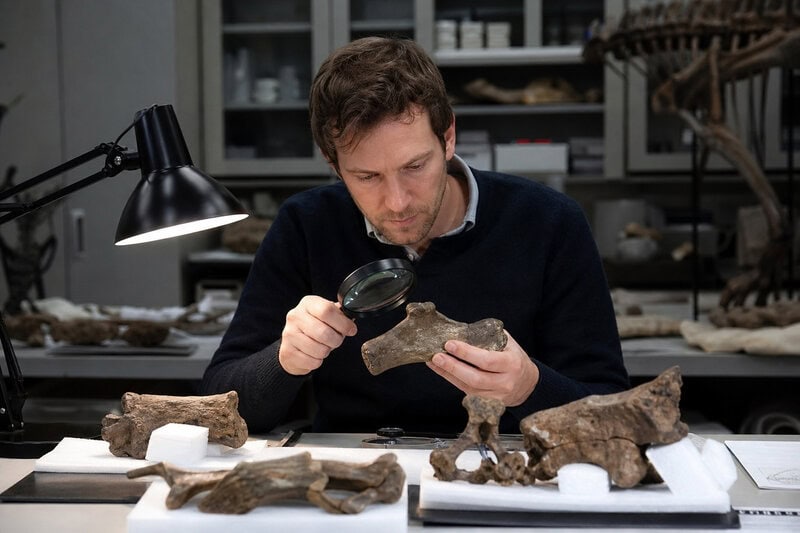
Researchers re-examining the specimen used comparative morphological analysis — a method that matches the shape, internal structure, and specific anatomical landmarks of an unknown bone against a reference library of known species — to establish its true identity. The most diagnostic feature was found not on the surface of the bone, but inside it.
The vertebra displayed what scientists call camellate pneumatization: a spongy, air-pocket-filled internal bone architecture that is characteristic of sauropod dinosaurs. This structural feature stands in clear contrast to the solid bone typical of marine reptiles, providing a reliable anatomical basis for reclassification. That single internal characteristic was sufficient to shift the specimen from the marine reptile category into the dinosaur fossil record entirely.
The fossil has been classified as belonging to a titanosaur sauropod — the clade of long-necked, quadrupedal herbivores that included some of the largest animals ever to walk on land, among them well-known giants such as Patagotitan and Argentinosaurus. According to the BBC, the specimen is described as only the second sauropod fossil of its kind recovered from the broader Antarctic region, underscoring how rare such finds are and how much of the continent’s Mesozoic fossil record remains effectively unexplored.
Why Antarctica’s Dinosaur Record Is So Sparse
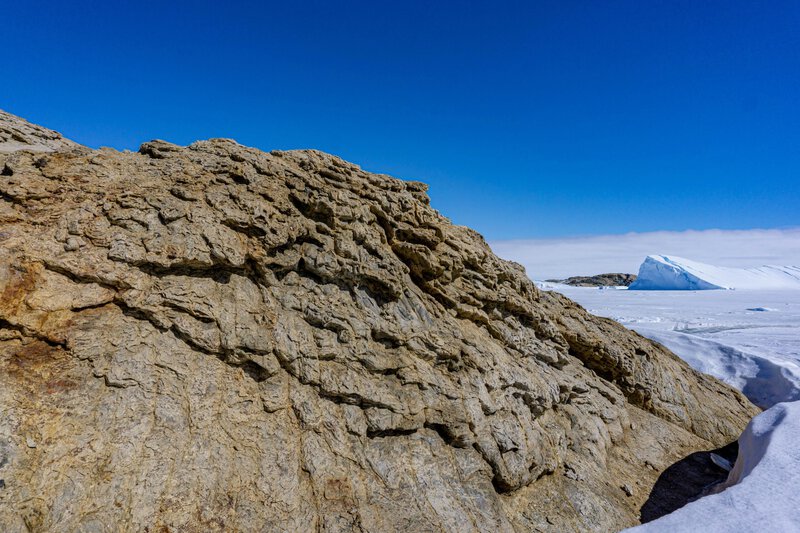
The scarcity of Antarctic dinosaur fossils is not simply a matter of animals being absent — it is largely a product of geology, logistics, and funding. Antarctica holds roughly 70 percent of the world’s fresh water locked in its ice sheet, and the vast majority of Cretaceous-era rock outcrops are buried under ice hundreds to thousands of meters thick, making systematic fossil surveys extraordinarily difficult and expensive. The continent’s brief summer field season — typically only a few months long — sharply limits the time scientists can spend prospecting exposed rock formations.
Preservation conditions add further complexity. While cold temperatures are theoretically favorable for conserving organic material over geological time, freeze-thaw cycles and glacial movement can fracture and scatter fossils across wide areas before researchers ever reach them. Antarctic paleontology has also historically received less funding than work in fossil-rich regions like Patagonia or the Gobi Desert, meaning fewer researchers have systematically examined the continent’s sedimentary exposures.
The rediscovery of Thomson’s specimen may help shift that calculus. CNN’s coverage of the find highlights the broader implication that additional dinosaur material may already be eroding to the surface on James Ross Island and surrounding exposed Cretaceous formations — providing a concrete scientific rationale for expanded fieldwork in the region.
The Broader Significance for Museum Collections
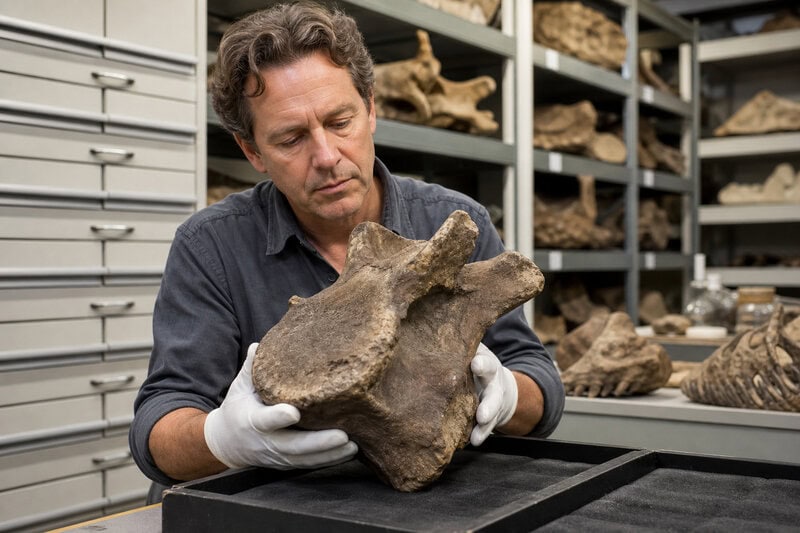
Perhaps the most consequential lesson from this discovery has nothing to do with Antarctica specifically. The titanosaur vertebra’s reclassification is a clear demonstration of the scientific value of museum collections as active research resources, not passive archives. Specimens catalogued under outdated or incorrect identifications can yield major discoveries decades later, particularly when re-examined with new analytical tools or within a richer scientific context than existed at the time of original collection.
This is not an isolated case. Paleontological literature documents multiple instances of significant fossils sitting in institutional collections for years or decades before their true importance was recognized. As People notes in its coverage of the find, systematic re-examination of legacy collections is increasingly recognized as a high-return research strategy — one that costs far less than mounting a new field expedition and can yield comparably significant results.
The find also strengthens the hypothesis, supported by fossil evidence from South America, that titanosaurs may have migrated across the ancient Antarctic landmass, potentially using it as a corridor between the southern continents during the Cretaceous. Researchers are careful to caution, however, that a single vertebra is not sufficient to confirm migration routes with certainty. One bone opens a question; it does not close it.
Open Questions and What Comes Next
A single tail vertebra, while historically significant as the first confirmed dinosaur fossil from Antarctica, leaves fundamental scientific questions unanswered. Which titanosaur species does the specimen represent? How large was the individual animal? Were dinosaurs a regular part of the Antarctic Cretaceous ecosystem, or occasional migrants moving through the region from South America? None of these questions can yet be answered with confidence.
Researchers have not been able to assign the specimen to a known titanosaur genus. The fragmentary nature of the bone means a definitive species-level identification may require additional fossil material — a challenging prospect given the logistical and financial barriers that define Antarctic fieldwork. The discovery also raises a productive broader question: how many other misidentified or uncatalogued specimens in museum collections worldwide might contain similarly overlooked evidence of Mesozoic fauna from poorly sampled regions?
There is an additional layer of urgency tied to the present moment. As climate change accelerates glacial retreat across Antarctica, previously ice-covered rock outcrops are becoming newly accessible. Antarctic geologists and paleontologists have noted that this gradual expansion of exposed fossil-bearing surface area presents both a scientific opportunity and a pressing argument for systematic surveying — before newly uncovered material is damaged by weathering and further freeze-thaw cycles. The bone that sat unnoticed for 40 years may, in that sense, be pointing toward discoveries that have not yet had the chance to be missed.