
A single fossilized tail bone, pulled from Antarctic rock in 1985 and then quietly shelved in a museum drawer, spent roughly four decades unexamined before scientists confirmed it as something extraordinary: the first dinosaur fossil ever recovered from Antarctica, a continent that had long been considered a blank space on the dinosaur distribution map.
40 Years in a Drawer, 82 Million Years in the Making
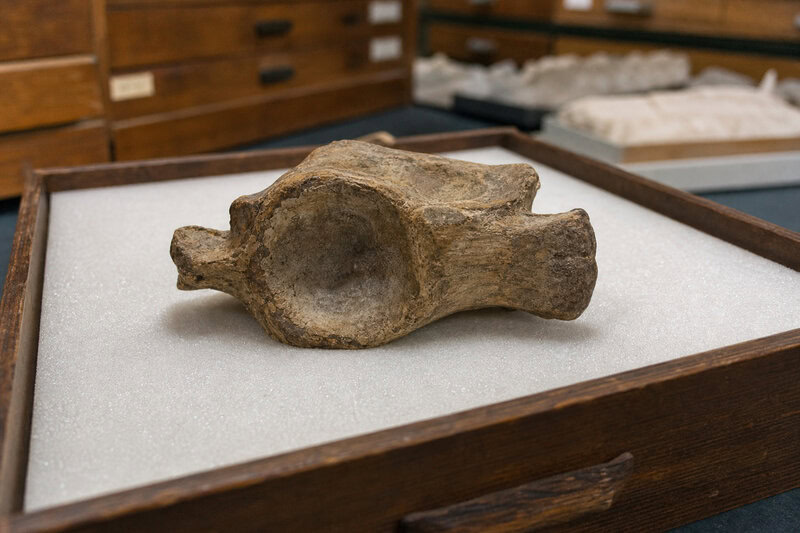
The specimen is an 82-million-year-old caudal vertebra — a bone from the tail section of the spinal column — collected during an Antarctic field expedition in 1985. For most of the intervening four decades, it sat largely unexamined, one unremarkable-looking fragment among the vast holdings of a natural history collection. When scientists recently completed their analysis and confirmed its identity as a genuine dinosaur bone, they did more than add a new entry to the fossil record. They established an entirely new category of paleontological evidence for an entire continent.
The stakes of that confirmation are difficult to overstate. Antarctica is Earth’s last major landmass to yield a confirmed non-marine dinosaur fossil. Every other continent had already produced dinosaur remains; Antarctica had not — at least not officially. According to Smithsonian Magazine, that distinction has now changed, and the fossil that changed it had been in hand all along.
Eighty-two million years ago places this animal firmly in the Late Cretaceous period, an era when Antarctica was a warmer, forested landmass still loosely connected to the rest of the southern hemisphere. The continent had not yet drifted to its current polar position, and the idea that large terrestrial dinosaurs could have lived there is not only plausible — this bone now confirms it.
What Scientists Are Actually Looking At
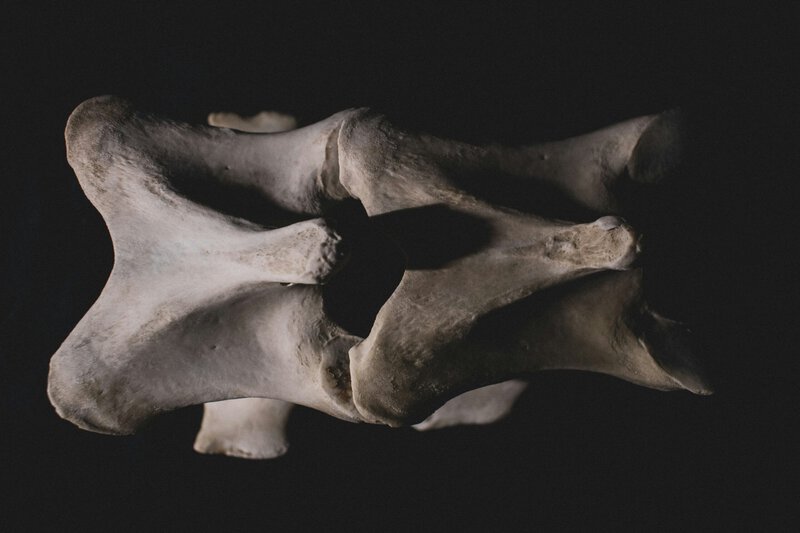
A caudal vertebra is not a glamorous fossil. It lacks the dramatic visual impact of a skull or a limb bone. But vertebrae are among the most taxonomically informative elements of a dinosaur’s skeleton. Their internal structure, the shape of their articulation surfaces — the faces where adjacent bones connect — and their overall proportions carry enough anatomical information for trained paleontologists to distinguish dinosaur lineages from other Mesozoic reptile groups, including marine reptiles such as plesiosaurs, which are already known from Antarctic waters.
That distinction matters enormously here. Antarctica has previously yielded fossils of marine and flying reptiles, but a terrestrial dinosaur is a different claim entirely. Confirming that this vertebra belongs to a land-dwelling dinosaur rather than any of those other groups required careful comparative analysis — the kind of work that modern imaging tools, including micro-CT scanning, have made substantially more reliable.
An artist’s reconstruction released alongside the announcement depicts an Antarctic sauropod — a long-necked, four-legged herbivorous dinosaur — suggesting that researchers consider sauropod anatomy a credible working hypothesis for this specimen. CNN’s coverage of the announcement includes that reconstruction, though formal taxonomic classification — the process of assigning the animal to a specific genus and species — appears to remain pending further analysis.
Why It Went Unnoticed: The Hidden Cost of Overcrowded Collections
The 40-year gap between collection and confirmation is jarring, but it is not an anomaly. Natural history museums worldwide collectively hold tens of millions of fossil specimens, and chronic underfunding of curatorial work means that a significant proportion of those specimens are catalogued minimally and stored without detailed analysis. Researchers who study this problem have described it as the “dark data” challenge in paleontology — scientifically valuable material that exists in institutional collections but remains effectively invisible because it has never been fully examined.
Antarctic material faces compounding obstacles. Field campaigns to the continent are among the most logistically demanding in all of science, and specimens recovered from remote outcrops often arrive at home institutions with limited accompanying documentation. When a bone looks ambiguous — and an isolated caudal vertebra can look very ambiguous — it may be filed away with a provisional label and simply never revisited.
It is also important to distinguish this case from institutional negligence. The 1985 collection predates the widespread availability of micro-CT scanning, a technology that can now reveal internal bone architecture non-destructively and accelerate the identification of specimens that look unremarkable on the outside. As Science Alert reports, the analytical toolkit available to paleontologists has advanced enormously since the mid-1980s, and it was precisely those modern methods that allowed researchers to finally recognize what this fragment represented.
The broader implication is unsettling in a productive way: if Antarctica’s first confirmed dinosaur bone spent four decades unrecognized in a museum collection, similar landmark specimens may already exist in other drawers, in other institutions, awaiting the application of modern techniques and a fresh set of eyes.
Antarctica’s Lost World: What the Continent Looked Like 82 Million Years Ago
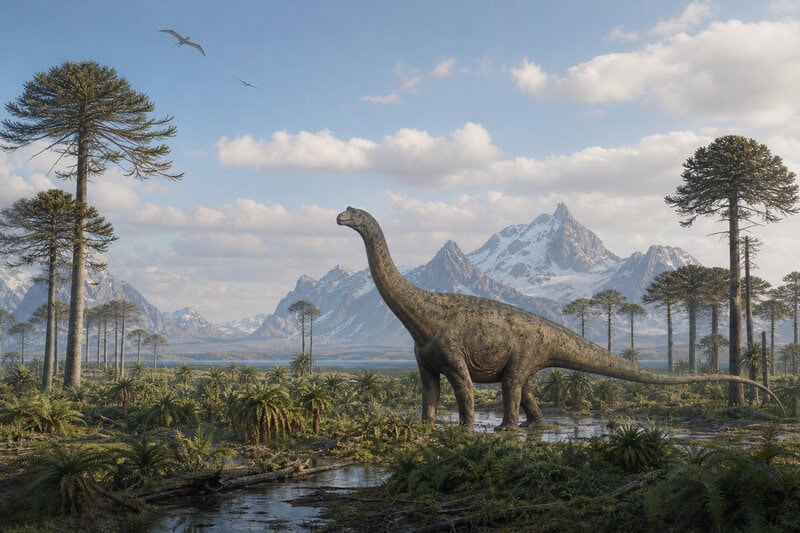
To understand why a dinosaur could have lived in Antarctica, it is necessary to understand how radically different that landmass was during the Late Cretaceous. Eighty-two million years ago, Antarctica was part of Gondwana, the ancient southern supercontinent, and had not yet reached its current position over the South Pole. Paleoclimate studies indicate that the continent supported seasonal forests and river systems, with average temperatures significantly warmer than today’s near-constant freeze. Permanent ice sheets did not yet exist.
Equally important is the paleogeographic connectivity of the period. Antarctica’s separation from other landmasses was still incomplete during the Late Cretaceous, and its proximity to what are now South America and Australia created corridors — or at minimum, narrow seaways — through which terrestrial fauna could disperse. This is why the discovery of a potentially sauropod-type dinosaur in Antarctic rock is scientifically coherent rather than surprising: sauropods were widespread across the southern hemisphere during this period, and Antarctica was not yet the isolated frozen continent it is today.
What remains genuinely uncertain is the precise ecosystem this animal inhabited, the specific species it represents, and whether its presence in Antarctica reflects a broader established faunal community or a rarer dispersal event from neighboring landmasses. A single vertebra, however informative, cannot answer those questions on its own.
The Sauropod Hypothesis: Promising but Preliminary
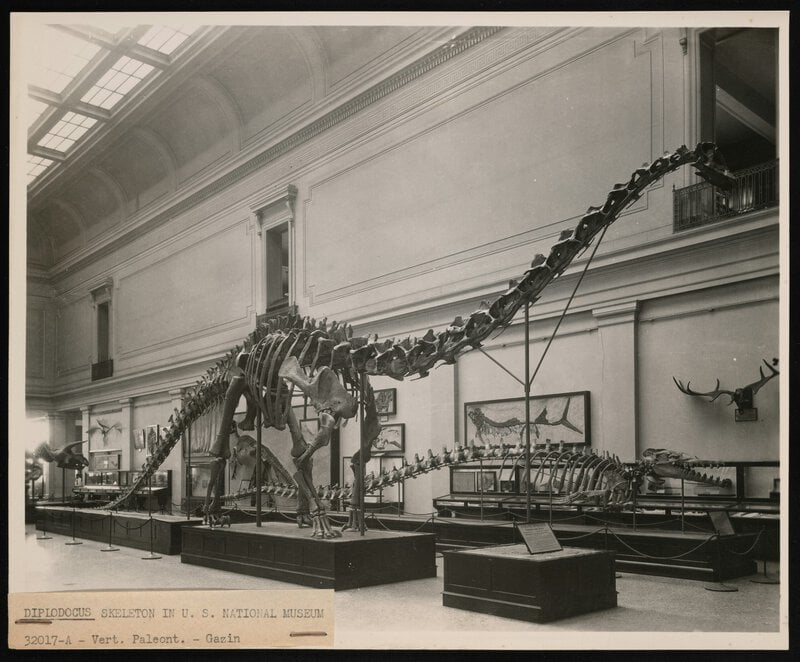
Sauropods — the group of long-necked, four-legged herbivorous dinosaurs that includes well-known genera such as Brachiosaurus and the massive Patagotitan — were among the largest land animals in Earth’s history. They were the dominant large-bodied herbivores across much of the Mesozoic Era and are known from fossil deposits on every continent that had previously yielded dinosaur material.
The case for interpreting this Antarctic vertebra as a sauropod rests on the bone’s morphology: its shape, size, and structural characteristics are reportedly consistent with sauropod anatomy. The artist’s reconstruction that accompanied the announcement reinforces this working hypothesis visually. Sauropod fossils from Cretaceous-era deposits in Argentina and Australia — both of which were geographically proximate to Antarctica during this period — provide a plausible biogeographic framework for that interpretation.
However, scientific caution is warranted. A single caudal vertebra rarely provides sufficient information for a definitive species-level identification. Paleontologists will almost certainly require additional fossil material, or more detailed comparative analysis against a broader reference collection, before any formal taxonomic classification can be published. The sauropod hypothesis is a credible scientific inference, not an established conclusion.
What This Means for Antarctic Paleontology
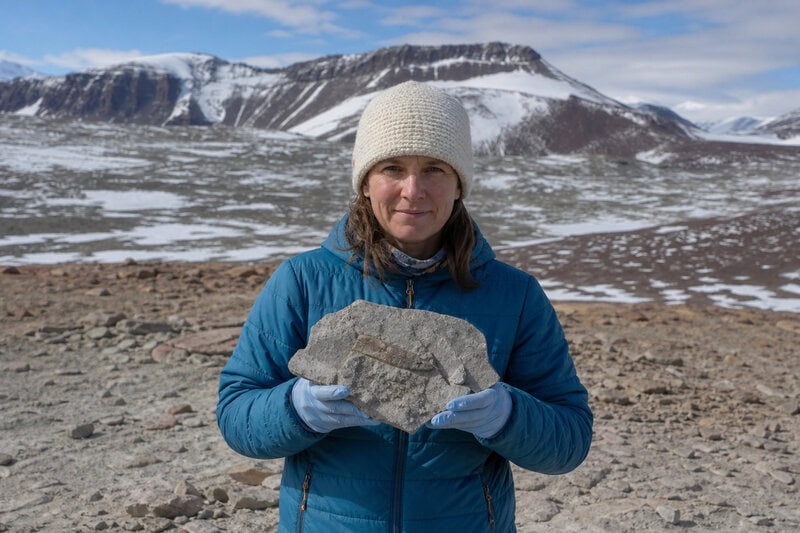
The significance of this finding extends well beyond the addition of one more species to the dinosaur family tree. What has been confirmed is that non-marine dinosaurs lived in Antarctica and that their fossilized remains can survive in Antarctic rock formations and be recovered by researchers. That confirmation transforms the continent’s geological units from speculative targets into scientifically justified destinations for future paleontological fieldwork.
The discovery has also renewed discussion about the value of systematically re-examining existing Antarctic fossil collections using modern analytical techniques. If additional overlooked specimens are sitting in institutional storage, a targeted review program could yield significant findings without requiring a single new expedition to the continent — a meaningful consideration given the extraordinary cost and logistical complexity of Antarctic field campaigns.
Those logistical realities deserve acknowledgment. Research in Antarctica is governed by the Antarctic Treaty System, requires international coordination, and is constrained by extreme weather windows and the expense of maintaining operations at the bottom of the world. Meaningful follow-up to this discovery — whether through collection reviews or new fieldwork targeting specific geological formations — will unfold over years and decades, not months.
Rewriting the Map of Dinosaur Life
For most of paleontological history, Antarctica occupied a conspicuous blank on the map of global dinosaur distribution. Every other major landmass had produced evidence of non-marine dinosaurs; the southern continent had not. That absence shaped scientific models of how dinosaurs spread across the southern hemisphere during the Mesozoic, and it always carried the important caveat that absence of evidence is not evidence of absence — that Antarctica’s extreme conditions simply made fossil recovery extraordinarily difficult.
This fossil removes that caveat. It does not merely suggest that dinosaurs lived in Antarctica; it confirms it, with a physical specimen that can be studied, imaged, and compared against the global fossil record. Models describing the dispersal of large-bodied dinosaurs across Gondwana will need to account for Antarctic fauna in a way they previously could not.
There is also a forward-looking dimension to this story grounded in observable fact rather than speculation. As Antarctic ice sheets continue to retreat, new rock outcrops are becoming accessible for the first time in recorded history. The geological conditions for future dinosaur discoveries on the continent are, if anything, improving — a rare instance where changing environmental conditions may open new scientific doors even as they close others.
The story of this fossil is ultimately the story of how scientific discovery sometimes happens not in the field, but in the quiet re-examination of what researchers already possess. One overlooked tail bone, collected four decades ago and forgotten in a drawer, has confirmed that dinosaurs once roamed every continent on Earth.