
A single fragment of tail bone, collected from Antarctica in 1985 and left sitting in institutional storage for roughly four decades, has just been identified as the first dinosaur fossil ever found on the continent — direct evidence that giant plant-eating dinosaurs once roamed what is now Earth’s most inhospitable landmass. The specimen belongs to a titanosaur, and its belated recognition is already reshaping what scientists thought they knew about prehistoric life at the bottom of the world.
A Tail Bone Sat in Storage for 40 Years — Then Rewrote Antarctic History
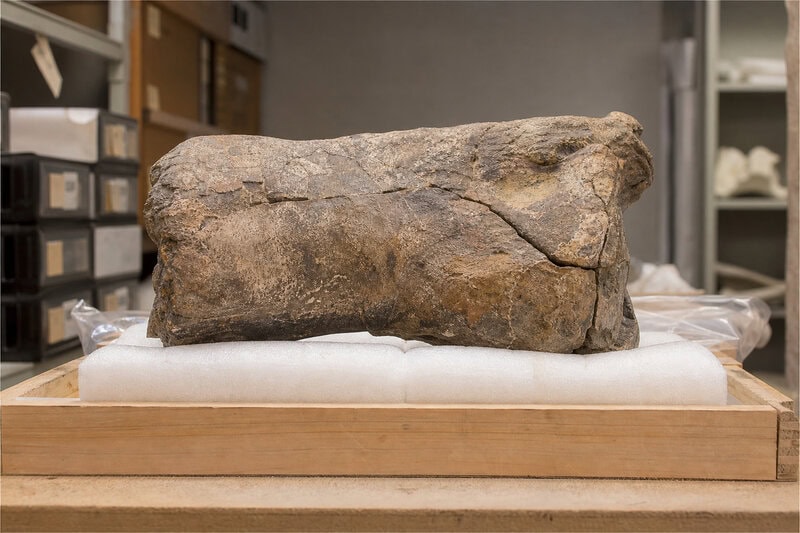
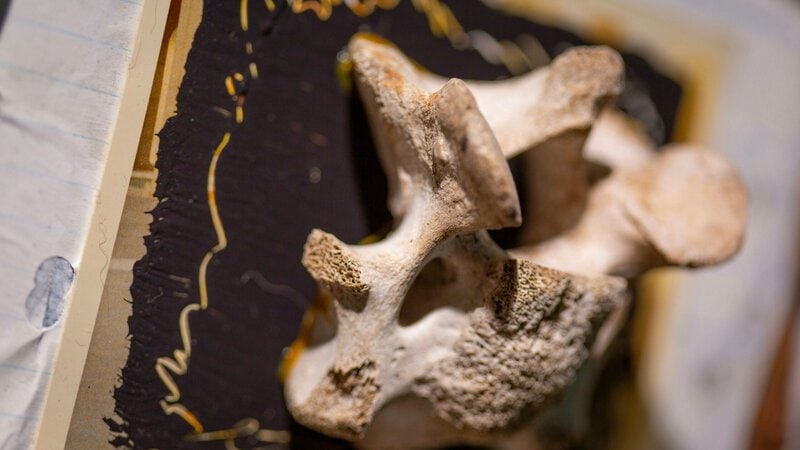
The bone is a fragment from the tail of a titanosaur, a long-necked, four-legged herbivore belonging to the group that includes the largest animals ever to walk on land. Despite its modest dimensions by titanosaur standards — researchers estimate this individual measured approximately 6 to 7 meters (roughly 19 to 23 feet) long, about the length of a city bus — the specimen carries enormous scientific weight simply by existing. No dinosaur fossil had previously been confirmed from Antarctica, meaning the continent’s terrestrial prehistoric life had been, until now, a matter of inference rather than physical evidence.
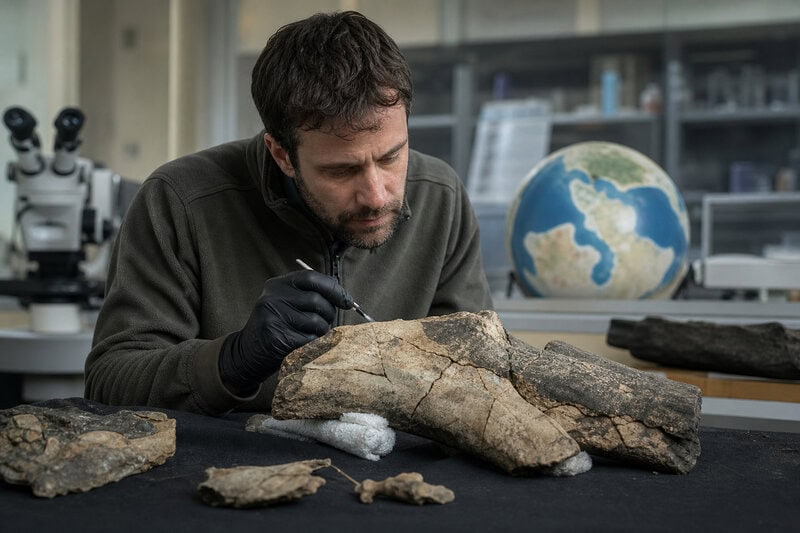
What makes the discovery particularly striking is not just what was found, but how long it went unrecognized. Collected during an Antarctic expedition in 1985, the bone was catalogued and placed in storage, sharing the fate of countless paleontological specimens recovered under difficult field conditions and set aside for later analysis that sometimes never comes. It took approximately 40 years — and advances in comparative anatomy databases and imaging techniques — before scientists re-examining the material recognized its true identity. The specimen’s long dormancy and sudden elevation to landmark status serve as a vivid case study in the scientific value of revisiting legacy collections — a practice that is gaining momentum as digital cataloguing and interdisciplinary collaboration make systematic reassessment more feasible than at any previous point in the field’s history.
Because no specific species has yet been assigned to the specimen, the find raises as many questions as it answers. It is simultaneously a landmark discovery and an open invitation for expanded Antarctic paleontology — a field long constrained by logistics, expense, and the sheer inaccessibility of the continent’s fossil-bearing rock.
What Exactly Is a Titanosaur — and Why Does Size Matter Here?
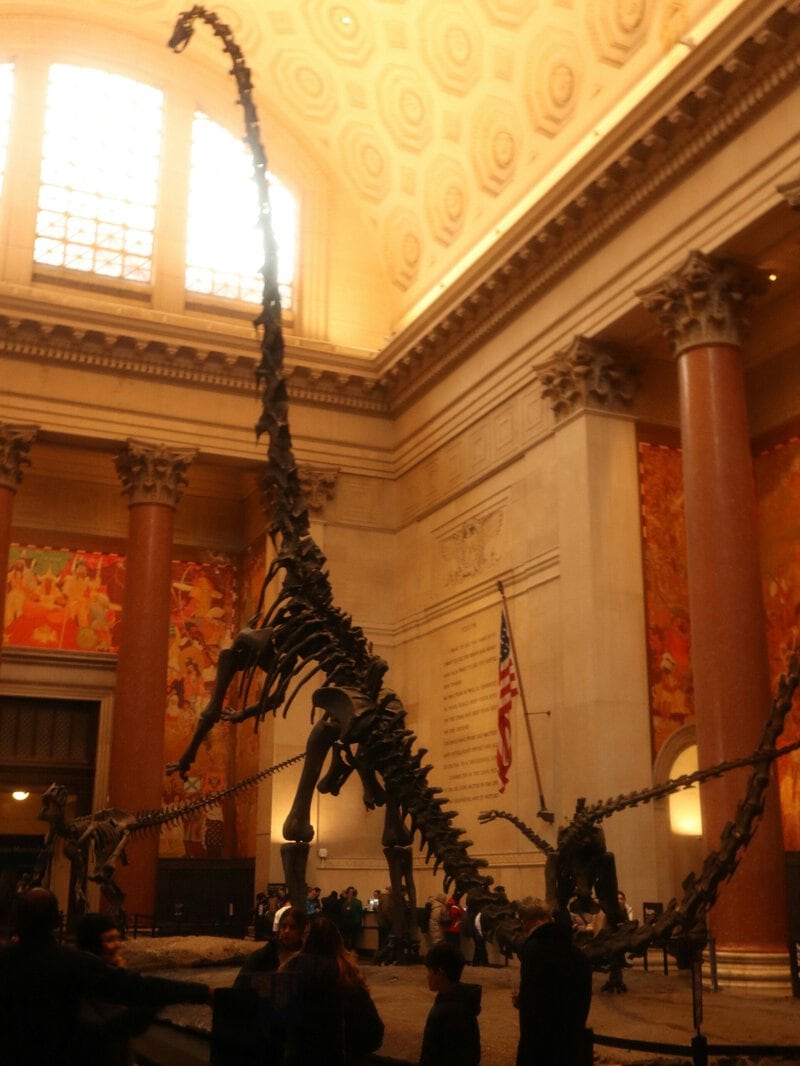
Titanosaurs — technically the clade Titanosauria — were a diverse group of sauropod dinosaurs that flourished during the Cretaceous period, roughly 145 to 66 million years ago, and whose remains have been found on every continent. The group includes Patagotitan mayorum and Argentinosaurus, both candidates for the title of largest terrestrial animal in Earth’s history, with some individuals potentially exceeding 70 tonnes. The Antarctic specimen appears to represent a considerably smaller animal — a reminder that titanosaurs, like most successful dinosaur groups, evolved across a wide range of body sizes to fill different ecological roles.
Identifying the bone as titanosaurian was not a casual observation. According to researchers involved in the re-examination, the tail vertebra’s distinctive shape, external morphology, and internal features — including pneumatic cavities, or air pockets, characteristic of sauropod vertebrae — place it firmly within this lineage. Those internal air pockets are a key diagnostic trait: they reduce skeletal weight while maintaining structural strength, a defining hallmark of the giant sauropod body plan. The combination of morphological features left scientists confident in the broad identification even while the specific species remains unresolved.
A 6-to-7-meter titanosaur would have been dwarfed by its largest relatives, but calling it “small” demands context. By any ordinary measure, an animal the length of a transit bus, built on the titanosaur body plan, represents a substantial ecological presence. The find suggests titanosaurs diversified into smaller niches as well as the gigantic ones for which the group is famous — a pattern already documented across South America and now, tentatively, extended to Antarctica.
Antarctica Wasn’t Always Frozen: The Deep-Time Context
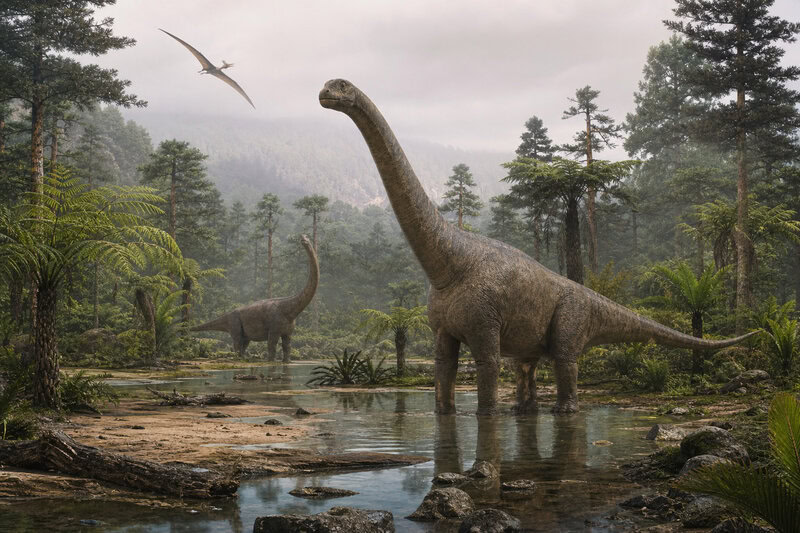
To understand why a dinosaur fossil from Antarctica is scientifically plausible — if startling — it helps to understand what the continent looked like during the Cretaceous. At that time, Antarctica was part of Gondwana, the ancient southern supercontinent that also encompassed the landmasses that would eventually become South America, Africa, Australia, India, and New Zealand. Antarctica occupied a warmer latitudinal position, enjoyed a significantly milder climate, and was covered in forests capable of sustaining large herbivores. The frozen wasteland familiar today is a geologically recent phenomenon.
Gondwana’s gradual breakup, driven by plate tectonics over tens of millions of years, progressively isolated Antarctica from its neighbors. Understanding which dinosaur lineages were present on the continent before that isolation is critical to reconstructing the timing and pathways of prehistoric animal dispersal across the ancient southern world. Paleontologists have long built biogeographic models suggesting that titanosaurs and other sauropods radiated outward from a common Gondwanan origin — but Antarctica’s role in that story had been entirely absent from the direct fossil record. The new titanosaur find provides the first physical data point from a continent-sized gap in the paleontological map.
It is important to be precise about what the scientific consensus covers and where uncertainty begins. The climatic and geological context — that Cretaceous Antarctica was warmer, forested, and connected to other southern landmasses — is well-supported by multiple lines of geological and botanical evidence. What remains genuinely open is precisely when titanosaurs arrived in Antarctica, how long they persisted there, and whether they represent a migrant population or a locally evolved lineage. A single tail bone cannot yet answer those questions.
What the Discovery Reveals About Gondwana Dinosaur Migration
Despite its incompleteness, the specimen does meaningful scientific work in reconstructing Gondwana dinosaur migration. The presence of a titanosaur in Antarctica provides the first direct fossil evidence linking the continent to the sauropod faunas already documented across South America and other Gondwanan landmasses. Paleontologists had long hypothesized that land corridors — or at minimum, shorter ocean crossings during periods of lower sea levels — allowed dinosaur populations to move between what are now separate continents. The Antarctic titanosaur moves that hypothesis one significant step closer to empirical confirmation.
The specimen’s unassigned species status, however, means scientists cannot yet determine the most fundamental question about its origins: whether the animal’s ancestors migrated from South America, whether the population evolved in relative isolation after Gondwana began fragmenting, or whether the lineage dispersed more broadly across the ancient supercontinent. Each scenario carries different implications for understanding both prehistoric animal distribution and the pace of Gondwana’s geological breakup. Researchers acknowledge these questions remain open and that resolving them will require substantially more material.
Some researchers have also raised the possibility that Antarctica may have functioned as a refugium — a geographic sanctuary where species survived environmental pressures that drove extinction elsewhere — but this hypothesis is not settled science, and a single specimen is wholly insufficient to support or refute it. It is precisely the kind of idea that more systematic Antarctic paleontology could eventually test.
Why Antarctica Remains One of Paleontology’s Hardest Frontiers
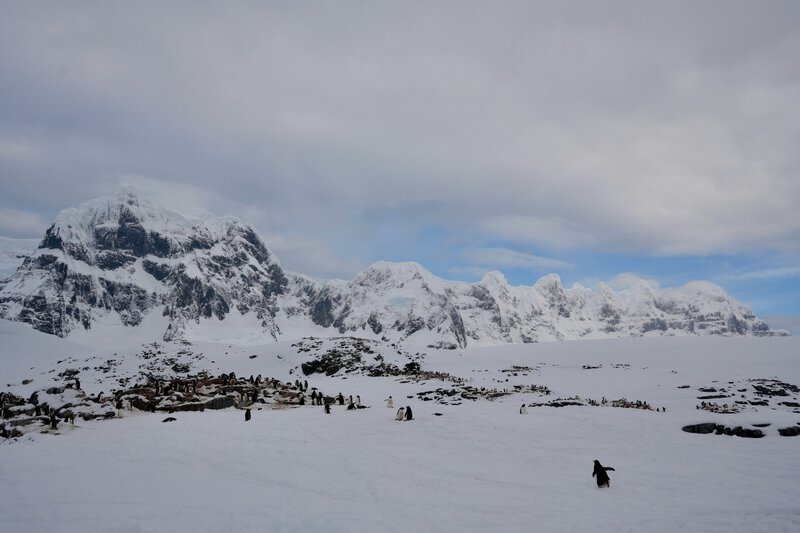
The 40-year gap between collection and identification is easier to understand when the realities of Antarctic fieldwork are taken into account. Antarctica’s ice sheet covers approximately 98 percent of the continent’s surface. Fossil-bearing rock is exposed only in small coastal and mountain outcrops, making systematic paleontological surveying extraordinarily difficult and expensive compared with established sites in Patagonia, the Gobi Desert, or the American West. Discoveries tend to cluster around brief summer field seasons, and specimens are frequently recovered opportunistically rather than through targeted, methodical excavation.
Despite these constraints, the continent has not been entirely silent on prehistoric life. Earlier expeditions recovered marine reptile fossils — including mosasaurs and plesiosaurs — along with plant material confirming the region’s Cretaceous habitability. Those finds established that life thrived in ancient Antarctica; what was missing until now was any evidence of terrestrial megafauna — the large land animals that dominated Cretaceous ecosystems on every other continent. The titanosaur fills that gap, at least in outline.
Scientists and institutions are now making the case that this discovery strengthens the argument for expanded, dedicated Antarctic paleontological surveys. Such campaigns involve years of planning, significant funding, complex logistics, and navigation of the international treaty frameworks that govern research activity on the continent. The discovery makes the case for investment; it does not automatically unlock the resources needed to act on it.
What Comes Next: Open Questions and the Road to a Species Name
The immediate scientific priority following any identification like this is detailed comparative analysis — cross-referencing the tail vertebra against the global titanosaur fossil record to determine whether it matches any known species or represents an entirely new one. Until that work reaches a conclusion, the specimen remains taxonomically unresolved: a confirmed titanosaur, but a nameless one.
Additional fieldwork targeting the same Antarctic locality where the 1985 bone was originally collected could prove decisive. A single vertebral fragment tells scientists relatively little about the animal’s overall anatomy, precise size, diet, or evolutionary relationships. More complete skeletal material — limb bones, additional vertebrae, or skull fragments — would dramatically sharpen conclusions about the animal’s phylogeny and ecological role. The location of the original find is therefore now a site of active scientific interest.
The discovery also reinforces a broader and increasingly urgent message for paleontology as a discipline: museum drawers and institutional storage facilities around the world contain specimens collected under difficult conditions, catalogued with the knowledge of their time, and never revisited with modern tools. The Antarctic titanosaur is an unusually dramatic example of what systematic reassessment can produce — and a reminder that the next landmark discovery may already be sitting on a shelf somewhere, waiting for the right set of eyes.
Antarctica’s first titanosaur — still nameless, known only from a fragment of its tail, carrying questions it cannot yet answer — has already moved the boundaries of what scientists understand about prehistoric life in Antarctica. Researchers are careful to emphasize that a single bone, however significant, is a beginning rather than a conclusion. But given that the continent’s ice covers rock that has never been systematically searched, most paleontologists would agree: it is almost certainly not the last dinosaur that ancient Antarctic ground will yield.