
At roughly 500 kilometres (310 miles) across — about one-tenth the diameter of Earth’s Moon and smaller than the state of Arizona — Enceladus is one of the Solar System’s more unassuming objects. Yet this small, icy moon of Saturn actively vents liquid water, heat, and complex organic chemicals into space through geysers at its south pole, and NASA-affiliated researchers have begun making a serious scientific case that it could become one of humanity’s most strategically valuable outposts beyond Mars.
A Moon That Advertises Its Own Resources
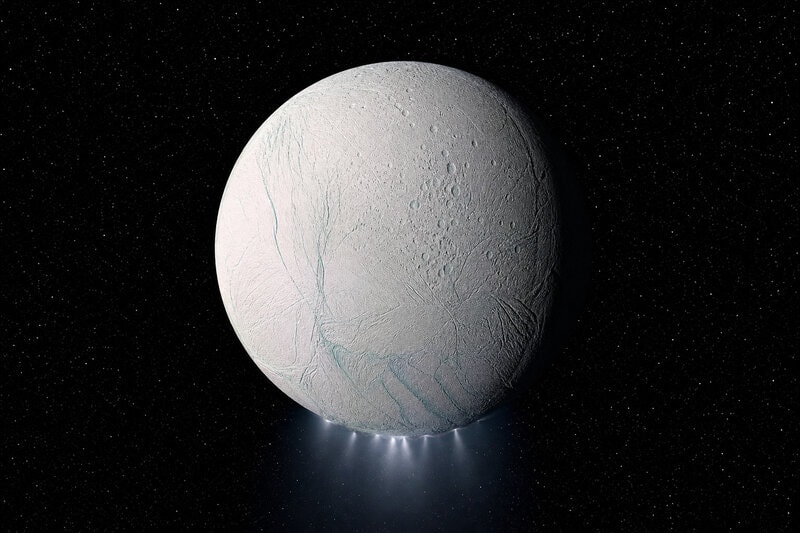
Most potentially useful bodies in the outer Solar System keep their assets locked away beneath impenetrable surfaces. Enceladus is different. NASA’s Cassini spacecraft, which orbited Saturn from 2004 to 2017, confirmed that the moon’s south polar region is split by geological fractures — informally called “tiger stripes” — through which enormous plumes of water vapour, ice particles, and organic compounds are continuously ejected into space. Those plumes feed Saturn’s E-ring and have allowed scientists to sample the moon’s interior chemistry without landing a single probe on its surface.
That self-advertising quality is scientifically extraordinary. It means that what lies beneath Enceladus’s frozen crust is not a matter of inference alone. Cassini flew directly through the plumes and measured their contents with onboard instruments, producing a body of data that has anchored the moon’s reputation as one of the most compelling objects in the Solar System. Enceladus is the sixth-largest moon of Saturn and the 18th largest in the Solar System, composed primarily of water ice over a rocky core — a structure that turns out to have profound implications for both astrobiology and long-range space logistics.
The Three Scientific Pillars: Water, Heat, and Organic Chemistry
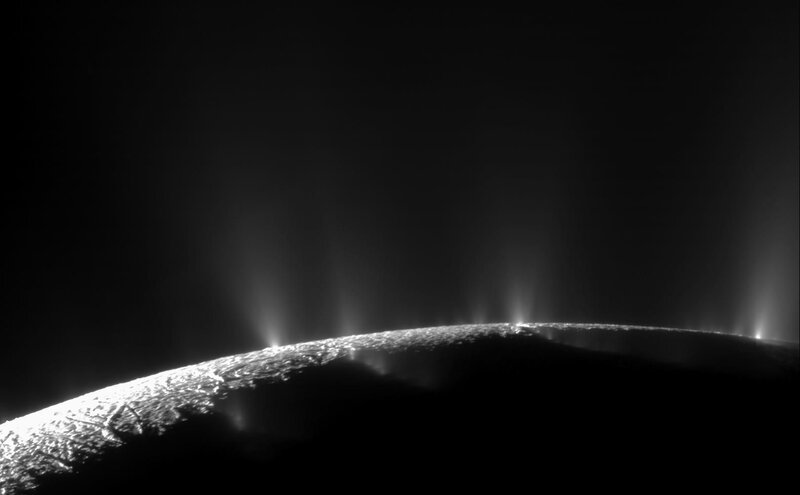
Researchers assessing whether a world is worth human attention typically look for three things in combination: liquid water, an internal energy source, and the organic chemistry necessary to support either biology or industrial production. Enceladus clears all three bars — a combination that is rare in the Solar System and that drives the current wave of scientific interest.
A Global Ocean Beneath the Ice
Cassini’s gravity measurements, published in the journal Science in 2015, confirmed that Enceladus harbours a global subsurface ocean — a body of liquid water sealed beneath kilometres of ice and kept liquid by internal heat rather than sunlight. This is distinct from surface water in a fundamental way: a subsurface ocean has no contact with space, is insulated from extreme temperature swings, and may have remained stable for millions or billions of years. The concept is roughly analogous to the liquid water lakes discovered beneath Antarctica’s ice sheets on Earth, except that Enceladus’s ocean is global in extent and estimated to be tens of kilometres deep. For mission planners, liquid water means drinking water, radiation shielding mass, and the feedstock for hydrogen-oxygen rocket propellant — all from a single source.
Hydrothermal Heat on the Ocean Floor
Silica nanoparticles detected in Saturn’s E-ring by Cassini indicate that Enceladus’s ocean floor hosts active hydrothermal vents — environments where water reacts with rock at elevated temperatures. On Earth, hydrothermal vents support entire ecosystems of chemosynthetic life that require no sunlight whatsoever, powered entirely by chemical energy from the planet’s interior. The presence of an analogous heat source on Enceladus has two distinct implications: it makes the moon one of the strongest candidates for microbial life in the Solar System according to NASA’s astrobiology programme, and it means the ocean has a long-term energy budget that keeps it liquid independent of solar input — a crucial distinction for a world more than 1.4 billion kilometres from the Sun.
Complex Organic Chemistry
In 2018, a research team led by J. Hunter Waite reported in the journal Nature that Cassini’s mass spectrometer had detected complex organic molecules in Enceladus’s plumes, including compounds with molecular weights above 200 atomic mass units. These are not simple hydrocarbons — they represent a sophisticated chemistry that scientists consider relevant both to the question of whether life could arise in the ocean below and, separately, to the question of whether future human missions could use moon-derived materials for fuel or construction. It is important to be precise here: the presence of organic molecules is a necessary condition for life as we understand it, not evidence that life exists. No biology has been detected on Enceladus. What has been confirmed is a chemical environment that scientists did not expect to find on a moon this small.
The ‘Deep-Space Pit Stop’ Argument: What Researchers Actually Claim
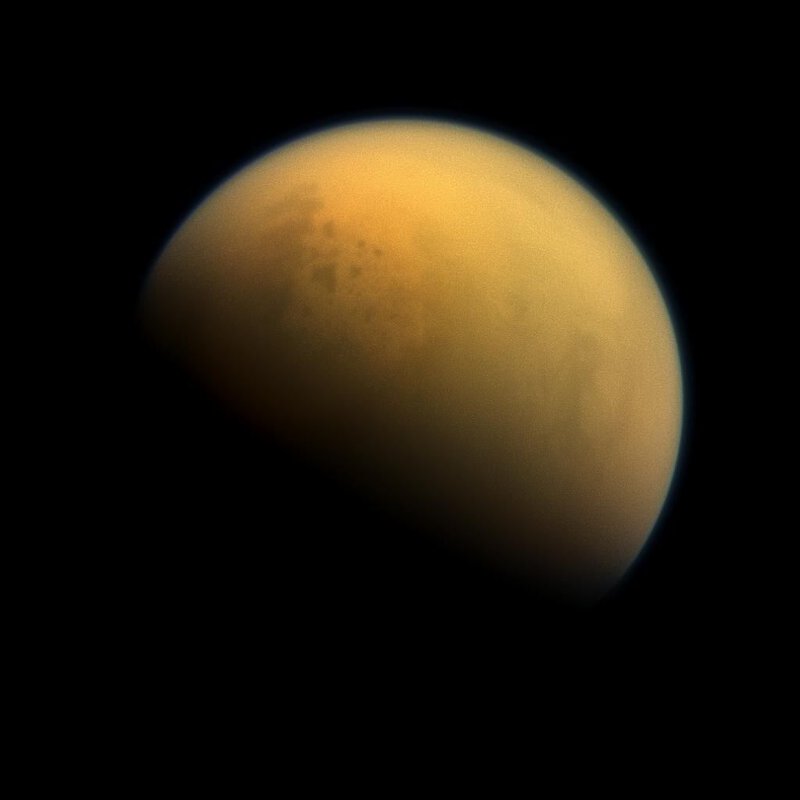
The strategic case for the Saturnian system as a waystation for deep-space exploration has been articulated most explicitly in relation to Titan, Saturn’s largest moon, which possesses surface lakes of liquid methane and ethane and a thick nitrogen atmosphere rich in hydrocarbon chemistry. A NASA scientist has argued that Titan’s hydrocarbon abundance makes the Saturnian system a logical interplanetary waystation, describing the moon’s complex hydrocarbon resources — both in liquid and solid form — as a lucrative source of raw materials that future spacecraft or habitats could process into rocket propellant, construction materials, and chemical feedstocks.
The resource logic is straightforward once stated plainly. The dominant cost driver in any deep-space mission is the mass that must be launched from Earth’s gravity well. If a crewed facility beyond Mars could manufacture propellant, water, and structural materials from locally available resources, the mission architecture changes fundamentally — fewer resupply flights, lower costs, and greater operational independence. Scientists have characterised the hydrocarbon resources of Saturn’s largest moon as an extremely valuable rest stop for deep-space travel, with Enceladus and Titan together offering a uniquely concentrated cluster of volatiles at a single orbital destination.
Enceladus contributes a different but complementary asset profile to Titan’s hydrocarbons. Where Titan offers organic chemistry at scale, Enceladus offers confirmed liquid water and hydrothermal heat — resources that are arguably more immediately relevant to human life support. Researchers have increasingly discussed Enceladus alongside Titan as a complementary resource node within the same orbital system, with the two moons together covering most of the material requirements a long-duration human outpost would need.
A critical distinction must be made, however, between a waystation and a settlement. The model most concretely discussed in institutional and peer-reviewed literature envisions a small, permanently crewed or robotic refuelling and resupply facility — a significantly lower ambition than a self-sustaining colony, and one that requires solving fewer civilisational-scale engineering problems. The phrase “ideal place to settle” that has appeared in some coverage describes a long-range strategic concept, not an active NASA programme with a funded architecture.
The Engineering Obstacles Are Substantial and Should Not Be Minimised
The scientific case for Enceladus is genuinely strong. The engineering case is another matter entirely, and responsible treatment of the topic requires stating the obstacles with equal clarity.
- Transit time: Using current chemical propulsion technology, a spacecraft takes approximately six to seven years to reach Saturn. A waystation only becomes economically and logistically meaningful if transit times can be dramatically reduced — most likely through nuclear thermal propulsion or other advanced systems that remain in early developmental stages and have not been flight-tested for crewed missions.
- Surface conditions: Enceladus has a surface gravity of approximately 0.0113 g — roughly 1.1 percent of Earth’s gravity — meaning that conventional construction, equipment anchoring, and even human movement would require entirely new engineering approaches with no direct precedent in current space architecture.
- Radiation: Saturn’s magnetosphere provides partial shielding compared to open interplanetary space, but long-duration human habitation near Enceladus would still require substantial radiation protection infrastructure. This challenge has not yet been solved even for Mars, which is far closer and the subject of vastly more engineering study.
- Planetary protection: Because Enceladus is considered a strong candidate for harbouring microbial life, any crewed infrastructure in its vicinity would have to operate under strict protocols to prevent biological contamination of a potentially inhabited ocean. No regulatory framework for crewed planetary protection at this level currently exists.
- Ice shell access: While Enceladus’s plumes offer a natural mechanism for robotic sampling of ocean-derived material without drilling, physically accessing the subsurface ocean for water extraction would require boring through kilometres of ice — a technically unproven capability in a low-gravity, cryovolcanically active environment.
Planetary scientists have noted that the outer Solar System is rich in the volatile compounds — water, ammonia, methane, nitrogen — that are scarce on the Moon and Mars but essential for long-duration human presence, which is precisely why the strategic conversation about Saturnian resources is worth conducting seriously even when the operational timeline remains distant.
Why This Conversation Is Happening Now
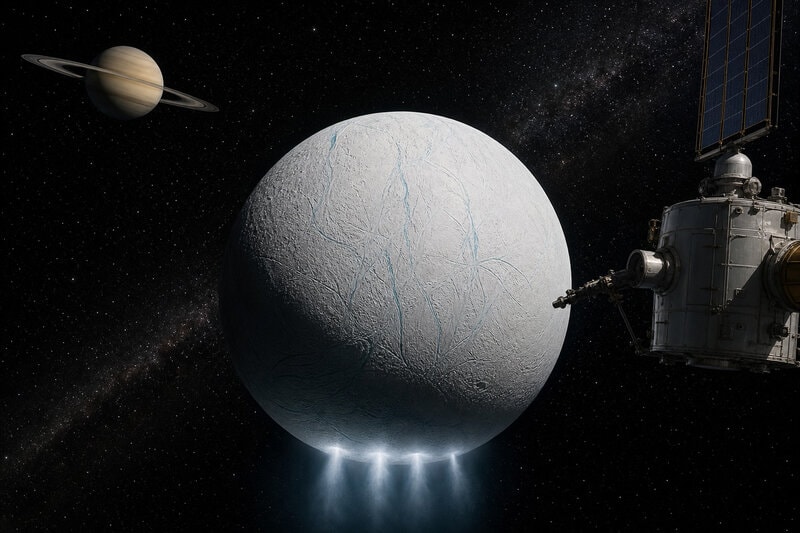
The renewed seriousness of the outer Solar System waystation concept is not accidental in its timing. As NASA’s Artemis programme and commercial ventures such as SpaceX’s Starship push crewed deep-space architecture into genuine engineering phases, mission planners are beginning longer-range logistics thinking that extends beyond Mars. The questions being asked about lunar and Martian in-situ resource utilisation — extracting water ice, producing propellant locally, manufacturing with local materials — are the same questions that would eventually apply to the Saturnian system, scaled up substantially in distance and complexity.
NASA’s Dragonfly mission, a rotorcraft lander targeted for launch in 2028, will explore Titan’s surface with a focus on astrobiology and prebiotic chemistry. While Dragonfly is entirely robotic and carries no resource-exploitation mandate, the data it returns will substantially sharpen scientists’ understanding of what the Saturnian system actually offers at ground level. Proposed Enceladus orbiter and lander concepts, if eventually funded, would do the same for the smaller moon. Within the next decade, measurements from missions to the Saturnian system could either strengthen or significantly complicate the waystation hypothesis — making the current debate a scientifically informed preview of decisions that future generations will concretely face.
The Honest Bottom Line
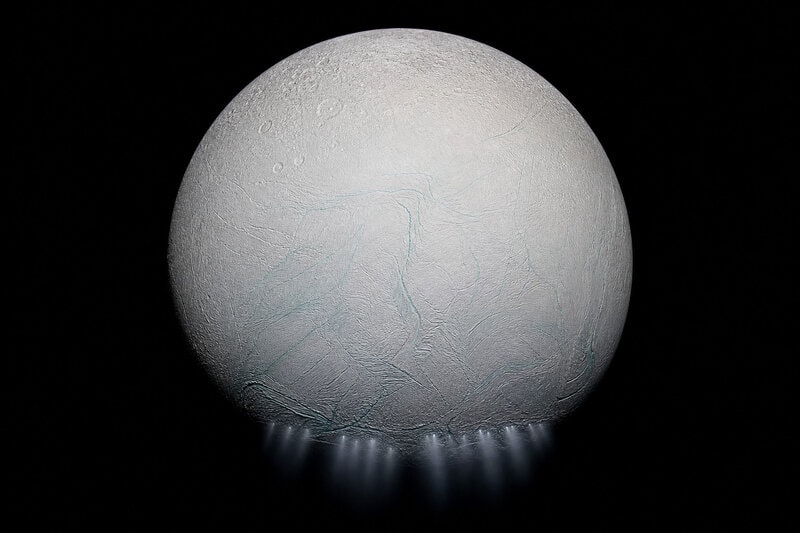
Enceladus simultaneously possesses confirmed liquid water, active internal heat, and complex organic chemistry — a combination that makes it one of the most scientifically significant objects in the reachable Solar System and a theoretically logical node in any long-range human logistics architecture. That is an objective statement of established science, supported by peer-reviewed Cassini mission findings published in Science and Nature.
What remains speculative is everything that follows from that foundation. The “ideal rest stop” or “settlement” framing reflects a strategic concept advanced by individual NASA-affiliated researchers and science communicators, not a funded mission architecture or an agency-wide position. The gap between “theoretically logical” and “operationally feasible” is measured in decades of propulsion development, materials engineering, radiation medicine, planetary protection policy, and capital investment that has not yet been committed.
The fair assessment is this: the scientific case for treating the Saturnian system as a serious long-range destination is more rigorous than most outer-Solar-System proposals — grounded in direct spacecraft measurements rather than modelling alone. If humanity does eventually extend a permanent crewed presence beyond Mars, the Saturnian system, with Enceladus’s confirmed water and hydrothermal heat alongside Titan’s hydrocarbon abundance, represents the most resource-rich cluster of moons in the reachable Solar System. The science justifying a serious look has never been stronger; the technology required to act on that science has never been further from ready.