
In just 59 days of operation, China’s Jiangmen Underground Neutrino Observatory produced a peer-reviewed cover article in Nature — a debut that particle physicists are calling a strong early signal of what the experiment can ultimately achieve. Here are eight essential facts about JUNO’s landmark first result.
1. A Nature cover story built on just 59 days of data
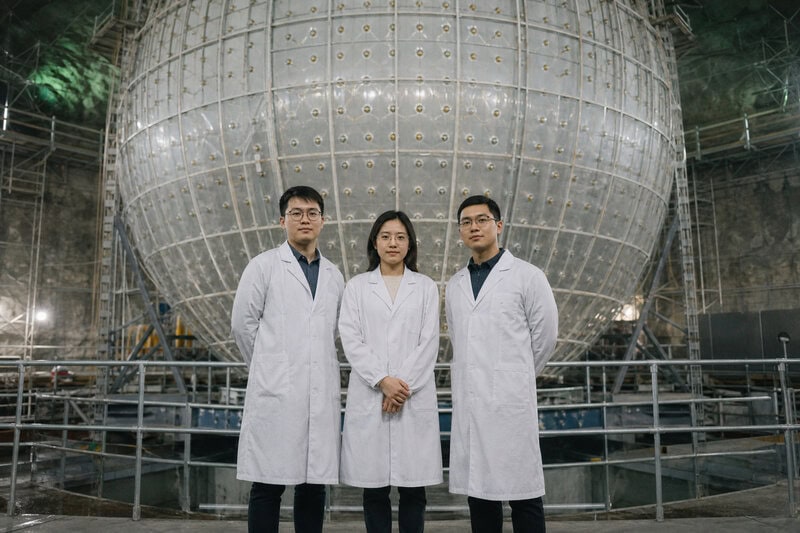
JUNO’s debut physics paper, published as a cover article in Nature on June 10, 2026, rests on only 59 days of valid detector operation — an unusually short runway for a large-scale particle physics experiment to reach peer-reviewed publication. The paper is formally titled “Precise Measurement of Two Neutrino Oscillation Parameters,” and its placement on the journal’s cover signals that editors and referees judged the result genuinely significant, not merely novel.
Major neutrino experiments typically accumulate data for several years before claiming precision milestones. The SNO experiment in Canada and KamLAND in Japan, for instance, each ran for years before publishing their defining results. Reaching a Nature-quality threshold in roughly two months therefore suggests the collaboration moved from data collection to rigorous analysis with exceptional speed — without, evidently, sacrificing the scrutiny that peer review demands.
2. The paper simultaneously pins down two fundamental constants of neutrino behavior
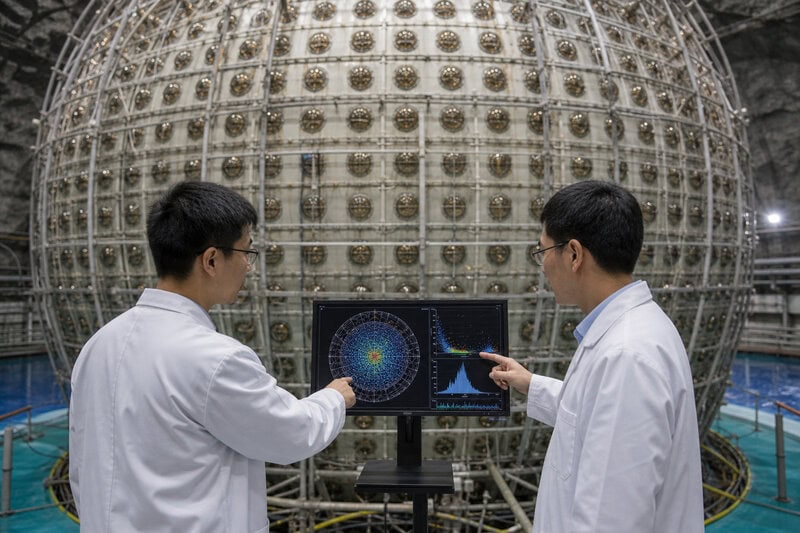
Neutrino oscillation parameters describe how neutrinos — ghostly subatomic particles that interact almost not at all with ordinary matter — spontaneously change from one type, or “flavor,” to another as they travel. There are several such parameters encoded in the mathematics of oscillation, and pinning them down with high precision matters because they feed into nearly every open question in neutrino physics: the absolute masses of the neutrinos themselves, the origin of the matter-antimatter asymmetry in the universe, and whether neutrinos behave differently from their antimatter counterparts.
JUNO’s simultaneous measurement of both targeted parameters from a single short dataset indicates the detector is performing at or near its design sensitivity — a reassuring early benchmark for an instrument that took more than a decade and substantial international resources to construct.
3. JUNO’s ultimate prize is still ahead: solving the neutrino mass ordering problem
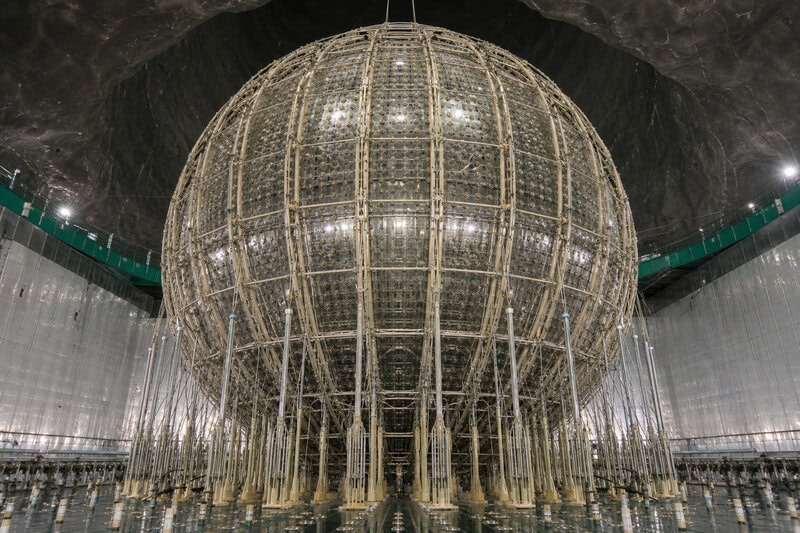
The experiment’s primary long-term goal is to determine the “neutrino mass ordering” — establishing which of the three known neutrino mass states is heaviest and which is lightest, a question sometimes called the mass hierarchy problem. This remains one of the genuinely unsolved problems in particle physics, and its resolution could reshape how theorists extend the Standard Model, the framework describing all known fundamental particles and forces.
Knowing the mass ordering is also a prerequisite for interpreting future experiments seeking to detect the tiny differences in behavior between neutrinos and antineutrinos — differences that may help explain why the observable universe contains far more matter than antimatter. The first results confirm JUNO is on track to achieve this goal, according to the collaboration, though the mass ordering measurement itself will require substantially more data accumulated over years of additional operation.
4. The detector sits deep underground specifically to block cosmic-ray interference
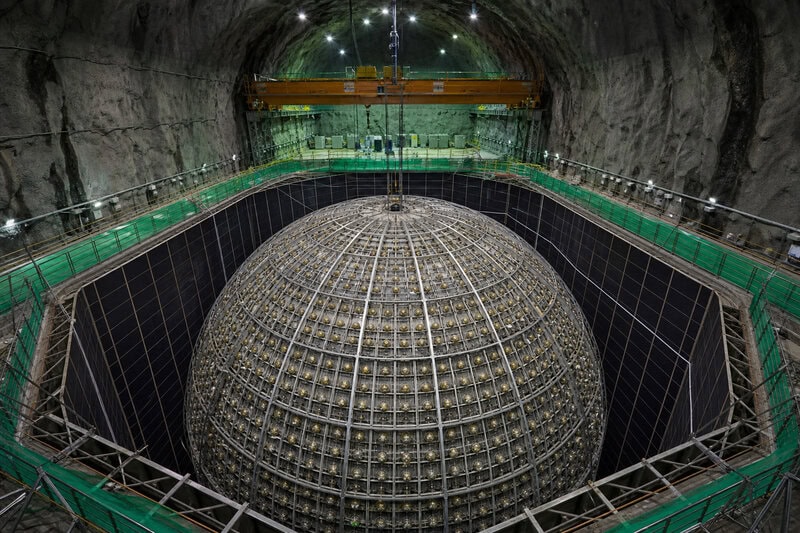
JUNO is buried underground in southern China so that the overlying rock filters out the constant shower of cosmic rays — high-energy particles arriving from space — that bombard Earth’s surface continuously. Without that rock overburden, cosmic-ray interactions inside or near the detector would produce signals that mimic or obscure the faint traces left by genuine neutrino interactions, making precision measurement impossible.
This shielding strategy is standard practice for ultra-sensitive neutrino and dark-matter experiments worldwide, from the Gran Sasso laboratory beneath the Italian Apennines to the former Sudbury Neutrino Observatory in Canada. The depth is not a convenience — it is a quantitative requirement dictated by the irreducible background rates that any given physics target demands. JUNO’s designers selected its depth to meet the specific signal-to-noise budget that the mass ordering measurement will require.
5. The observatory is anchored at China’s leading particle physics institution
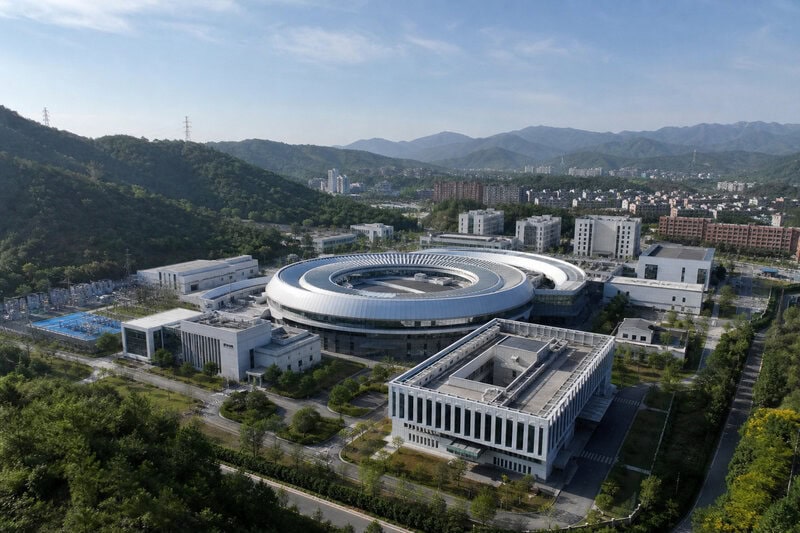
JUNO is affiliated with the Institute of High Energy Physics (IHEP), which operates under the Chinese Academy of Sciences and is China’s principal center for particle and nuclear physics research. IHEP has participated in major international experiments for decades, but JUNO represents China’s most ambitious standalone neutrino detector to date, both in physical scale and in scientific scope.
The Nature publication marks JUNO’s formal entry into the competitive global landscape of precision neutrino science, alongside established programs in Japan, the United States, and Europe. For Chinese high-energy physics, the cover article represents a meaningful shift: from contributing partner in overseas experiments to leading a flagship detector that the international community is now watching as a primary source of results.
6. An international collaboration — spanning dozens of institutions — built and operates JUNO
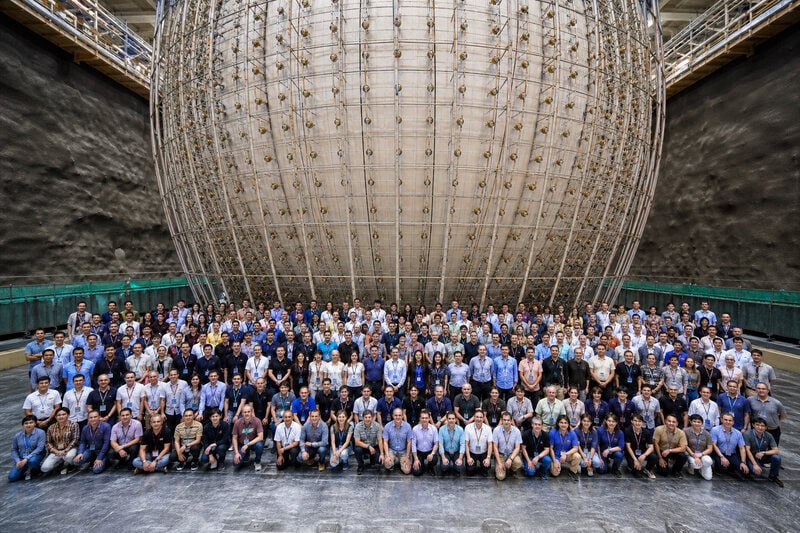
Large-scale neutrino experiments almost universally require pooling detector expertise, precision engineering, and data-analysis talent across national boundaries, and JUNO is no exception. The Joint Institute for Nuclear Research (JINR), based in Dubna, Russia, is among the named participating institutions, as confirmed by JINR’s own announcement of the Nature publication. Institutions from Europe, Asia, and elsewhere are also represented in the collaboration.
This international makeup mirrors that of landmark projects such as the Large Hadron Collider experiments at CERN or the IceCube Neutrino Observatory at the South Pole, underscoring that JUNO is a global scientific enterprise despite being China-led and China-sited. The collaboration has proceeded and delivered results regardless of the broader geopolitical complexities that sometimes complicate scientific partnerships of this kind.
7. The site in southern China was chosen deliberately for its proximity to nuclear reactors
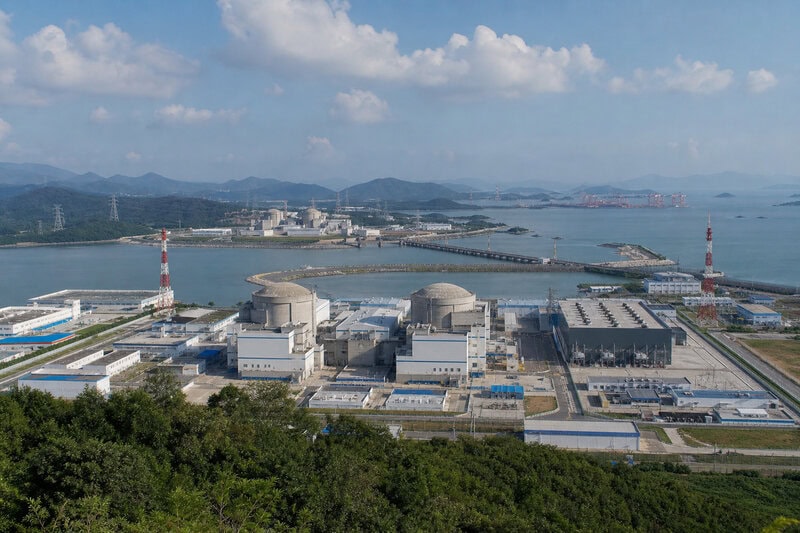
JUNO is located in Jiangmen, Guangdong province — a site selected in part because several nuclear power reactor complexes operate within the optimal baseline distance for the planned oscillation measurements. Reactors are prolific, well-characterized sources of electron antineutrinos: nuclear fission reactions in reactor fuel produce enormous numbers of these particles continuously, and their energy spectrum is understood well enough to serve as a precision physics tool.
Choosing a reactor-adjacent site maximizes the neutrino flux reaching the detector without requiring a purpose-built particle accelerator. This approach has a strong track record: China’s earlier Daya Bay experiment, also sited in Guangdong province, used the same reactor-based strategy to produce what were, for a period, the world’s most precise measurements of the mixing angle known as θ₁₃. JUNO is in many respects the logical successor to that program, aimed at harder targets with a far larger and more capable detector.
8. A two-month dataset achieving high precision sets an encouraging early performance benchmark
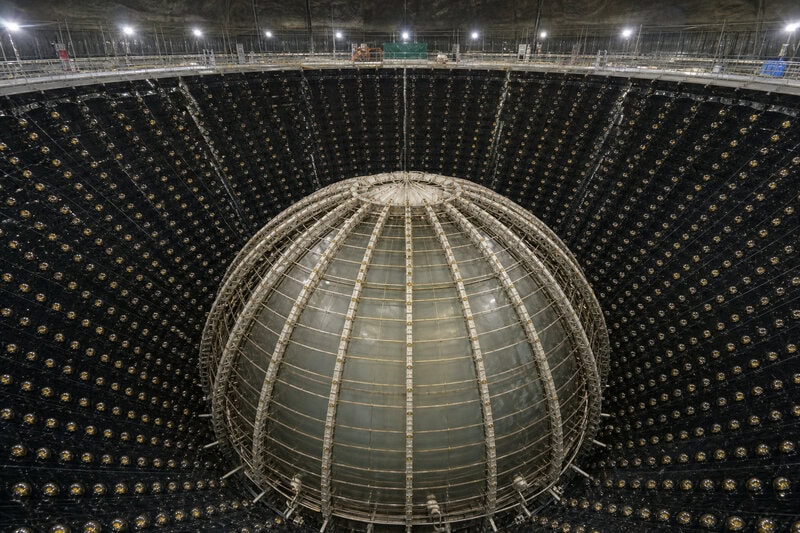
The collaboration describes its oscillation parameter measurements as “high-precision” despite being drawn from approximately two months of collected data — a characterization that carries genuine weight given Nature‘s peer-review standards. The Daya Bay experiment, widely praised internationally for its precision, required years of data collection to reach comparable milestones in its own oscillation measurements, though direct comparison is complicated by differences in detector design and physics targets.
The rapid result strongly suggests that JUNO’s energy resolution and background-rejection capabilities are functioning close to design specifications from the outset — a finding with direct implications for the longer-term program. If JUNO continues to perform at this level, the collaboration’s timeline for resolving the neutrino mass ordering could be on firm footing — and one of particle physics’ most consequential open questions may have a definitive answer within the decade.
JUNO’s first 59 days have already placed it among the experiments that precision neutrino physics will watch most closely in the years ahead. Whether its detector sustains this performance as data volumes grow will determine whether the mass ordering — one of the field’s deepest open questions — finally yields a clear answer, and with it, a new foothold for understanding the fundamental structure of matter itself.