
Thirteen world-class telescopes sit atop a 13,796-foot shield volcano rising from the middle of the Pacific Ocean. On March 14, 2025, Hawaiʻi Island residents were once again invited inside them for free — a program that quietly illustrates why this mountain remains one of humanity’s most extraordinary windows on the cosmos, and why the question of who gets to look through it matters as much as the science itself.
Why Maunakea Is Exceptional for Astronomy
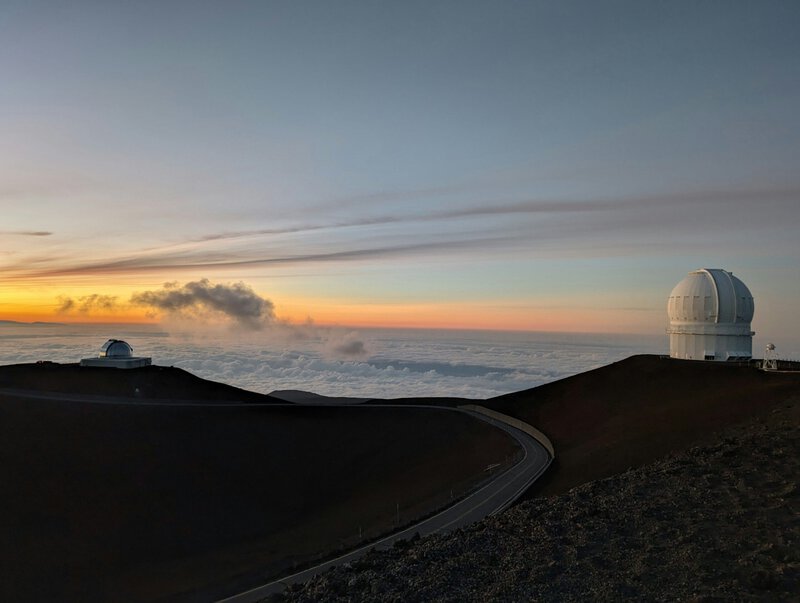
Three compounding physical advantages make Maunakea’s summit atmosphere nearly impossible to replicate elsewhere on Earth. First, the summit sits above roughly 40 percent of the atmosphere’s water vapor — the molecule that absorbs infrared light and blinds ground-based telescopes to entire swaths of the electromagnetic spectrum. Second, the mountain experiences more than 300 cloud-free nights per year on average, according to the University of Hawaiʻi Institute for Astronomy, giving instruments a reliable observing calendar that most observatory sites cannot match. Third, its location near the center of the Pacific places it at a latitude from which telescopes can observe large portions of both the northern and southern skies — a geographic advantage that multiplies its scientific reach.
Central to all of this is a concept astronomers call seeing — the technical term for atmospheric steadiness, which determines how sharp a telescope image can actually be. Even a perfect mirror is degraded by turbulent air the way a coin at the bottom of a rippling pool is blurred by moving water. Maunakea’s airflow off the open Pacific tends to be laminar — smooth and non-turbulent — producing median seeing values around 0.43 arcseconds at the summit, among the best values measured anywhere on Earth, according to long-term site-testing data published by the Canada-France-Hawaii Telescope Corporation.
The mechanism behind this stability is the thermal inversion layer — a band of relatively warm air that typically forms between roughly 6,000 and 8,000 feet on Maunakea’s slopes. This layer acts as a meteorological lid, trapping moist marine air below the summit and leaving the observing environment above it consistently dry and stable. For astronomers pointing instruments at faint, distant galaxies, that stable air column is not a convenience — it is the fundamental precondition of precision science.
It is worth being precise, however, about the phrase “best on Earth.” That claim is wavelength-dependent. Sites in the Atacama Desert of Chile — home to the European Southern Observatory’s Very Large Telescope and the future Extremely Large Telescope — rival or exceed Maunakea in certain submillimeter wavelength conditions, owing to the Atacama’s extreme aridity at comparable altitudes. A 2009 site-comparison study published in the Publications of the Astronomical Society of the Pacific by Tokunaga and Vacca quantified Maunakea’s infrared transparency advantages over competing sites with calibrated, peer-reviewed data. The accurate conclusion is that Maunakea is arguably unmatched for near-infrared and optical wide-field surveys of the northern sky — a narrower but still remarkable distinction.
Thirteen Telescopes, One Summit: The Science Being Done Right Now
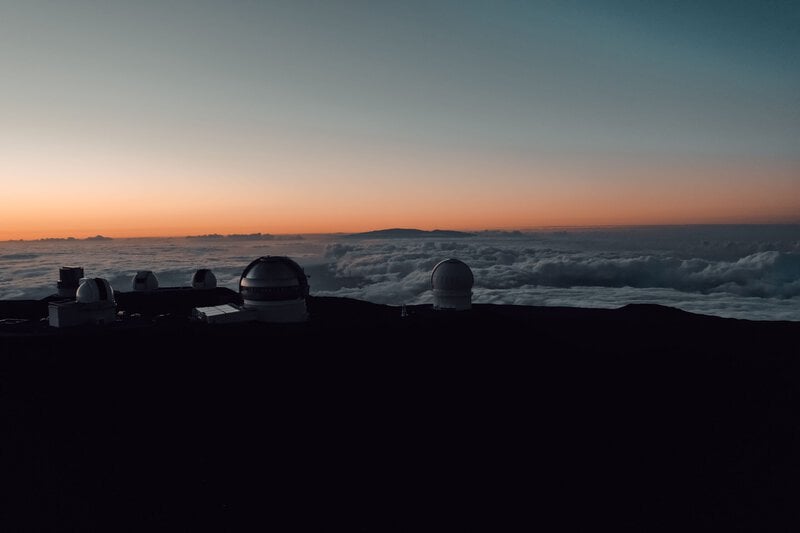
The concentration of instruments on Maunakea’s summit ridge is itself a scientific asset. Thirteen major telescopes operate there, spanning optical, near-infrared, mid-infrared, and submillimeter wavelengths, enabling coordinated multi-wavelength observing campaigns that would be logistically difficult if those instruments were scattered across different continents. The Maunakea Observatories consortium represents a range of national and international partnerships, each optimized for different scientific problems.
The W. M. Keck Observatory houses twin telescopes — Keck I and Keck II — each with a 10-meter segmented primary mirror. These were the world’s largest optical telescopes at their completion and have since been central to exoplanet research and galaxy-formation studies. One concrete measure of their impact: Keck Observatory contributed key radial-velocity measurements used in confirming the first directly imaged exoplanets orbiting the star HR 8799, a landmark result published in Science by Marois et al. in 2008.
Gemini North, an 8.1-meter optical and infrared reflector operated by NOIRLab (the National Optical-Infrared Astronomy Research Laboratory, funded by the U.S. National Science Foundation), is optimized for faint-object spectroscopy — breaking the light of very distant or very dim objects into its component wavelengths to decode their chemistry, temperature, and motion. The Subaru Telescope, operated by Japan’s National Astronomical Observatory, brings wide-field survey capability that has contributed to mapping the large-scale structure of the universe. The James Clerk Maxwell Telescope (JCMT) is a submillimeter facility used to study cold gas and dust in star-forming regions and distant galaxies. Together, these instruments have contributed to discoveries ranging from the accelerating expansion of the universe to the identification of hundreds of exoplanets.
The Kamaʻāina Observatory Experience: What the Free Tour Actually Offers
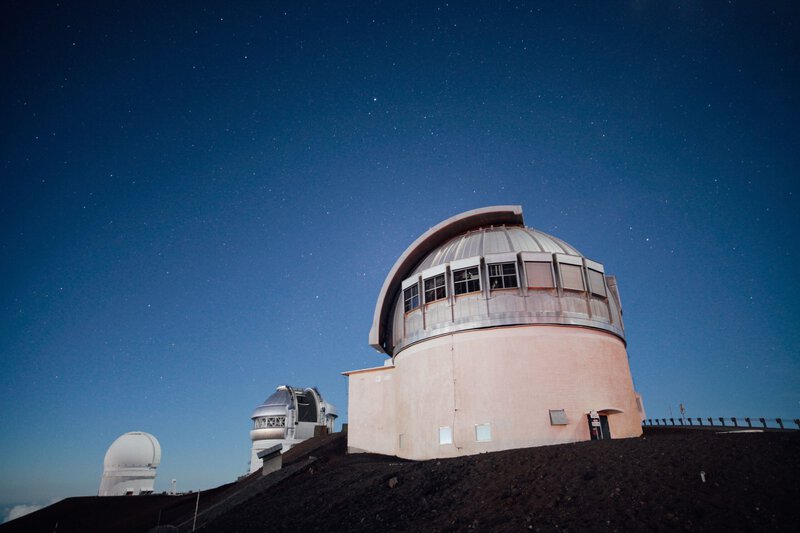
The Kamaʻāina Observatory Experience is a free program offered by Maunakea Observatories that gives Hawaiʻi Island residents the opportunity to visit working observatories on the summit. The program returned on March 14, 2025, reconnecting island residents with the observatories on Maunakea after a period of reduced access. It accommodates up to 48 Hawaiʻi residents per month — a number modest by design, since summit visits require acclimatization, coordination, and staffing — but it represents consistent, structured access to infrastructure that most people on Earth will never see at close range.
The NOIRLab component is particularly concrete in what it offers. NOIRLab provides tours at no cost to the Gemini North telescope, where visitors can see the 8.1-meter primary mirror — a mosaic of 36 hexagonal glass segments polished to nanometer-level precision — along with the dome enclosure engineering and the instrument packages attached to the telescope’s focal points. Staff scientists and engineers lead the visits, meaning residents are not viewing a museum exhibit but encountering active research infrastructure alongside the people who run it every night.
The summit visit is typically preceded by a stop at the Onizuka Center for International Astronomy Visitor Information Station, located at approximately 9,200 feet on Maunakea’s slopes. The Maunakea Visitor Information Station offers free public educational programs that serve a dual purpose: allowing visitors to acclimatize gradually to altitude before ascending further, and providing interpretive context about the mountain’s astronomy, ecology, and cultural significance before anyone reaches the summit.
Community access to operational research observatories is uncommon globally. Most major telescope facilities have no structured program for host-community members; scientific infrastructure of this scale tends to be insulated from the public by geography, cost, and institutional inertia. For a place as culturally layered as Maunakea, a structured, free monthly program represents one concrete and verifiable expression of observatory operators’ commitment to engaging the community on whose ancestral land these instruments stand.
Sacred Ground and Scientific Frontier: The Cultural Context
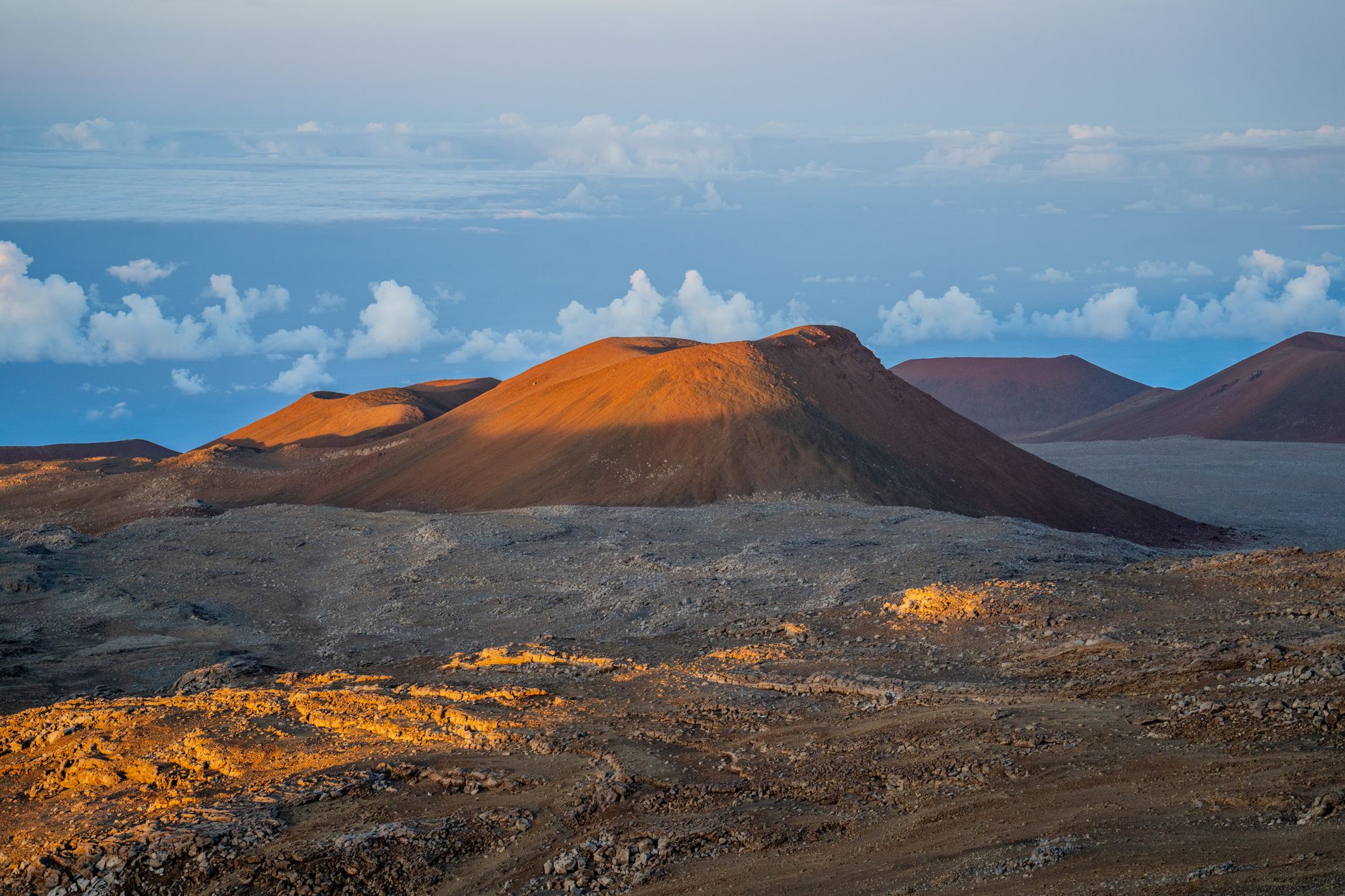
Maunakea is regarded as wao akua — the realm of the gods — in Native Hawaiian tradition, and its summit is considered among the most sacred places in the Hawaiian archipelago. This is not peripheral context that can be bracketed away from the astronomy story; it is central to understanding why debates about the mountain have been so consequential and why programs like the Kamaʻāina Observatory Experience carry meaning beyond science outreach.
Proposals for new large-telescope construction on Maunakea, most prominently the Thirty Meter Telescope (TMT), have been the subject of sustained legal, political, and cultural dispute. Native Hawaiian perspectives on TMT range from strong opposition rooted in concerns about desecration of sacred land and the cumulative impact of existing structures, to conditional support tied to governance reform and community benefit agreements. This remains an actively contested policy question with no resolved consensus. Readers seeking a full account of the governance history should consult primary sources including the Office of Hawaiian Affairs and the Maunakea Observatories’ own community engagement documents.
What can be stated plainly is that the Kamaʻāina Observatory Experience sits within this larger context as one of several community-engagement efforts by current observatory operators — an attempt to give Hawaiʻi Island residents, including Native Hawaiians, direct access to and a degree of involvement in what happens on the mountain. Whether that access is sufficient, how it relates to broader governance questions, and what it means for the future of the summit are questions the program raises without resolving.
How Maunakea Compares to Other Premier Observatory Sites
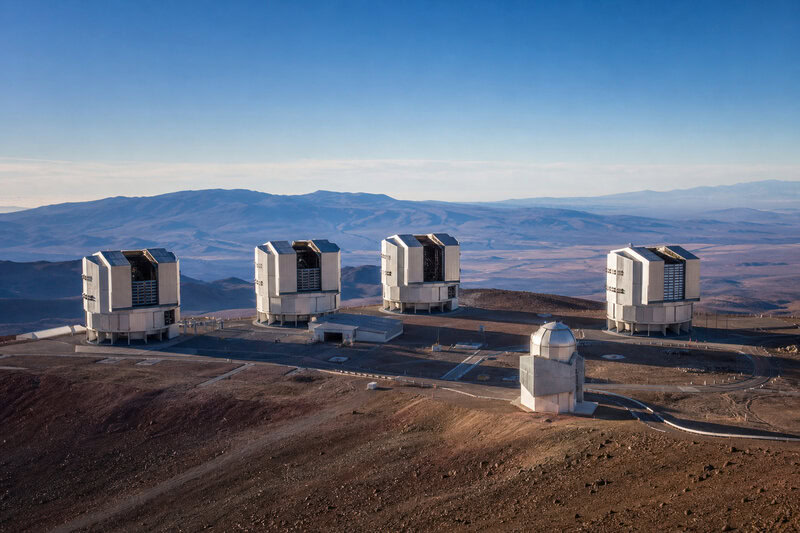
Mapping Maunakea against its global competitors helps calibrate what “exceptional” actually means at this level of astronomy. The European Southern Observatory’s Paranal site in Chile, home to the Very Large Telescope array, operates at comparable altitude with excellent seeing and is the premier optical observatory site in the southern hemisphere. The Atacama Large Millimeter/submillimeter Array — ALMA, a network of 66 dish antennas in the Chilean Atacama — operates at extreme altitude with an aridity that gives it decisive advantages at millimeter and radio wavelengths. La Palma in Spain’s Canary Islands hosts the Gran Telescopio Canarias, a 10.4-meter instrument that holds the current record for the largest single optical mirror. None of these sites replicates the specific combination of instrument density, wavelength coverage, sky access, and atmospheric stability that Maunakea offers simultaneously in one location.
The next generation of extremely large telescopes — 30-meter-class instruments being planned or under construction at Paranal, La Palma, and potentially Maunakea — will shift some of this competitive landscape within the coming decade. When a 39-meter mirror comes online in Chile, certain light-gathering comparisons will change substantially. That makes the current moment on Maunakea — its existing instrument suite, its community programs, its unresolved governance questions — particularly worth understanding while the transition is still underway.
Why Public Access to Working Science Matters
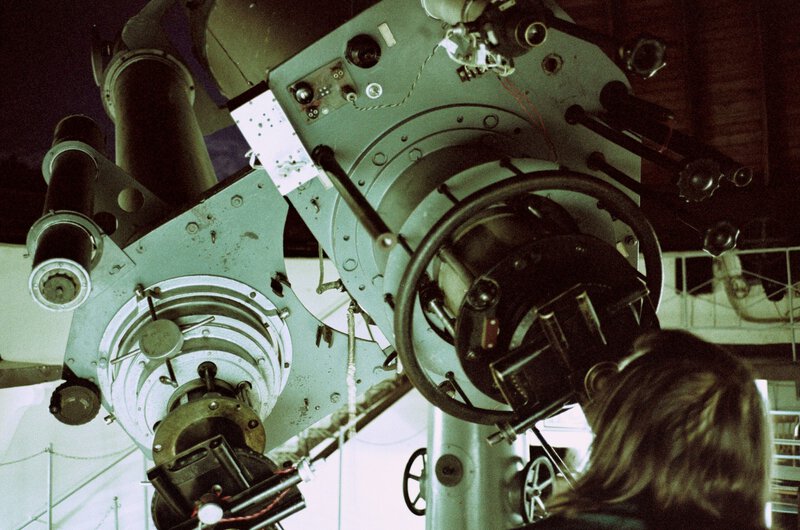
Forty-eight residents per month may appear a modest number against the scale of the science being conducted above them. But the National Academies of Sciences, Engineering, and Medicine, in their 2021 report on science communication, reviewed evidence that direct exposure to operational research infrastructure — seeing a working instrument, speaking with an active scientist, understanding what a spectrograph does and why — has measurable effects on science literacy and on public trust in research institutions. A tour of Gemini North is not a lecture; it is proximity to a working 8.1-meter telescope operated by real people solving real scientific problems, and that distinction is not trivial.
Hawaiʻi Island residents interested in the Kamaʻāina Observatory Experience can find registration information through the Maunakea Observatories’ official outreach channels, with spots available monthly on a first-come basis.
At a moment when the relationship between large scientific institutions and host communities is under scrutiny worldwide — from telescope siting disputes to debates about who benefits from publicly funded research — Maunakea represents a case study that is imperfect, ongoing, and instructive precisely because it does not resolve neatly. The summit is extraordinary not only because the physics of its atmosphere makes stars appear unusually steady and clear, but because the decisions made about who governs, who visits, and who benefits from the telescopes there will shape the future of publicly supported astronomy as much as any mirror size or wavelength range.