
In 2011, NASA found itself in the unusual position of publicly distancing itself from a film it had initially shown interest in — a low-budget found footage horror movie that went on to earn a 24% rating on Rotten Tomatoes and become a textbook example of how not to blend institutional history with science fiction. The story of Apollo 18 is, on the surface, about one bad movie. Beneath that surface, it is about something NASA takes far more seriously: the measurable cost of letting false science wear a realistic face.
When NASA Quietly Backed Away From Its Own Name
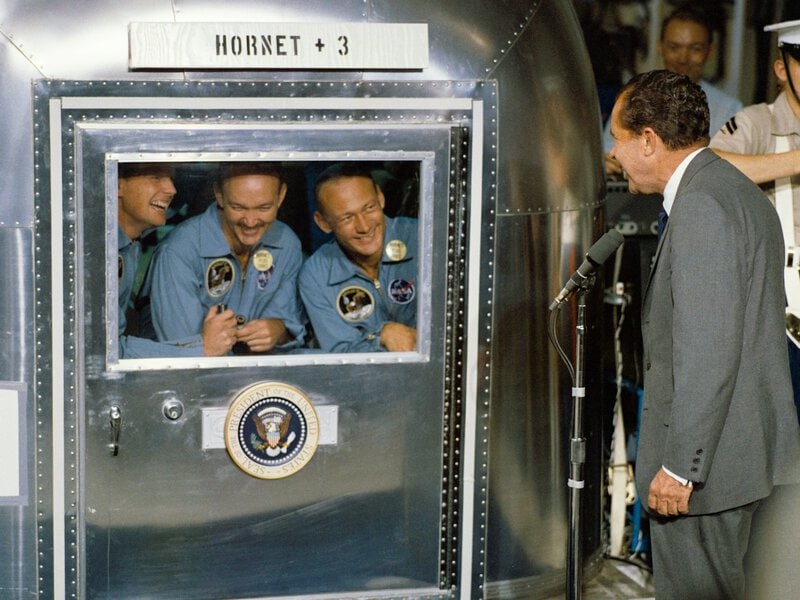
Directed by Gonzalo López-Gallego, Apollo 18 presents itself as declassified footage from a secret, suppressed lunar mission that ended in extraterrestrial horror. The found footage format — a filmmaking approach in which the narrative is presented as recovered real recordings rather than conventional cinema — is doing specific and consequential work here. Unlike a clearly fantastical space opera, found footage primes audiences to read what they are watching as documentary evidence. When that footage is explicitly framed as coming from a suppressed NASA archive, the agency is not merely adjacent to the fiction. It is cast as a participant in a cover-up.
NASA’s initial engagement with the production, followed by a quiet but deliberate withdrawal, represents one of the more documented cases of a government science institution reversing course on a Hollywood project. Reporting on the film’s troubled relationship with the agency makes clear that NASA could not allow the institutional implication of conspiracy to go unchallenged, regardless of the film’s entertainment merit. The withdrawal was not aesthetic. It was defensive.
How NASA’s Hollywood Relationship Actually Works
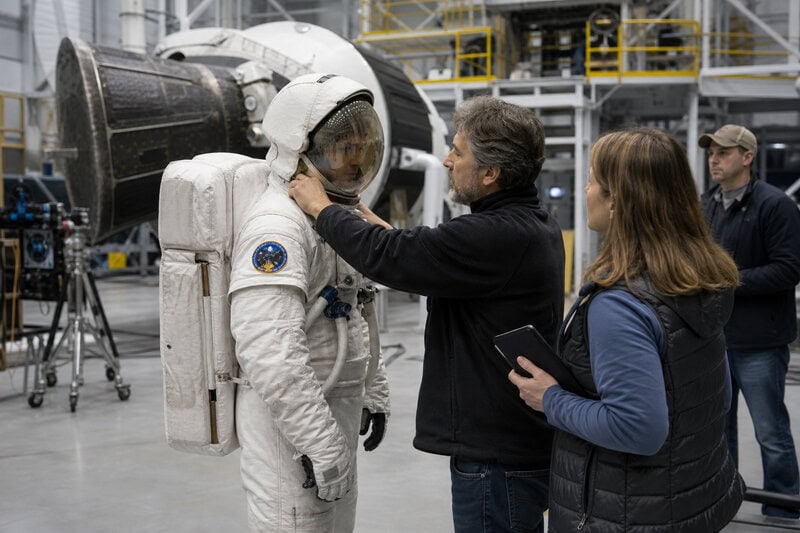
To understand why the Apollo 18 reversal matters, it helps to understand what NASA’s cooperation with Hollywood actually means in practice. The agency maintains a formal Office of Communications that reviews film and television scripts, offering technical advisors, facility access, and equipment loans to productions that demonstrate a commitment to reasonable scientific accuracy. This is not a rubber stamp. It is an exchange: productions receive a credibility signal, and NASA receives some assurance that its history and science will not be fundamentally distorted on screen.
When a film carries NASA’s cooperation, audiences receive an implicit message that what they are watching has passed at least a basic credibility threshold. That institutional trust is the agency’s most durable public asset. NASA has stood by several Hollywood space films that portray spaceflight challenges with reasonable fidelity, while systematically declining to associate itself with productions that falsify its history or misrepresent scientific principles the agency considers settled.
The distinction NASA draws is not about darkness, violence, or even scientific implausibility in the abstract. It is about whether a film’s core mechanism requires audiences to accept false claims about verifiable history or established science — and whether the film’s format encourages that acceptance rather than flagging it as fiction.
The Apollo 18 Problem: What Found Footage Gets Wrong About Trust
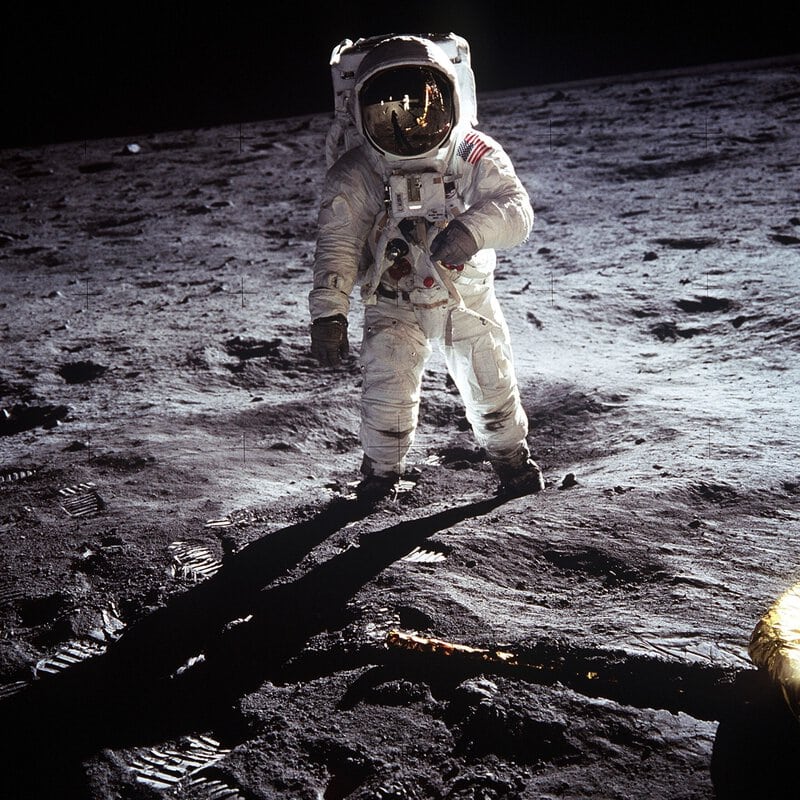
Standard science fiction, even when it contains significant scientific errors, operates under what might be called an explicit fictional contract. Audiences watching a film set in a distant galaxy or featuring faster-than-light travel are not being asked to believe they are watching documentation of real events. The genre signals its own fictionality. Found footage breaks that contract by design — it is structured specifically to collapse the distance between narrative and reality.
Apollo 18 did not merely tell a story involving NASA. It claimed its footage originated from a suppressed agency archive, directly implicating NASA in a decades-long cover-up of extraterrestrial contact. This lands in particularly dangerous territory because conspiracy theories about the Apollo program — including persistent and measurable moon landing denial — represent one of the most studied cases of durable public scientific misbelief. A film that amplifies distrust in the Apollo program’s historical record, dressed in the aesthetic of documentary evidence, carries a real-world credibility cost that extends well beyond its box office footprint.
NASA’s withdrawal was therefore less about the film’s quality — critics had their own views on that — and more about the agency’s obligation to actively protect a historical record it has spent decades verifying and communicating. Silence, in this case, would have functioned as implied endorsement.
Other Films NASA Has Objected To — and the Pattern They Reveal

Apollo 18 is not an isolated case. An examination of science fiction films NASA has objected to identifies a revealing pattern across multiple productions. What the Bleep Do We Know!? (2004), a documentary-style film, misrepresented quantum mechanics to support pseudoscientific claims, presenting fringe interpretations of physics as though they constituted mainstream scientific understanding. The 6th Day (2000), a cloning thriller, presented speculative biotechnology in a near-contemporary frame that distorted public understanding of what was actually scientifically feasible at the time.
The common thread is not subject matter or tone. It is a specific failure mode: presenting false, contested, or impossibly extrapolated science inside a realistic or quasi-documentary aesthetic that actively discourages the audience skepticism that might otherwise filter the misinformation. Films with clearly fantastical premises — even ones riddled with physics shortcuts — tend not to draw the same institutional objection precisely because the fictional contract remains intact. Audiences know they are watching fiction. The problem arises when that signal is deliberately obscured.
What Bad Science in Movies Actually Costs

The case for taking NASA’s film vetting seriously rests on a substantial body of research in science communication. Scholars working in this field have identified a phenomenon called narrative transportation — the cognitive state in which deep engagement with a story lowers a viewer’s critical resistance to embedded factual claims. In this state, misinformation does not need to be persuasive in the conventional sense. It simply needs to be present.
Research published in the Journal of Experimental Social Psychology found that misinformation embedded in fictional narratives was retained and believed at rates comparable to misinformation presented as straightforward fact, particularly among audiences who were highly absorbed in the story. For NASA specifically, the stakes of public misbelief are not merely cultural. Congressional appropriations, recruitment pipelines for science and engineering careers, and the political viability of long-duration missions all correlate with sustained public confidence in the agency and in scientific institutions broadly. The cost of bad science in popular film is therefore budgetary and political, not just epistemic. NASA’s film review process functions as a form of soft power maintenance as much as public education.
Where Artistic License Ends and Harmful Distortion Begins
None of this means NASA expects Hollywood to produce textbooks. The agency and the broader scientific community generally tolerate dramatic compression, invented dialogue, speculative extrapolation, and even significant physics shortcuts in fiction. The operative question is narrower: does a film’s core premise contradict verifiable fact in a way that could durably mislead audiences, and does the film’s format discourage the skepticism that would otherwise protect them?
Philosophers of science use the term verisimilitude to describe the degree to which a claim resembles truth. A film can be wildly speculative and maintain high verisimilitude by clearly signaling its own fictionality — the audience understands they are engaging with imagination, not documentation. A grounded-looking film that falsifies real institutional history has low verisimilitude despite its realistic aesthetic, because it uses the appearance of truth to deliver falsehood. Apollo 18 failed this test not because lunar horror is an indefensible premise for fiction, but because the found footage format and the explicit NASA archive claim made the falsification of real history the film’s central creative mechanism, not an incidental detail.
The broader conversation about NASA’s relationship with Hollywood points to a challenge that has only grown more acute since 2011. AI-generated content and deepfake video are now pushing found footage aesthetics into everyday media at a scale Apollo 18 could not have anticipated. The credibility problem the film illustrated — realistic-looking footage that implicates real institutions in fictional events — is no longer confined to movie theaters. The mechanics NASA was defending against in 2011 are now ambient features of the broader information environment.
What This Means Going Forward
NASA’s informal film review process has no regulatory authority. The agency cannot prevent a film from being made. It can only withhold cooperation and publicly clarify its non-involvement — which is precisely what it did with Apollo 18, and which carries its own risks. Even partial early engagement with a production, as the Apollo 18 episode demonstrated, can create a public perception problem that requires active correction after the fact. This is why the agency now examines premise and framing, not merely technical detail, before committing to a collaboration.
Science advisors embedded in productions from early development — a role NASA has formally supported on cooperating films — represent the most effective intervention point, catching fundamental distortions before they are locked into a finished product. The alternative, correcting the record after a film has reached a mass audience, is significantly less efficient and considerably less certain.
The tension between Hollywood’s structural need for dramatic stakes and science institutions’ structural need for accurate representation is not going to resolve itself. NASA’s film history suggests the most durable approach is not to eliminate scientific ambition from storytelling — some of the most effective science communication in popular culture has come from fiction — but to maintain transparency about the fictional contract. Audiences who know they are watching imagination, even when that imagination is grounded in real science and real history, are audiences who can engage critically. That capacity for critical engagement is, ultimately, what NASA is trying to protect.