
Cleveland Clinic is home to something that exists nowhere else on Earth: an IBM Quantum System One dedicated entirely to healthcare research — a machine designed not to crack encryption or optimize financial portfolios, but to simulate the molecular machinery of disease. When Cleveland Clinic and IBM recently convened a forum to assess what their landmark partnership has actually produced, the event offered one of the clearest windows yet into how quantum computing and artificial intelligence are beginning to reshape the future of medicine — carefully, incrementally, and with significant work still ahead.
The Discovery Accelerator: A Decade-Long Bet on Two Technologies at Once
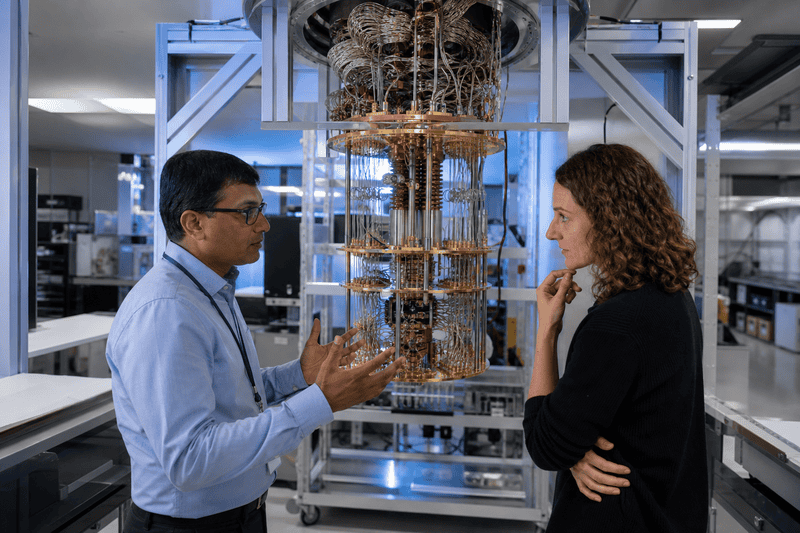
The formal name for the Cleveland Clinic-IBM collaboration is the Discovery Accelerator, a 10-year partnership built on a straightforward but ambitious premise: quantum hardware and the algorithms designed to run on it are maturing simultaneously, and a partnership structured around quarters or single fiscal years would capture neither. A decade-long horizon gives both institutions the runway to track hardware improvements, refine methodologies, and eventually translate computational findings into clinical research outcomes.
The division of labor reflects each partner’s core strengths. IBM contributes quantum hardware — including the on-site Quantum System One — along with its software stack and a team of research scientists. Cleveland Clinic contributes what IBM cannot manufacture: clinical data pipelines, deep biomedical domain expertise, and a continuous supply of real, consequential patient-care problems to direct the research. That combination is the animating logic of the partnership.
Housing the IBM Quantum System One physically on Cleveland Clinic’s campus, rather than relying solely on cloud-based quantum access, provides a structural advantage worth understanding. On-site placement gives researchers lower-latency access to the hardware and allows tighter integration with hospital workflows and data systems — the difference between borrowing a specialized instrument and owning one. It is worth noting that all structural claims here reflect the partnership’s publicly stated framework; independent peer-reviewed validation of specific research outcomes is still accumulating, a caveat that matters for assessing the collaboration’s progress honestly.
Why Quantum Computing Is a Natural Fit for Molecular Biology

To understand why this partnership targets healthcare specifically, it helps to understand what a quantum computer actually does differently from a classical one. A classical computer encodes all information in bits — switches that are either off (0) or on (1). A quantum computer encodes information in qubits, which exploit a quantum mechanical property called superposition to represent 0 and 1 simultaneously. For certain categories of problems, this allows quantum systems to explore vast numbers of possible solutions in ways that classical architectures cannot efficiently match.
Molecular simulation is precisely one of those problem categories. The behavior of electrons within a molecule follows quantum mechanical rules — which means a quantum computer is not merely a faster classical computer for this task, it is a fundamentally more appropriate one. Trying to simulate a molecule’s electron behavior on a classical computer is theoretically possible in principle, but catastrophically inefficient at any meaningful scale.
There is an important distinction to draw here, however. Scientific consensus holds that quantum computers have genuine theoretical advantages for certain chemistry and molecular simulations. What remains actively contested is whether today’s machines — operating in what researchers call the noisy intermediate-scale quantum, or NISQ, era — are yet large enough and stable enough to outperform classical supercomputers on real-world drug discovery tasks. Qubits are fragile; they lose their quantum properties through a process called decoherence, introducing errors into calculations. The Cleveland Clinic-IBM collaboration is working within these real constraints, not beyond them, and responsible coverage of this field requires that fact to remain explicit.
Protein Folding and the Hybrid Quantum-Classical Model
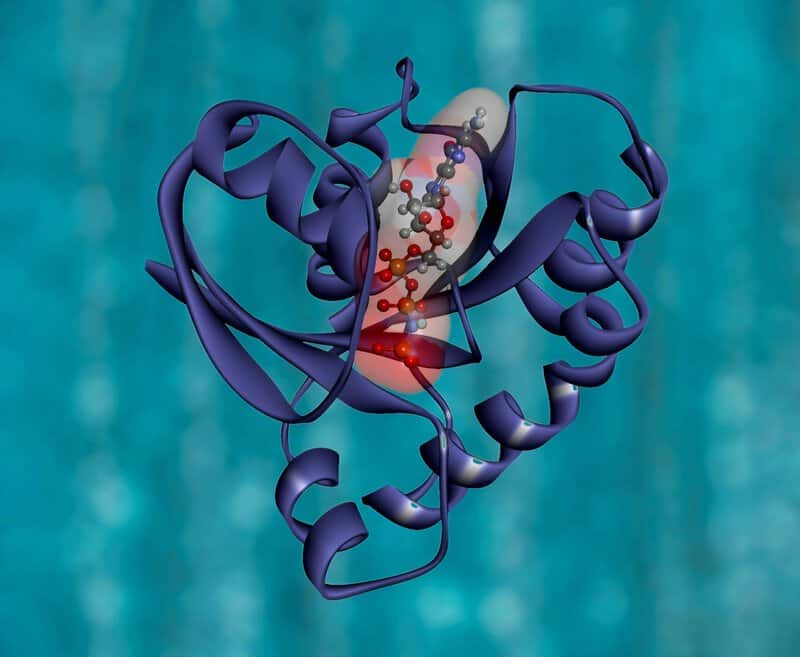
One of the most concrete findings to emerge from the partnership involves one of biology’s most persistently difficult computational problems: protein folding. Proteins are molecular machines whose function is determined by their three-dimensional shape, and the process by which a chain of amino acids collapses into that precise shape involves quantum mechanical interactions of extraordinary complexity. Misfolded proteins are implicated in Alzheimer’s disease, Parkinson’s disease, and certain cancers, making accurate folding simulation a problem with direct therapeutic relevance.
According to Cleveland Clinic’s forum announcement, the institution and IBM developed a hybrid quantum-classical computing model to simulate interactions between molecules involved in protein folding. The hybrid designation describes an architecture where the quantum processor handles the exponentially complex quantum-mechanical core of the calculation, while a classical computer manages the surrounding algorithmic scaffolding — each component doing what it does best, rather than forcing one architecture to perform tasks suited to the other.
The practical significance for drug discovery is direct. Knowing precisely how a protein folds reveals which molecular pockets or binding sites a drug candidate might attach to. That knowledge can narrow the search space from billions of theoretically possible compounds to a tractable shortlist of candidates worth synthesizing and testing. The current work represents a proof-of-concept demonstration of the hybrid approach’s feasibility, not a clinically approved therapeutic output. The pipeline from computational simulation to bedside medicine remains long, and no one in this collaboration is claiming otherwise.
Where AI Enters: Convergence, Not Competition
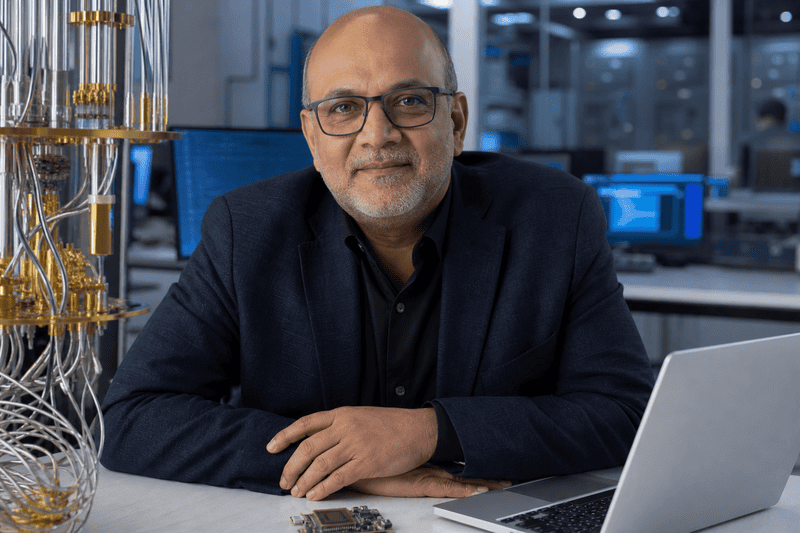
The forum’s central theme, as reported by HPCwire, was the convergence of quantum computing and artificial intelligence — a framing that reflects how both technologies are being developed together in the healthcare context rather than in isolation. The relationship between them is complementary in a specific way: quantum computing expands the solution space researchers can explore, while AI narrows it by learning which regions of that space are biologically meaningful.
AI algorithms, particularly machine learning systems, can interpret the probabilistic outputs of quantum circuits, compensate for qubit noise during computation, and identify patterns in the large datasets that quantum simulations generate. In practical terms, a quantum processor might model thousands of molecular configurations; an AI system trained on biological data can then evaluate which configurations are chemically stable, physiologically relevant, and worth investigating further.
At the forum, this combined approach was discussed across several specific healthcare domains: genomics, medical imaging analysis, and molecular dynamics — all fields where both data volume and computational complexity push against classical computing limits. A critical distinction applies here, however. AI applications in healthcare, including radiology image flagging and pathology analysis, are already in routine clinical use at institutions around the world. Quantum-enhanced AI applications remain firmly in research and development phases and are not in routine clinical deployment today. That line between current practice and future potential must stay clearly drawn in any honest account of this work.
Drug Discovery and the Longer Stakes
The broader context for quantum computing’s emerging healthcare applications is the economics and timelines of pharmaceutical development. Bringing a new drug to market currently requires more than a decade of work and costs billions of dollars, with a high proportion of candidates failing at late and expensive stages of clinical trials. Computational simulation that could more accurately predict molecular behavior before any physical synthesis or animal testing represents a potential paradigm shift in early-stage research — compressing timelines by identifying failures earlier and successes more reliably.
Cleveland Clinic’s ongoing work aims to use quantum simulation to model how drug candidate molecules interact with target proteins before physical testing begins. That ambition is shared by pharmaceutical companies and research institutions globally. The scientific community’s honest consensus, however, places full quantum advantage in drug discovery as a goal of the 2030s — dependent on the development of fault-tolerant quantum hardware that does not yet exist at the necessary scale.
This positions the current value of the Cleveland Clinic-IBM model precisely: it may be less about immediate drug breakthroughs and more about building the research infrastructure, validated methodologies, and specialized talent pipelines that will be essential when more powerful quantum hardware arrives. Institutions that begin this foundational work now will be positioned to apply more capable future hardware immediately, rather than starting from scratch. That is a legitimate and strategically significant outcome, even if it is less dramatic than a headline announcing a cured disease.
Broader Partnerships and the Collaborative Ecosystem
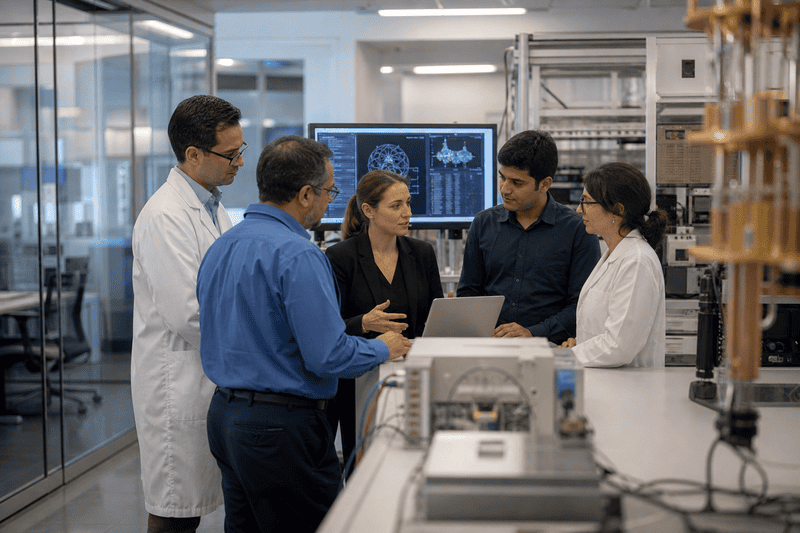
Collaborations between Cleveland Clinic and other research organizations in this space suggest the institution is deliberately building a network of computational research partnerships that extend beyond the IBM relationship. That strategy reflects a maturing understanding of what this field requires: no single institution or vendor relationship will produce quantum advantage in healthcare alone. Progress depends on shared methodologies, compatible data standards, and cross-institutional validation of results.
This networked approach also serves a practical risk-management function. As quantum hardware continues to evolve rapidly — with competing architectures from IBM, Google, IonQ, and others advancing along different technical trajectories — an institution invested in a single platform faces concentration risk. Broadening collaborative ties across the research ecosystem hedges against that uncertainty while simultaneously deepening the pool of expertise Cleveland Clinic can draw on.
Open Questions and the Road Ahead
The forum’s discussions pointed toward near-term priorities that are concrete without being overstated: continued refinement of the hybrid quantum-classical framework, deeper integration of AI with quantum computational outputs, and expansion of these tools to a widening set of clinical and genomic research problems. The key open questions the broader scientific community is watching remain unresolved: When will quantum hardware cross the threshold from NISQ-era noise limitations to fault-tolerant operation — the point at which qubits can correct their own errors reliably? Which healthcare applications will demonstrate quantum advantage first, and against what classical benchmark? How will quantum-generated molecular insights ultimately be validated against actual clinical outcomes in patients?
The 10-year structure of the Discovery Accelerator is, in a real sense, the institutional answer to all three. A long enough timeline allows the collaboration to track hardware maturation, methodology development, and eventually clinical translation — making it one of the most significant longitudinal experiments in applied quantum science currently underway.
The Cleveland Clinic-IBM forum marks a meaningful checkpoint in that endeavor, not an announcement of solved problems. Perhaps the most accurate characterization of where the collaboration stands is this: it is producing the right questions as reliably as it is producing early answers. In a field this young and this technically demanding, that disciplined orientation toward foundational rigor is itself a form of genuine progress — and one that distinguishes serious long-term research programs from the shorter-horizon hype that too often surrounds both quantum computing and AI.