
On June 5, 2026, a slender, needle-nosed aircraft punched through the sound barrier over the California desert — and on the ground below, almost nothing happened. That near-silence may turn out to be one of the most significant moments in aviation history.
What the X-59 Is — And Why NASA Built It

NASA’s X-59 is a purpose-built quiet supersonic research aircraft developed under the agency’s Quesst mission. Its mandate is both simple and radical: prove that supersonic passenger travel can be commercially viable by solving the one problem that grounded the Concorde era — the sonic boom.
The aircraft is the product of a collaboration between NASA and Lockheed Martin’s Skunk Works division, the same secretive engineering team responsible for legendary aircraft including the SR-71 Blackbird. For years, the X-59 existed only in computational models, wind tunnel tests, and engineering drawings. On June 5, it finally validated all of that work by flying faster than the speed of sound for the first time in its test program.
The Sonic Boom Problem — Why It Matters More Than You Think
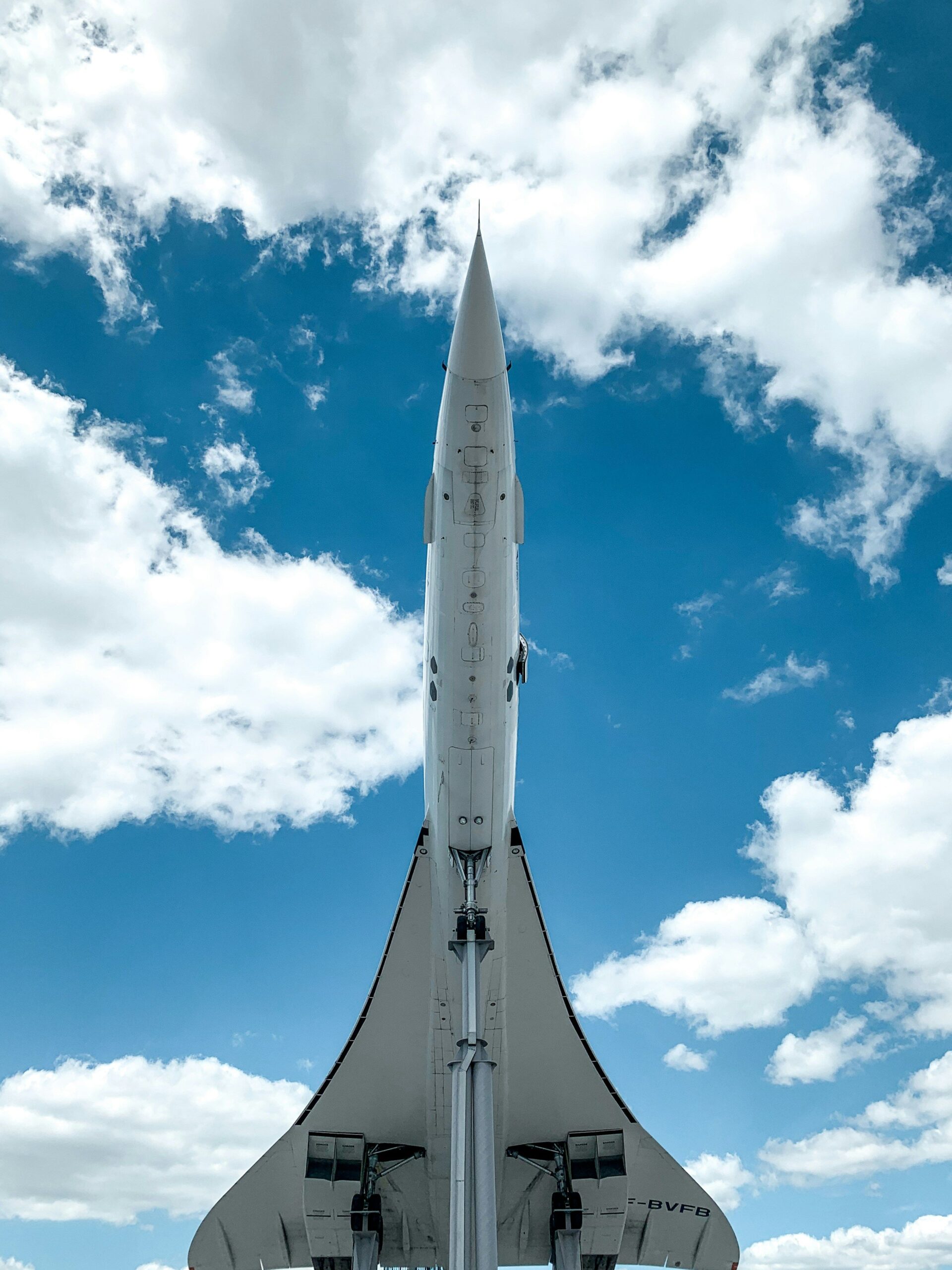
A sonic boom is not merely an annoyance. It is loud enough that the FAA has banned commercial supersonic flight over the continental United States since 1973. Understanding why requires a brief look at the physics involved.
When an aircraft travels slower than sound, the pressure waves it generates spread out ahead of it in all directions. As the aircraft accelerates toward and then past roughly 767 mph — Mach 1 at sea level — it outruns those pressure waves. They pile up and merge into a concentrated shockwave that radiates outward and downward, reaching the ground as the distinctive double crack of a sonic boom. The faster and larger the aircraft, the more energy is packed into that shockwave.
The Concorde, the world’s only successful supersonic passenger jet, was forced to fly supersonic only over open ocean as a result. That restriction made transatlantic routes between Europe and New York viable but rendered cross-country supersonic routes — New York to Los Angeles, for example — completely off-limits. Any future supersonic airliner that cannot solve this problem faces the same geographic constraint, regardless of how advanced its engines or airframe might be.
The Science of Quiet Supersonic Flight
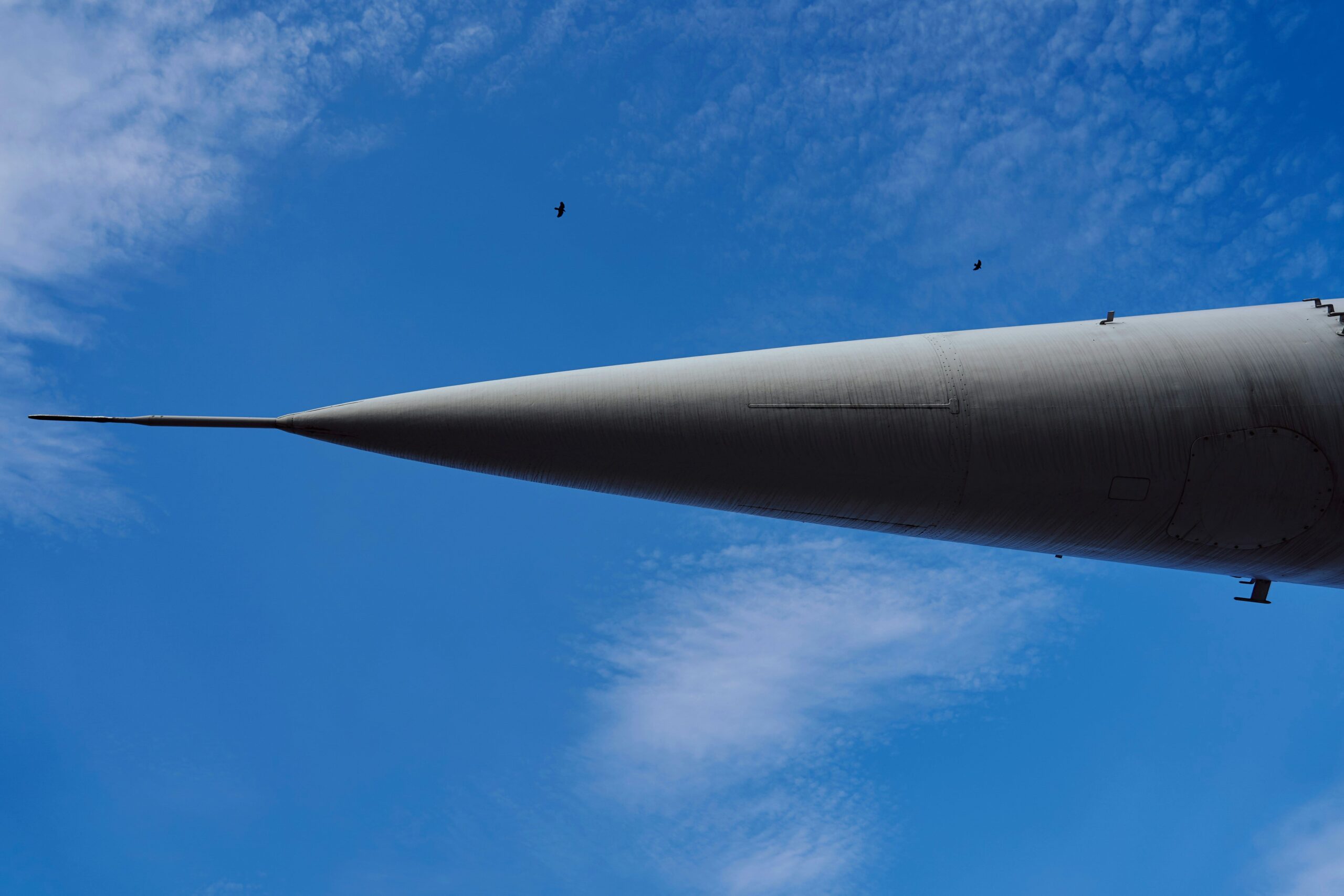
The X-59’s answer to the boom problem starts at its nose — and keeps going for a long time. The aircraft’s sharply tapered nose stretches nearly a third of its 99-foot total length. That geometry is not accidental or aesthetic. It is the central aerodynamic innovation of the entire program.
On a conventional supersonic aircraft, pressure disturbances generated at various points along the fuselage — the nose, the cockpit, the wings, the engine inlets — travel at similar angles and merge into a single powerful shockwave before reaching the ground. The X-59’s elongated shape is designed to spread those disturbances out in time and space, so that instead of stacking into one thunderclap, they arrive at the ground as a series of softer, separated pressure pulses.
Engineers describe this as “shaped sonic boom” technology, or boom mitigation. The design target for the X-59 is a ground-level acoustic signature of around 75 PLdB — a unit that accounts for human perception of low-frequency sound. That figure is roughly comparable to the sound of a car door closing. Achieving it required decades of NASA research into supersonic shockwave interaction and extensive use of computational fluid dynamics, which allows engineers to simulate complex airflow in software before a single physical component is built.
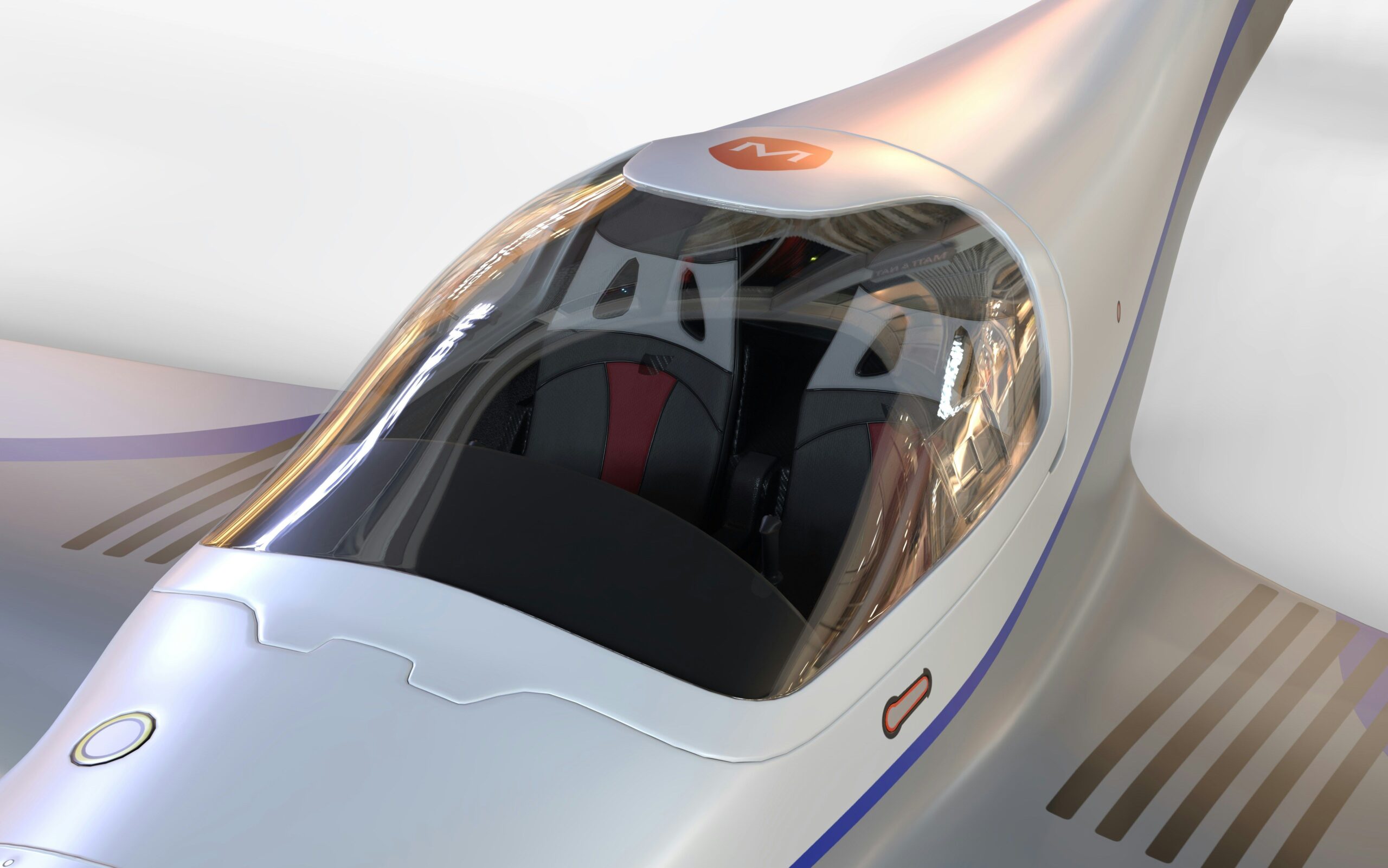
One striking consequence of the nose design involves the cockpit. Because placing a conventional windshield at the front of such a long, tapered fuselage is aerodynamically impractical, the X-59 has no forward-facing window. Pilots navigate using an external vision system — a network of cameras feeding high-resolution displays inside the cockpit. The design choice was deliberate: it allowed engineers to shape the nose entirely around aerodynamic performance rather than pilot sightlines.
As Smithsonian Magazine reports, the June 5 flight marks the beginning of a data collection process that will test whether the aircraft’s real-world acoustic signature actually matches the low-boom profile its designers predicted.
What Happened on June 5 — And What Comes Next
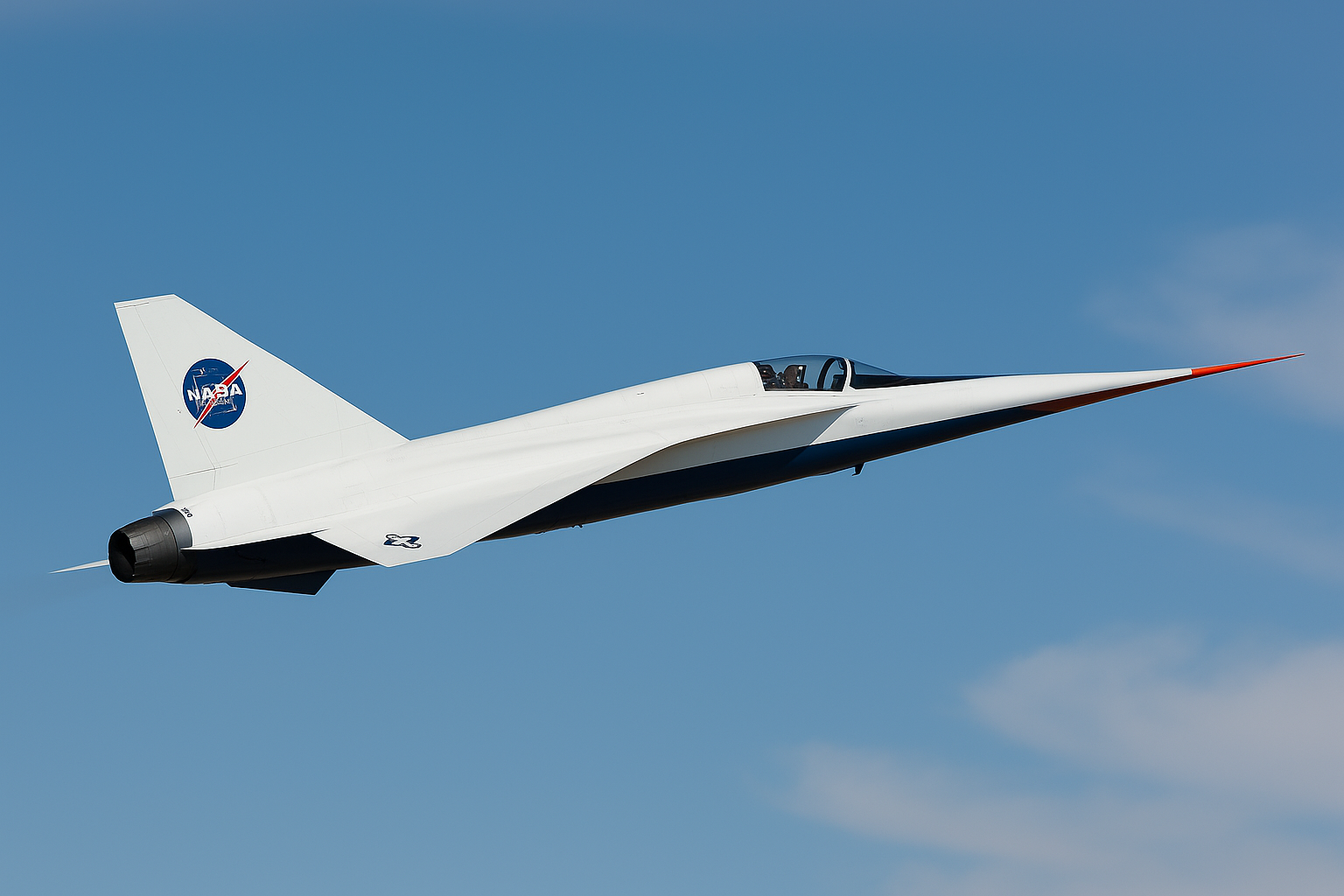
The supersonic milestone followed an earlier phase of subsonic test flights during which engineers verified the X-59’s handling characteristics, onboard systems, and overall airworthiness. Reaching sustained supersonic speed was the next major threshold in that progression — confirmation that the aircraft performs as designed when it matters most.
But the flight itself is not the finish line. The acoustic data gathered during that supersonic run will now be compared against the computational models that shaped the aircraft’s design. If the real-world numbers align with predictions, NASA moves to the phase of the Quesst mission that carries the most regulatory weight: community overflights.
In those planned campaigns, the X-59 will fly supersonic over actual populated areas. Researchers will then survey residents to measure their perception of — and reaction to — whatever sound, if any, reaches the ground. That human response data is not being collected for academic curiosity. It is intended to be delivered directly to the FAA and international aviation regulators, who could use it as the evidentiary basis for rewriting the rules on supersonic flight over land.
If those rules change, the commercial implications are substantial. A new generation of supersonic passenger jets — including designs being developed by private companies — could fly coast-to-coast routes that have been legally off-limits for more than five decades. Flights between New York and Los Angeles in under three hours, or transatlantic crossings in roughly half the current time, would move from theoretical possibility to practical opportunity.
Why This Moment Is Bigger Than One Airplane
The X-59 will never carry a single fare-paying passenger. It is a research instrument, built to answer a regulatory question rather than fill a route map. But the findings it produces could reshape commercial aviation within a decade by unlocking a market that has been legally sealed since 1973.
The significance of the June 5 flight is less about what the X-59 itself will do and more about what it could make possible. If its acoustic data persuades regulators to revise the ban on overland supersonic flight, the aircraft will have accomplished something rare in aerospace history: a single research program that directly rewrites the rules of commercial aviation. That is a modest-looking airplane carrying an unusually large ambition.