
While Socrates debated the nature of justice in the Athenian agora, the overwhelming majority of his fellow citizens were hauling charcoal, pulling fishing nets, shaping clay amphorae, or plowing stony hillside plots — occupations that fed, equipped, and commercially connected the civilization philosophers are credited with building. The common jobs of ancient Greece were overwhelmingly physical, skilled, and trade-oriented, a workforce whose labor has been overshadowed by the outsized cultural legacy of its thinkers.
The Forgotten Workforce Behind the Golden Age
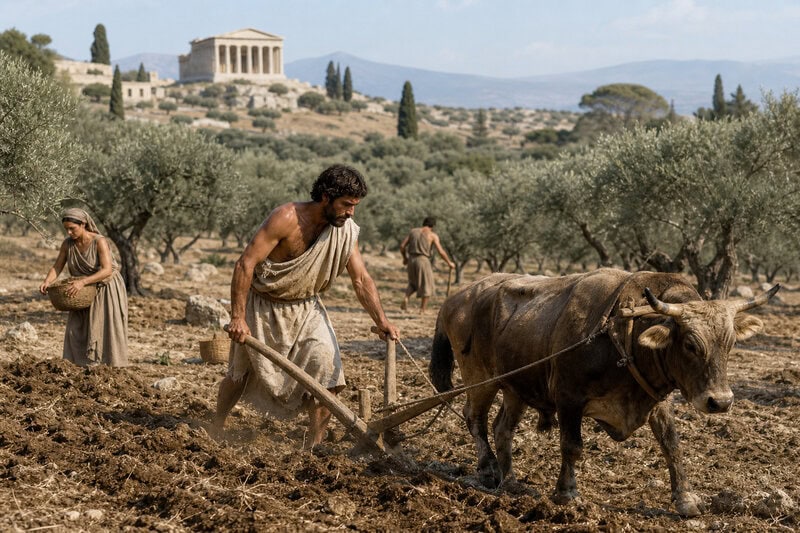
The popular image of ancient Greece tends to foreground its philosophers, playwrights, and generals. That image, while not inaccurate, is radically incomplete. According to historians of the ancient Greek economy, the three domains on which the activity of the ancients was chiefly concentrated were agriculture and cattle rearing, trade, and handicraft — not intellectual or civic pursuits. The men and women who filled those domains were farmers, potters, merchants, mariners, and craftspeople, and understanding their working lives is essential to understanding how Greek civilization actually functioned from day to day.
Ancient Greek occupations were extraordinarily varied. Written sources, inscriptions, and archaeological evidence document roles ranging from barbers and charcoal burners to pearl divers, matchmakers, dance teachers, and mine workers — a range that reflects a commercially dynamic society far removed from the lecture halls of the Academy. Labor in the ancient Greek world encompassed freeborn citizens, metics (resident foreigners without full citizenship rights), and enslaved people, all participating in the same economy under sharply different legal and social conditions.
How Ancient Greek Work Was Organized: The Concept of Technē
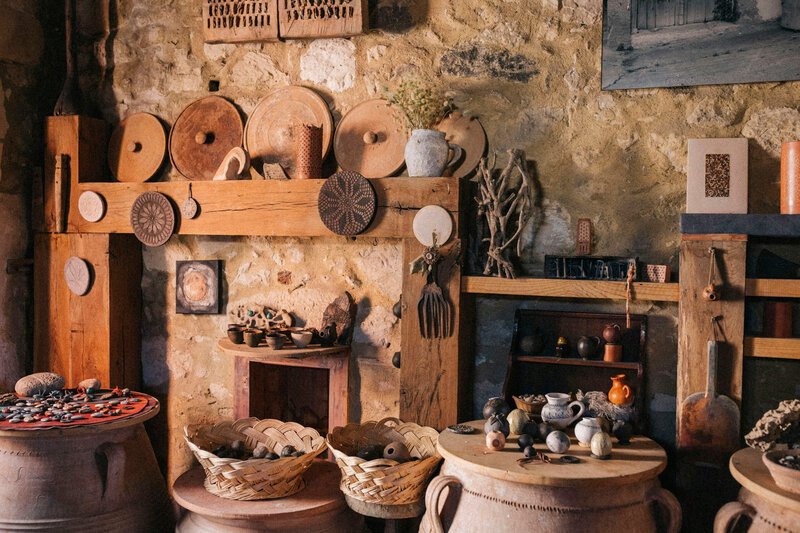
To understand why certain jobs dominated ancient Greek society, it helps to understand the organizing principle behind Greek work. In ancient Greece, occupations were practiced by specialists identified by the Greek word technē (τέχνη) — meaning a craft, skill, or art — so that a worker was primarily known by the single trade they had mastered, whether smith, carpenter, or banker. A person was not simply a “laborer”; they were a keramos (potter), a georgos (farmer), or a khalkeus (bronze-smith), and that identity carried real social and economic weight.
The technē system meant Greek society was built on discrete, specialized labor markets rather than generalist workers, making occupational identity central to a person’s standing in the community. As scholarship on skilled labour in ancient Greece and Rome has examined, the ancient world recognized many distinct occupations while organizing them differently from modern professional categories. Skilled craftspeople commanded higher pay than unskilled laborers — a pattern consistent across most ancient Mediterranean economies — and work and wages in ancient Greece varied considerably depending on trade, city-state, and whether a worker was free, a metic, or enslaved. Understanding technē as an organizing principle helps explain why certain jobs were so dominant and so deeply embedded in the rhythms of ancient Greek daily life.
Job #1: Farmer (Georgos) — The Economy’s Backbone
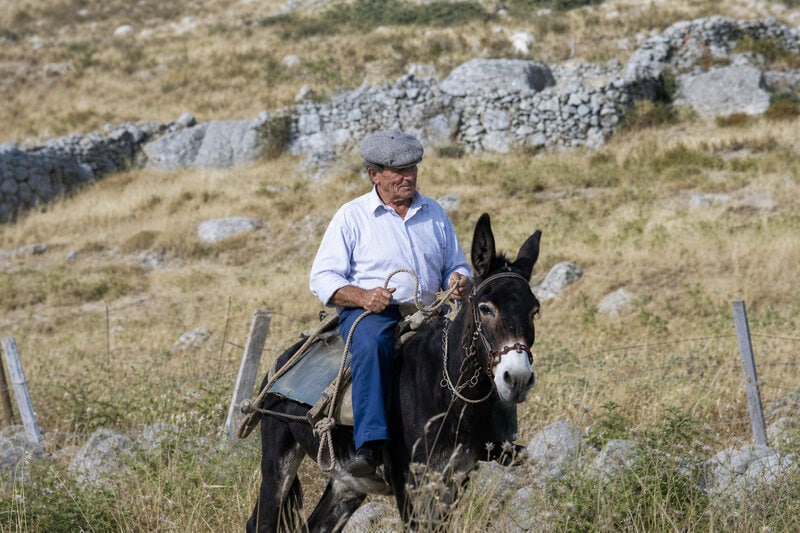
Agriculture was the backbone of the ancient Greek economy, and the georgos, or farmer, was almost certainly the single most common occupation in the ancient Greek world. The majority of the population was engaged in farming or cattle rearing at some level, whether as smallholders working family plots or as agricultural laborers on larger estates. Greek farmers cultivated olives, grapes, barley, and wheat — crops suited to the thin, rocky soils and dry Mediterranean climate that characterized much of the Greek peninsula and its island territories.
Olive oil and wine were not merely staple foods; they were major trade commodities exported across the Mediterranean in ceramic amphorae, connecting the farmer’s daily labor directly to the broader ancient Greek economy. Surplus agricultural production fed the trade networks that made cities like Athens commercially viable, meaning the georgos was the foundational input for every merchant, mariner, and market trader who appeared further up the economic ladder.
Farming in ancient Greece was not uniform, however. Landholding sizes, crop types, and reliance on enslaved agricultural labor differed significantly between city-states. Sparta’s agricultural system, built on the labor of the helots — a subjugated population legally bound to the land they worked — looked nothing like the smallholder culture of rural Attica, where freeborn citizen-farmers worked comparatively small plots, often with limited additional labor. Recognizing that variation is important: daily life in ancient Greece resisted easy generalization even within a single generation.
Job #2: Potter (Keramos) — The Ancient World’s Industrial Producer
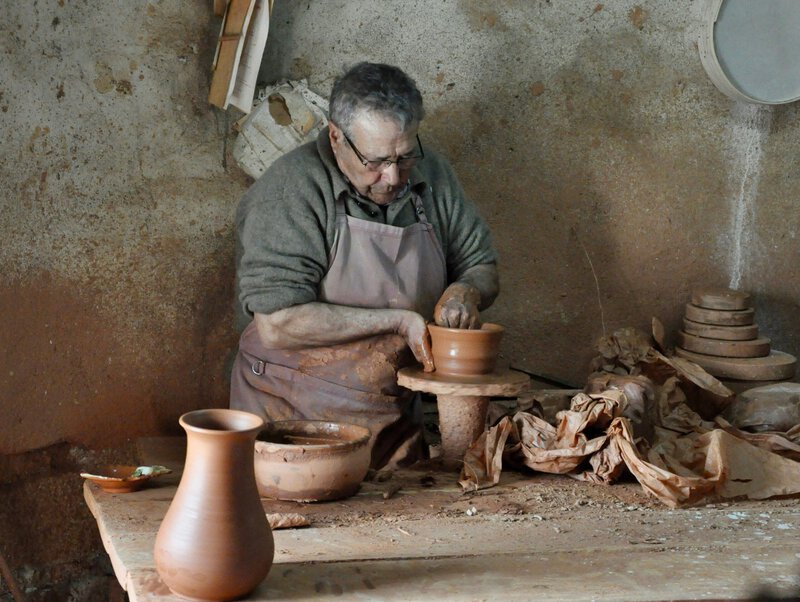
Athenian pottery workshops, known as ergasteria, produced vessels in substantial quantities, and archaeological evidence recovered from shipwrecks and trading posts across the Mediterranean confirms that Greek ceramics were among the most widely distributed manufactured goods of the ancient world. The potter — practicing one of the most recognizable forms of technē — produced amphorae for transporting olive oil and wine, household storage and cooking vessels, drinking cups, and ritual wares, making pottery a cornerstone of both domestic life and long-distance trade.
Because pottery served as the primary container technology of the ancient world, the keramos occupied a position in the economic supply chain analogous to a modern packaging manufacturer: unglamorous by the standards of philosophical achievement, but economically indispensable. Without the potter’s output, the merchant had nothing to ship olive oil in, the household had nowhere to store grain, and the symposium had no cups for wine.
Pottery also holds a special place in the study of ancient Greek occupations for a practical reason: fired clay survives in the archaeological record far better than wood, textile, or organic material. Pottery is among the most abundant categories of evidence historians have for reconstructing ancient Greek daily life, meaning scholars know more about this occupation — its workshop organization, its trade routes, its product range — than about almost any other craft in the ancient world. The Kerameikos district of Athens, named for the potters who worked there, remains one of the most extensively excavated urban areas from the ancient Greek period.
Job #3: Merchant and Mariner — The Engine of Trade
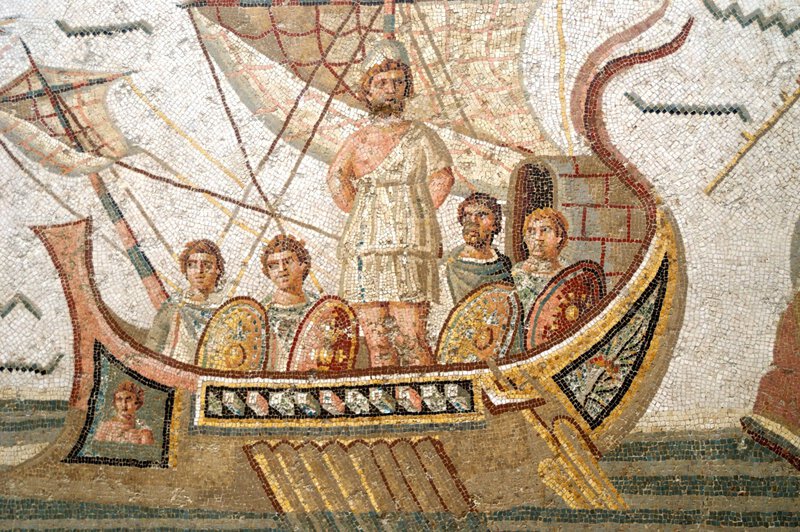
Trade was one of the three domains on which ancient Greek economic activity was chiefly concentrated, and the emporos (merchant) and naukleros (ship owner-operator) were the human infrastructure that made long-distance commerce possible. Greek merchants sailed routes connecting the Aegean to Egypt, the Black Sea coast, Sicily, and the western Mediterranean, exchanging olive oil, wine, pottery, silver, and imported grain. Athens’ port at Piraeus functioned as one of the ancient Mediterranean’s most active commercial hubs, drawing traders from across the known world.
Ancient Greek occupations in the maritime sector included distinct roles that are sometimes conflated. Mariners were skilled sailors who crewed vessels and navigated open-water routes; merchants were the traders who financed, directed, and profited from cargo. These were two different technē representing different positions in the economic hierarchy, though in practice a single individual might fill both roles on a small trading voyage.
Maritime trade in ancient Greece was genuinely high-stakes. The institution of the nautikon daneion — a bottomry loan, in which repayment was contingent on a ship’s safe arrival — reflects how seriously Greek society institutionalized the financial risks of seafaring commerce. That such a sophisticated financial instrument existed at all is evidence that maritime trade was not marginal but central to how the ancient Greek economy generated and distributed wealth. The risks were real: storms, piracy, and navigational hazards made each voyage a commercial gamble, which is precisely why formal lending instruments and contracts developed around it.
Job #4: Craftsman — Smiths, Carpenters, and the Skilled Trades
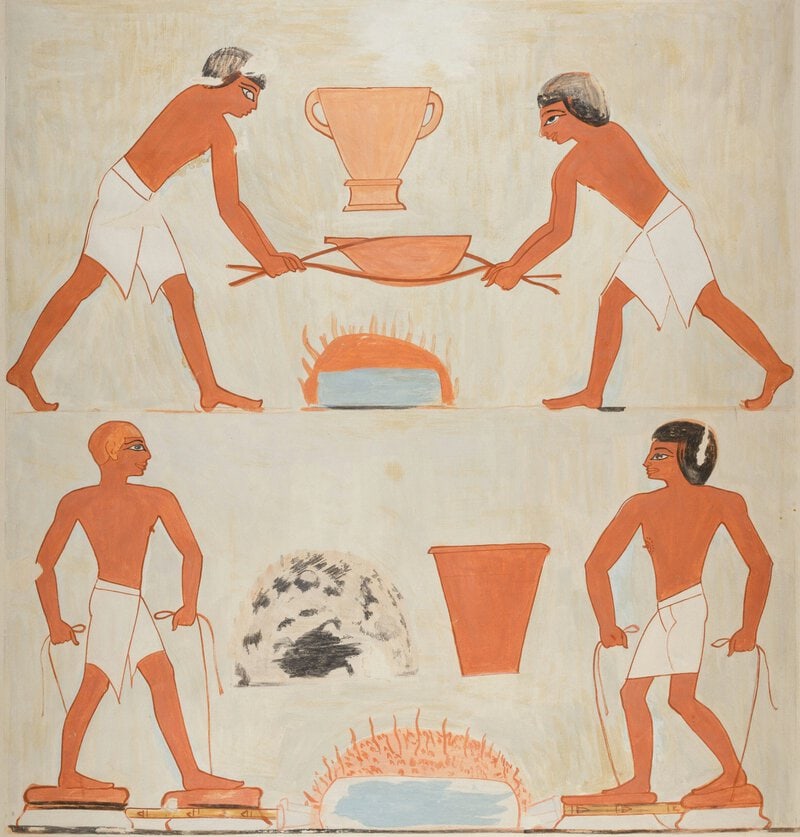
Handicraft was the third principal domain of ancient Greek economic activity, encompassing a wide cluster of technē-based occupations that collectively formed the civilization’s manufacturing sector. Carpenters, jewelers, painters, metalworkers, leatherworkers, and weavers all fell under this broad category, and their products were essential to agriculture, warfare, domestic life, and religious practice.
Metalworkers occupied a particularly critical position. The khalkeus (bronze-smith) and sidērourgos (iron-worker) produced the tools that farmers used to break soil, the weapons that soldiers carried into battle, and the household implements that furnished everyday Greek life. A city-state without skilled smiths was a city-state that could neither feed itself efficiently nor defend its borders — a dependency that placed metalworkers among the most economically indispensable craftspeople in any Greek community.
The social organization of craft workshops was more complex than a simple narrative of independent artisans might suggest. Some craftspeople operated small independent ergasteria, working alongside family members and a handful of hired laborers. Others worked within larger workshops that employed both free workers and enslaved people side by side, complicating any straightforward account of who performed ancient Greece’s common jobs and under what conditions. Ancient Greek occupations for carpenters, jewelers, and other skilled tradespeople appear consistently in written records, legal documents, and inscriptions, confirming that the skilled trades were not peripheral but woven into the economic fabric of everyday Greek life.
Job #5: Fisherman — Feeding the City from the Sea
Greece’s extensive coastline, island geography, and proximity to productive fishing grounds made the halieus, or fisherman, one of the most common occupations in the ancient Greek world — and one that often goes unacknowledged alongside the more documented trades. For coastal communities and island populations in particular, fishing was not a supplementary activity but a primary source of both subsistence and commercial income. Fish, preserved through salting and drying, were traded inland as well as exported, making the fisherman a participant in the same long-distance trade networks that involved merchants and mariners.
Archaeological evidence from ancient harbors and literary references in sources including comedy and household accounts confirm that fish was a staple of the ordinary Greek diet across social classes. The variety on offer was considerable: tuna, mackerel, anchovy, sea bream, and eel all appear in ancient sources as common market items. Fishermen worked from small boats using nets, lines, and traps, and the visual and documentary record of ancient Greek working life includes representations of fishing scenes on pottery and in literary texts, offering a window into how this everyday occupation was understood by the Greeks themselves.
Like farming, fishing was practiced by freeborn citizens, metics, and enslaved workers depending on context. Small-scale fishermen who owned their own boats occupied a modest but independent position in coastal communities; those who worked hired vessels or fished on behalf of larger operations occupied a more precarious one. The halieus rarely appears in philosophical texts, but the material evidence makes clear that without the fisherman’s daily work, the ancient Greek city could not have fed itself.
The Bigger Picture: What These Jobs Reveal About Ancient Greece
The most common jobs in ancient Greece — farmer, potter, merchant, mariner, craftsman, and fisherman — were defined by physical skill, market participation, and the technē principle of specialization, not by the philosophical and artistic achievements that dominate the civilization’s modern reputation. That distinction matters not to diminish the philosophers, but to restore the workers who made the philosophers’ world possible.
Historians broadly agree on agriculture’s primacy and on the centrality of trade and handicraft to the ancient Greek economy. Where scholarly debate continues is in the details: the exact proportion of the population engaged in each sector, the precise role and scale of enslaved labor across different city-states, and the wage structures that governed daily working life remain subjects of active research and legitimate scholarly disagreement. The evidence base — combining epigraphy, archaeology, literary sources, and papyrology — is rich but uneven, and confident generalizations should be held carefully.
What the full range of ancient Greek occupations ultimately reveals is a civilization whose daily life was as varied and commercially dynamic as its intellectual culture was celebrated. Beyond the five jobs examined here, the ancient Greek workforce included barbers, charcoal burners, pearl divers, tutors, actors, musicians, miners, and matchmakers — a diversity that the documentary and visual record is still helping scholars reconstruct in full. Readers who want to explore ancient Greece’s economy and occupational history further can consult the Oxford Handbook of the Ancient Greek Economy and follow ongoing archaeological work at sites such as the Athenian Agora, where the material traces of ordinary working lives continue to surface.