Mechanical Voting Machine (1892)
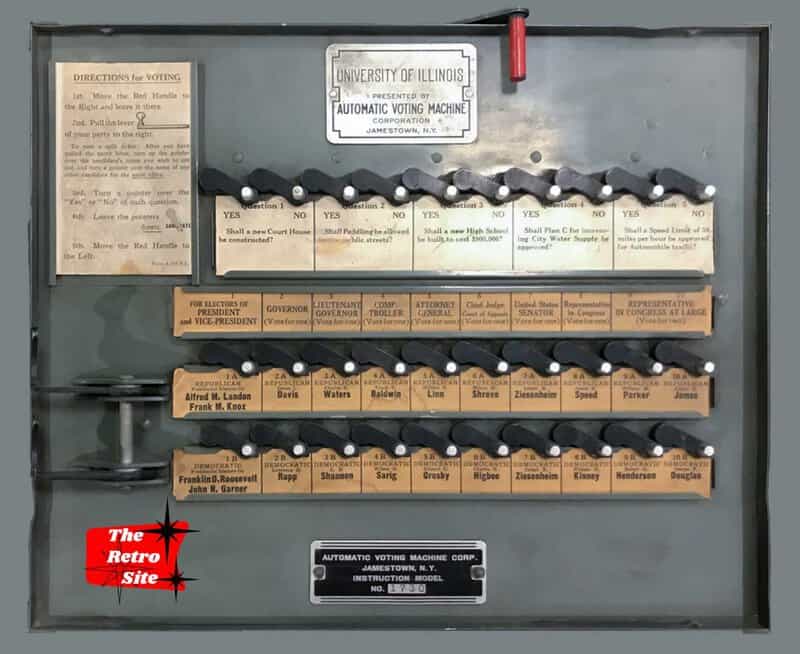
The first voting machines used no electricity but prevented double-voting and counted ballots automatically. Voters pulled levers beside candidate names, which moved mechanical counters behind locked panels. When polls closed, election workers just read the numbers off each counter. Their fail-safe design – voters could only access one voting lever at a time, and the final tally couldn’t be manipulated without leaving obvious signs of tampering.
The machines required no electricity to operate and left clear paper trails of every vote cast. Some models even included innovative features like write-in ballot mechanisms and party-line voting options. Many election officials continued using these reliable machines well into the computer age, trusting their tamper-proof mechanical nature over electronic alternatives.