9. The Mount Tambora Eruption of 1815
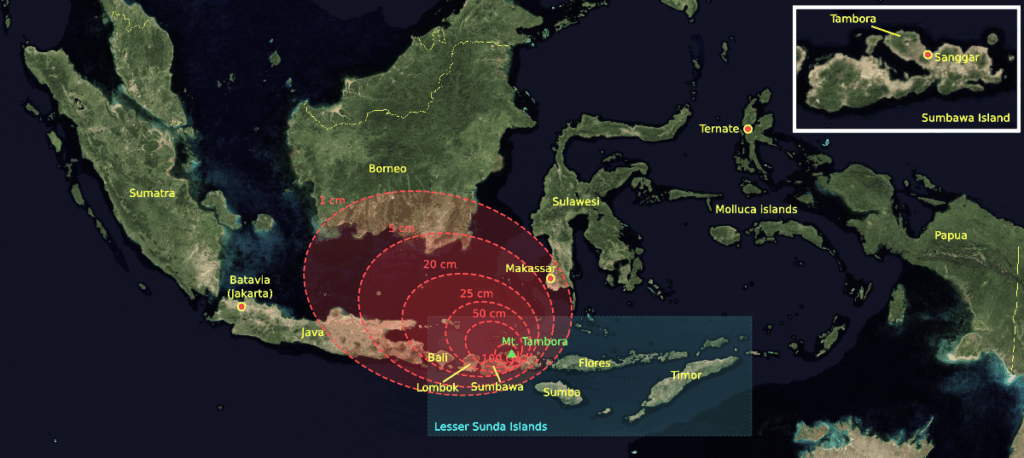
In April 1815, Mount Tambora in Indonesia erupted catastrophically, releasing vast amounts of volcanic ash and aerosols into the atmosphere. This debris formed a global haze that blocked sunlight, leading to a significant drop in global temperatures. The following year, 1816, became known as the “Year Without a Summer,” characterized by unseasonably cold temperatures and widespread crop failures. These climatic disruptions resulted in mass starvation and economic hardship worldwide. (nationalgeographic.com)