3. Dicrocoelium dendriticum (Lancet Liver Fluke)
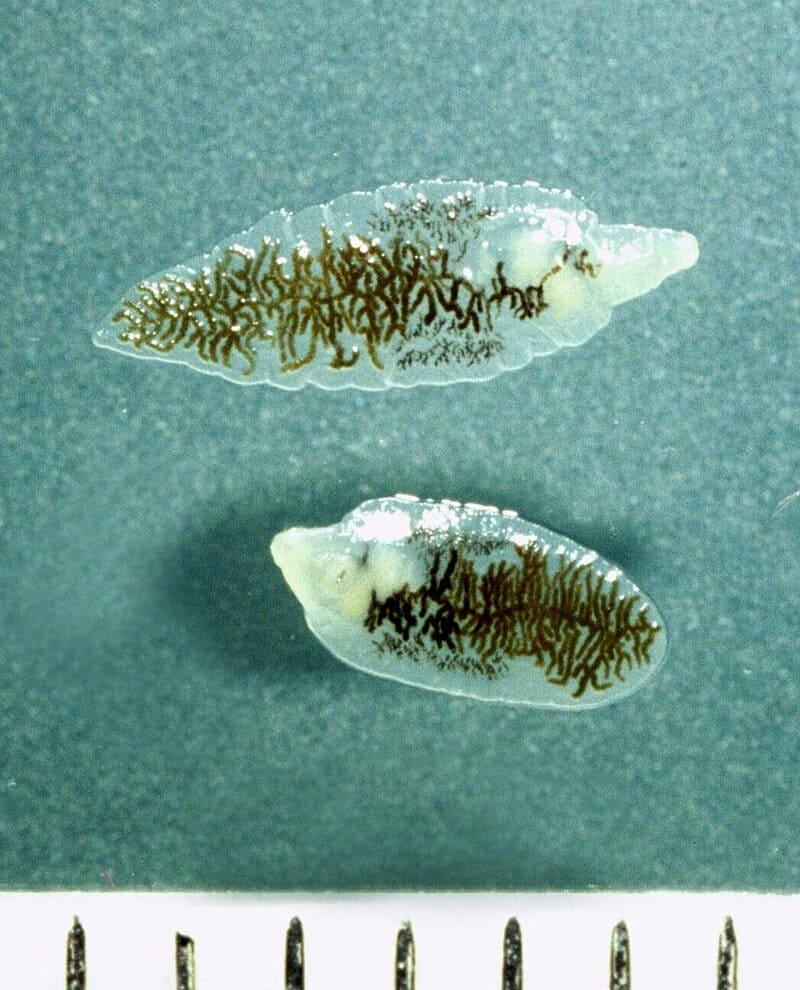
The lancet liver fluke, Dicrocoelium dendriticum, exhibits a complex life cycle involving multiple hosts. Initially, terrestrial snails ingest the parasite’s eggs, which hatch into larvae that develop into sporocysts within the snail’s digestive tract. These sporocysts release cercariae, which are then excreted in the snail’s slime. Ants, attracted to the snail’s slime trail, consume the cercariae, leading to infection. Within the ant, the parasite’s larvae encyst in the abdomen, while one migrates to the suboesophageal ganglion in the brain. This brain-invading parasite manipulates the ant’s behavior, causing it to leave the colony during cooler evening hours, ascend a blade of grass, and bite down on the vegetation, anchoring itself in place. The ant remains in this position overnight, making it more likely to be consumed by grazing mammals, the definitive hosts of the parasite. This behavior is temperature-dependent; if the ambient temperature rises above a certain threshold, the ant releases its grip and returns to normal activity. This adaptation ensures the parasite’s transmission to its next host while minimizing the risk of desiccation or predation of the ant. (sci.news)