4. Leucochloridium paradoxum (Green-Banded Broodsac)
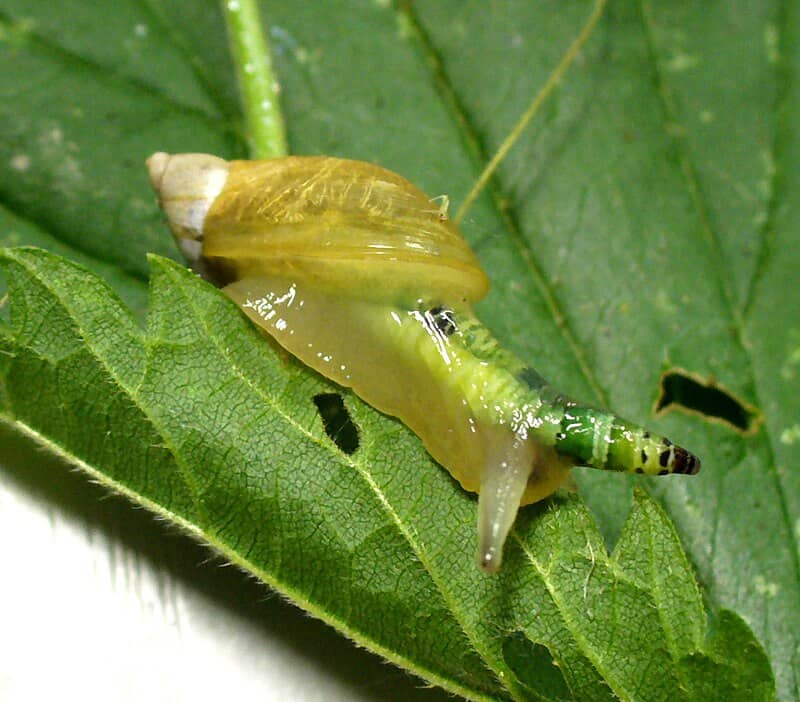
The parasitic flatworm Leucochloridium paradoxum, known as the green-banded broodsac, infects land snails, particularly those of the genus Succinea. Inside the snail’s tentacles, the parasite forms pulsating, colorful broodsacs that mimic the appearance of caterpillars or grubs. This mimicry attracts birds, which consume the infected tentacles, thereby facilitating the parasite’s transmission to its definitive host. The broodsacs pulsate in response to light intensity, and in total darkness, they cease pulsating. This adaptation increases the likelihood of the snail being exposed to predators, enhancing the parasite’s chances of completing its life cycle. (si.edu)