
Building an AI-optimized data center on Earth costs between $15 million and $20 million per megawatt — before a single kilogram of hardware leaves the ground. Yet SpaceX has unveiled the design for its AI1 Compute Satellite, a spacecraft intended to function as a fully operational orbital data center, and Anthropic — one of the world’s most consequential artificial intelligence companies — has agreed to study the use of those orbital data center satellites. The premise sounds extravagant until you examine what the physics of space actually solve, and what entirely new problems they create in return.
Why Earth-Based AI Infrastructure Is Already Hitting a Wall
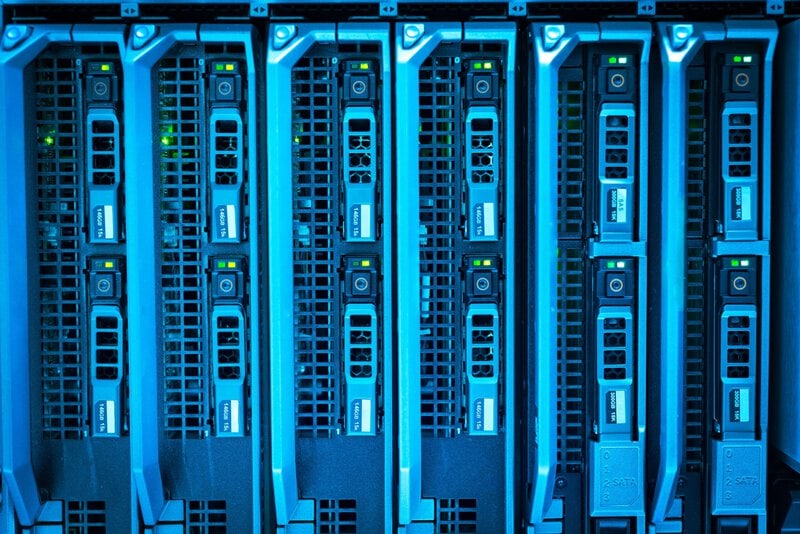
The scale of energy consumption required to train and run modern AI systems is not an abstraction. A single large-model training cluster can draw hundreds of megawatts continuously for weeks — a sustained demand that most regional power grids were not designed to absorb quietly. Cooling compounds the problem. Conventional data centers dedicate roughly 30 to 40 percent of their total energy consumption not to computation but purely to removing the heat that densely packed GPU and TPU chips — the specialized semiconductors that power AI workloads — generate as a byproduct of operation.
The result is a compound scarcity problem. Land, water rights, and proximity to stable power sources are converging into genuinely constrained inputs. Hyperscalers — the industry term for companies that operate data centers at massive scale, including Google, Microsoft, and Amazon — are now competing for sites in ways that more closely resemble resource extraction than conventional real estate development. New data center projects face community opposition, environmental review, and grid interconnection queues measured in years. In several U.S. states, utilities have publicly warned that large data center applications are outpacing available generation capacity, making approval timelines increasingly uncertain.
These terrestrial constraints are what make the space environment worth taking seriously as an alternative, however counterintuitive that premise initially appears. Space offers three things that Earth increasingly cannot: abundant solar energy unmediated by atmosphere or weather, a near-perfect vacuum that eliminates one entire category of cooling infrastructure, and no competing land use whatsoever. Whether those advantages are sufficient to offset the extraordinary cost and complexity of getting there is the central question the field has not yet answered.
The Cooling Paradox: Space Is Both a Perfect Radiator and a Heat Trap
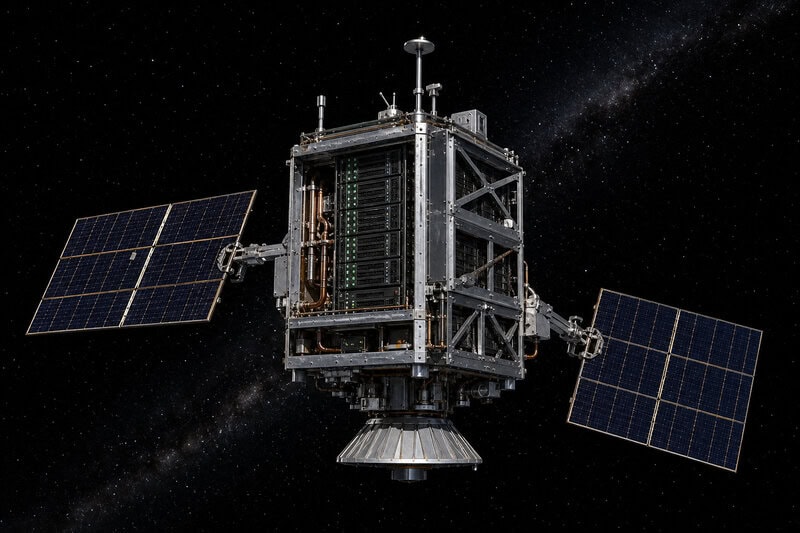
The most counterintuitive physics fact about cooling servers in space is that the vacuum itself cannot cool anything. Heat transfer requires one of three mechanisms: conduction (physical contact with a cooler solid), convection (a moving fluid carrying heat away), or radiation (the emission of infrared energy into the surroundings). The vacuum of space eliminates conduction and convection almost entirely. An unprotected chip floating in orbit has no air to convect heat away and no surface to conduct it into — it can only radiate.
What space does offer, on the radiation side of the equation, is genuinely remarkable. The cosmic microwave background — the faint thermal afterglow of the Big Bang — sits at approximately 2.7 Kelvin, close to absolute zero. A well-engineered radiator panel oriented away from the Sun can shed waste heat into that effectively infinite cold sink with extraordinary efficiency. No chillers. No cooling towers. No water consumption at all. For an industry in which cooling represents 30 to 40 percent of energy overhead, that is a significant structural advantage.
The complication is the Sun itself. A spacecraft in low Earth orbit — typically defined as altitudes between roughly 200 and 2,000 kilometers, abbreviated as LEO — alternates between full solar irradiance of approximately 1,361 watts per square meter and cold eclipse every 90 minutes. Thermal systems must manage violent temperature swings on a schedule that has no terrestrial parallel. One proposed solution for space-based data centers is sun-synchronous orbit, a polar trajectory in which the satellite maintains a consistent angle relative to the Sun throughout each revolution, providing more predictable thermal and power conditions than a standard equatorial orbit. The engineering trade-offs between different orbital configurations remain an active area of study, and no orbital architecture has yet been validated at anything approaching data center scale.
Power: Where the Orbital Case Is Most Compelling
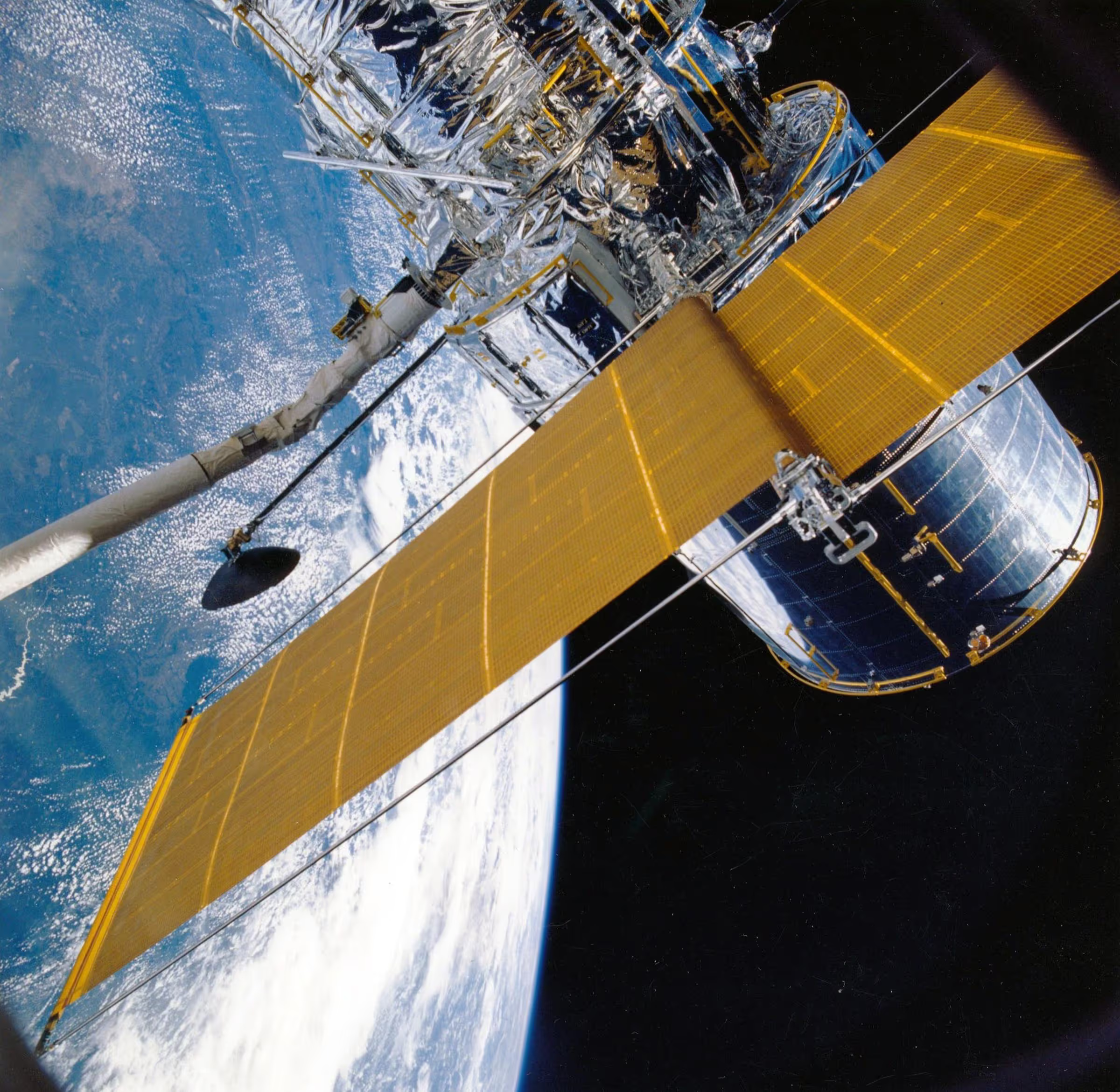
Solar panels in low Earth orbit operate at full solar constant intensity — no clouds, no atmosphere, no seasonal tilt degrading collection efficiency. They receive sunlight during roughly 50 to 60 percent of each orbital period, a figure that compares favorably to even the most productive terrestrial solar installations when capacity factor — the ratio of actual output to theoretical maximum — is considered. Unlike ground-based renewables, orbital solar power is structurally immune to weather variability and geographically unconstrained. The absence of an atmospheric filter also means panels degrade more slowly from dust and particulate fouling, though they face accelerated degradation from the radiation environment discussed below.
The economic enabler that makes this plausible rather than merely interesting is SpaceX’s Starship launch vehicle. If Starship achieves the per-kilogram launch costs the company has projected through rapid reusability, the expense of lifting hardware into orbit shifts from prohibitive to merely aggressive. Analysts examining whether space-based AI data centers make economic sense note that the entire financial case rests heavily on Starship hitting cost targets it has not yet demonstrated at commercial scale — a caveat that matters enormously, because novel launch vehicle programs have historically proven more expensive in practice than initial projections suggested. The gap between projected and realized launch costs has, in past programs, run to multiples rather than percentages.
SpaceX’s successful IPO has been cited as a factor that may help bring the concept of AI data centers in space closer to the realm of plausibility, potentially giving the concept longer financial runway than earlier, smaller entrants in the orbital infrastructure space could sustain. That matters because the timeline to any operational capability is measured in years, not quarters, and the capital requirements for demonstrating even a prototype system at meaningful compute scale are substantial.
Radiation, Reliability, and the Hardware Problem Nobody Talks About
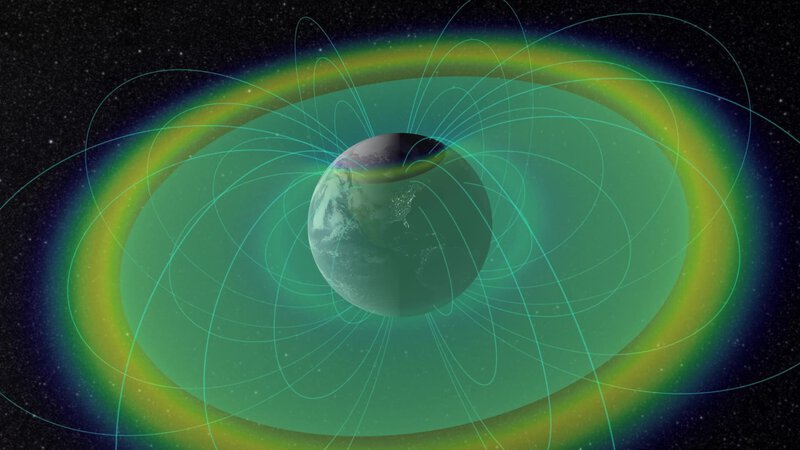
Power and cooling are the headline physics. The problem that receives far less public attention is radiation. In low Earth orbit, and especially beyond the Van Allen belts — the regions of magnetically trapped charged particles surrounding Earth — semiconductor chips are exposed to ionizing radiation that causes what engineers call bit flips: spontaneous, random errors in stored data triggered by energetic particles striking memory cells. The rate of bit flips in orbit is orders of magnitude higher than on Earth’s surface, where the atmosphere and magnetic field provide substantial shielding.
Radiation-hardened chips exist and are used routinely in military and scientific satellites. They are engineered to tolerate the orbital environment. They are also typically far less powerful, far more expensive, and far less energy-efficient than the commercial off-the-shelf GPUs that make modern AI training economically viable at scale. Using standard consumer-grade AI accelerators in orbit would require aggressive software-level error correction and hardware redundancy architectures, adding latency and complexity that partially erode the very performance advantages the orbital environment is supposed to confer.
This tension — between the cheap, powerful chips that AI workloads demand and the hardened, reliable chips that the space environment requires — is one of the most substantive unresolved technical questions in the entire space computing debate. There is also a secondary materials problem: the same radiation environment that disrupts chip logic accelerates degradation in solar panels and thermal management systems over multi-year operational timescales, adding replacement and maintenance costs that ground-based facilities do not incur in the same form. No public announcement from SpaceX or Anthropic has yet addressed either issue in engineering detail, which is a meaningful gap in the public record for a concept that has attracted serious institutional attention.
What SpaceX and Anthropic Are Actually Proposing — and What Remains Unconfirmed
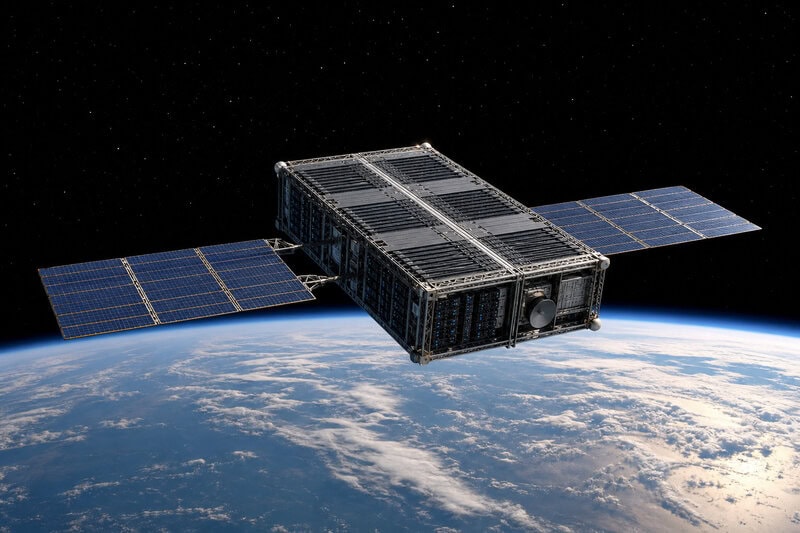
Precision about the state of the program matters here. SpaceX’s AI1 Compute Satellite represents a stated design intent, not a launched or contracted operational system. There is a meaningful difference between an announced concept and demonstrated capability, and SpaceX has not yet crossed that line on this specific program. Anthropic’s commitment to study orbital data center satellites is a research and evaluation commitment — it does not constitute a purchase order, a deployment timeline, or an endorsement that the physics and economics have been resolved to the company’s satisfaction.
It is also worth noting what the current announcements do not address: the latency implications of serving AI inference workloads from orbit, the legal question of data sovereignty for information processed outside any national jurisdiction, on-orbit maintenance and hardware refresh cycles, and the aggregate cost of capital for a system that must be built largely before it generates any revenue. Each of these is a solvable problem in principle. None has been publicly solved in practice.
The most intellectually honest framing, consistent with what published reporting and company statements actually support, is that SpaceX is making a credible, well-resourced engineering bet on a concept that remains genuinely unproven at any operational scale. That is neither dismissible nor confirmable as a success. It is an experiment conducted by an organization with unusual capacity to absorb the cost of being wrong — and with a demonstrated track record, in launch vehicles and satellite internet, of eventually making previously implausible infrastructure economics work.
The Broader Stakes: Jurisdiction, Latency, and What Comes Next

If a functioning network of SpaceX AI infrastructure in space were ever achieved, its implications would extend well beyond data center economics. Orbital computing infrastructure exists entirely outside any nation’s territorial jurisdiction, raising regulatory, security, and geopolitical questions that international law has not yet been formally asked to answer. Sovereign governments that regulate terrestrial data centers by geography and corporate domicile have no clear existing framework for computing infrastructure that overflies every country on Earth every 90 minutes. Data processed in orbit during a pass over one jurisdiction may be stored and retrieved during a pass over another — a fact pattern that existing data residency law was not written to address.
There is also a latency dimension that the current enthusiasm for orbital compute has largely glossed over. Low Earth orbit is close enough — roughly 550 kilometers in the case of Starlink’s operational shell — that round-trip signal latency to the surface runs in the range of 20 to 40 milliseconds, comparable to many terrestrial long-haul connections. That is acceptable for asynchronous workloads like batch AI training. It is more problematic for real-time AI inference applications where sub-10-millisecond response times are expected. The orbital architecture is better suited to some AI use cases than others, and that distinction matters for how seriously any specific commercial proposal should be taken.
The more immediate, measurable impact of the current announcement cycle may be competitive rather than operational. A credible threat that AI compute could migrate to orbit — even one that takes years to materialize — alters the negotiating dynamics between SpaceX and terrestrial hyperscalers, power utilities, and governments competing to host data center investment. The announcement itself carries strategic value independent of whether the hardware ever flies at scale.
The physics underlying space-based data centers are real, the investment behind the concept is real, and the problems it claims to solve — cooling overhead, power scarcity, land constraints — are genuinely pressing. Whether orbital AI infrastructure ultimately proves physically elegant, economically viable, or merely a productive forcing function that pressures better terrestrial solutions into existence, it deserves more rigorous public scrutiny than the current alternation between uncritical excitement and reflexive dismissal has so far produced. The numbers are strange enough, and the stakes large enough, to warrant taking the question seriously on its own terms.