
Since the Industrial Revolution, the United States and other wealthy nations have collectively pumped more carbon dioxide into the atmosphere than the entire developing world combined — a historical imbalance that sits at the unresolved heart of every modern climate negotiation, and one that the world’s highest court moved, in July 2025, from the realm of moral argument into the domain of international law. Understanding who bears responsibility for that imbalance — and what a fair reckoning would actually require — is no longer an abstract philosophical exercise. It is an urgent legal and political question with measurable consequences for billions of people.
The Carbon Ledger Nobody Wants to Open
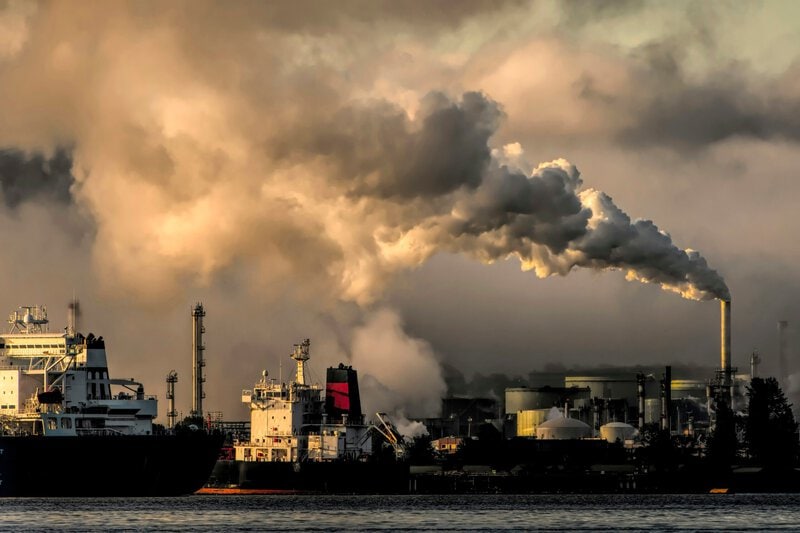
The atmosphere does not reset between treaties. Carbon dioxide emitted in 1880 is still trapping heat today, which means the countries that industrialized earliest have already spent a disproportionate share of the planet’s finite carbon budget. That is not a political talking point — it is a measurable physical reality. Understanding why that math matters requires stepping back to examine who burned what, when, and who is now paying the price.
Carbon dioxide is a long-lived greenhouse gas: roughly half of any pulse of CO₂ emitted today will still reside in the atmosphere a century from now, according to established atmospheric chemistry. This means historical emissions are not merely a matter of historical guilt — they represent an ongoing physical forcing of the climate system. Annual emissions figures, the ones most often cited in headlines, systematically undercount this legacy effect by ignoring the accumulated stock of CO₂ that wealthy nations deposited over more than 150 years of industrial output.
A key concept here is the carbon budget: the total cumulative amount of CO₂ humanity can still emit while keeping warming below a given threshold. Once spent, it cannot be reclaimed. Historical draws on that budget are therefore permanently relevant, not ancient history. Research published in Nature Communications on global fossil fuel reduction pathways confirms that scientific scenarios consistent with limiting warming to 2°C or below require careful analysis of the speed, trajectory, and feasibility of different fossil fuel phase-down paths — and those pathways look radically different depending on whether a country’s baseline includes 150 years of industrial output or 30. Ignoring that difference is not a neutral analytical choice; it is a political one.
The Principle That Tries to Square the Circle: CBDR-RC
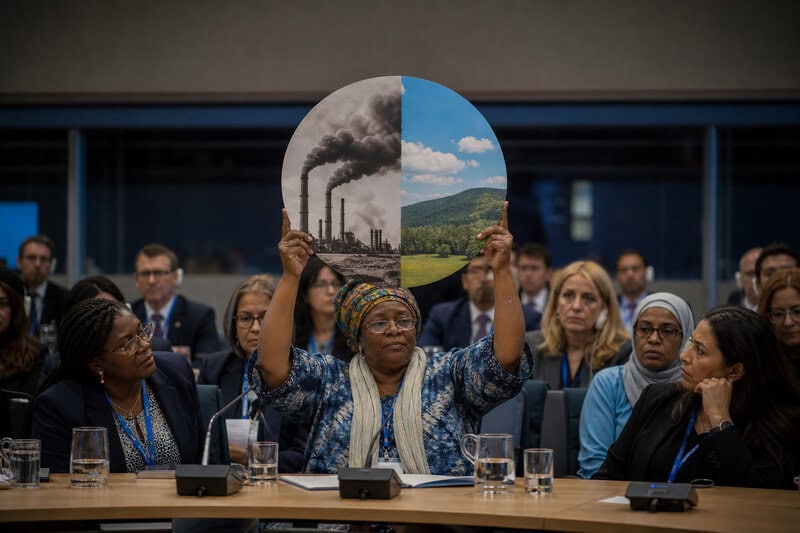
International climate law has a formal mechanism for acknowledging this imbalance. The principle of Common But Differentiated Responsibilities and Respective Capabilities — known by its acronym CBDR-RC — holds that while all nations share a common obligation to address climate change, the degree of responsibility and the expected pace of action should reflect each country’s historical contribution to the problem and its current economic capacity to act.
CBDR-RC was enshrined in the 1992 UN Framework Convention on Climate Change and reaffirmed in the Paris Agreement, making it one of the most durable — and most contested — concepts in international environmental law. Legal scholars writing in the Völkerrechtsblog have noted that the principle recognizes both historic and continuing economic inequality between nations, providing a doctrinal foundation for differentiated climate action that has survived three decades of renegotiation.
Proponents argue the principle is simply equitable accounting: a country that built its wealth on coal and oil over 150 years cannot fairly demand the same immediate phase-out timeline from a nation still trying to electrify rural villages. Critics — particularly representatives of some high-emission emerging economies — argue the framework is increasingly outdated as countries like China now rank among the world’s largest annual emitters. That tension is genuine and unresolved. It points to a real limitation of CBDR-RC as currently operationalized: the principle is stronger as a statement of historical equity than as a precise guide to who should cut how much, how fast, starting now. Renegotiating its application to the present landscape of emissions is work the international community has not yet done honestly.
The ICJ Opinion: From Moral Argument to Legal Exposure

In July 2025, the International Court of Justice — the United Nations’ principal judicial organ — issued a landmark advisory opinion with potentially sweeping consequences. The court ruled that nations failing to prevent foreseeable climate harm could face obligations of compensation and restitution, and affirmed that a healthy environment constitutes a fundamental human right. What had been largely an ethical debate was elevated into the domain of international legal obligation.
The court signaled explicitly that subsidies, licensing, and financing for new fossil fuel infrastructure are not legally neutral acts in a world where climate harm is scientifically established and foreseeably catastrophic. Carbon Brief’s analysis of the ICJ opinion explains that advisory opinions are not binding judgments in the way that contentious case rulings are, but they carry significant legal and diplomatic weight — informing domestic litigation, treaty interpretation, and the negotiating positions of states in multilateral forums. Legal experts have described them as “soft law with hard edges,” and the 2025 opinion is already being cited in climate cases before domestic courts in multiple jurisdictions.
The human rights framing is particularly significant and deserves emphasis. By grounding climate action in the language of fundamental rights rather than treaty compliance alone, the court opens parallel legal avenues through human rights bodies and domestic courts that operate independently of the climate treaty regime. A government can, in principle, be challenged in its own courts for failing to protect its citizens’ right to a healthy environment — a pathway that does not require waiting for a new international agreement and that empowers affected communities, not just states, to seek accountability.
Who Bears the Burden? Fossil Fuel Equity and Frontline Communities

The cruelest asymmetry in the climate crisis is geographic. The worst impacts of fossil fuel pollution and climate change fall most heavily on communities that are least historically responsible for those emissions — small island states, sub-Saharan Africa, South and Southeast Asia. This pattern is extensively documented by the Intergovernmental Panel on Climate Change and represents one of the starkest examples of environmental injustice in recorded history.
Fossil fuel equity, as a concept, goes beyond emissions accounting to ask a broader set of questions: Who profits from fossil fuel extraction? Who absorbs the health costs of local air pollution? Who loses the most when that infrastructure must eventually be retired? Those questions rarely have the same answer. The Climate and Health Alliance’s briefing on the health harms of fossil fuels across their full lifecycle documents how the burdens of extraction, combustion, and pollution fall disproportionately on low-income and marginalized communities — a pattern that holds both within wealthy nations and between the Global North and South. Respiratory disease, contaminated water, and degraded land are not shared equally by the shareholders and the neighbors of fossil fuel infrastructure.
Loss and damage — the term used in climate negotiations for climate impacts that exceed a country’s capacity to adapt — became a formal agenda item at COP27 in 2022 and resulted in a new dedicated fund. Financing commitments, however, remain far below what affected nations report they need, and disbursement mechanisms remain slow and administratively burdensome. Critically, IPCC Working Group III has noted that perceived fairness in burden-sharing is one of the strongest empirical predictors of whether countries will implement ambitious national climate policies. Differentiated responsibility is, by that analysis, not a moral luxury but a practical prerequisite for effective collective action.
Why Rich Nations Resist the Full Accounting
Wealthy governments have strong structural incentives to resist frameworks that translate historical emissions into financial liability. Even a modest per-tonne carbon debt calculation applied to two centuries of US or European industrial output would produce compensation figures in the trillions of dollars. The resistance is not simply bad faith — it also reflects genuine scientific and legal complexity that deserves honest treatment rather than dismissal.
Establishing causation between a specific country’s historical emissions and a specific harm — a flood in Bangladesh, a drought in the Sahel — requires probabilistic attribution science that, while rapidly maturing, remains contested in legal contexts. Courts have historically been reluctant to assign liability in cases where causation is statistical rather than direct, though that reluctance is eroding as attribution methods improve and produce narrower, more defensible estimates of the contribution of specific emission sources to specific events.
Some economists argue that wealth generated through fossil fuel industrialization funded the technologies — solar panels, wind turbines, electric vehicles — that developing nations can now deploy at lower cost, a so-called leapfrogging benefit that partially offsets historical inequity. Critics respond that this framing conveniently ignores physical damage already locked into the climate system, and that cheaper solar panels do not rebuild homes destroyed by more intense hurricanes or restore agricultural land lost to desertification. Both observations are true, which is precisely what makes this accounting exercise so resistant to tidy resolution.
The result is a persistent negotiating gap. Analysis published in Australian Outlook by the Australian Institute of International Affairs captures this dynamic clearly: developing nations arrive at climate talks demanding equity-based burden-sharing grounded in historical emissions data, while wealthy nations propose forward-looking frameworks that treat all current emitters more symmetrically. The disagreement is as much about liability as it is about climate science, and no technical fix will dissolve it without political will on the part of high-income countries to acknowledge what the historical record actually shows.
What a Fair Carbon Reckoning Would Actually Look Like
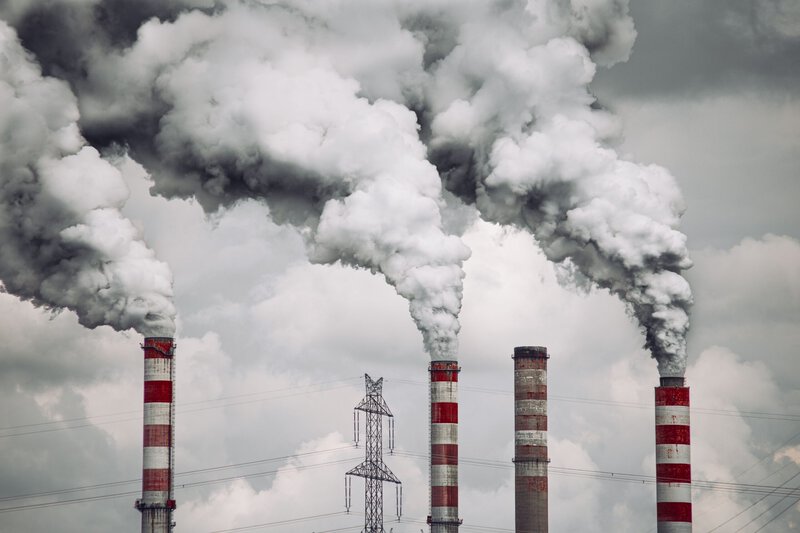
A rigorous differentiated framework would integrate at least three variables: cumulative historical emissions representing the stock problem; current annual emissions and their trajectory; and GDP-adjusted capacity to finance the transition. No single metric captures the full picture, and cherry-picking one is a political act masquerading as neutral accounting. The conversation about which combination of metrics is most defensible is one that climate diplomacy has consistently deferred, to the frustration of vulnerable nations that need concrete commitments, not further methodological debate.
Practical near-term steps that climate analysts identify as consistent with differentiated responsibility include the following:
- Accelerated financing of clean energy infrastructure in the Global South, structured as grants rather than loans that compound existing debt burdens already accumulated in part through adaptation to climate impacts wealthy nations caused.
- Reformed loss-and-damage fund mechanisms with disbursement timelines and capitalization levels commensurate with the scale of documented harm, not the scale of what donor governments find politically convenient.
- Elimination of fossil fuel subsidies in wealthy nations before demanding equivalent action from developing countries that may lack alternative revenue sources, energy infrastructure, or the fiscal buffers to absorb rapid transition costs.
The Sierra Club has documented the widening gap between countries’ stated climate targets and their continued expansion of fossil fuel production — a contradiction that sits at the center of every credibility argument about differentiated responsibility. Nations cannot plausibly demand faster transitions from others while simultaneously licensing new oil and gas fields at home. That hypocrisy is not merely rhetorical ammunition for adversaries; it materially undermines the trust that multilateral climate cooperation requires.
The ICJ opinion, combined with rapidly maturing climate attribution science, is beginning to shift the legal terrain in ways that may prove durable regardless of the pace of treaty negotiations. As courts in multiple jurisdictions cite the advisory opinion, and as attribution studies increasingly link specific weather disasters to specific emission sources with greater statistical precision, the firewall between historical responsibility and legal liability is becoming harder to maintain. The carbon ledger opened at the dawn of industrialization cannot be closed by pretending all nations came to the table at the same time, with the same resources, and the same historical footprint. The scientific record does not support that pretense. Increasingly, neither does the international legal order.