
The ocean has already absorbed roughly a quarter to a third of every tonne of carbon dioxide humanity has released since the Industrial Revolution. Because of the chemistry governing that absorption, its capacity to keep doing so is measurably declining with every passing decade. That single geophysical fact transforms the politics of climate delay into something harder and more permanent: not a missed opportunity, but a physical commitment etched into seawater — and it is the most important piece of context for understanding why a two-day conference in a Colombian port city in April 2026 carries more than symbolic weight.
When Delegates Met in a Coal City: The Point of Santa Marta

On 28-29 April 2026, government representatives, subnational officials, and civil society delegates gathered in Santa Marta, Colombia, for the First Conference on Transitioning Away from Fossil Fuels. The choice of venue was deliberate. Santa Marta plays a significant role in coal exports, making it an unlikely but precisely chosen backdrop for a forum whose central argument is that fossil fuels must be named — not euphemized — as the root cause of climate change. Hosting the conference in a coal-dependent community was itself a statement that the transition conversation cannot be confined to capitals insulated from its costs.
The conference was not a negotiation in the conventional sense. It was explicitly designed as a space for countries, subnational governments, and other stakeholders that already accept the need for a fossil fuel transition — a coalition-building forum rather than a room in which committed governments must persuade reluctant holdouts. According to reporting by the International Institute for Sustainable Development, its stated objective was to initiate a concrete process through which committed governments could advance collective efforts toward a global fossil fuel phase-out, moving beyond the softer language of “reducing unabated use” that characterized the COP28 outcome text.
That linguistic distinction matters once the underlying physics is understood. The science does not recognize a meaningful difference between “unabated” and “abated” combustion in the way diplomats do: carbon dioxide accumulates in the atmosphere and ocean regardless of the policy framework under which it was emitted, and the accumulation is the harm.
The Carbon Cycle and the Ocean: Why CO₂ Is Not Like Other Pollution

To understand why the timing of a fossil fuel transition carries geophysical consequences, it is necessary to understand what makes CO₂ categorically different from other air pollutants. Sulfur dioxide, the principal driver of acid rain, washes out of the atmosphere within days. CO₂ does not. The IPCC Sixth Assessment Report (AR6, 2021) documents what climate scientists call the “long tail” of CO₂: roughly half of any pulse emission is absorbed within decades by land and ocean sinks, but a substantial fraction persists in the atmosphere for centuries to millennia. Some fraction — on the order of 20 percent — remains detectable on timescales of tens of thousands of years.
The ocean’s role in moderating this accumulation depends on carbonate buffering chemistry. When CO₂ dissolves in seawater, it forms carbonic acid, which reacts with carbonate ions to form bicarbonate. This reaction is what allows the ocean to absorb CO₂ at all. The problem is self-limiting: as more CO₂ is absorbed, the concentration of carbonate ions falls, weakening the buffer and reducing the ocean’s capacity to absorb additional CO₂. This process — ocean acidification — is not merely an ecological threat to coral reefs and shellfish; it is a feedback that progressively erodes the ocean’s function as a carbon sink.
Research published by the Global Carbon Project confirms that while the ocean carbon sink remains active, it is showing regional stress signals, and models project that sink efficiency will continue to decline under high-emission scenarios. The practical consequence is that a tonne of CO₂ emitted today enters an ocean slightly less capable of absorbing it than the ocean of a decade ago — and a tonne emitted in 2035 will face an even less capable ocean than that. Delay does not merely postpone action; it physically increases the atmospheric burden that any given level of future action must address. This is the scientific definition of irreversibility in the context of the fossil fuel transition: not that nothing can improve, but that each increment of delay locks in a higher baseline from which all future efforts must begin.
Tipping Points: Where Irreversibility Becomes Non-Linear

Carbon cycle physics alone would be reason enough for urgency. But the IPCC AR6 and a landmark 2022 paper published in Science by Armstrong McKay and colleagues identify a further layer of risk: climate tipping points. These are thresholds in the Earth system beyond which self-reinforcing feedbacks drive change independently of further human emissions. The list includes West Antarctic Ice Sheet destabilization, Amazon rainforest dieback, and permafrost carbon release — each of which, once initiated, could continue even if global emissions fell to zero.
Armstrong McKay et al. found that some of these tipping points may be reachable at warming levels as low as 1.5°C. The study characterizes this as emerging rather than fully settled consensus, and genuine scientific uncertainty remains about both the precise thresholds and their interactions. That uncertainty, however, is not exculpatory. It is an argument for precaution rather than complacency, because the relevant question is not whether tipping points will definitely be crossed but what the cost of crossing them would be if they are — a cost that, by definition, cannot be undone.
Several tipping elements are coupled in ways that amplify this risk. Permafrost thaw releases methane and CO₂, which warm the climate further. Additional warming accelerates ice melt. Reduced ice coverage lowers Earth’s albedo — the proportion of sunlight reflected back into space — warming the ocean in turn. That warmer ocean absorbs CO₂ less efficiently and accelerates further ice loss. The cascade is not hypothetical; its individual components are documented in the observational record. For the fossil fuel phase-out debate, this non-linearity means the difference between acting now and acting in a decade is not arithmetically proportional to the difference in emissions. Delay may cross thresholds that permanently alter the cost and feasibility of stabilization.
What the Santa Marta Conference Was — and What It Was Not
Against this scientific backdrop, the design of the Santa Marta conference reflects a deliberate strategic choice. The European Parliament produced a briefing on the conference’s methodology and central dynamics, reflecting institutional interest in how a parallel-track coalition of committed governments might interact with — or accelerate — the formal UNFCCC process.
The UNFCCC process has, critics argue, been structurally constrained by consensus rules that give fossil-fuel-exporting states an effective veto over language that directly names their primary export as the problem. The Santa Marta conference was explicitly designed to work around that constraint by building a committed-country coalition outside the veto structure — not to replace the UNFCCC, but to generate political momentum and institutional precedent that the formal process has been unable to produce on its own. This parallel-track approach has historical analogues in arms control and trade law, where like-minded coalitions have sometimes created facts on the ground that multilateral bodies later codified.
Analysis from the Center for International Environmental Law noted that conference declarations urged states to act by ending fossil fuel expansion, eliminating subsidies, and cooperating in good faith to deliver a just transition. That language is notable for what it borrows from treaty obligation frameworks rather than voluntary pledge structures — a framing with legal, not merely rhetorical, implications, and one that sets up the international law arguments directly.
What the conference was not is equally important to state clearly. It produced no binding treaty, no enforcement mechanism, and no financing commitments with specified amounts or timelines. Its value is prospective: it established a coalition, a process, and a discursive frame. Whether those translate into measurable outcomes is the question its organizers will be judged against.
The Duty to Co-operate: What International Law Says About Irreversible Harm
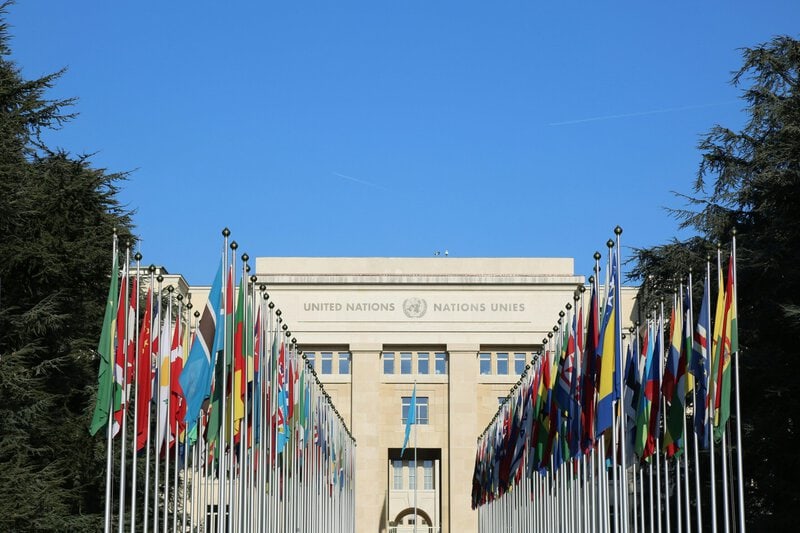
The legal dimension of the Santa Marta conference is analyzed in detail in a commentary published by Opinio Juris. The core argument runs as follows: the duty to co-operate — embedded in the UN Charter, the UNFCCC itself, and principles of customary international law — takes on heightened legal force when the harm at stake is irreversible, because states cannot later compensate for geophysical thresholds they failed to prevent.
The reasoning connects directly to the carbon cycle physics described above. If each year of delay in a global fossil fuel phase-out produces permanent, uncompensable atmospheric and oceanic change, then the obligation to co-operate in good faith is not merely procedural. Delay becomes, on this reading, not just a missed opportunity but conduct substantively contrary to the legal obligation itself. Irreversibility gives the duty-to-co-operate argument a time-sensitivity it did not previously carry with the same force — one that maps onto the declining buffer capacity of the ocean sink in precise scientific terms.
Whether the Santa Marta coalition constitutes a legally meaningful expression of that duty, or merely a political signal, remains genuinely contested. For the argument to gain traction in international law, legal scholars note that states within the coalition must demonstrate consistent practice and opinio juris — the belief that they are acting out of legal obligation rather than political convenience. A single two-day conference cannot alone establish that. It requires institutionalized follow-through: treaty ratification, domestic legislation, financing mechanisms, and verified emission reductions that could be presented as evidence of a developing legal norm rather than a diplomatic gesture.
The broader legal landscape provides some supporting architecture. The International Court of Justice’s advisory opinion process on climate obligations, requested by the UN General Assembly and with proceedings ongoing, may eventually clarify the scope of states’ legal duties in ways that give coalitions like Santa Marta’s a more formal anchor. The Opinio Juris commentary situates the conference within that evolving legal environment rather than treating it as a self-contained event.
Why the Science and the Law Are Now Converging

The deeper significance of the Santa Marta conference is that it marks a moment when two previously parallel tracks — scientific projections of CO₂ irreversibility and international legal obligations of cooperation — are converging on the same practical conclusion: that action must happen at a pace set by geophysical constraints, not diplomatic convenience.
Established scientific consensus, as reflected in IPCC AR6, holds that limiting warming to 1.5°C requires global CO₂ emissions to reach net zero around mid-century and significant reductions in fossil fuel use across all sectors this decade. The phrase “this decade” is not rhetorical emphasis. It reflects the ocean carbon physics described here, under which emissions in the 2020s are disproportionately consequential relative to the same volume emitted later, precisely because the sink is progressively weakening. Earlier emissions are processed by a more capable ocean; later emissions by a less capable one. The asymmetry is chemical, not political.
The emerging and still-debated science on coupled tipping point interactions adds a precautionary dimension to this calculus. Even where the probability of crossing multiple tipping points simultaneously is uncertain, the irreversibility of crossing them makes the expected cost of inaction asymmetrically high — a risk calculus that informs both scientific and legal arguments for urgent cooperation in ways that reinforce rather than merely echo each other. This convergence is what gives the Santa Marta conference more than atmospheric significance: it is taking place at the intersection of a physical deadline and an evolving legal obligation, and that intersection is narrowing.
The choice of Santa Marta as host underscored that this convergence must also reckon with economic reality. The fossil fuel treaty movement, which has long advocated for a supply-side agreement analogous to arms control treaties, frames the just transition question as a test of whether wealthy nations will provide the financing and technology transfer necessary to make the phase-out equitable rather than merely declaratory. Without that, phase-out commitments risk being declarations that impose costs on fossil-fuel-dependent communities while leaving the underlying economic structure intact — a failure mode that would undermine both the legal and political legitimacy of the coalition.
What Comes Next: From Coalition to Mechanism
The Santa Marta conference’s stated purpose was to initiate a process, not conclude one. Its organizers were explicit that it represented a first step — which means its value will ultimately be judged by what follows: whether the coalition it convened produces binding or semi-binding mechanisms, specified financing commitments, and measurable phase-out timelines with verification frameworks, rather than a further layer of non-enforceable declarations that the climate policy landscape already contains in abundance.
Several specific tests will determine whether the conference is retrospectively significant. First, do participating governments translate conference language into domestic legislation or formal treaty proposals within a defined timeframe? Second, does the coalition expand to include states that were absent from Santa Marta, particularly major emerging economies whose fossil fuel trajectories are central to global emissions arithmetic? Third, do the financing commitments implied by the just transition framing acquire specific numbers, and are those numbers new money rather than repackaged existing pledges?
The carbon cycle physics reviewed here suggests the window for avoiding the most severe irreversibility is measured in years to a decade or two, not generations. That timeframe makes the pace of coalition-building and mechanism design directly consequential in scientific terms — not as a metaphor for urgency, but as a literal constraint imposed by the declining buffer capacity of seawater. The Geneva Environment Network’s analysis of the conference situates it within a broader arc of climate diplomacy that connects Geneva-based multilateral institutions to the emerging coalition-of-the-willing approach Santa Marta represents — a useful frame for understanding where this process sits in the larger institutional landscape.
Whether the First Conference on Transitioning Away from Fossil Fuels is remembered as a turning point or as another well-intentioned forum will depend on the same variable that has always determined climate outcomes: the speed and scale at which pledges translate into the physical reduction of fossil fuel combustion. That reduction will be measured not in diplomatic language but in the parts per million of atmospheric CO₂ that the ocean will — or will not — be asked to absorb by a buffer whose capacity diminishes with every year the answer is deferred.