3. Mapping Temperature Extremes
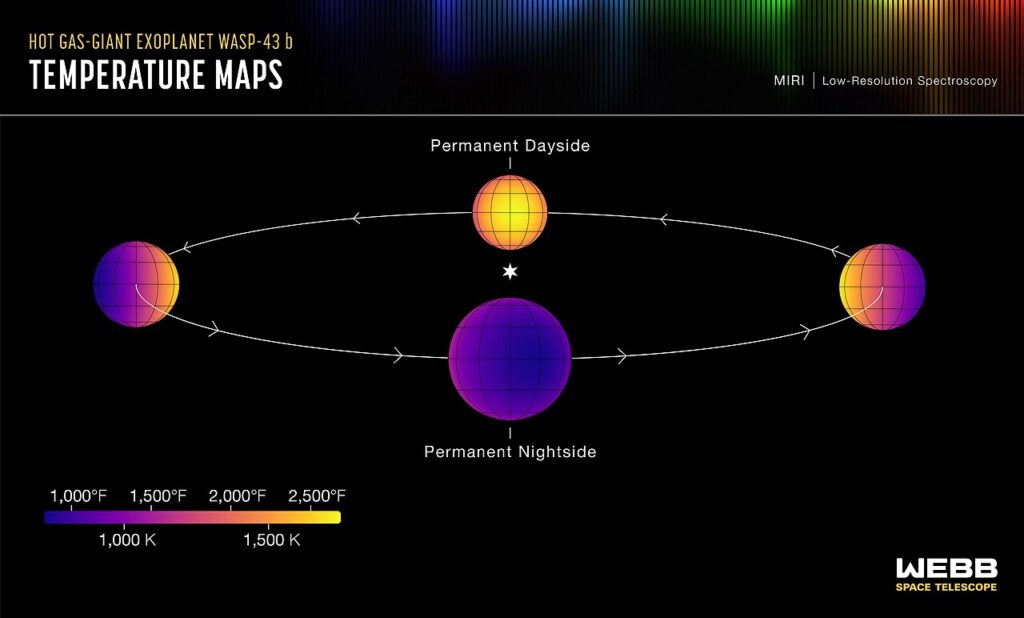
Webb’s sensitive instruments have allowed scientists to map striking temperature contrasts between WASP-43b’s blistering day side and its much cooler night side. Surface temperatures on the day side soar above 2,000°C, offering a dramatic look at how heat is distributed across this extreme planet. These thermal maps shed light on powerful atmospheric currents and circulation patterns unique to ultra-hot Jupiters. Such observations, as reported by Science News, are deepening our grasp of how these exotic worlds evolve and interact with their parent stars.