
Of the five Space Shuttles that ever carried crews to orbit, two never came home. The investigations that followed each disaster revealed not isolated accidents but a vehicle whose fundamental architecture made catastrophe an ever-present possibility. Understanding exactly why NASA walked away from the shuttle in 2011 means confronting a string of hard engineering and management realities that accumulated over three decades of flight — realities the agency ultimately concluded it could no longer responsibly ignore.
A 40% Fleet Loss Rate That No Airline Would Tolerate

Two of the five operational Space Shuttles — Challenger in 1986 and Columbia in 2003 — were destroyed during missions, representing a 40% loss of the operational fleet. Across 135 missions, the program’s crew fatality rate was roughly 1.5%, a figure that dwarfs commercial aviation’s target of fewer than one fatal accident per million flights. Those numbers alone reframe the shuttle’s legacy from engineering triumph to statistical warning.
The Columbia Accident Investigation Board concluded after the 2003 disaster that the Space Transportation System was fundamentally unsafe, characterizing the loss rate as a structural feature of the design rather than a streak of bad luck. That institutional verdict made the retirement of the program not a matter of budget convenience but of basic safety accounting — the kind no responsible agency could indefinitely defer. NASA’s official Space Shuttle program page documents the full scope of the program, including both disasters and their consequences.
Foam Insulation — The Mundane Material That Doomed Columbia
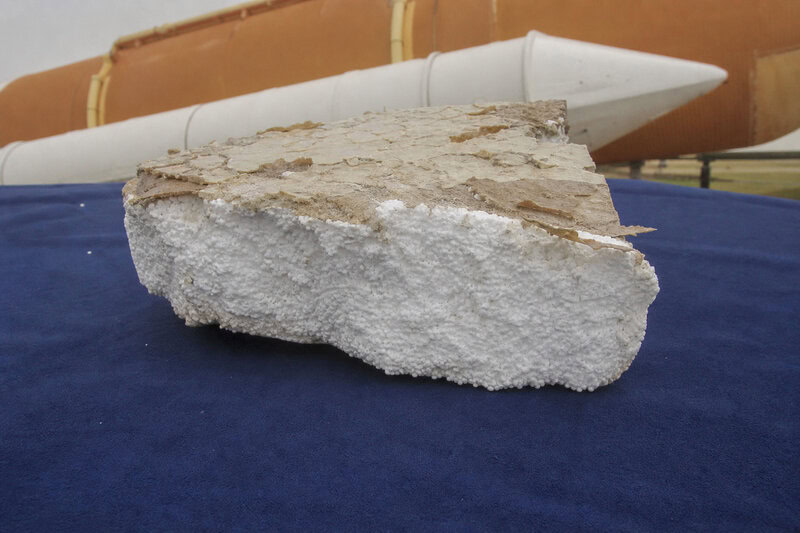
Columbia broke apart during re-entry on February 1, 2003, because a briefcase-sized piece of foam insulation shed from the External Tank during launch punched a hole in the orbiter’s reinforced carbon-carbon wing leading edge — the specialized ceramic composite material designed to survive the extreme heat of atmospheric re-entry. The damage was invisible from the ground, and the crew had no means to repair it in orbit. When Columbia hit the upper atmosphere on the way home, catastrophic structural failure was inevitable.
The Columbia Accident Investigation Board identified foam-shedding not as a freak accident but as a recurring, documented engineering problem that NASA management had normalized over years of flights. Because the shuttle launched with the orbiter mounted beside — rather than on top of — its External Tank, debris from the tank could strike the orbiter’s vulnerable thermal protection system on every single flight. That design vulnerability was never fully eliminated across the program’s entire operational life. Britannica’s overview of the shuttle’s retirement identifies this systemic flaw as central to the program’s ultimate end.
Challenger’s O-Rings Had Already Failed on Earlier Flights

Challenger was destroyed 73 seconds after launch on January 28, 1986, when an O-ring seal — a rubber gasket designed to prevent hot combustion gas from escaping the joints of the Solid Rocket Booster — failed in the cold morning air. The Presidential Commission investigating the disaster, known as the Rogers Commission, found that O-ring erosion had been observed and documented on multiple previous shuttle flights. Engineers at contractor Morton Thiokol warned NASA management the night before launch that freezing overnight temperatures made a seal failure dangerously likely. Management overruled them.
The Rogers Commission characterized that override as a catastrophic breakdown in NASA’s safety culture, not merely a technical miscalculation. The detail that makes the finding so damning is straightforward: the erosion was documented, discussed at the highest levels of the program, and ultimately reframed as an acceptable engineering variance. Seven crew members died as a direct consequence of a known risk that institutional pressure had caused decision-makers to tolerate.
Each Launch Cost at Least $450 Million — Far More Than Originally Promised
NASA’s per-launch cost reached an estimated $450 million or more by the program’s final years, according to NASA’s own accounting — a figure that bears almost no resemblance to the economic projections made to Congress when the shuttle was approved in the early 1970s. At that time, agency officials projected that reusability would drive costs as low as $10 million per flight in then-year dollars, with up to 50 missions flown annually making the economics viable. Neither projection came close to reality.
The highest annual flight rate the shuttle ever achieved was nine missions, in 1985. That chronic shortfall meant the enormous fixed costs of maintaining thousands of specialized workers and a sprawling launch infrastructure were divided across far fewer flights than the economic model assumed, compounding per-mission costs year after year. Astronomy.com’s analysis of the retirement decision identifies this persistent gap between projected and actual economics as one of the program’s most unresolvable structural problems.
Turnaround Time Was Measured in Months, Not Days
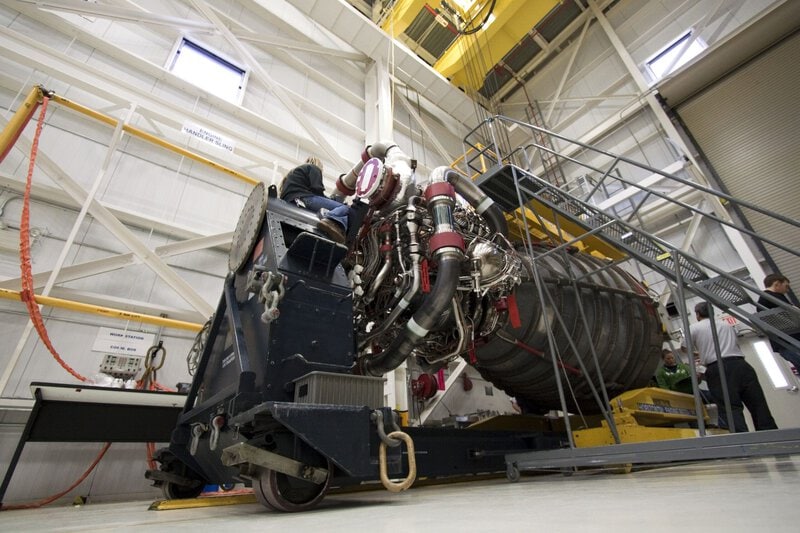
NASA originally projected a two-week turnaround between shuttle flights. In practice, refurbishing an orbiter between missions typically required months and tens of thousands of labor hours. The shuttle’s main engines, rated for multiple uses, had to be individually inspected and often partially disassembled after each flight — a process that alone could consume weeks of skilled technician time before any other processing work began.
NASA identified slow turnaround as one of the three primary drivers behind the program’s unsustainable economics, alongside raw cost and safety. The central irony is that the complexity intended to enable reuse was itself what made reuse so expensive and time-consuming. An infrastructure designed for the operational tempo of an airline was, in practice, running at something closer to the pace of a naval vessel overhaul.
The Side-Mount Launch Configuration Was a Safety Compromise Built In from the Start
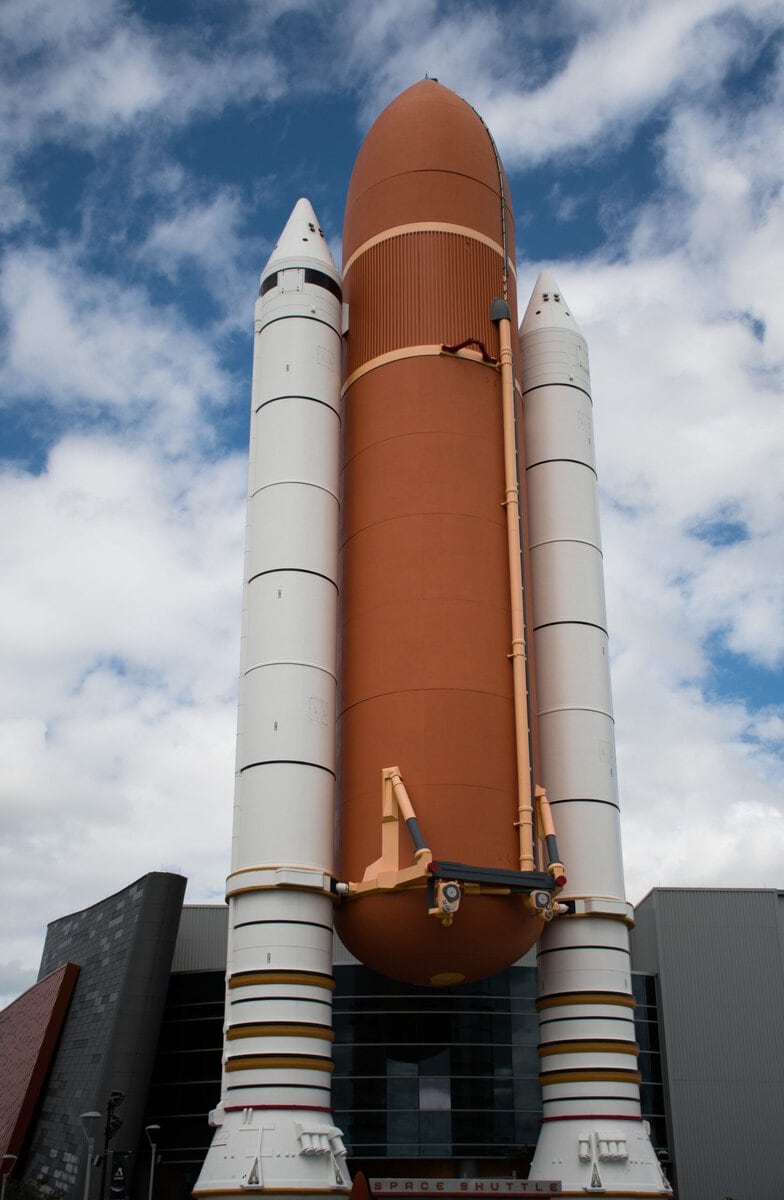
Unlike the Saturn V rockets that carried Apollo astronauts — where the crew capsule sat atop the launch stack, safely above any potential explosion or debris — the Space Shuttle mounted its crew compartment beside the propellant stack. That geometry meant that any debris, fire, or structural rupture below or alongside the vehicle directly threatened the orbiter and its crew, with no protective separation. It was a design trade forced by the decision to fly a winged vehicle that had to land on a runway.
The side-mount configuration also made it impossible to add a conventional launch-escape tower — the crew-survival system used successfully on Mercury, Gemini, and Apollo, and incorporated into today’s Orion capsule and SpaceX Crew Dragon. The Columbia Accident Investigation Board specifically cited the absence of a practical crew-escape system as a safety deficiency that was a direct consequence of the shuttle’s fundamental design architecture — not an oversight that could be patched, but a structural limitation that could never be fully corrected. Wikipedia’s Space Shuttle retirement article details how this architectural reality shaped the retirement debate.
The Shuttle’s “Reusability” Required Rebuilding Key Components After Every Flight
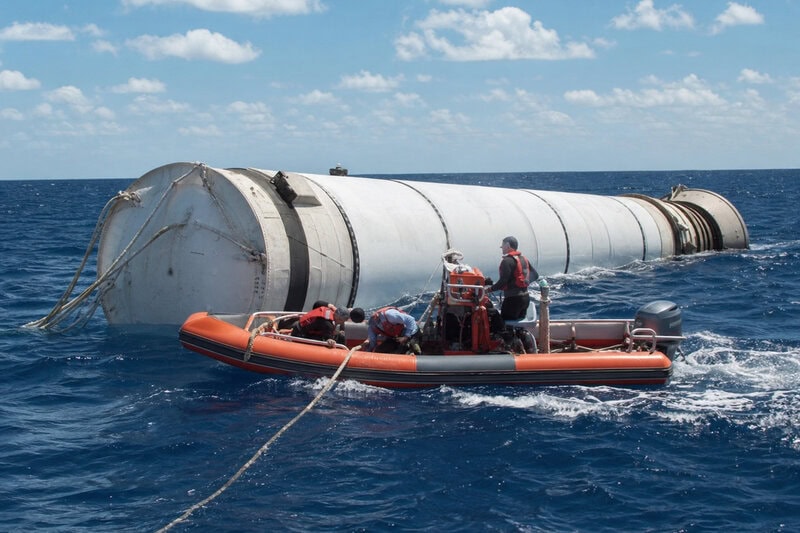
The two Solid Rocket Boosters were recovered from the ocean after each launch and refurbished — but saltwater immersion degraded their components, including the O-ring joints implicated in the Challenger disaster, and the labor-intensive rebuilding process negated much of the expected cost savings from recovery. Meanwhile, the External Tank, the largest single component of the launch stack, was entirely expendable and destroyed on every mission, making the shuttle only partially reusable despite its widespread reputation as a fully reusable vehicle.
NASA found that the labor intensity of post-flight processing pushed the shuttle’s operating costs far closer to those of a conventional expendable rocket than to the airliner-like economics its designers had projected. The word “reusable” described an aspiration more than an operational reality, and the gap between the two was measured in hundreds of millions of dollars per flight.
NASA’s Return to Rockets After Retirement Was an Implicit Verdict on the Spaceplane Model

Following the shuttle’s retirement with the landing of Atlantis on July 21, 2011, NASA pivoted decisively away from the reusable spaceplane concept. For deep-space exploration, the agency developed the Space Launch System — a conventional expendable heavy-lift rocket. For crew transport to the International Space Station, it contracted with SpaceX and Boeing under the Commercial Crew Program, producing vehicles — Crew Dragon and Starliner — that use capsule-and-rocket architectures with integrated launch-escape systems, conceptually similar to Apollo and a direct philosophical reversal of the shuttle era. SlashGear’s examination of the shuttle’s retirement explores how thoroughly NASA’s post-shuttle direction repudiated the spaceplane model.
That pivot was an institutional acknowledgment that, for the missions NASA actually needed to fly, simpler expendable or semi-reusable rockets offered better trade-offs across cost, safety, and reliability. It was not a statement that the shuttle’s engineers had failed as individuals, but that the political and budgetary constraints imposed on them in the 1970s produced a vehicle that the realities of spaceflight economics and safety could not sustain across multiple decades of operation.
Thirty Years of Service Ended With Only 135 Missions — A Fraction of the Original Goal
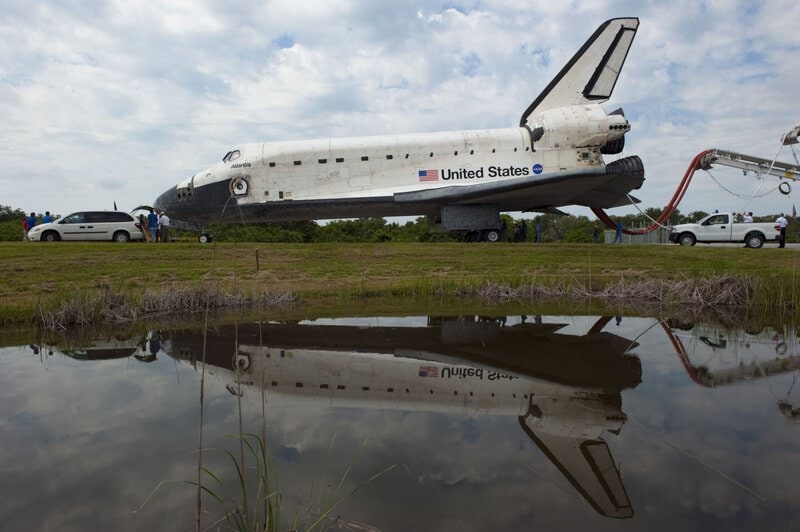
The Space Shuttle flew 135 missions between April 1981 and July 2011, averaging fewer than five per year across its 30-year operational life. Early program plans had called for up to 50 flights annually; even later, more conservative projections of 24 annual missions were never achieved. The program’s actual cadence sat so far below its design assumptions that the entire economic rationale for building the vehicle was effectively invalidated within the first years of operation.
That gap between projected and actual flight rates is arguably the single number that best explains the shuttle’s retirement. Every fixed cost — workforce, facilities, infrastructure — was being divided by a launch count that was a small fraction of what the business case required. When President George W. Bush announced the shuttle’s retirement following the Columbia disaster, and when the Obama administration confirmed and executed that decision, the underlying math had been unforgiving for nearly three decades.
The Space Shuttle was a genuine feat of engineering that significantly expanded human capability in low Earth orbit and contributed directly to the construction and servicing of the International Space Station and the repair of the Hubble Space Telescope. But the same investigations and cost analyses that chronicled those achievements also documented a vehicle too expensive to operate, too slow to process between flights, and too architecturally constrained to be safely or economically sustained over the long term. NASA’s return to rockets was not a retreat from ambition — it was a hard-won lesson, carefully applied.