The Quest to Finding the First Exoplanet

The discovery of the first exoplanet orbiting its star was a benchmark discovery in astronomic science. Two significant facts were revealed after Mayor’s and Queloz’s discovery; first, that sun is not the only star playing a host to planets, and second, that universe is full of secrets that are yet to be discovered. Over the years, humans had struggled to find whether life existed beyond the Earth and its solar system. Around 24 years ago, the mystery was unraveled when Mayor and Queloz, two Swiss scientists, came forward with their discoveries of the first exoplanet, named 51 Pegasi b. Back in 1995, with their constant efforts and persistence, both the scientists were able to find an exoplanet that was orbiting a star called 51 Pegasi, later the planet was given the name 51 Peg b. It is said that the planet’s mass is similar to that of Jupiter and is 100 times closer to its star, which makes its temperature shoot over 10000° C.
Planets from our solar system like Saturn and Jupiter are giant in masses and are ten times further from the sun and have temperatures below – 100° C. It is deemed that Saturn and Jupiter were formed through gaseous discs around the sun due to the accumulation of gas and ice. The discovery of the hot exoplanets gave a hint to scientists that planets can be formed in extremely diverse conditions outside Earth’s solar system. The development of 51 Peg b was the result of technological prowess and dedication. Both scientists have indulged in finding planets outside our solar system when everyone believed that it was a lost hope.
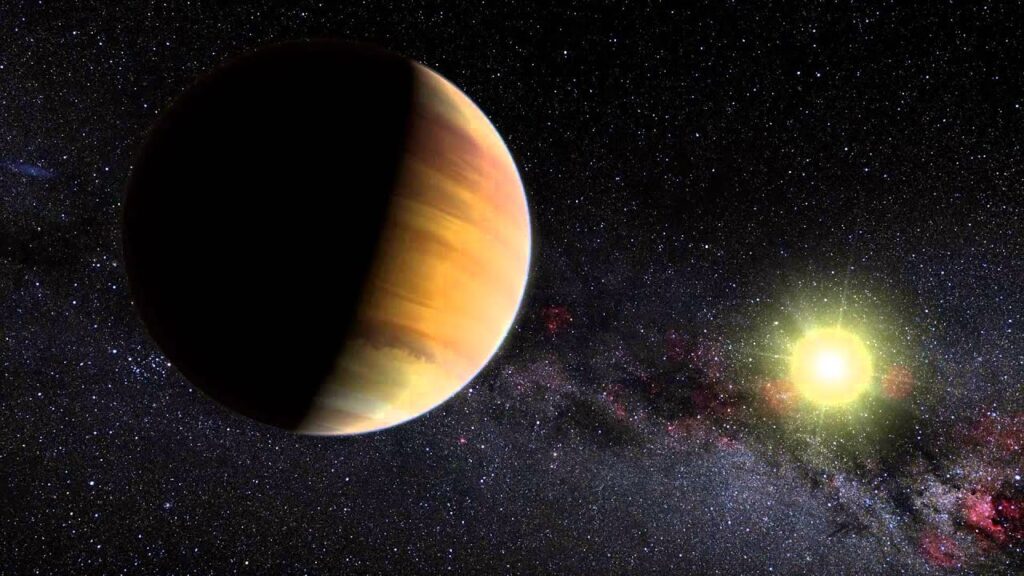
No one was actively searching for such exoplanets. Still, Mayor and Queloz were determined to discover what they intended to do when they started a long-term program, which ended up in finding the first exoplanet. They used a radial velocity method to identify 51 Pegasis b orbiting its star. When a planet revolves around its star, the star also starts moving in a similar yet smaller orbit. Due to the planet’s gravitational pull, the star tends to wobble around.
The movements of the star can be seen from the Earth which is known as the Doppler shift. The wavelength of the light changes according to the actions of the star. This method was also used to measure the speed at which the planet was moving. The rate of the planet was also influenced by the location of the other planets as well.
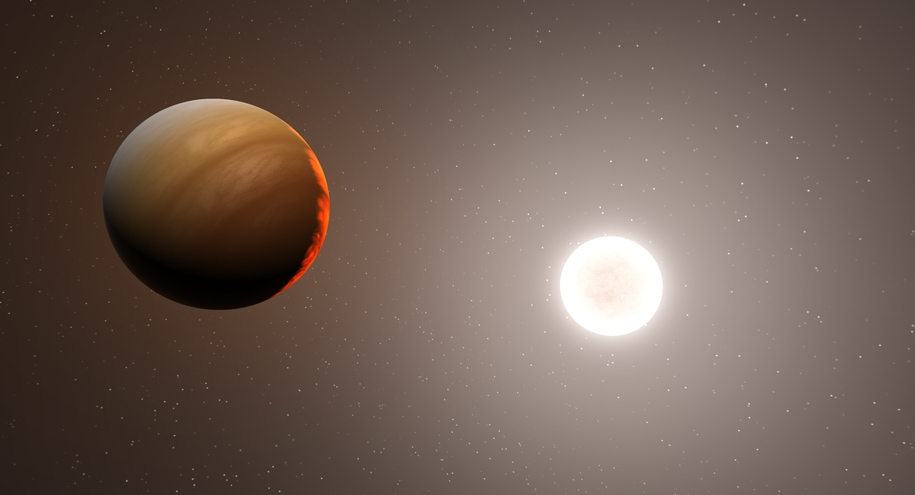
When both scientists found the signs of their first exoplanet having a short orbit, they were determined to make further observations to analyze its properties. The radical discovery of Mayor and Queloz’s 51 Peg b triggered an avalanche of astronomical observation for the next two decades. Their discovery compelled every other scientist to delve deep into the development of exoplanets. After 51 Peg b, more than 4000 other exoplanets were discovered. Ranging from Jupiter to Earth-sized planets, there were plenty of exoplanets that came into the mainstream space studies. Mayor and Queloz’s discovery proved that there are other cosmo bodies in space that are yet to be discovered, and adequate technology has to be deployed to unravel the mystery.
The discovery of an exoplanet was a breakthrough in the space world. The groundwork was laid by Michel Mayor and Didier Queloz. Their radical discovery of the exoplanets and related studies have bagged the Nobel Prize for Physics. Both the Swiss scientists have given so many space studies that have compelled space scientists to steer their concentration and technologies towards finding the hidden planets that might be orbiting some abandoned star in the galaxy. If you are keen to know more about their discovery, then don’t stop and read on…
Learn more about their journey towards the common goal of finding exoplanets and bringing their existence to mainstream space studies.