
On June 15, 2026, a Swedish environmental court handed down a ruling that may quietly reshape the future of global steelmaking: state-owned mining group LKAB received a long-awaited permit to build a fossil-free sponge iron plant at its Malmberget operations, clearing one of the most demanding regulatory hurdles any hydrogen-based industrial facility has yet faced in Europe.
What the Permit Actually Authorizes
The permitted facility is designed to produce up to 1.5 million tons of fossil-free sponge iron — a volume that, if an investment decision follows, could supply a meaningful share of European green steel demand from a single site. According to Reuters, the permit covers both expanded mining activity at Malmberget and the construction and operation of the fossil-free iron production facility, meaning LKAB cleared a significant dual regulatory hurdle in a single proceeding.
Environmental permits in Sweden are granted under the Environmental Code and typically include binding conditions on water use, noise, and emissions monitoring — details that will shape the plant’s actual ecological footprint well beyond its headline carbon benefit. The June 2026 ruling is a legal instrument, not a construction order. As reported by Asian Metal, an investment decision was still pending as of the permit announcement, meaning the legal green light does not automatically translate into construction activity. Capital commitments and financing structures must still be confirmed before ground is broken.
A regulatory permit granted by a national environmental court also carries a different evidentiary weight than a corporate sustainability announcement or a government subsidy pledge. It means that independent legal scrutiny of environmental impact assessments, community consultations, and technical feasibility has been completed and survived challenge — a meaningful institutional milestone in a sector where project announcements routinely outpace delivery.
Why Steel Decarbonization Is So Difficult
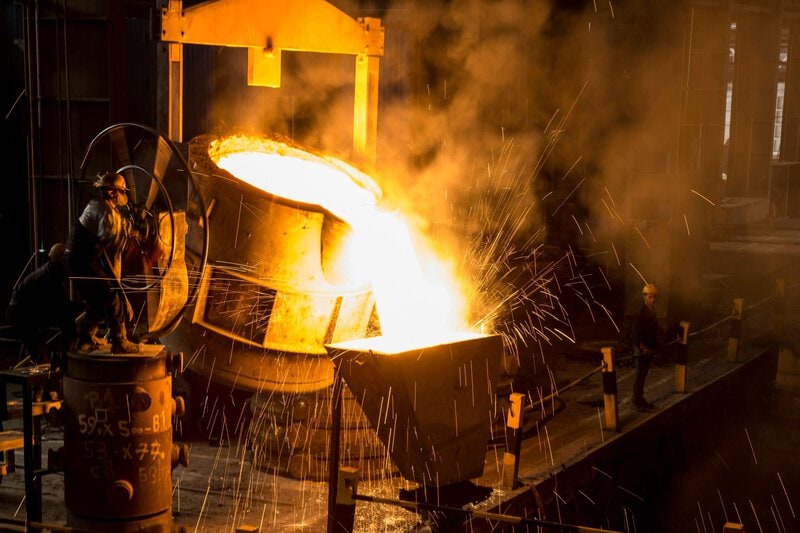
Steel production accounts for roughly 11 percent of industry’s carbon challenges, making it one of the hardest industrial sectors to decarbonize. Unlike power generation, where renewable electricity can substitute directly for fossil fuels, steelmaking has historically depended on coal not just for energy but as a chemical ingredient in the iron-making reaction itself. That dependence is precisely what LKAB’s permitted plant is engineered to break.
The World Steel Association recognizes direct reduced iron — the technical name for sponge iron — as one of a small number of technologically credible pathways for deep decarbonization of primary steel production, distinguishing it from incremental efficiency improvements applied to existing blast furnace routes. Efficiency improvements reduce emissions at the margin; hydrogen-based direct reduction eliminates fossil carbon from the chemical reaction entirely.
What Sponge Iron Is and Why It Matters
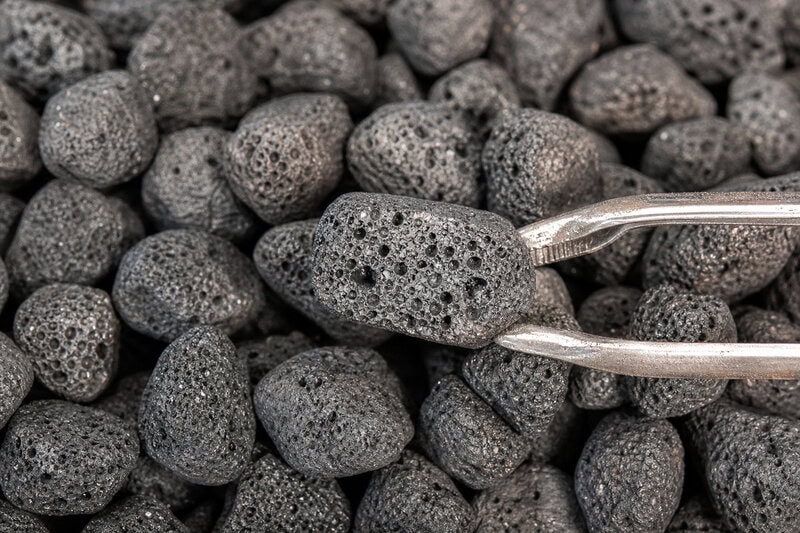
Sponge iron, formally called direct reduced iron (DRI), is iron ore that has been chemically stripped of its oxygen content without ever being melted. The name is literal: the finished product is a porous, metallic solid riddled with microscopic voids left behind as oxygen atoms are drawn out of the ore structure.
In a conventional blast furnace, coke derived from metallurgical coal drives the oxygen-removal reaction, producing molten pig iron and large quantities of carbon dioxide as an unavoidable byproduct. In the DRI process, a reducing gas — historically natural gas, and in LKAB’s case, green hydrogen — performs the same chemical work at lower temperatures, typically between 800 and 1,050 degrees Celsius. Because the iron never liquefies during direct reduction, the process consumes significantly less energy per ton than traditional ironmaking and produces a high-quality metallic feedstock that electric arc furnaces can refine into finished steel with minimal additional emissions.
The Chemistry: How Hydrogen Replaces Coal
The underlying chemistry is straightforward even if the engineering required to execute it at industrial scale is formidable. In a conventional blast furnace, coke reacts with iron ore — primarily iron oxide, written as Fe₂O₃ — to produce molten pig iron and carbon dioxide. The simplified reaction is: Fe₂O₃ + 3CO → 2Fe + 3CO₂, where carbon monoxide generated by burning coke is the active reducing agent that strips oxygen from the ore.
Hydrogen-based DRI substitutes molecular hydrogen for carbon monoxide: Fe₂O₃ + 3H₂ → 2Fe + 3H₂O. The only reaction byproduct is water vapor, provided the hydrogen itself was produced from renewable electricity via electrolysis rather than from fossil natural gas via steam methane reforming. That proviso is critical. Hydrogen produced from natural gas — sometimes called grey hydrogen — carries a substantial carbon footprint of its own. Only hydrogen produced by electrolyzing water using zero-carbon electricity, known as green hydrogen, delivers the full decarbonization benefit the reaction promises on paper.
The substitution is industrially demanding in practice. Hydrogen is less energy-dense by volume than natural gas, requires purpose-built reactor vessels and pipeline infrastructure designed to manage hydrogen embrittlement risk, and burns with a nearly invisible flame that creates distinct safety challenges. These are engineering problems that LKAB and its partners have been working to address at pilot scale for several years before seeking the Malmberget permit.
The Hybrit Process: From Iron Ore to Green Steel
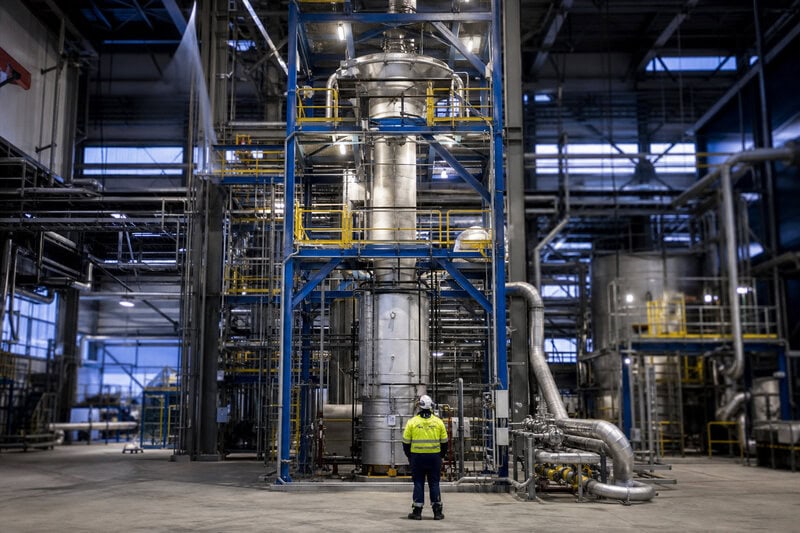
LKAB’s approach to fossil-free iron production flows through the Hybrit joint venture, a collaboration between LKAB, Swedish steelmaker SSAB, and energy company Vattenfall. The partnership has been refining the hydrogen-DRI process at a pilot facility in Luleå, Sweden, generating operational data that underpins the Malmberget plant’s design.
The production chain moves through three distinct steps. The first is ore preparation. LKAB’s Malmberget mine produces magnetite, a higher-grade and more chemically uniform iron ore than the hematite used in many global DRI operations. These are processed into iron oxide pellets optimized for hydrogen reactivity — a feedstock advantage that LKAB’s ore body provides over many competing DRI projects worldwide.
The second step is reduction. Pellets travel downward through a shaft furnace — a tall vertical reactor — where a continuous flow of hot green hydrogen moves upward through the descending ore, stripping oxygen from the iron oxide and producing solid sponge iron that exits the bottom of the reactor at temperatures around 700 to 900 degrees Celsius.
The third step is steelmaking. The hot sponge iron is transferred — ideally while still at elevated temperature to conserve energy — to an electric arc furnace, where it is melted alongside scrap steel using electricity sourced from renewables, then alloyed and refined into finished steel products. The full chain is only genuinely fossil-free if all three energy inputs — the electrolysis producing the hydrogen, the shaft furnace operation, and the electric arc furnace — draw from zero-carbon electricity. Sweden’s high share of hydropower and wind generation makes that condition more achievable there than in most countries.
What Remains Unresolved After the Permit
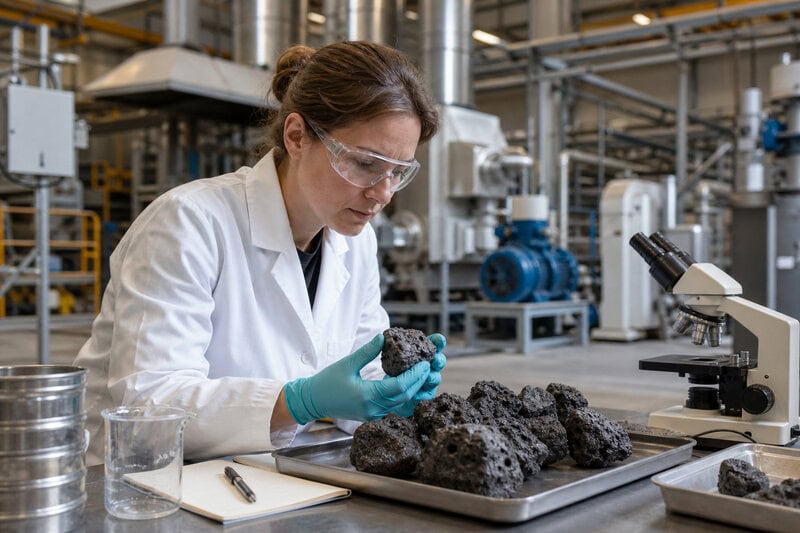
The distinction between a demonstration plant and a full commercial facility carries real scientific weight. At 1.5 million tons of annual capacity, the Malmberget plant would be among the largest hydrogen-DRI installations ever attempted. Operational data at that scale — covering real-world hydrogen consumption rates, equipment reliability across full production cycles, and pellet behavior under sustained hydrogen atmospheres — does not yet exist. Generating that dataset is arguably as valuable as the iron the plant will produce, because it will underpin the business cases of every subsequent commercial facility.
The European Commission’s Joint Research Centre has noted in analyses of green hydrogen deployment that permitting complexity has been one of the practical bottlenecks slowing industrial hydrogen projects across Europe. The Malmberget ruling demonstrates that hydrogen-based industrial facilities can navigate those frameworks — a signal with practical value for project developers elsewhere on the continent who will explicitly reference this precedent in their own regulatory applications.
Where Hydrogen-DRI Stands in the Global Green Steel Race
LKAB and its Hybrit partners are operating in an increasingly competitive field. Germany’s Thyssenkrupp began trialing hydrogen-DRI at its Duisburg plant in 2024, while ArcelorMittal has announced hydrogen-ready DRI projects in Spain and Canada. The technology is transitioning from research programs into early industrial deployment across multiple geographies simultaneously.
The International Energy Agency, in its Net Zero by 2050 roadmap, identifies hydrogen-DRI coupled with electric arc furnaces as one of the primary technology routes needed to decarbonize steel production at scale by mid-century. The IEA also notes that green hydrogen costs must fall substantially from current levels to make the economics competitive with conventional steelmaking — a condition that depends on continued expansion of renewable electricity capacity and electrolyzer manufacturing scale.
Researchers at the Royal Institute of Technology (KTH) in Sweden have published lifecycle assessments suggesting that hydrogen-DRI steel can reduce CO₂ emissions by more than 90 percent compared to conventional blast furnace routes. The precise figure depends critically on the carbon intensity of the electricity grid powering the process — a reminder that green steel’s environmental credentials are inseparable from the energy system surrounding the factory gates.
LKAB’s Malmberget location, with access to Baltic Sea ports, positions the company for potential export to European steelmakers that lack their own DRI capacity — an economic model that could extend the climate benefit of the facility beyond Sweden’s borders if logistics and market structures develop accordingly. Whether sponge iron will primarily be consumed close to production sites or traded internationally as a commodity remains one of the key contested questions shaping investment strategies across the sector.
Why This Ruling Is a Signal, Not Just a Story
The most consequential outcome of the Hybrit demonstration plant may not ultimately be its 1.5 million tons of annual output. It may be the operational dataset it generates — the unglamorous, irreplaceable evidence base that will tell the next generation of commercial facilities what it actually costs, in energy, equipment, and engineering, to make steel without coal. Whether LKAB’s investment decision follows the permit in 2026 or in subsequent years, the court ruling establishes a legal and technical precedent that advances one of heavy industry’s most consequential decarbonization challenges from aspiration toward verified, site-specific reality.