
On the night of October 4, 1957, Americans stepped outside, tilted their heads toward a clear autumn sky, and watched a tiny moving star arc silently overhead. Then the radio told them what it was, and the fear hit like cold water. The Soviet Union had put a metal sphere into orbit, and nothing about the world felt safe anymore.
Terror Before Science: Why the Space Race Really Happened
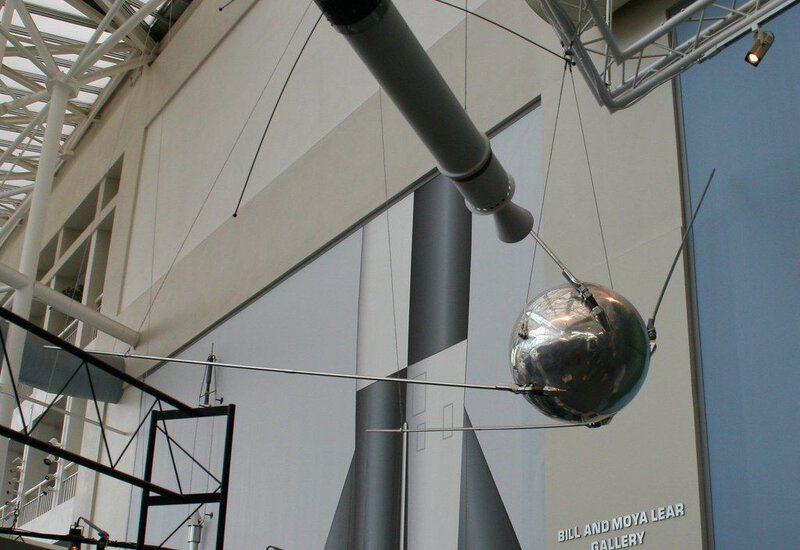
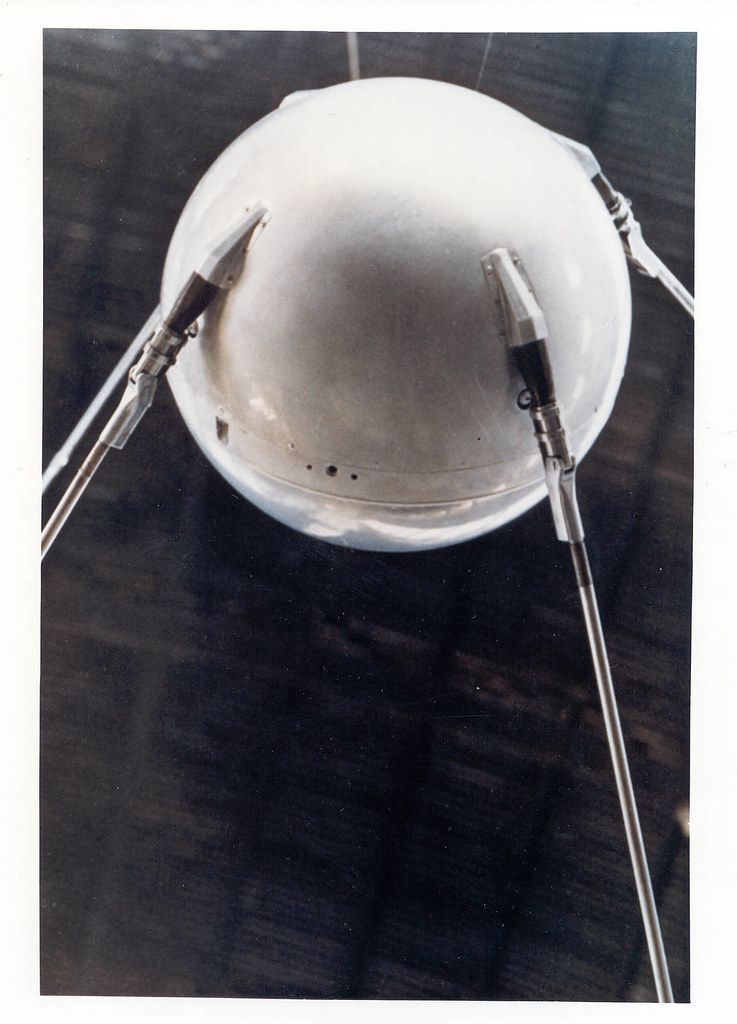
The beeping signal that Sputnik broadcast back to Earth was almost cheerful in its simplicity — a repeating pulse that ham radio operators around the world could tune into. But in Washington, in living rooms, and in newspaper editorial offices, the translation was brutal and immediate: if Soviet engineers could loft a satellite over the Arctic on a ballistic arc, they could loft a nuclear warhead over the same route and drop it on any city they chose. The science was almost beside the point. This was a message written in orbital mechanics, and every American with a television understood it.
President Eisenhower knew, from classified U-2 reconnaissance intelligence, that Sputnik posed no direct military threat in itself. But he chose near-silence rather than public reassurance, and in that silence, fear metastasized into something closer to national obsession. The answer to why the space race happened is brutally simple: two superpowers, locked in nuclear stalemate and each possessing weapons capable of ending civilization, needed a way to demonstrate dominance without pulling the trigger. A rocket powerful enough to reach orbit was, by definition, a rocket powerful enough to reach any point on the planet. The Cold War space race was not born of curiosity about the cosmos — it was arms racing by other means, conducted at altitudes that made the whole world watch.
Soviet Premier Nikita Khrushchev grasped the propaganda dimensions of Sputnik almost before the satellite had completed its first orbit. Within weeks he ordered a second launch, this time carrying a dog named Laika — proof that the first mission was no lucky accident and that Soviet engineering could sustain its achievements. In Washington, the shock produced swift institutional responses: the National Defense Education Act flooded money into American schools, and NASA was formally established in July 1958. Both were framed, quite explicitly, around national security rather than scientific discovery. The opening chapter of space exploration history was written by generals and strategists as much as by astronomers.
The Secret Genius Behind the Soviet Lead
The man most responsible for the Soviet Union’s stunning early dominance was someone the West could not even name. Sergei Korolev, the visionary engineer who designed the rockets that launched Sputnik and carried Yuri Gagarin into orbit, was known to outsiders only as “the Chief Designer.” His identity was so completely classified that his obituary in January 1966 was the first time most of the world learned he had ever existed. He had survived Stalin’s Gulag — imprisoned on fabricated charges during the purges of the late 1930s — and emerged to build the machinery that remade history.
Korolev’s R-7 rocket had been designed from the ground up as a delivery vehicle for a hydrogen bomb. That same military hardware, repurposed with extraordinary ingenuity, became the vehicle that launched the first satellite, the first animal, and the first human being into space. Between 1957 and 1965, the Soviet program accumulated a dazzling sequence of firsts: first satellite, first living creature in orbit, first man, first woman, first spacewalk. Each milestone was timed and staged for maximum psychological effect on Western audiences, choreographed as much by Khrushchev’s political office as by Korolev’s engineering teams. Space exploration, in these years, was geopolitical theater performed at the edge of the atmosphere.
America’s Stumbles, Myths, and the Complicated Road to Recovery
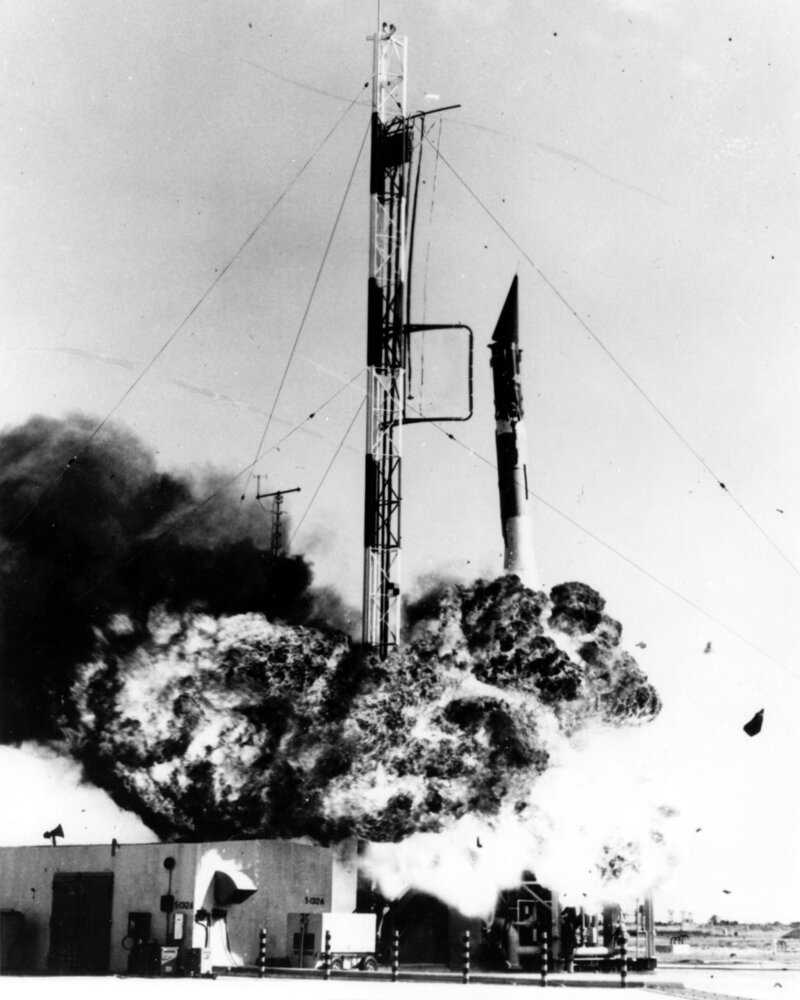
The American response to Sputnik was, at first, spectacularly undignified. In December 1957, the Navy’s Vanguard rocket — rushed into readiness under enormous political pressure — rose a few feet off its launchpad on live national television and then collapsed back into a fireball. Newspapers needed only a moment to find their headlines: “Kaputnik.” “Flopnik.” The humiliation was total and public in a way that Soviet failures, hidden by state secrecy, never were.
The Army’s alternative, led by Wernher von Braun, succeeded with the launch of Explorer 1 in January 1958 — but von Braun’s history complicated the triumphant narrative. He had been a leading engineer of Nazi Germany’s V-2 rocket program and was brought into American service after World War II as part of Operation Paperclip, the postwar transfer of German technical expertise to the West. The heroic American space story was, from its foundations, built on morally tangled ground that its public myth-makers preferred not to examine too closely.
NASA proved exceptionally skilled at packaging its missions as moral drama. Astronauts were presented as clean-cut, courageous test pilots — embodiments of democratic virtue and individual excellence, a pointed contrast to the faceless collectivism Americans associated with the Soviet system. The Mercury and Gemini programs were genuine engineering achievements of the first order, but their public framing was inseparable from Cold War messaging. The history of American space exploration was always, simultaneously, a story told for an audience in Moscow as much as for one in Houston.
Kennedy’s Moon Bet: A Geopolitical Declaration in Rocket Fuel
When Gagarin completed his single orbit of Earth in April 1961 and a shaken American public watched Alan Shepard follow weeks later with a far more modest suborbital arc, President Kennedy asked his advisors a question that was less visionary than desperate: was there any space competition the United States could actually win? The answer his team returned was the Moon — not because the Soviets had no lunar ambitions, but because they had not yet publicly committed to a crewed Moon program, and the technological gap had not yet become unbridgeable.
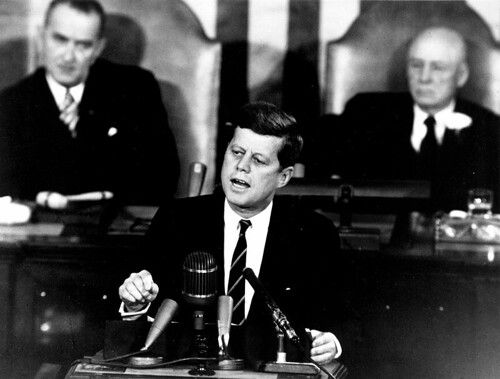
Kennedy’s address to Congress in May 1961, pledging an American Moon landing before the decade’s end, reads today like inspiration. In context, it was a geopolitical ultimatum delivered in the language of exploration. Kennedy reportedly told NASA administrator James Webb in private that he was not particularly interested in space for its own sake — he wanted the United States to defeat the Soviet Union, and the Moon was simply the largest, most dramatic available arena for that contest. The Apollo program that followed became the most expensive and technically ambitious peacetime engineering project in American history, driven not by wonder but by the fear of what would happen if the other side arrived there first.
The Costs the Glory Could Not Hide
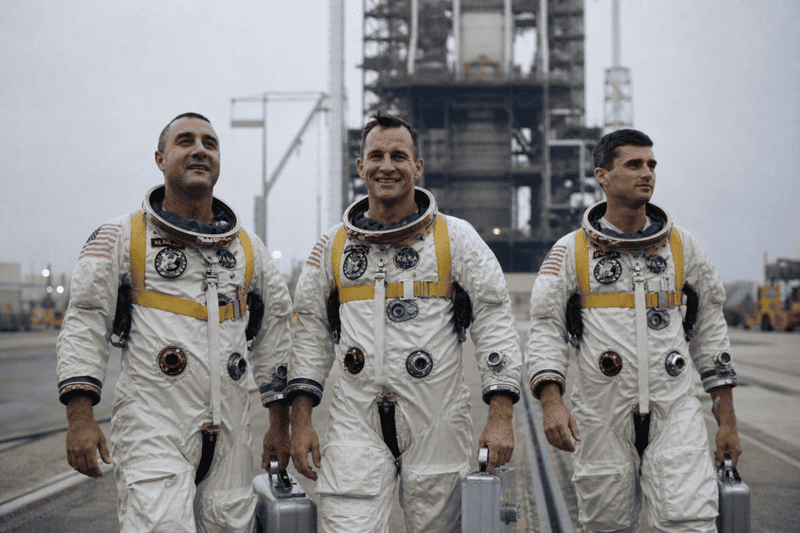
The geopolitical urgency driving the space race created pressures that killed people. In January 1967, astronauts Gus Grissom, Ed White, and Roger Chaffee died in the Apollo 1 launchpad fire — a tragedy rooted, at least in part, in the reckless pace that Cold War competition had imposed on a program where schedule pressure led to critical oversights. The Soviet program suffered its own devastating losses in secret: cosmonaut Vladimir Komarov died in April 1967 when Soyuz 1’s parachute system failed on reentry, a disaster the Soviet state suppressed for years because it could not afford to appear fallible.
The financial costs were staggering even for the wealthiest nation on Earth. The Apollo program consumed roughly $25 billion in 1960s dollars — equivalent to well over $150 billion today — resources extracted from a society simultaneously fighting a deeply unpopular war in Vietnam and reckoning with profound racial and economic inequality at home. The poet and musician Gil Scott-Heron captured this moral dissonance in his 1970 spoken-word piece Whitey on the Moon, a raw articulation of what it felt like to watch billions pour skyward while earthbound suffering went unaddressed. For millions of Americans, the space race was a glittering distraction funded on their deprivation.
July 20, 1969, and the Long Shadow of the Race
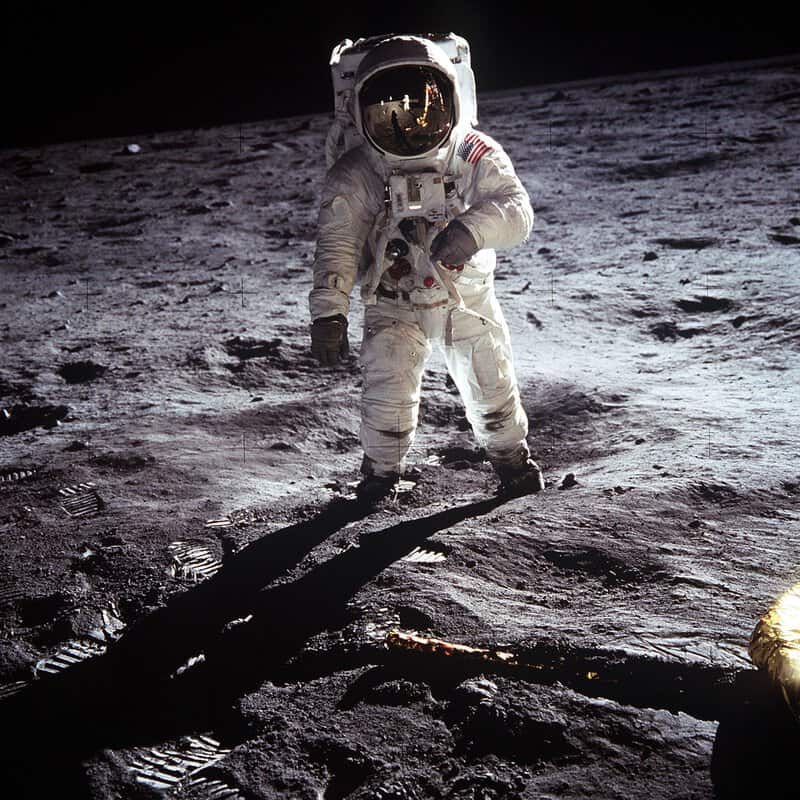
When Neil Armstrong placed his boot on the lunar surface on July 20, 1969, the symbolic contest that had consumed two superpowers for twelve years reached its finish line. The Soviet lunar program — which had been real, ambitious, and conducted almost entirely in secret — was quietly shelved after repeated failures of its N1 Moon rocket, its existence denied by Soviet officials for decades. The United States had won the only event that history would remember, and it had done so in front of the largest television audience the world had ever assembled, estimated at roughly 600 million viewers.
The technologies that spilled out as byproducts of that frantic competition reshaped civilian life in ways that outlasted the rivalry by generations. Miniaturized integrated circuits developed under the pressure of weight constraints in spacecraft found their way into consumer electronics. Satellite communications, weather forecasting systems, and the navigational infrastructure that would eventually underpin GPS all trace direct lineage to the race’s investments. Materials science advances made their way into medical equipment, protective gear, and everyday consumer products. The space race history that began in terror ended in tools that billions of people now use without thinking about their origins.
National identity on both sides was permanently marked. America absorbed “we can do anything” as a kind of civic religion — a belief in its own capacity for collective achievement that the Moon landing seemed to prove beyond argument. The Soviet Union began a longer, quieter reckoning with a system that could produce brilliant engineers working in classified darkness but struggled to sustain the open, iterative problem-solving that a long-duration space program required. The same secrecy that had protected Korolev’s identity also strangled the institutional flexibility that might have let the Soviet program survive his death in 1966.
The deepest truth embedded in the Cold War space race may be this: humanity reached the Moon not because it was drawn upward by curiosity or wonder, but because it was driven by fear — terror of the bomb, terror of falling behind, terror of what a world dominated by the other side might look like. In that fear, almost accidentally, it proved what becomes possible when the stakes feel existential enough to demand it. The stars were never really the destination. They were simply where the competition happened to take place — and the view from up there, it turned out, was worth the terror that got us there.