Comet 67P Was Weirder Than Expected
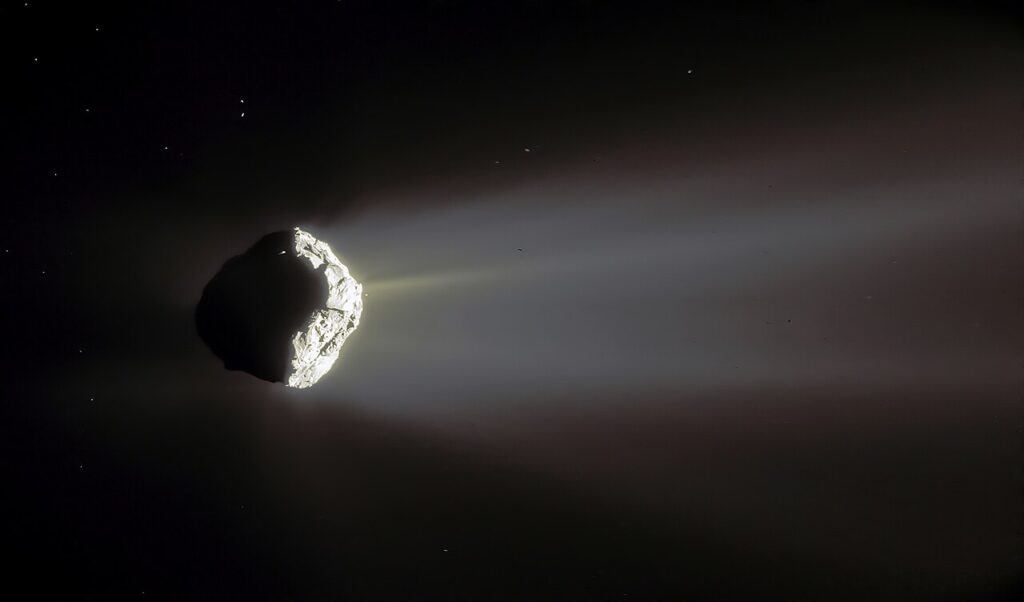
Upon arrival, Rosetta revealed that 67P was nothing like scientists imagined. Instead of a smooth, potato-shaped object, the comet had a dramatic “rubber duck” form, with two distinct lobes connected by a narrow neck. Its surface was far rougher, covered in towering cliffs, pits, and boulders. Even more surprising, 67P’s density was much lower than predicted, suggesting a loosely packed, porous structure. These revelations forced researchers to rethink long-held assumptions about how comets form and evolve in the solar system.