
In early 2027, a rocket standing just 18 meters tall — roughly the height of a six-story building — will lift off on three separate occasions carrying instruments that NASA considers essential to monitoring Earth’s climate and the Sun’s energy output. The fact that those launches are dedicated, schedule-certain, and contracted to a commercial provider marks a quiet but consequential turning point in how the United States conducts space science.
Three Rockets, Two Missions, One Fundamental Shift in NASA Procurement
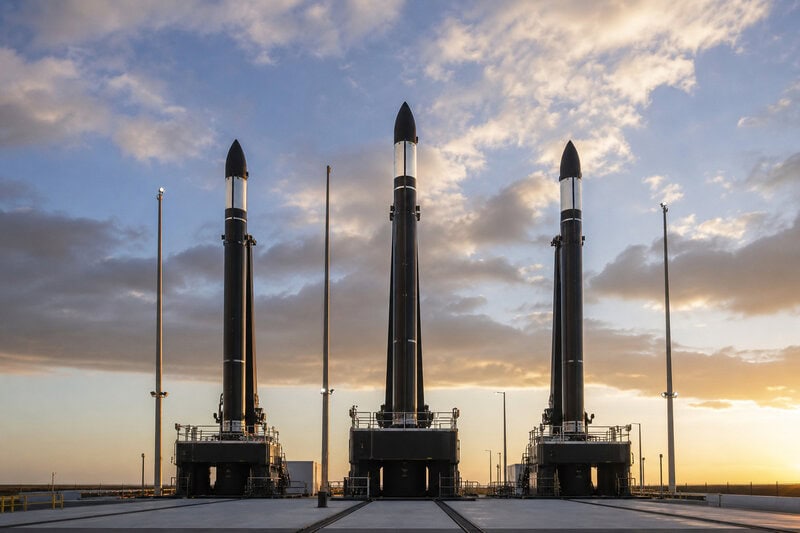
NASA has selected Rocket Lab to provide three dedicated launches of its Electron rocket for two separate science missions — PolSIR and TSIS-2 — with launches targeted to begin as early as the first quarter of 2027. Both missions are described by NASA as time-sensitive, meaning the science they are designed to collect degrades in value — or becomes impossible to collect at all — if launches slip by years rather than months.
For most of NASA’s history, small scientific payloads did not get their own rockets. They waited, sometimes for three to five years, to fly as secondary cargo aboard large launch vehicles whose schedules were dictated by primary payloads with entirely different orbital requirements. That arrangement was economical in a narrow sense, but it imposed a hidden scientific cost: instruments designed to monitor continuous geophysical processes were routinely delayed past the windows when their data would have been most valuable.
The PolSIR and TSIS-2 contract changes that arithmetic. A rocket capable of lifting roughly 300 kilograms to low Earth orbit is now trusted with science that NASA and NOAA consider part of a decades-long climate monitoring record. That says as much about the agency’s evolving procurement philosophy as it does about Rocket Lab’s engineering maturity.
What the Electron Rocket Actually Is — and How It Works
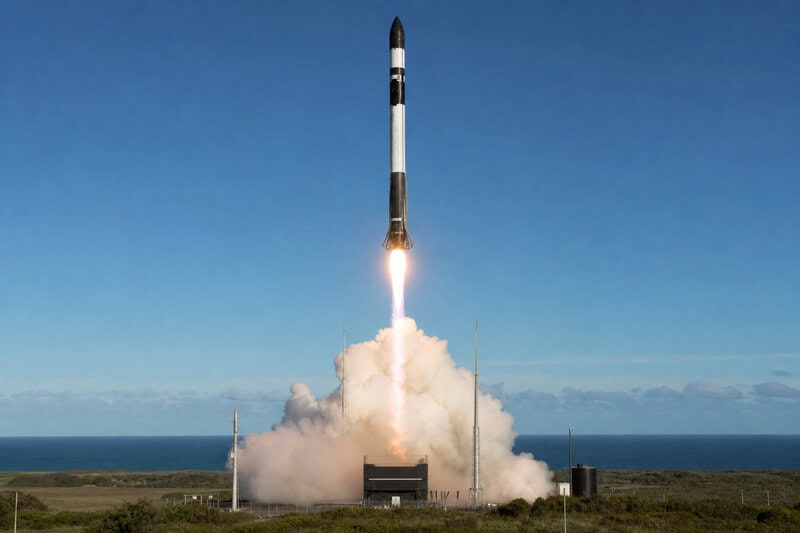
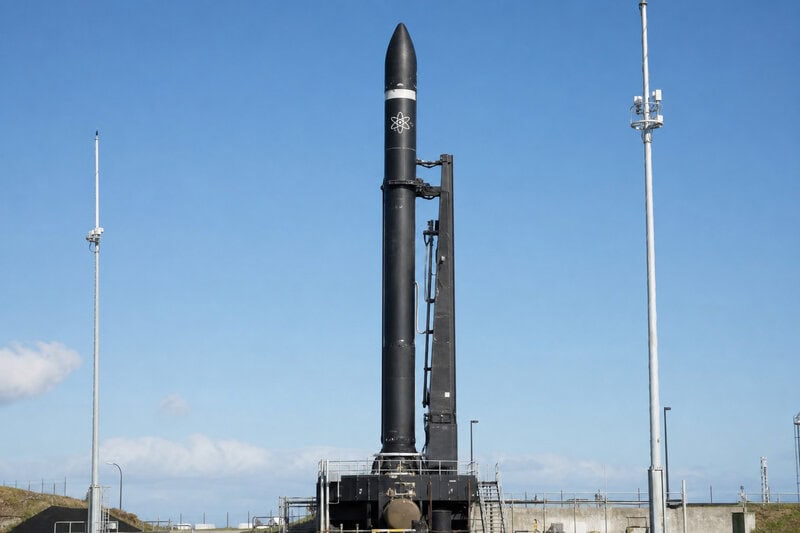
The Electron is a two-stage orbital rocket developed by Rocket Lab, a company headquartered in Long Beach, California, with launch operations in New Zealand and Virginia. It was designed from the outset as a dedicated small satellite launch vehicle — meaning its entire architecture is optimized to carry payloads up to roughly 300 kilograms to low Earth orbit on missions where the customer, not a primary passenger, controls the schedule and orbital parameters.
Its most discussed engineering innovation is its propulsion system. Electron’s nine first-stage Rutherford engines are among the first flight-qualified rocket engines whose primary components are manufactured using additive manufacturing — commonly called 3D printing. Rocket Lab has documented this approach publicly, and it represents a meaningful departure from conventional machined-component engine production. The practical effect is a significant reduction in manufacturing time per engine, which matters when a launch company is trying to sustain a high flight cadence.
The propellant cycle is equally unconventional. Rather than using a gas-generator or staged-combustion cycle — in which high-pressure combustion gases drive the pumps that push propellant into the engine — Electron uses battery-powered electric motors to drive its turbopumps directly. This electric pump-fed cycle is simpler, lighter, and involves fewer failure modes than traditional approaches. It trades some thermodynamic efficiency for manufacturing speed and operational reliability, a trade-off well suited to the small-payload, high-frequency market Rocket Lab is targeting.
A longer-term cost variable is reusability. Rocket Lab has demonstrated mid-air recovery of Electron first stages using helicopters and has publicly stated its intention to move toward routine reuse. If that capability matures fully before or during the PolSIR and TSIS-2 campaign, it could further reduce the cost per kilogram for NASA science payloads — but reuse at operational scale remains a developmental goal rather than a delivered, routine product.
The Two Missions: What PolSIR and TSIS-2 Are Actually Trying to Learn
PolSIR — short for Polarization Signatures of Ice and Rain — is a NASA Earth science mission designed to measure microwave polarization signatures from precipitation systems and ice clouds. Those measurements feed directly into the atmospheric models that underpin global weather forecasting and climate simulation. The mission requires a specific orbital altitude and inclination to overlap with other Earth-observing assets in coordinated ways; a rideshare slot dictated by a different primary payload’s orbit would almost certainly be incompatible with those requirements.
TSIS-2 — the Total and Spectral Solar Irradiance Sensor-2 — carries instruments designed to measure the total amount of the Sun’s energy reaching Earth, as well as how that energy is distributed across the electromagnetic spectrum. It continues a measurement record that NASA and NOAA consider foundational to understanding long-term solar forcing of Earth’s climate system. The original TSIS-1 was installed aboard the International Space Station in 2018. Scientists working on this data record have publicly stated that a gap of more than a few years in measurement continuity would compromise the ability to detect climate trends — a concern that makes the targeted Q1 2027 launch schedule scientifically significant, not merely commercially convenient.
Both missions illustrate a structural constraint that small dedicated launchers solve particularly well. Neither PolSIR nor TSIS-2 can simply accept whatever orbit a rideshare manifest offers. Their science is tied to precise geometry — specific inclinations, altitudes, and local solar times — that are defined by the physics of what they are measuring, not by what happens to be available on a given manifest. Before the current generation of commercial small launch vehicles, meeting those requirements meant either building a large and expensive satellite that could justify its own large rocket, or waiting years for a compatible rideshare opportunity that might never materialize on an acceptable timeline.
Why NASA Is Turning to Commercial Small Launchers
The policy foundation for this shift was laid through NASA’s Venture Class Launch Services program and its successor, the Venture Class Launch Services Demonstration 2 contract vehicle, which were explicitly designed to stimulate a domestic small-launch industry and provide science missions with cost-competitive, dedicated-ride options. The underlying logic was straightforward: if small science payloads could get their own rockets at predictable prices, mission planners could scope instruments to the science rather than to whatever rocket happened to have room.
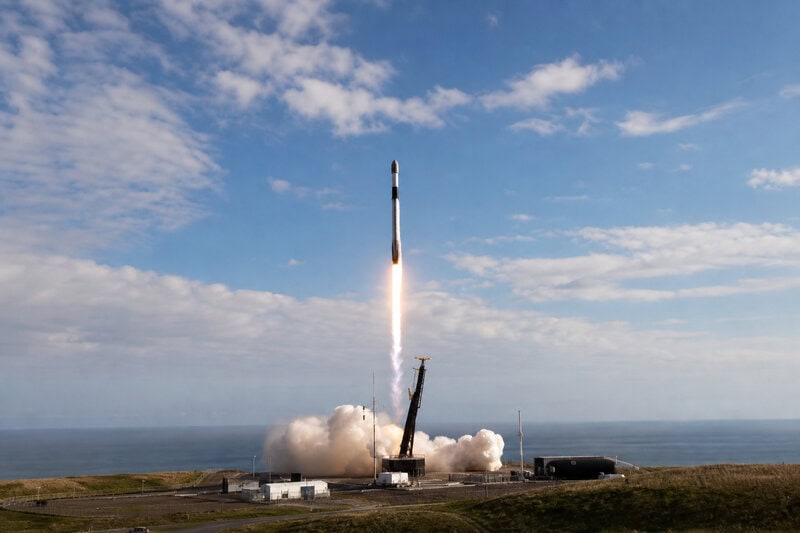
NASA has used Electron before. The CAPSTONE mission — a lunar pathfinder launched in 2022 to demonstrate a near-rectilinear halo orbit ahead of the Artemis program — flew on an Electron from Rocket Lab’s New Zealand launch site. That mission succeeded, giving NASA’s science program managers documented flight heritage to evaluate rather than an experimental promise. The PolSIR and TSIS-2 contracts represent a continuation of a relationship built on demonstrated performance.
The competitive picture merits context. As of mid-2025, Electron had completed more than 50 orbital launch attempts, making it the most frequently launched dedicated small orbital rocket in the Western world by cumulative flight count — a metric that matters directly to schedule-risk assessments. Other commercial small satellite launch vehicles are competing in the same market segment, though none had matched Electron’s cumulative flight record at that point. Market consolidation in the small-launch sector could eventually reduce competition and exert upward pressure on prices — a concern worth tracking even as near-term evidence shows NASA treating Electron as a reliable option for a defined class of payloads.
Rocket Lab’s geographic footprint provides a practical operational advantage. Launch Complex 1 on New Zealand’s Māhia Peninsula and Launch Complex 2 at NASA’s Wallops Flight Facility in Virginia together offer access to a wider range of orbital inclinations than most competitors can match from a single site. For Earth science missions like PolSIR, where orbital geometry is integral to the scientific design, this flexibility has real and measurable value.
On cost, Rocket Lab has publicly listed Electron launch prices at approximately $7.5 million per mission. This pricing is generally competitive for payloads under roughly 200 kilograms but becomes less favorable relative to large-rocket rideshare for heavier instruments — context that clarifies why Electron is the right tool for some missions and not for others.
What ‘Schedule Certainty’ Actually Means for Scientific Research
The National Academies of Sciences, Engineering, and Medicine’s Decadal Survey for Earth Science and Applications from Space has been explicit about a principle that often gets lost in procurement discussions: reproducible, timely data collection is not a logistical nicety but a core methodological requirement of Earth and solar science. Monitoring continuous geophysical processes — precipitation patterns, solar output, atmospheric composition — requires observations taken at predictable intervals with known instruments. Launch delays that interrupt those intervals do not merely postpone data; they can permanently degrade the scientific value of the entire accumulated record.
When a science team controls its own launch schedule through a dedicated vehicle, it gains capabilities that rideshare passengers cannot reliably access. It can coordinate ground-truth field campaigns to coincide with a satellite’s first orbital passes. It can synchronize observations with other satellites’ orbital geometry. It can plan instrument calibration sequences against known timelines. These operational capabilities translate directly into data quality, and data quality is ultimately what justifies the cost of flying anything to space at all.
A broader conceptual question is emerging in the research community, though it remains contested and unresolved: should future National Academies Decadal Survey recommendations explicitly account for the availability of small dedicated launchers when defining mission scope? The traditional framework assumed that mission size was bounded primarily by budget and science requirements. The growing availability of schedule-certain small launch vehicles introduces a third variable — orbital access flexibility — that could allow smaller, more targeted instruments to address science questions previously reserved for large, expensive platforms. Whether that shift should be formalized in planning documents is a live debate, not a settled conclusion.
What to Watch Before and After 2027
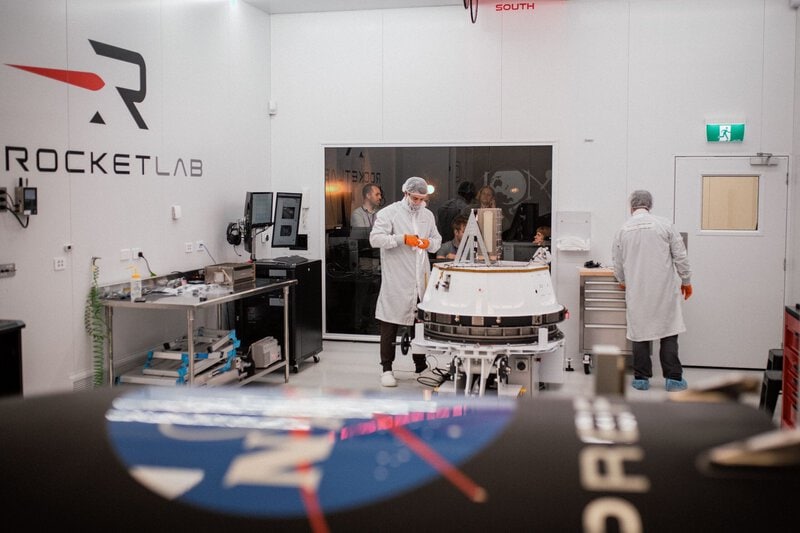
The three Electron launches for PolSIR and TSIS-2 will function as a high-visibility proving ground for the small-launch model in federal science procurement. Several variables will determine what those launches actually demonstrate.
- Schedule performance is the first and most immediate test. Both missions are explicitly time-sensitive, and any significant delay to Rocket Lab’s launch cadence will have direct, documentable consequences for scientific return — making schedule adherence the most legible success metric for observers tracking the commercial small-launch experiment.
- Reusability progress will be a secondary indicator of the model’s long-term sustainability. If Rocket Lab recovers and re-flies an Electron first stage during or ahead of the PolSIR and TSIS-2 campaign, it would represent a meaningful cost and sustainability milestone for the industry. Reuse at operational scale has not yet been demonstrated as a routine capability and should not be assumed as part of the current contract’s value proposition.
- Data continuity for TSIS is an outcome that neither NASA nor Rocket Lab fully controls. Whether a Q1 2027 launch successfully closes any potential gap in the solar irradiance record depends partly on the continued on-orbit health of TSIS-1 aboard the International Space Station — a factor governed by hardware aging and station operational priorities that are independent of the Electron launch schedule.
- Broader procurement signaling is the least visible but perhaps most consequential outcome to watch. If PolSIR and TSIS-2 succeed on schedule, they will strengthen the case for NASA systematically scoping future small science missions around dedicated commercial launch options rather than treating rideshare as the default. If delays or anomalies occur, they will just as systematically reinforce institutional caution about relying on the small-launch sector for time-critical science.
The Q1 2027 Electron launches for PolSIR and TSIS-2 are not merely procurement events. They are a measurable data point in a years-long experiment testing whether commercial small launch vehicles can function as reliable, permanent scientific infrastructure for a federal research agency. The rocket is small. The question it is being asked to answer is considerably larger.