
Researchers in China have painstakingly catalogued approximately 200 fossilized mammal teeth — some no larger than a grain of rice — to reconstruct one of evolution’s most consequential turning points: the world immediately after the dinosaurs vanished 66 million years ago. That modest collection of enamel and dentin, drawn from ancient rock in China, is now helping paleontologists fill a long-standing gap in the record of early mammal diversification at the Cretaceous-Paleogene (K-Pg) boundary, the geological line that separates the age of dinosaurs from everything that came after.
Why Teeth? The Surprising Power of a Tiny Fossil
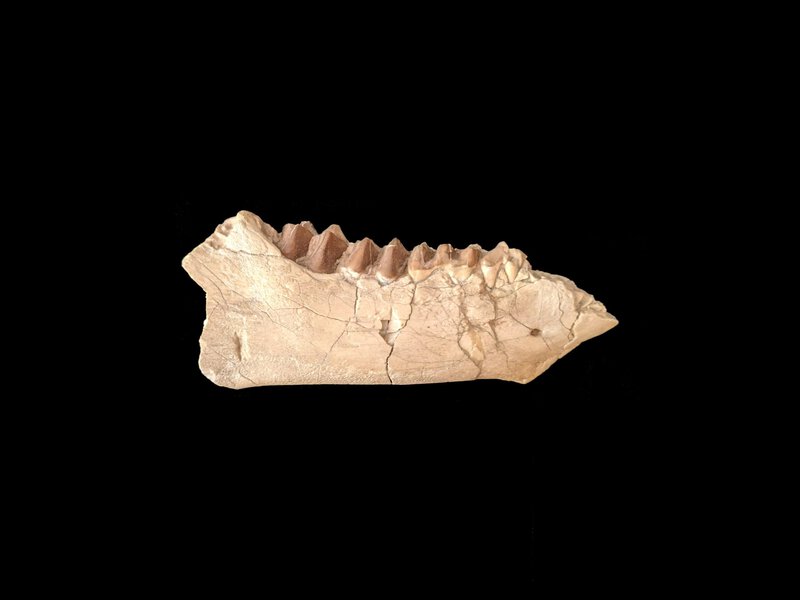
Early mammal fossils are exceptionally rare. The recoverable record typically consists of isolated teeth and small bone fragments rather than complete skeletons, which makes each specimen disproportionately valuable to paleontologists. That scarcity is not simply frustrating — it is scientifically clarifying, because it forces researchers to extract the maximum possible information from the material they do have.
Tooth enamel is the hardest biological tissue produced by vertebrates, and it preserves details that soft tissue and even bone cannot. A single fossilized molar can simultaneously place an animal within a family tree and on a food chain. The geometry of a tooth’s cusps — the bumps and ridges on its chewing surface — reveals whether an animal was grinding plant matter, piercing insect exoskeletons, or processing a mixed diet. Isotopic signatures locked inside the enamel can indicate the plant communities the animal fed within and the broader climate it inhabited. As Palaeontology Online’s survey of early mammal fossils explains, these tiny structures carry an outsized amount of biological information precisely because they were built to last.
The analysis of around 200 fossil teeth from the Chinese site demonstrates how a modest physical collection can yield outsized evolutionary insight when modern imaging and geochemical techniques are applied. Researchers were able to identify multiple distinct lineages, reconstruct dietary strategies, and situate these animals within the broader ecosystem of the early Paleocene — the geological epoch immediately following the dinosaur extinction — all from specimens that could fit in a matchbox.
The Extinction Event and the Ecological Vacuum
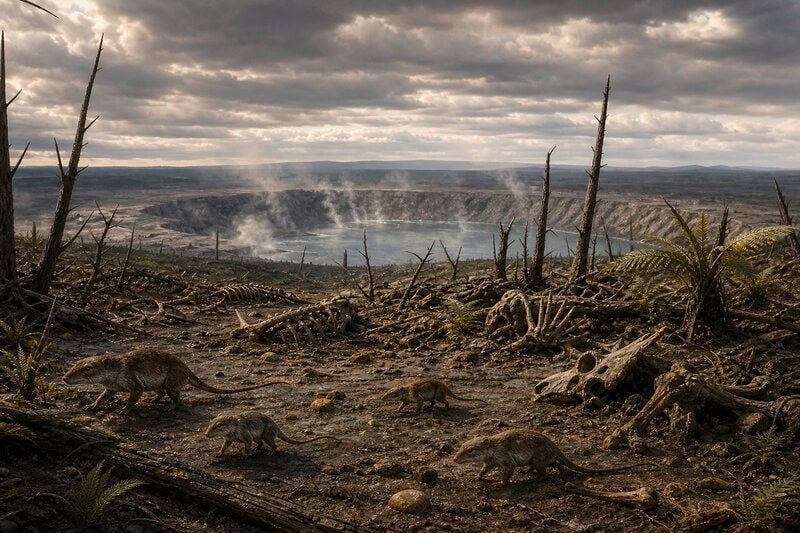
The mass extinction approximately 66 million years ago — triggered by the Chicxulub asteroid impact and its cascading environmental consequences — eliminated roughly 75 percent of Earth’s species, including all non-avian dinosaurs, according to the broad scientific consensus documented across the geological record. The consequences for life on land were immediate and sweeping.
For roughly 165 million years, non-avian dinosaurs had occupied the large-bodied, daytime, terrestrial niches: the grazers, the browsers, the apex predators, the mid-sized omnivores. Their sudden disappearance left an enormous range of food sources, habitats, and body-size categories with no dominant occupants. It was, in ecological terms, the largest vacancy sign Earth had posted in hundreds of millions of years.
The mammals that survived the extinction were, by modern standards, unimpressive. Pre-K-Pg mammals were overwhelmingly small, many were nocturnal, and most were ecologically constrained to the margins of a dinosaur-dominated world — the majority no larger than a modern rat. This picture is well-established by the fossil record, though the precise ecological and evolutionary reasons for their small size and restricted habits remain an active area of research. The central question the new fossil evidence begins to address is not whether mammals diversified after the extinction — that much is established — but how quickly, through what specific pathways, and whether the patterns observed in one part of the world applied globally.
What the Chinese Fossil Site Reveals
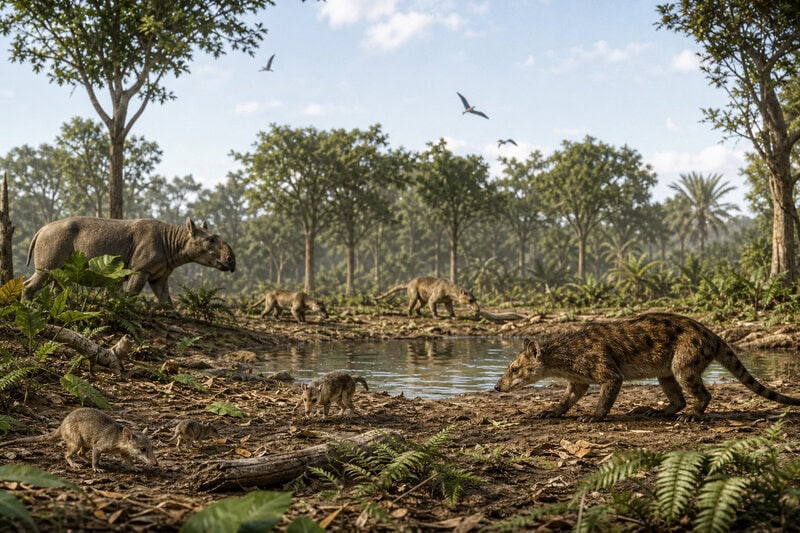
The discovery of extensive plant and animal fossils at the Chinese site allowed scientists to reconstruct not just the mammals themselves but the broader ecosystem they inhabited during the Paleocene epoch. That ecological context is critical: understanding what the mammals were eating, what the vegetation looked like, and what other animals shared the landscape transforms isolated teeth from curiosities into data points within a functioning biological system.
Analysis of the fossil teeth shows multiple distinct mammal lineages present within a geologically short window after the K-Pg boundary, suggesting that diversification began rapidly rather than unfolding gradually over tens of millions of years. Researchers are careful to note that the precise rate of that diversification is still being refined, and that a larger sample would strengthen any quantitative claims about timing.
The range of cusp patterns identified across specimens is particularly telling. Different tooth shapes indicate that mammals were already experimenting with a variety of diets — from insect-dominated to plant-dominated — providing direct anatomical evidence of ecological niche-filling in real time. As Discover Magazine’s coverage of the research notes, the fossil tooth assemblage helps illuminate how mammals came to fill the huge ecological gap left by the demise of the dinosaurs.
What remains uncertain is equally important to acknowledge. The study contributes significant data points, but paleontologists emphasize that a fuller picture of global mammal diversification requires comparable fossil assemblages from other continents. Evolutionary pressures varied significantly by region in the early Paleocene, and no single site — however rich — can stand in for the whole planet.
Filling the Gap: What Was Missing Before This Discovery
The fossil record of mammals at and immediately after the K-Pg boundary has historically been patchy, particularly outside North America. That geographic imbalance has left paleontologists uncertain whether the rapid diversification documented in places like the Bighorn Basin of Wyoming represented a global pattern or a regional phenomenon shaped by local conditions.
Asia’s Paleocene mammal fossil record has been comparatively understudied relative to North American sites, making the Chinese assemblage a critical geographic data point for testing global models of mammal evolution after the dinosaur extinction. Research published in PMC examining the rise of mammals through combined fossil and molecular evidence underscores why geographic breadth matters: different landmasses experienced the post-extinction recovery differently, and those differences shaped the distinct mammal faunas that exist on each continent today.
By providing a large, well-dated collection of fossilized mammal teeth spanning the K-Pg boundary from an Asian locality, the research helps scientists test whether the diversification patterns seen in North America were replicated independently on other landmasses — or whether Asia followed its own trajectory. The answer appears to be broadly consistent with rapid diversification, but with regional particularities that complicate any single global narrative.
This is an additive discovery rather than a revolutionary overthrow of existing models. The findings align with the broader consensus that mammals diversified rapidly after the dinosaur extinction, but they add geographic breadth and anatomical detail that both strengthens and, in some respects, complicates the picture researchers had previously assembled. That is precisely how science is supposed to work.
The Bigger Picture: Mammal Diversification as an Evolutionary Case Study
The question of how mammals diversified after the dinosaurs is one of the foundational problems in vertebrate paleontology, with implications that extend well beyond the Paleocene. How ecosystems recover after catastrophic mass extinctions — how quickly, which groups lead the recovery, and what determines which lineages succeed — are questions with direct relevance to understanding biodiversity loss and recovery today.
Multiple lines of evidence converge on a coherent conclusion: the K-Pg extinction was the primary catalyst for the rapid adaptive radiation of placental mammals, the group that includes all living mammals except marsupials and monotremes. Molecular clock analyses — which use the rate of genetic mutations to estimate when lineages diverged — morphological studies of fossil anatomy, and the physical fossil record itself all point in the same direction. Discoveries like the Chinese tooth assemblage add density and geographic reach to that converging picture.
The contested edges of this consensus are worth naming honestly. The precise timing of the earliest splits among major mammal groups — whether some lineages diverged before or only after the extinction — remains a genuinely debated question. Molecular data sometimes suggest divergence events that predate the K-Pg boundary by millions of years, while fossil evidence tends to place the origin of many modern mammal orders firmly after the extinction. Resolving that tension is an active area of research, and the Chinese fossil assemblage contributes to it without definitively settling it.
Stated plainly: every elephant, bat, whale, and human alive today is, in a meaningful biological sense, descended from a small, opportunistic creature that survived the worst catastrophe to strike Earth in the past 100 million years — and then, tooth by tiny tooth, inherited the world.
Open Questions and the Road Ahead
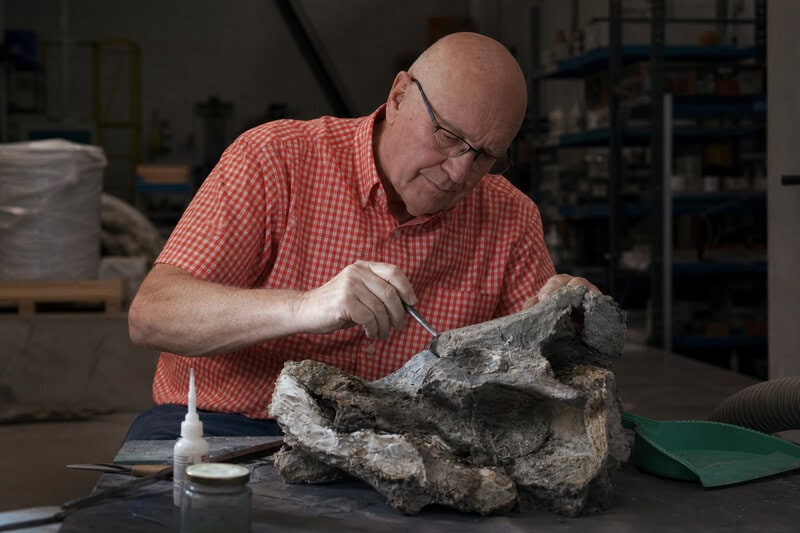
Researchers working with the Chinese fossil assemblage hope to recover additional material from the same sites — particularly skull and limb elements that would allow body-size estimates and locomotor reconstructions to complement the dietary data already extracted from the teeth. A tooth can reveal what an animal ate; a limb bone can reveal how it moved and where it lived, adding another dimension to the ecological reconstruction.
The comparative work needed is substantial. A robust global picture of early Paleocene mammal diversification will require similarly dense fossil assemblages from South America, Africa, and Europe — continents where the post-K-Pg record remains fragmentary. Each new assemblage from a different region is a test of whether the patterns observed elsewhere were universal or contingent on local conditions.
The technological horizon is also shifting rapidly. Advances in micro-CT scanning allow researchers to examine internal tooth structure without damaging irreplaceable specimens. Ancient protein analysis extracted from fossil enamel — a field that has extended usable molecular data far beyond the reach of ancient DNA — is beginning to resolve evolutionary relationships that morphology alone cannot. High-resolution isotope mapping can reconstruct seasonal climate variation from a single tooth. Specimens collected decades ago under older methods may soon yield entirely new categories of information when reanalyzed with these tools. As reporting on this discovery notes, the significance of such finds continues to grow as analytical methods improve.
Each new fossil find at the K-Pg boundary is not merely a data point — it is a window into the moment that set the trajectory of vertebrate life on Earth. The tiny fossilized teeth emerging from Chinese rock are among the clearest windows scientists have yet found into that pivotal transition, and they are already reshaping what researchers can say with confidence about the morning after the dinosaurs disappeared.