
During the summer of 2012, a drought of historic proportions swept across the American Midwest, driving corn yields down sharply in a single season, pushing Mississippi River levels so low that barge traffic ground to a near-halt, and sending grocery prices rippling across global markets within months. That event was not an anomaly waiting to be forgotten — it was, according to a significant new peer-reviewed study, a preview of a structural vulnerability now formally documented by science.
A New Study Puts the Midwest on the Global Risk Map
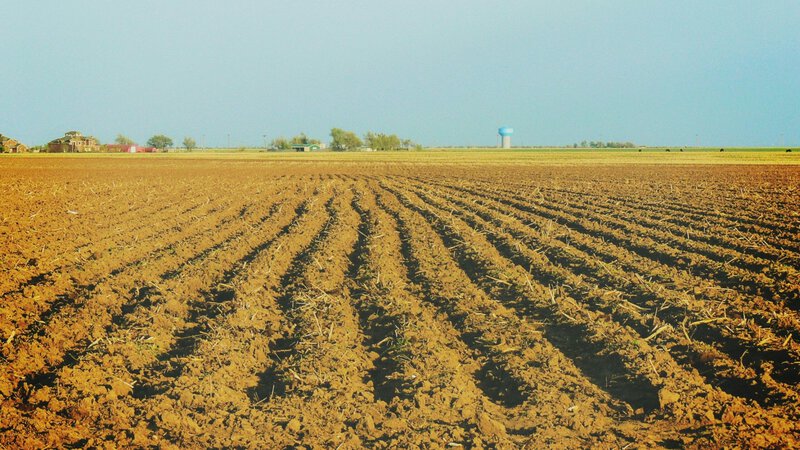
A study led by Kyle Davis, a researcher at the University of Delaware, has systematically mapped which agricultural regions around the world are most sensitive to drought — meaning where crop yields show statistically outsized negative responses when drought conditions occur. The findings, published and described by the University of Delaware, place parts of the Midwestern United States alongside eastern Brazil and eastern Spain in a global ranking of crop-drought sensitivity hotspots. Being named a hotspot does not simply mean a region is dry; it means that when drought does strike, crop yields there fall sharply and reliably — a more precise and more alarming designation.
The stakes are difficult to overstate. The Midwest produces roughly a third of the world’s corn and soybeans, meaning that drought stress in this region is not a regional inconvenience but a global food-security event, with consequences felt from commodity trading floors in Chicago to grain import markets in sub-Saharan Africa and Southeast Asia.
This article explains what the Davis study actually found, why the Midwest is structurally exposed to drought in ways that other major agricultural regions are not, where the science is settled and where it remains contested, and what the hotspot designation means — and does not mean — for the future of American farming.
What the Davis Study Actually Found
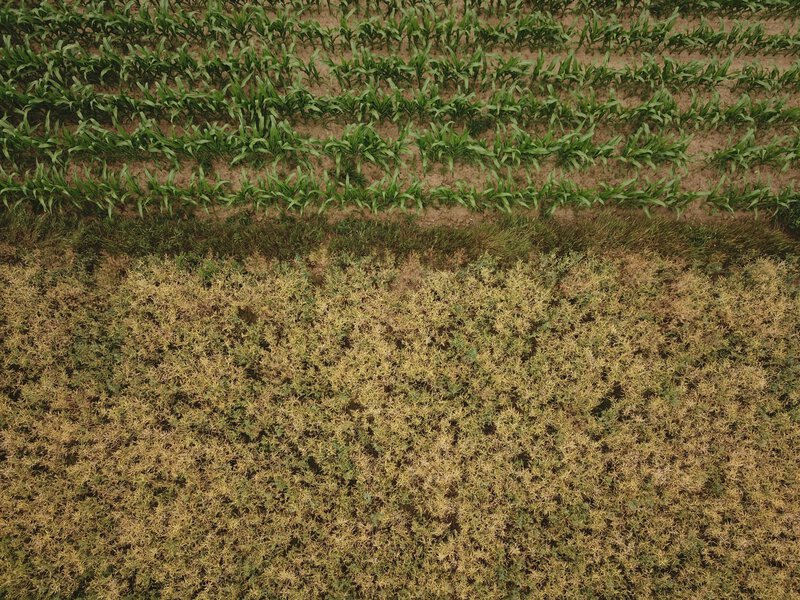
The research team at the University of Delaware took an approach that distinguishes their work from broader, less precise assessments of agricultural climate risk. Rather than treating “drought” and “agriculture” as monolithic categories, the study evaluated drought-yield relationships crop by crop and region by region, separating rain-fed agriculture — crops grown without supplemental irrigation, relying entirely on rainfall and stored soil moisture — from irrigated agriculture, which draws on groundwater or surface-water supplies. This separation matters enormously, because the two systems respond to drought through entirely different mechanisms and face different risk profiles.
The team evaluated how well commonly used drought indicators — standardized indices that measure soil moisture deficits or precipitation shortfalls relative to historical norms — actually explain year-to-year swings in corn and soybean yields across the 2000-2022 period. The central question was empirical: which metrics have genuine predictive power, and which ones fail to detect crop stress in time to be useful?
One of the study’s most policy-relevant findings is also one of its most underreported: not all drought indicators perform equally well for all crops or all regions. A metric that reliably signals corn yield failure in Iowa may be a poor predictor of soybean losses in a neighboring state. As detailed in the study’s public release through EurekAlert, this indicator-specificity problem means that how scientists and policymakers choose to measure drought determines whether they detect an unfolding agricultural crisis early enough to respond — or miss it entirely.
The study also found meaningful differences in drought sensitivity between irrigated and rain-fed systems at the same geographic location. Irrigated fields showed substantially lower yield volatility during drought years, confirming that water-supply buffering — not regional climate alone — drives much of the divergence in agricultural outcomes during dry periods. That finding has direct implications for how policymakers prioritize water infrastructure investment relative to other adaptation strategies.
Why the Midwest Is Structurally Vulnerable
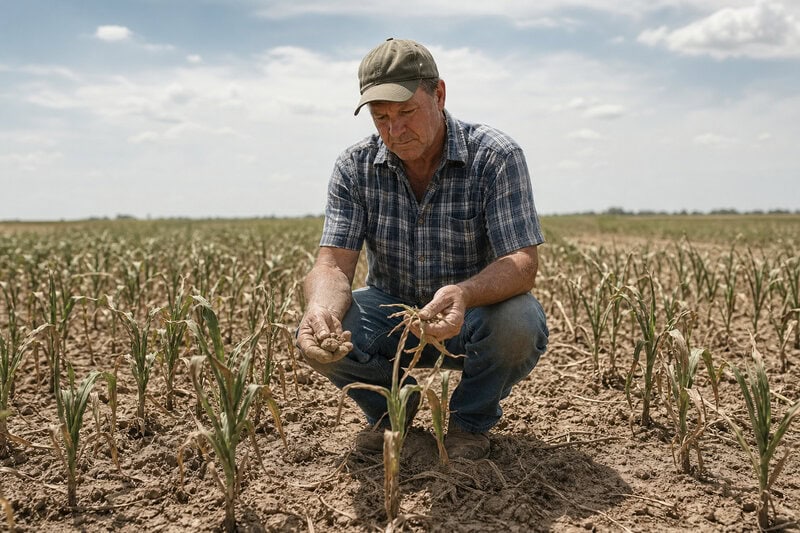
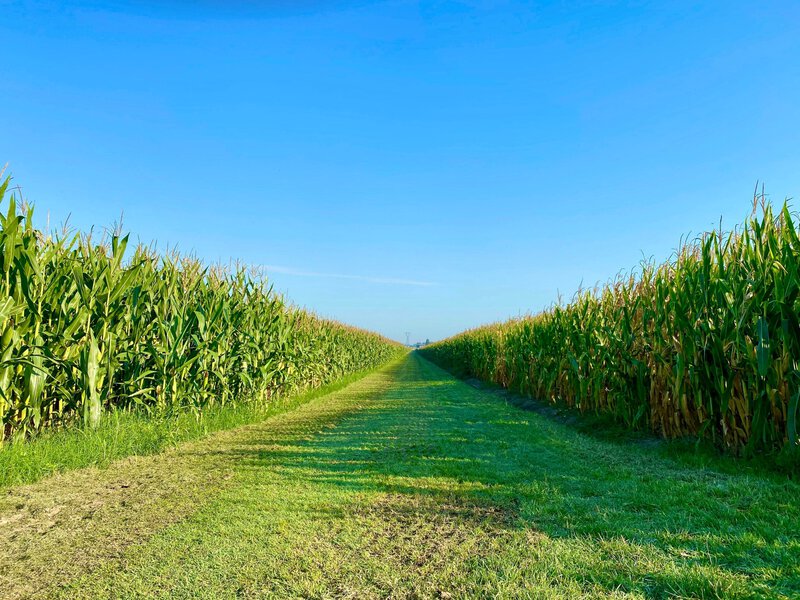
To understand why the Midwest earns hotspot status, it helps to understand what makes rain-fed agriculture fundamentally different from irrigated farming. Rain-fed crops — which describe much of the Midwest’s corn and soybean belt — receive no supplemental water supply. When the rains fail or arrive at the wrong time, there is no backup system. California’s heavily irrigated Central Valley, by contrast, can draw on surface reservoirs and groundwater networks to buffer against precipitation shortfalls, at least in the short term. The Midwest’s dependence on rainfall is not a failure of planning; it reflects the scale of the operation. Irrigating hundreds of millions of acres of row crops at the intensity required is neither economically nor physically feasible across much of the region.
Within that rain-fed system, corn carries a particular biological vulnerability that amplifies drought risk: an acutely sensitive two-week window around silking and pollination in midsummer. During this period, moisture stress — even a brief, intense dry spell that might cause little harm at other growth stages — can slash yields far more severely than a mild deficit spread across an entire growing season. The timing of drought, not just its magnitude, is what often determines whether a difficult summer becomes a catastrophic one.
Temperature compounds this vulnerability in a well-established feedback loop. When soil moisture falls, the land surface heats up faster because less energy is consumed by evaporation. That additional surface heat intensifies stress on crops already struggling with water deficits, accelerating the damage. Drought and heat are not merely correlated in the Midwest; they physically amplify each other.
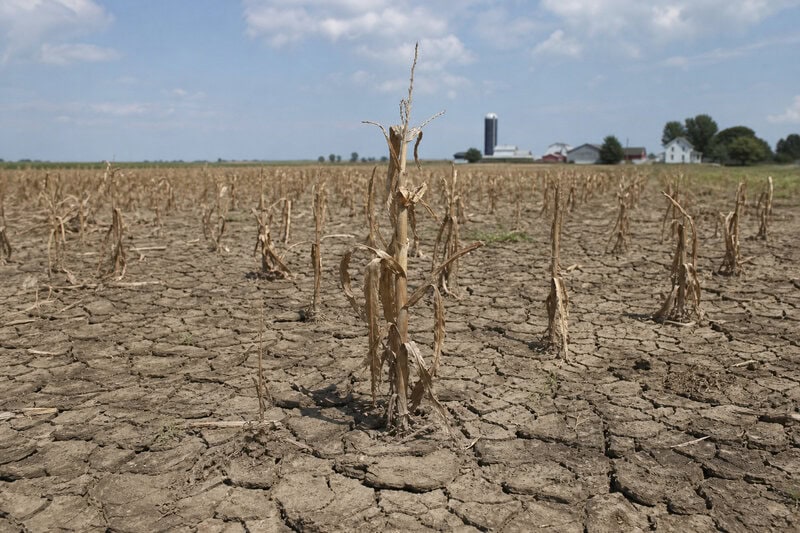
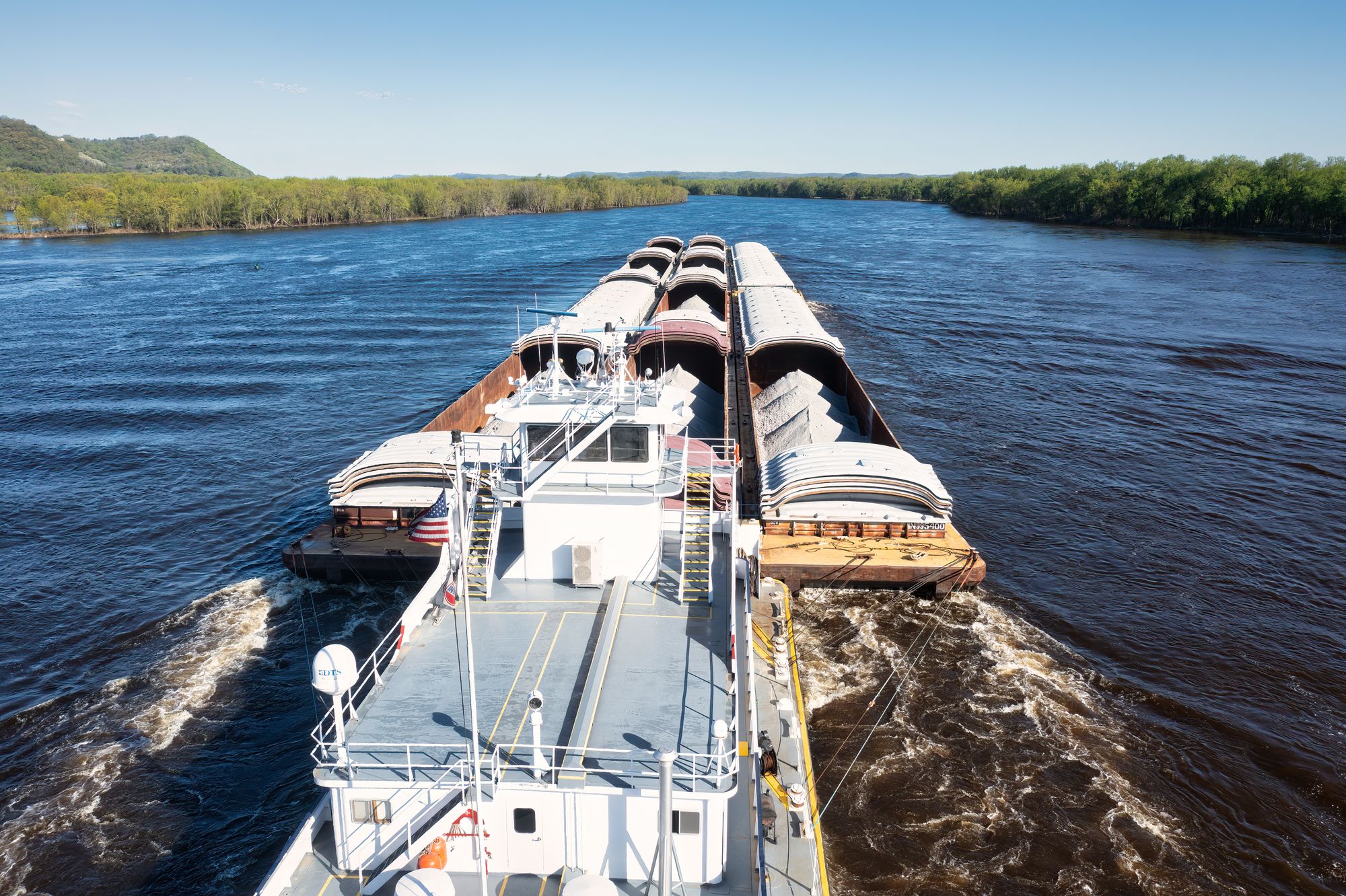
The 1988 and 2012 droughts, both cited as documented precedents, showed precisely what happens when drought timing aligns with crop critical periods at regional scale. In both cases, agricultural losses cascaded well beyond the farm gate. In 2012, the Mississippi River — the central artery of American grain logistics — dropped to levels that severely constrained barge traffic, raising transportation costs and compressing farmer margins simultaneously. That infrastructure dimension of drought is often overlooked in purely agronomic analyses, but it illustrates why a Midwest crop drought is a supply-chain event as much as a farming one.
Climate Change’s Role: What Is Settled and What Remains Contested
The scientific consensus, as established by the Intergovernmental Panel on Climate Change and supported by the bulk of peer-reviewed literature, is clear on one point: human-caused climate change is increasing the frequency and intensity of drought conditions across many mid-latitude agricultural regions, including parts of the central United States. That finding is not in serious scientific dispute.
What remains an area of active and genuinely open research is the precise trajectory of Midwest precipitation patterns decade by decade. Some climate models project wetter springs coupled with drier summers — a pattern that could intensify the critical-window drought risk described above even if annual totals remain stable. Others project increased variability without a dominant directional trend. The Davis study does not resolve this uncertainty; its contribution is to map current sensitivity rather than to forecast future precipitation, and it is important not to conflate the two.
What is not in dispute, and what the Davis research implicitly reinforces, is the role of rising temperatures in reshaping drought risk regardless of precipitation trends. Higher temperatures increase evapotranspiration — the combined process of water evaporating from soil and transpiring through plant leaves — meaning that crops can experience physiological drought stress during historically “normal” rainfall years simply because more of that rainfall is lost to the atmosphere before roots can use it. This dynamic is already being observed in Midwestern agricultural data and represents a slow-moving shift in the baseline risk environment.
One emerging and still-contested dimension deserves transparent acknowledgment: some researchers argue that historically significant irrigation from the Ogallala Aquifer — the vast underground water reserve beneath the Great Plains — has buffered Midwest drought statistics in ways the surface-level precipitation record does not fully reveal. As that aquifer depletes in heavily drawn areas, measured drought sensitivity may worsen in ways the 2000-2022 historical window examined by Davis and colleagues cannot yet fully capture. This remains a hypothesis under active investigation rather than an established finding, but it is a credible concern that future research will need to address directly.
From the Farm to the Global Table: Food Security Implications
The connection between Midwest drought conditions and global food security runs through a simple but powerful arithmetic: the United States Midwest supplies a disproportionate share of globally traded corn, soybeans, and wheat. When production there falters, import-dependent nations across Africa, Asia, and Latin America face higher prices for staple foods, often with limited capacity to absorb those shocks. A drought in Iowa is, within months, a food-affordability problem in Lagos or Jakarta.
The 2012 drought demonstrated this chain with unusual clarity. Reduced barge capacity on the Mississippi raised grain transportation costs at the same moment that reduced yields were tightening supply, compressing farmer margins and elevating export prices simultaneously. The interaction between agricultural production loss and logistics infrastructure failure created a compounding shock that neither factor would have produced alone.
The Davis study’s crop-specific, region-specific framework is significant for policy precisely because it moves beyond generic drought warnings. By identifying which crops, in which areas, under which drought-indicator thresholds, are most likely to show yield failure, the research produces information that is actionable for commodity traders, international relief agencies, and farm lenders — all of whom need lead time to adjust positions, pre-position supplies, or restructure credit before a crisis matures.
Economic complexity deserves honest acknowledgment here. Drought years in the Midwest can temporarily benefit producers in unaffected competing regions through higher commodity prices. But repeated production shocks erode the long-term investment stability and planning horizons that agriculture depends on, and the net global welfare effect of major Midwest crop failures is consistently negative. The short-term price signal should not be mistaken for systemic resilience.
What Farmers and Policymakers Are Doing — and Where the Gaps Remain
Adaptation tools exist and are being deployed, though not uniformly or at sufficient scale. Drought-tolerant crop varieties, developed through decades of conventional breeding and more recent genetic research, have shown measurable yield stability in dry years for both corn and soybeans. Cover cropping — planting non-cash crops between growing seasons — improves soil structure and water retention, reducing moisture loss during dry spells. Federal crop insurance programs attempt to buffer farmer income losses during drought years, though coverage gaps, premium costs, and complex enrollment requirements remain persistent barriers for smaller and mid-sized operations.
The Davis study carries a specific and actionable lesson for early-warning systems: because different drought indicators explain yield variability differently for corn than for soybeans, and differently across subregions of the Midwest, improving agricultural forecast accuracy requires crop-specific and location-specific monitoring rather than the one-size-fits-all drought indices that currently dominate U.S. agricultural early-warning infrastructure. Closing that gap would allow decision-makers — from USDA analysts to grain elevator operators — to act on more reliable signals earlier in the growing season, potentially before losses become severe enough to trigger market disruptions.
The infrastructure dimension the study implicitly raises also deserves sustained policy attention. Waterway transportation bottlenecks during drought years expose a systemic vulnerability in how harvests move from field to market. Resilience planning that focuses exclusively on crop genetics while ignoring logistics capacity addresses only part of the problem — and arguably not the part most visible to global food markets during an acute crisis.
It is equally important to be clear about what the Davis study does not prescribe. It maps sensitivity and evaluates the performance of drought indicators; it does not itself recommend specific farm-level interventions or quantify how much adaptation investment would be required to meaningfully offset projected risk. Those questions — which are the ones most directly useful to policymakers writing budgets and farmers making planting decisions — remain open for follow-on research and for the policy analysis that good science eventually informs.
The Bottom Line: A Hotspot Designation With Real Consequences
The University of Delaware study by Kyle Davis and colleagues provides crop-specific, globally comparative evidence that the Midwest is not merely drought-prone but is among the world’s highest-sensitivity agricultural regions — a place where drought reliably translates into measurable yield loss in ways that matter far beyond American borders.
The distinction between sensitivity and inevitability is worth holding carefully. Being a hotspot means the region responds sharply to drought when it occurs, not that catastrophic drought is certain or imminent. The designation is a call for proportionate preparedness and sustained investment, not for alarm. The Midwest has absorbed severe droughts before and will continue farming after future ones. The question the Davis study raises is whether the tools for detecting, anticipating, and responding to those droughts are as sophisticated as the agricultural system they are meant to protect.
As climate change alters precipitation variability and raises baseline temperatures across mid-latitude regions, a crop system already shown to be highly drought-sensitive faces a compounding risk profile that warrants sustained scientific monitoring, smarter and crop-specific drought indicators, and resilient logistics infrastructure — all areas where the Davis study’s framework can directly inform decision-making. Drought forecasting and agricultural modeling are improving rapidly, but the 2000-2022 window the study examines is a relatively short observational record. Researchers including Davis have emphasized the need for continued long-term data collection to confirm and refine hotspot designations as climate conditions evolve — a reminder that good science treats its own findings as a starting point, not a final word.