
In the six seconds it takes an astronaut to cross the International Space Station’s airlock threshold, the pressure surrounding their body plunges from a comfortable 14.7 pounds per square inch to a near-perfect vacuum of 0.00006 psi — a pressure differential more extreme than anything a deep-sea diver encounters going in the opposite direction. NASA’s upcoming Canadarm2 wrist-joint repair spacewalk, scheduled for June 30 with live coverage beginning at 7 a.m. ET, puts two astronauts back into that punishing environment for an estimated six-plus hours. What their bodies endure during that time is far more complex than the graceful footage broadcast to Earth suggests — and understanding it makes watching the spacewalk live a fundamentally different experience.
When and How to Watch the June 30 Spacewalk Live
NASA’s live coverage begins at 7 a.m. ET on Monday, June 30 and is available free of charge across multiple platforms. NASA Live streams continuously on the agency’s official channel, and the NASA+ app — available on iOS, Android, Roku, and Apple TV — carries the full broadcast without a subscription. The spacewalk will also stream on YouTube and other streaming platforms, significantly broadening access for audiences who may not follow NASA channels directly. Additional platform links and mission context are available through Florida Today’s coverage of the event.
The extravehicular activity (EVA) is officially designated U.S. Spacewalk 95 and is expected to last approximately six hours and thirty minutes. The mission objective is the installation of a new wrist joint on Canadarm2, the robotic arm that serves as the ISS’s primary tool for cargo handling, crew vehicle berthing, and external logistics. This is the second U.S. spacewalk of calendar year 2026, following U.S. Spacewalk 93 on January 8, which began at 8 a.m. EST and was planned for approximately six hours and thirty minutes, and U.S. Spacewalk 94 on March 18, with coverage beginning at 6:30 a.m. ET.
What to Watch For During the Broadcast
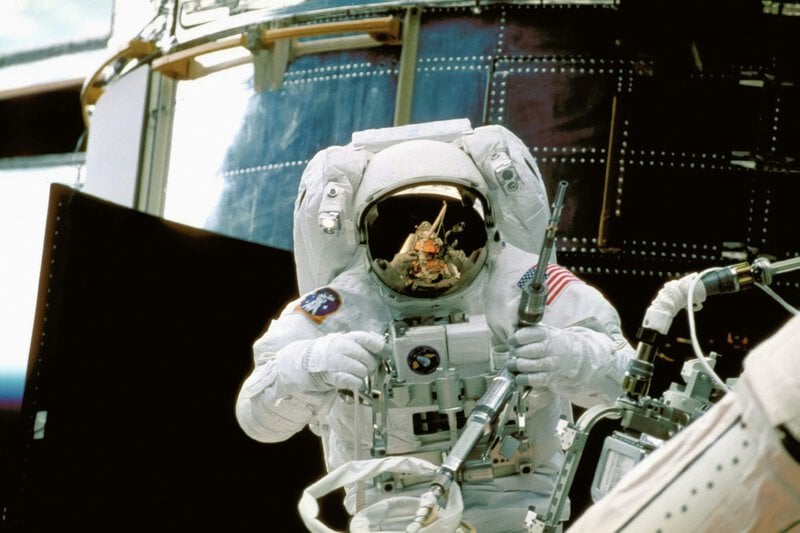
Viewers who understand what is physically happening inside those suits can watch for cues that rarely make headlines. Mission commentary will periodically reference suit pressure readouts and consumables margins — those numbers reflect a continuous biological negotiation between the crew and ground teams. Rest breaks during the EVA are not idle pauses; they are active thermal and fatigue management decisions made in real time. Any mention of carbon dioxide levels, a change in task sequence, or an unscheduled hold may signal that flight controllers are responding to physiological data streaming from sensors inside the suits. The Canadarm2 wrist-joint installation also has a clear visual narrative: camera angles will shift as the crew maneuvers the new joint into position, and commentary will walk through each torque sequence as it completes.
The Decompression Gauntlet: Why Astronauts Breathe Pure Oxygen for Hours Before Going Outside
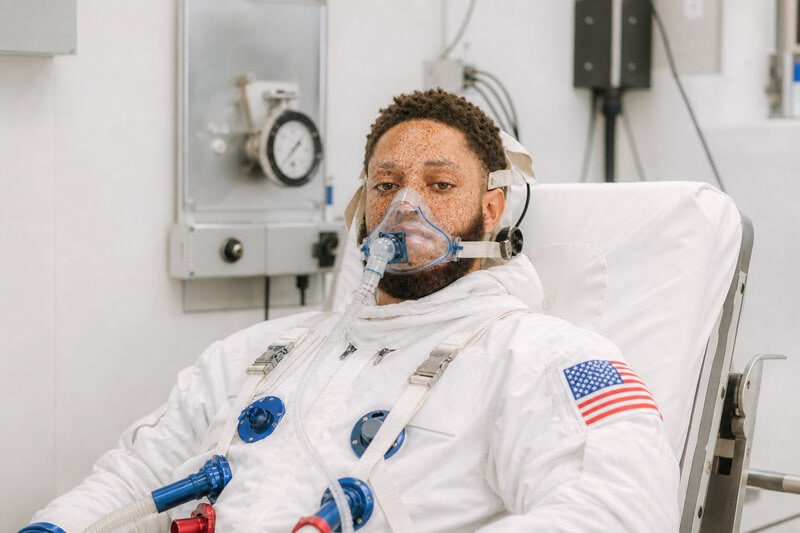
Preparation for an ISS spacewalk begins long before any hatch opens. The EMU, or Extravehicular Mobility Unit, operates at only 4.3 pounds per square inch of pure oxygen — roughly the atmospheric pressure atop a 30,000-foot mountain. Stepping directly from the station’s normal cabin pressure into that low-pressure suit would allow dissolved nitrogen in an astronaut’s blood and tissues to bubble out violently, causing decompression sickness (DCS), the same “bends” that can kill scuba divers who ascend too quickly from depth. NASA’s Human Research Program identifies DCS prevention as a foundational EVA safety requirement.
NASA’s standard pre-breathe protocol requires astronauts to inhale 100 percent oxygen for a minimum of four hours, either at the station’s normal atmospheric pressure or after spending a “campout” night in the Quest airlock at a reduced pressure of 10.2 psi. The campout method compresses active pre-breathe time but substitutes a sleep-disrupted night in a cramped chamber — a trade-off with its own physiological cost. A 2021 review published in NPJ Microgravity found that even with full protocol compliance, venous gas emboli — tiny nitrogen bubbles detectable by Doppler ultrasound — form in roughly 10 to 15 percent of EVAs, though most resolve without clinical DCS. The practical implication is significant: by the time a crew member floats outside for the June 30 Canadarm2 wrist-joint installation, they have already been physiologically taxed for the better part of half a day before touching a single tool.
Radiation Exposure: Six Hours Outside the Aluminum Shield
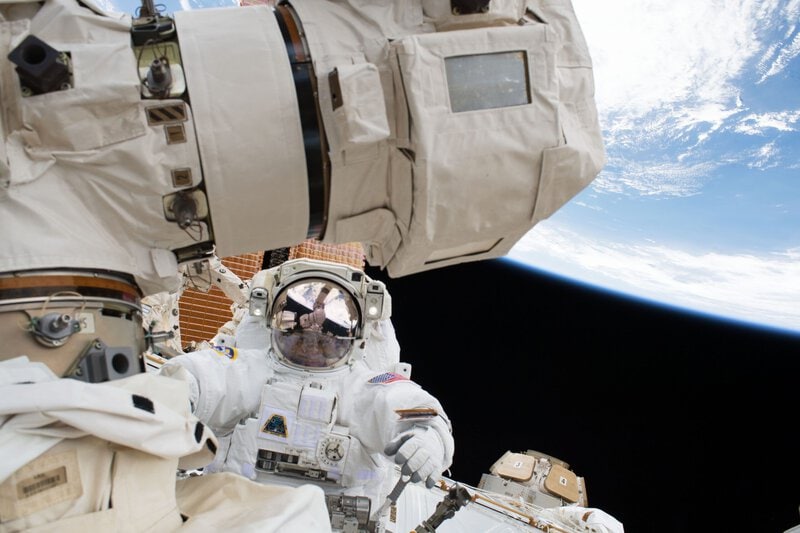
The ISS’s aluminum hull provides meaningful, though imperfect, shielding from space radiation. Outside it, astronauts are exposed to galactic cosmic rays and solar energetic particles at a dose rate NASA’s Space Radiation Laboratory estimates at roughly 0.5 to 1 millisievert per EVA under quiet solar conditions — the equivalent of approximately 50 to 100 chest X-rays absorbed during a single outing. Each spacewalk chips away at each astronaut’s lifetime radiation budget.
NASA caps career radiation exposure using a 3 percent REID limit — Risk of Exposure-Induced Death from cancer — individualized by the astronaut’s age and sex, a standard the agency updated in 2021 after moving away from a previously separate, lower limit for women. A solar particle event during an EVA could spike an astronaut’s dose dramatically and unpredictably. NASA monitors space weather in real time and reserves the right to terminate any spacewalk if NOAA’s Space Weather Prediction Center issues a solar energetic particle alert — a protocol that has been invoked, though rarely, in the history of ISS operations.
The Glove Problem: Hand Trauma NASA Hasn’t Fully Solved
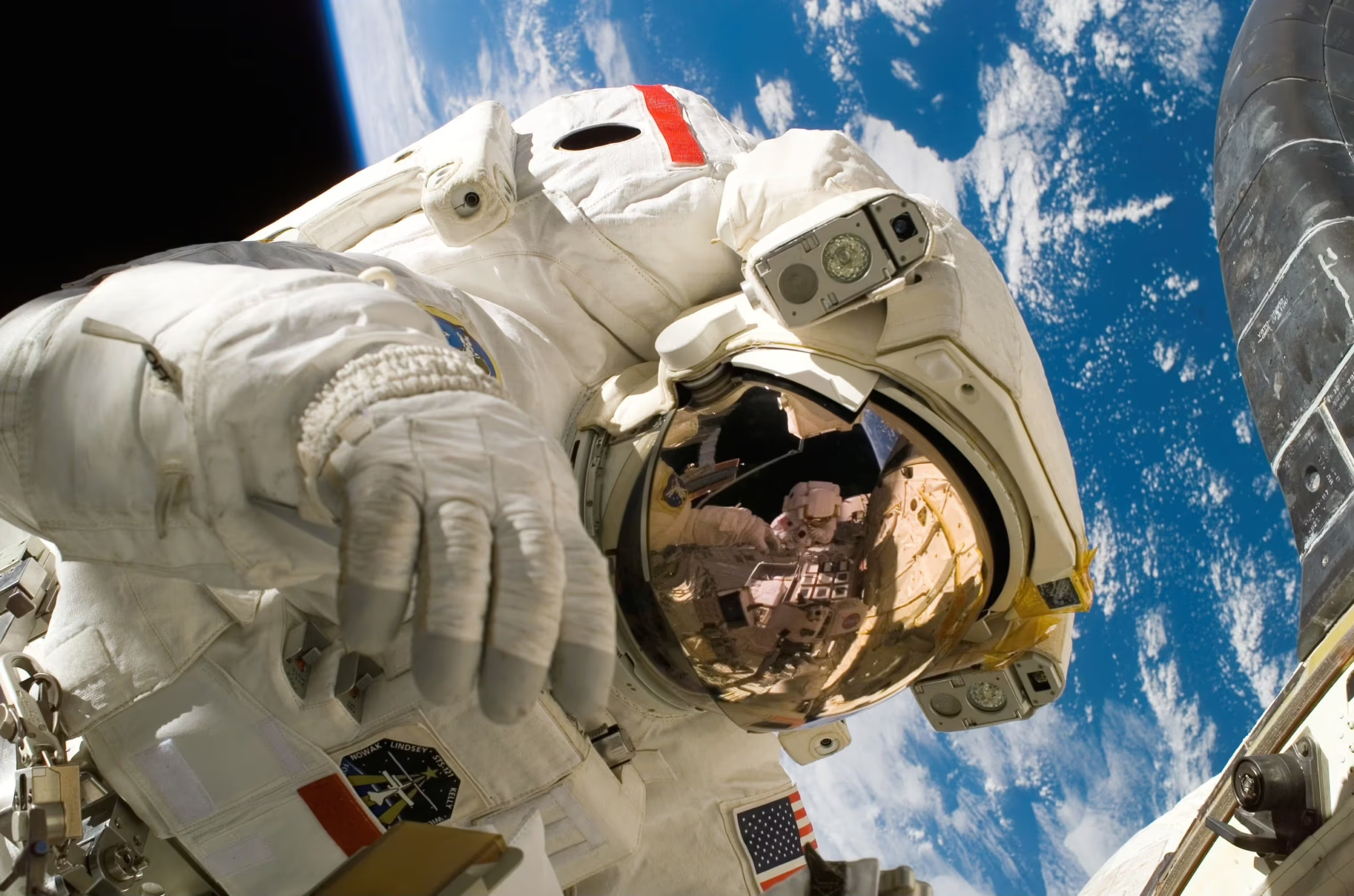
Of all the physiological stresses a spacewalk imposes, hand and arm fatigue may be the most underappreciated by viewers watching smooth footage of astronauts gliding along the station’s exterior. The EMU glove is pressurized to 4.3 psi, which means it mechanically resists every finger movement a crew member makes. Research presented at the 2019 International Astronautical Congress found that a six-hour EVA can require an astronaut’s hands to exert the equivalent of hundreds of kilograms of cumulative grip force against that constant resistance.
The consequences show up in NASA’s own injury surveillance data, published in the journal Aviation, Space, and Environmental Medicine: fingernail delamination — the nail physically separating from the nail bed — is the most commonly reported EVA hand injury. Shoulder injuries from suit-induced torque represent an emerging concern flagged in NASA’s 2023 Human Research Program Evidence Report. The agency is studying next-generation suit designs, including the xEMU intended for the Artemis lunar program, that aim to reduce rotational load on the shoulder joint, though that suit has not yet been certified for ISS use.
Core body temperature is also actively managed throughout an EVA. The liquid cooling and ventilation garment worn beneath the EMU circulates chilled water against the astronaut’s skin to offset metabolic heat generation. During high-workload tasks — such as the precise robotic arm joint installation planned for June 30 — NASA’s thermal physiology team notes that astronauts can approach the suit’s cooling capacity limits, making task pacing a genuine operational variable rather than a comfort preference.
Vision Changes and the SANS Problem Few Viewers Notice

Long before an astronaut steps outside, microgravity is already altering their physiology in ways that affect their ability to perform precision work. According to NASA’s Human Research Program, fluid shifts headward within the first 24 hours aboard the ISS, and over months that elevated intracranial pressure can reshape the optic nerve sheath and flatten the back of the eyeball. This condition is called SANS, or Spaceflight-Associated Neuro-ocular Syndrome. A 2023 paper in JAMA Ophthalmology found structural optic disc changes in approximately 70 percent of long-duration ISS crew members studied; the authors called for standardized pre- and post-flight ophthalmologic monitoring as a research priority.
NASA notes that the direct contribution of EVA activity itself to SANS progression is not yet quantified, distinguishing the EVA-specific effect from the well-documented long-duration microgravity effect. What is operationally relevant is that astronauts threading a new wrist joint onto Canadarm2 on June 30 may be doing so with vision subtly altered by months of SANS accumulation — a human factors consideration mission planners acknowledge but cannot yet fully mitigate with current countermeasures.
How Long Can Astronauts Actually Stay Outside the ISS?
The EMU’s primary life support system carries enough oxygen, battery power, and cooling water for approximately eight hours of EVA operations, with a built-in 30-minute contingency reserve. NASA’s standard mission planning target of six to six-and-a-half hours is deliberately set to preserve that margin. But the real limiting factors are rarely the suit’s consumables alone.
Hand and shoulder fatigue, carbon dioxide buildup in the suit’s ventilation loop — NASA sets a hard abort threshold at 15 mmHg of suit CO₂ — and metabolic heat accumulation typically impose constraints before hardware limits are reached, according to NASA Johnson Space Center EVA operations documentation. Cognitive performance adds another dimension: a 2022 study in Frontiers in Physiology found measurable declines in fine motor accuracy and working memory after five or more hours of simulated EVA workload combined with mild hypercapnia, though the authors noted that ISS suit CO₂ concentrations in nominal operations remain below the range they studied.
The operational answer to how long astronauts can stay outside is therefore not a single fixed number. It is a dynamic limit shaped by suit consumables, individual crew physiology, task complexity, and real-time ground monitoring — all of which will be actively managed throughout the June 30 Canadarm2 EVA.
Why This Spacewalk Matters Beyond the Task
Canadarm2 is the robotic backbone of ISS operations. Without a functioning wrist joint, the arm’s ability to berth visiting cargo vehicles and reposition equipment along the station’s truss is compromised in ways that cascade through the entire ISS logistics schedule. The physical work astronauts endure on June 30 — the hours of pre-breathe oxygen saturation, the radiation dose, the cumulative grip force measured in hundreds of kilograms, the thermal stress approaching suit cooling limits — directly sustains the station’s long-term operational capacity. That is the full weight of what a spacewalk actually costs, measured not in mission time but in the human bodies that make it possible. Watching the live coverage with that context in mind transforms an impressive spectacle into something more: a precise record of what it takes to keep a crewed outpost functioning 250 miles above Earth.