
A peer-reviewed study published in Scientific Reports — a journal in the Nature Portfolio — has confirmed that the cannabis “entourage effect” is real, but with a finding that reshapes how scientists, clinicians, and consumers should think about it: the effect is not a blanket, whole-plant synergy. It is highly selective, varying by which terpene interacts with which cannabinoid receptor. For the millions of patients and consumers who have chosen cannabis products based on terpene profiles, assuming a generalized therapeutic boost, that distinction is not a minor scientific footnote — it is a fundamental revision of the underlying assumption.
What the Entourage Effect Actually Means — and Where the Idea Came From

The entourage effect refers to the hypothesis that compounds found in cannabis — cannabinoids such as THC and CBD, terpenes (the aromatic molecules responsible for cannabis’s distinctive smell, including linalool and beta-caryophyllene), and flavonoids — work synergistically to produce effects greater than any single compound alone. In plain terms: the whole plant, this hypothesis holds, is therapeutically greater than the sum of its parts.
The concept gained formal traction in cannabis research over the past two decades, defined most precisely as the suggested positive contribution derived from the addition of terpenes to cannabinoids. It became enormously influential — shaping product development, clinical conversations, and consumer marketing — well before receptor-level pharmacology had fully tested it. That gap between cultural acceptance and scientific rigor is exactly what the new research moves to close.
Early interpretations of the entourage effect proposed something sweeping: any terpene would broadly enhance any cannabinoid activity, and stacking more compounds into a product would reliably amplify its effects. That reading outpaced the experimental evidence. Before this new study, the entourage effect remained a widely discussed but incompletely validated concept — more settled in cannabis culture and some clinical circles than firmly established in peer-reviewed, receptor-level pharmacology. Medical News Today’s overview of the entourage effect captures this tension well, noting that researchers have long called for more rigorous investigation of the mechanism.
The New Study: What Researchers Did and Why It Matters
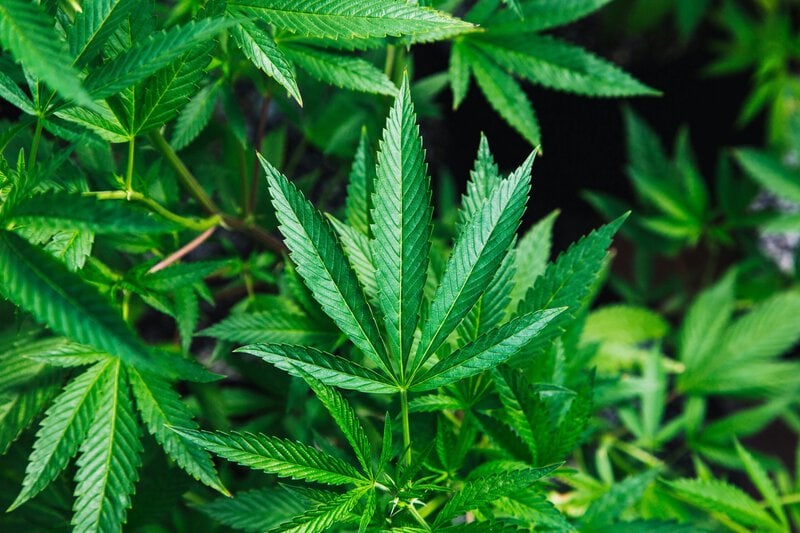
Research published in Scientific Reports examined a specific and important scientific question: whether cannabis sativa terpenes are cannabimimetic — meaning whether they can mimic or selectively enhance cannabinoid activity at specific receptors. Cannabinoid receptors are the molecular targets embedded in human cells that THC, CBD, and related compounds bind to in order to produce their effects; they are the core infrastructure of the endocannabinoid system, the body’s own regulatory network that cannabis compounds interact with.
Rather than measuring whole-plant effects in human subjects — an approach that captures outcomes but obscures mechanism — the researchers tested individual terpenes against specific cannabinoid receptors to map which combinations produced enhanced activity and which did not. This methodological choice is significant. By isolating individual interactions at the receptor level, the team could identify why certain combinations work rather than merely observing that they sometimes do. That represents a meaningful step up in scientific rigor, moving the field from correlation toward mechanism.
The headline result: the study found evidence of an entourage effect — compounds working together to achieve results more robust than individual compounds alone — but only in specific terpene-receptor pairings, not universally across all combinations tested. As Marijuana Moment reported in its coverage of the findings, the study’s authors frame this as refuting early, overly broad interpretations of a generalized entourage effect and replacing them with terpene- and receptor-specific models.
The Mechanism Explained: Why Some Terpenes Work and Others Don’t

The central insight is one of selectivity. Not every terpene enhances every cannabinoid receptor — the research reveals that the entourage effect depends on specific terpene-receptor interactions, meaning the chemistry is far more targeted than a general “boost” to the cannabis experience.
A useful analogy: think of cannabinoid receptors as different locks and terpenes as keys that only fit certain locks. Inserting the wrong key does nothing; the right pairing, however, can open the door more efficiently than the cannabinoid compound alone would. The study’s central question — whether terpenes qualify as cannabimimetic, and under what specific conditions — is answered affirmatively, but with a crucial qualifier: specificity is everything.
A cannabimimetic compound is one capable of acting on the same receptor pathways as cannabinoids, producing similar or complementary effects through those shared molecular channels. The finding that certain terpenes meet this definition under specific conditions represents a genuine advance in understanding how cannabis pharmacology works at the cellular level.
What remains uncertain is equally important to state clearly. The study identifies receptor-level interactions under laboratory conditions. Translating those findings to real-world human therapeutic outcomes — accounting for dosage, individual biology, delivery method, and the full complexity of living systems — requires further clinical research. The mechanism has been better illuminated; the clinical map is still being drawn.
What This Means for CBD, THC, and the Products People Already Buy
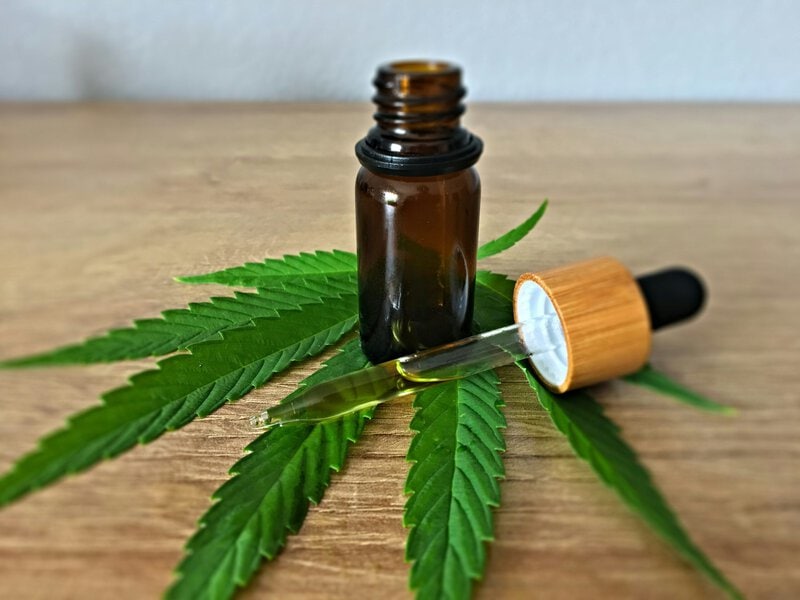
The growing body of entourage effect research in cannabis medicinal products has already driven a booming market in full-spectrum cannabis formulations — oils, tinctures, capsules, and flower marketed explicitly on their terpene profiles. The promise, implicit or explicit, has been that a richer terpene profile equals a stronger, more beneficial product. This study suggests that promise is scientifically incomplete.
If the entourage effect is receptor- and terpene-specific rather than generalized, then a product’s terpene content is only meaningful if those particular terpenes interact with the receptors relevant to a user’s specific condition. A terpene profile that enhances activity at one receptor subtype may be entirely inert at another. Current product labeling does not capture this nuance — and the industry, for the most part, has not yet mapped it.
The “more is more” logic — stack a product with as many terpenes as possible and amplify the effect — is not scientifically supported as a reliable strategy for enhancing therapeutic outcomes. The new findings directly challenge that interpretation. What they do not do is invalidate the value of terpene-rich cannabis products altogether. Rather, they sharpen the question: which terpenes, at which receptors, for which conditions?
That question points toward a future where clinicians and formulators could match specific terpene-cannabinoid combinations to specific therapeutic targets — a meaningfully more precise approach than the current market convention of broad terpene marketing claims.
The Shift Toward Precision Cannabis Medicine
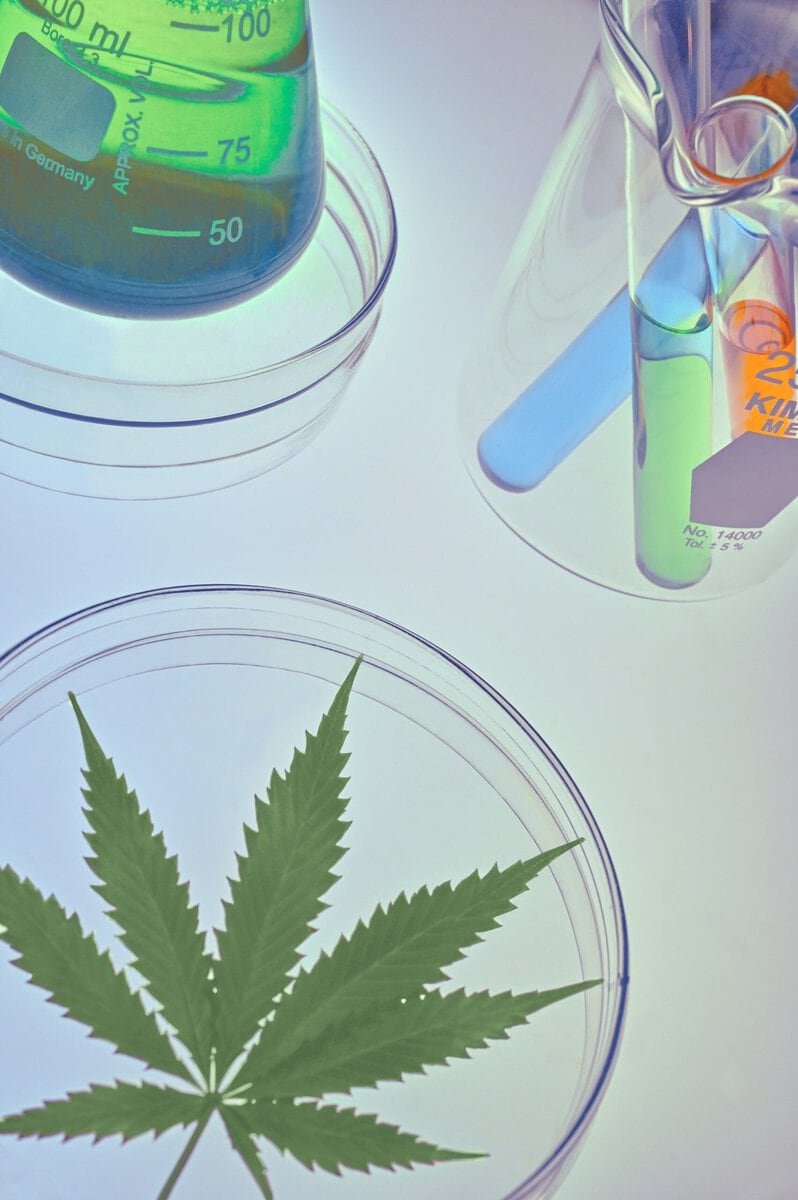
This research signals a potential paradigm shift: a move away from whole-plant generalism toward what researchers are increasingly calling precision cannabis medicine. Under this model, formulations would be built around verified terpene-receptor interactions — mapped, validated, and matched to patient biology — rather than around tradition, anecdote, or marketing convention.
This trajectory mirrors developments across modern medicine more broadly. Precision medicine — tailoring treatments to specific biological mechanisms in specific patient populations — is already standard in oncology and pharmacogenomics. That cannabis pharmacology may be maturing toward similar specificity is both a scientific development and a practical one, with implications for how products are designed, regulated, and prescribed.
What researchers and clinicians now need are validated maps: which terpenes modulate which cannabinoid receptors, at what concentrations, and with what effect in which patient populations. The Scientific Reports study helps define that research agenda — identifying the selectivity principle and providing receptor-level evidence for it — but it does not complete it. The next generation of cannabis science will need to build on this framework with clinical trials designed around these specific mechanisms.
What the Science Supports — and What to Wait For
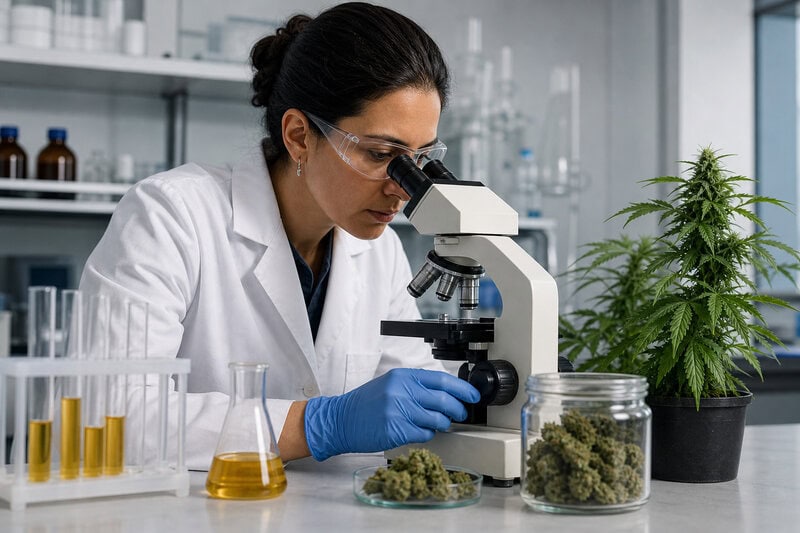
The core finding is worth stating plainly: a peer-reviewed study in Scientific Reports provides receptor-level evidence that the cannabis entourage effect is real, but selective — dependent on specific terpene-receptor pairings rather than a universal synergy across all cannabis compounds. That is a significant scientific advance, and it deserves to be understood as one.
It is well established that THC and CBD act on the endocannabinoid system. It is now better evidenced — though not yet fully proven at the clinical level — that certain terpenes can selectively enhance those interactions under specific conditions. The distance between “better evidenced at the receptor level” and “clinically proven in humans” is real, and responsible reporting requires holding both truths simultaneously.
- For consumers: Skepticism toward broad entourage effect marketing claims is scientifically warranted. A product marketed on its terpene profile is not automatically more effective — the relevant question is which terpenes, at which receptors, for which purpose.
- For patients: Until precision terpene-receptor data is translated into clinical guidelines, the most reliable resource is a healthcare provider familiar with cannabis pharmacology, not a product label.
- For the field: The research agenda is now better defined. The selectivity principle gives scientists a more precise framework to test, and the tools of precision medicine offer a model to follow.
The real significance of this study is not what it proves today but what it makes possible tomorrow — a generation of cannabis research precise enough, and rigorous enough, to match the genuine complexity of the plant itself. The entourage effect is not dead. It has simply grown up.