
More than 80% of the fossil fuel industry’s political donations flow to Republicans and conservative groups — a figure that reframes partisan deadlock on climate legislation not as a philosophical coincidence, but as a financially predictable outcome. When researchers apply the tools of political science and economics to that pattern, what emerges is a detailed, if incomplete, picture of how money moves through democratic institutions and why ambitious climate policy so consistently stalls. Understanding the mechanics behind that pattern requires separating what the data robustly show from what remains genuinely contested — a distinction that public debate on this topic rarely makes with sufficient care.
What Lobbying Science Actually Measures

Lobbying, in its legal and technical definition, is the practice of paying licensed professionals to communicate industry preferences directly to legislators and their staffs. It is distinct from — though frequently combined with — campaign contributions and political action committee (PAC) spending. The U.S. Senate’s public lobbying disclosure database, established under the Lobbying Disclosure Act of 1995, logs spending by sector and firm, giving economists and political scientists a structured dataset against which to test hypotheses about legislative behavior. By running statistical regressions that link disclosed dollars to voting records while controlling for variables like district partisanship and constituent opinion, researchers can identify correlations between industry spending and legislative outcomes.
The field carries an important methodological caveat that honest researchers flag prominently. Political scientist Lee Drutman of the New America Foundation has noted that disclosed lobbying expenditures represent a floor, not a ceiling — spending routed through 501(c)(4) nonprofit organizations, commonly called “dark money,” remains largely opaque to outside analysts. This means that studies relying on disclosed data almost certainly undercount total industry influence, a limitation that should temper strong causal claims in either direction.
What the science can and cannot prove deserves equal clarity. Correlations between fossil fuel lobbying spending and anti-climate voting patterns are robust and have been replicated across multiple studies using different methodologies. Proving direct causation — demonstrating that a specific donation changed a specific legislator’s vote on a specific bill — remains methodologically difficult and is a genuinely contested area of active scholarly debate. The distinction matters: correlation documents a pattern; causation would require ruling out every alternative explanation, a bar that social science rarely clears with full confidence. Readers should hold both of those facts simultaneously rather than defaulting to whichever framing fits their prior views.
The Fossil Fuel Industry’s Political Spending Profile
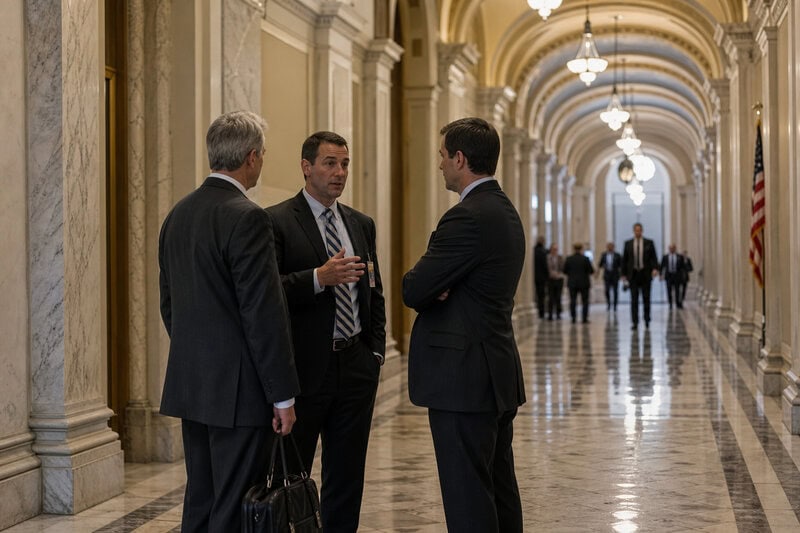
The 80%-to-Republicans donation pattern provides essential context for understanding why partisan voting splits on climate bills look the way they do. When one party receives a structurally dominant share of an industry’s contributions over many electoral cycles, voting alignment becomes a predictable statistical correlate rather than a surprise finding. But the industry’s influence infrastructure is broader than direct donations alone, and grasping its full scope requires looking at several distinct spending channels together.
OpenSecrets, formerly the Center for Responsive Politics and the most widely cited nonpartisan tracker of money in U.S. politics, has documented that oil, gas, and coal interests consistently rank among Washington’s top lobbying spenders, with annual disclosed federal lobbying expenditures across the sector routinely exceeding $100 million. These figures capture only the reported portion of a broader influence infrastructure that also includes trade association dues, sponsored research, and grants to policy-oriented nonprofit organizations.
A 2021 report by InfluenceMap, a nonprofit that analyzes corporate climate policy engagement, found that the five largest publicly traded oil and gas companies spent approximately $750 million over a five-year period on climate-related lobbying and corporate branding — often during the same period in which those companies were making prominent public commitments to reduce emissions. The report characterized this documented gap between stated climate goals and political spending as “say-do divergence,” a term that has since been adopted by other researchers in the field. Critics of the report have argued that some of the spending it categorized as oppositional included legitimate participation in regulatory processes, a methodological dispute worth acknowledging.
Lobbying behavior within the fossil fuel sector is not monolithic, and researchers are careful to note the complexity. Scholars at the London School of Economics Grantham Research Institute have documented what they describe as a “dual-track” influence strategy, in which some companies simultaneously support carbon pricing mechanisms in public forums while funding trade associations and advocacy groups that actively oppose those same mechanisms in legislative settings. This internal tension complicates any simple narrative about the industry as a unified political actor and points to the importance of examining trade association spending alongside direct corporate expenditures.
How Donations Correlate With Legislative Outcomes
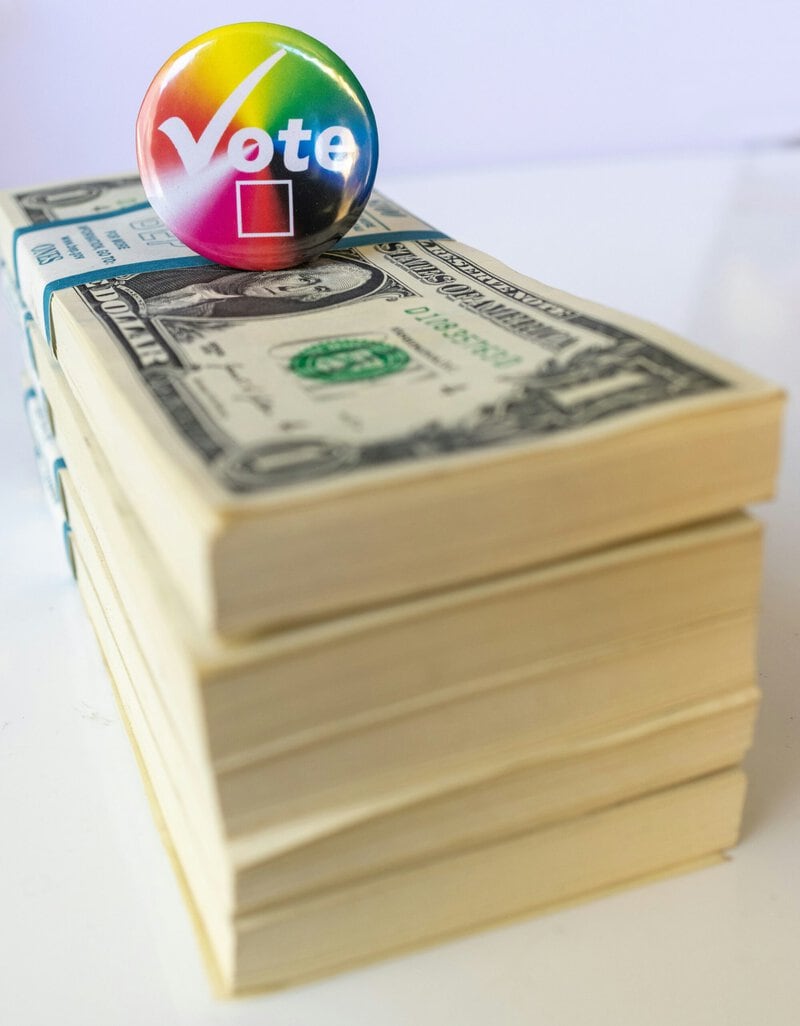
A 2022 study published in PLOS Climate by political scientist Matto Mildenberger and colleagues provided some of the most rigorous recent evidence linking fossil fuel money to voting behavior. The study found that legislators who received higher levels of fossil fuel industry contributions were statistically significantly more likely to vote against climate-related bills, even after controlling for district-level partisanship and measured public opinion on climate issues. The finding held across multiple model specifications, strengthening confidence in the correlation while stopping short of establishing causation.
The mechanism researchers most commonly hypothesize is subtler than a simple transaction. Money does not, in the dominant scholarly framework, straightforwardly “buy” votes. Instead, it purchases access — the meetings, staff briefings, and persistent presence of industry framings in the everyday environment of legislative offices. Political scientists call this “informational lobbying”: the process by which repeated contact with industry representatives shapes how legislators and their staffs understand a policy problem, what trade-offs they perceive as real, and which solutions they consider feasible. Over time, this environmental effect can be more durable than any single contribution.
Research from the Union of Concerned Scientists has documented a complementary channel of influence: fossil fuel companies have funded a network of think tanks and advocacy organizations that produce policy-skeptical literature, providing legislators with what appears to be independent, third-party intellectual cover for opposing climate regulations. The Union of Concerned Scientists describes this as a strategy of “manufactured uncertainty” — deliberately amplifying doubt about scientific consensus or policy effectiveness — and draws an explicit parallel to the tobacco industry’s documented use of the same approach to delay regulation of smoking. Internal industry documents that have since become public record lend additional support to this characterization, though the full scope of coordinated efforts remains a subject of ongoing historical and legal research.
Researchers are careful to distinguish what is established from what remains contested. The correlation between fossil fuel political spending and anti-climate legislative votes is well-replicated across studies and methodologies and can be considered a robust finding. The precise “dollar-per-vote elasticity” — how much spending is needed to measurably shift a legislator’s behavior — remains an open empirical question that researchers have not yet answered with confidence. Public letters like the one published in the Salt Lake Tribune reflect a growing civic awareness of this documented pattern, even as the precise causal mechanics remain under scientific investigation.
The Delay Dividend: What Stalled Legislation Costs
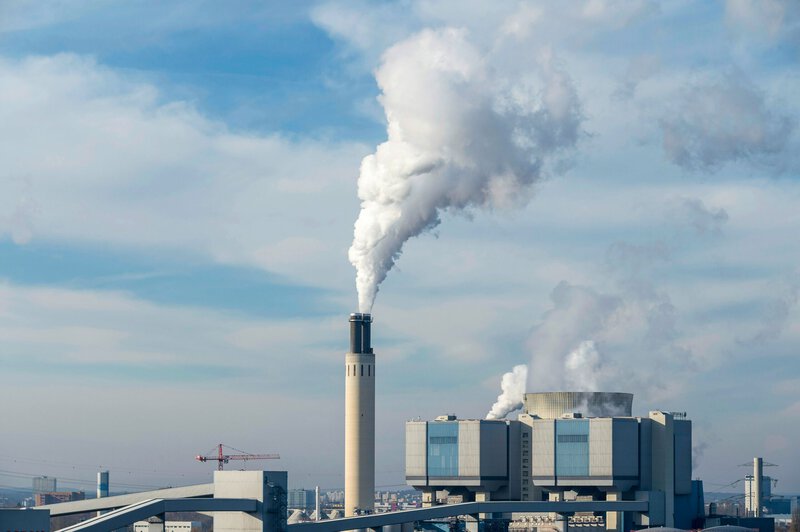
Legislative delay is not a neutral outcome, and the economics of delay are now well enough characterized to put concrete numbers on its consequences. A 2021 analysis published in Nature Climate Change estimated that each decade of delayed decarbonization policy adds trillions of dollars in long-run economic damages attributable to additional warming. The Intergovernmental Panel on Climate Change’s most recent synthesis report reinforced this urgency, warning that policy delays of even a few years significantly narrow the remaining window to limit global warming to 1.5°C above pre-industrial levels — the threshold beyond which scientists project substantially higher risks of irreversible climate impacts.
Researchers use the concept of “carbon lock-in” to describe why delay compounds over time. The term, coined by economist Gregory Unruh, refers to the dynamic in which existing fossil fuel infrastructure — power plants, pipelines, refineries, and the economic and political systems built around them — makes energy transitions progressively harder the longer they are postponed. Each year of delay extends the operational life of carbon-intensive assets and deepens the political economy that defends them, creating a feedback loop in which entrenched infrastructure sustains the political power needed to protect itself from reform.
The Inflation Reduction Act of 2022 represents the largest single climate investment in U.S. history, a genuinely significant legislative achievement that passed only after years of failed attempts and extensive compromise. Yet independent analysis by the Rhodium Group, an economic research firm, found that the law’s projected emissions reductions still fall short of meeting the United States’ stated 2030 climate targets. That gap illustrates how even landmark legislation reflects the accumulated compromises of a political environment shaped partly by industry influence — not as a conspiracy, but as the documented arithmetic of access and alignment over many legislative cycles.
A legitimate policy debate runs alongside the empirical one, and it should not be collapsed into the corruption frame. Some economists argue that certain fossil fuel lobbying efforts have blocked policies they consider genuinely inefficient, and that well-designed carbon markets or technology incentives would achieve better outcomes than regulatory mandates. This is a substantive disagreement about policy design, separate from the empirical question of whether money shapes legislative outcomes. Conflating the two weakens both conversations.
Reform Proposals and Their Evidence Base
Among researchers and policy analysts, mandatory disclosure of lobbying and dark money expenditures commands the broadest academic support as a starting point for reform — not because disclosure alone changes behavior, but because it gives researchers, journalists, and voters the same informational baseline that industry participants already possess. Political scientists across the ideological spectrum have endorsed stronger transparency requirements even where they disagree sharply about preferred policy outcomes, making disclosure one of the few genuinely bipartisan reform proposals in this space.
The For the People Act, passed by the House of Representatives in 2021, represented the most comprehensive recent federal attempt to reform campaign finance and lobbying disclosure simultaneously. Its failure in the Senate — where it could not overcome a filibuster — is itself a case study in the legislative dynamics this article describes: reform proposals that would alter the rules governing political money face the same structural headwinds as climate legislation, because the same financial relationships that shape climate votes also shape votes on the rules of political finance.
Emerging research suggests the influence dynamic is not static. A 2023 working paper circulated through the National Bureau of Economic Research found that environmental advocacy groups’ lobbying expenditures, though far smaller than fossil fuel industry spending in absolute terms, showed measurable correlations with more favorable climate votes in districts where that lobbying was concentrated. The finding is preliminary and should be treated as suggestive rather than conclusive, but it indicates that the architecture of influence can shift when the balance of spending shifts — an important nuance for anyone who concludes that the current arrangement is immovable.
What the science does not yet resolve is equally important to state clearly. Researchers have not established whether disclosure alone changes legislative behavior in practice, what level of counter-lobbying by clean-energy or environmental interests would meaningfully rebalance influence, or whether structural reforms like public campaign financing would produce demonstrably different legislative climates on climate policy specifically. These remain active and unresolved research questions — honest territory for scientific humility rather than confident prescription.
Impasse by Design, or Impasse by Data?
The scientific literature on lobbying does not portray political gridlock on climate as merely ideological — it documents a financial architecture that systematically rewards delay, quantifiable in disclosed spending records and replicable voting correlations. That is a meaningful empirical finding, distinct from a political argument, even if it carries obvious political implications. The difference between those two things is worth preserving in public debate.
The epistemic limits deserve equal weight in any honest summary. Correlation is not causation. Data gaps from undisclosed spending are real and significant. Reasonable people with access to the same evidence disagree about which policy solutions would most effectively address the structural problem. The science characterizes the problem more confidently than it prescribes any particular cure, and overstating what the research proves ultimately weakens the case for taking it seriously.
The financial architecture of climate politics is itself beginning to shift, and tracking that shift is part of the scientific story. OpenSecrets data show that renewable energy industry lobbying expenditures roughly tripled between 2015 and 2023, as clean-energy companies grew large enough to sustain their own presence in Washington. Whether that change in the balance of lobbying resources will produce measurable changes in legislative outcomes is a question researchers are actively studying — and one that makes this an unusually dynamic moment in the political economy of climate policy.
The tools to measure industry influence on democratic institutions exist, are publicly available under federal disclosure law, and are actively used by researchers at universities, think tanks, and nonprofit organizations across the political spectrum. Citizens who want to evaluate their own elected officials’ financial relationships with fossil fuel interests have access to the same underlying data that scientists use — OpenSecrets and the Senate’s lobbying disclosure portal both provide searchable public databases. The impasse the science documents is real and measurable. So, increasingly, is the evidence about what conditions would be required for it to change.