16. Human Biophoton Emission vs. Animal Bioluminescence
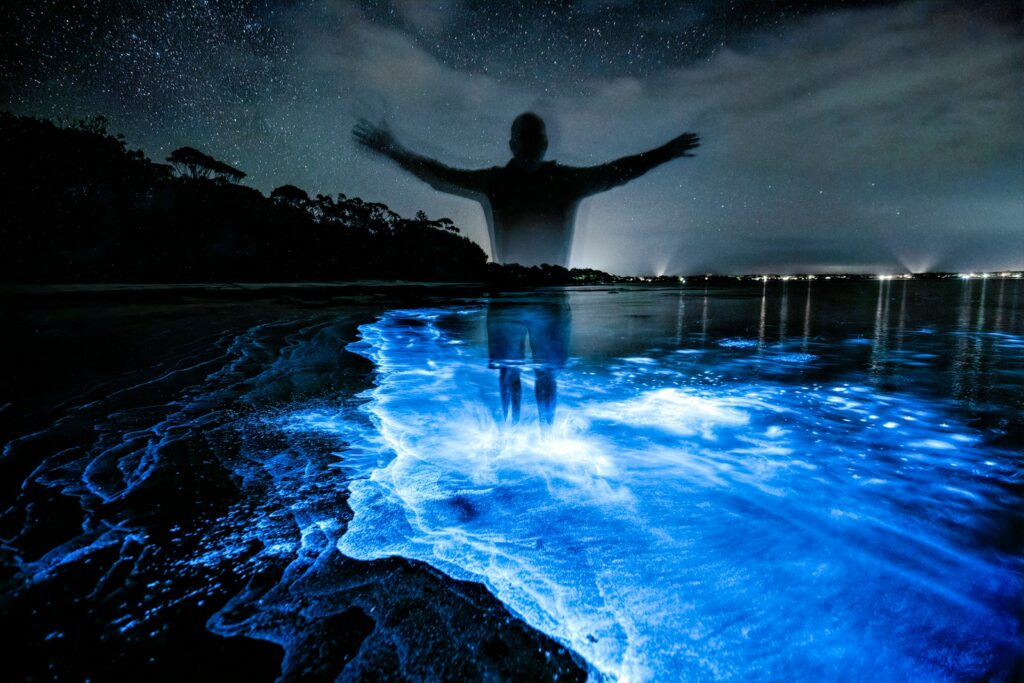
While human biophoton emission shares some similarities with animal bioluminescence—both involve biological generation of light—the two phenomena differ significantly in intensity, visibility, and purpose. Animal bioluminescence, as seen in creatures like fireflies and deep-sea organisms, produces visible and often vibrant light through specialized biochemical reactions primarily used for communication, mating, or defense. In contrast, human biophoton emissions are extraordinarily weak, invisible without specialized instruments, and result from routine metabolic processes rather than deliberate signaling. This fundamental distinction underscores how human biophoton emissions function as subtle indicators of internal physiological states, rather than as active mechanisms for external interaction.