
More than 1,000 undergraduate students from Minnesota’s private colleges have spent the past two decades doing real scientific work inside two of the most recognizable institutions in their respective fields — Mayo Clinic and NASA. That scale makes the Innovation Scholars program one of the Midwest’s most ambitious experiments in STEM workforce development. What began as a structured bridge between regional liberal-arts colleges and frontier research institutions has quietly evolved into a working model for how a hospital, a space agency, and a network of small colleges can collectively address a talent shortage none of them could solve independently.
What the Innovation Scholars Program Actually Is
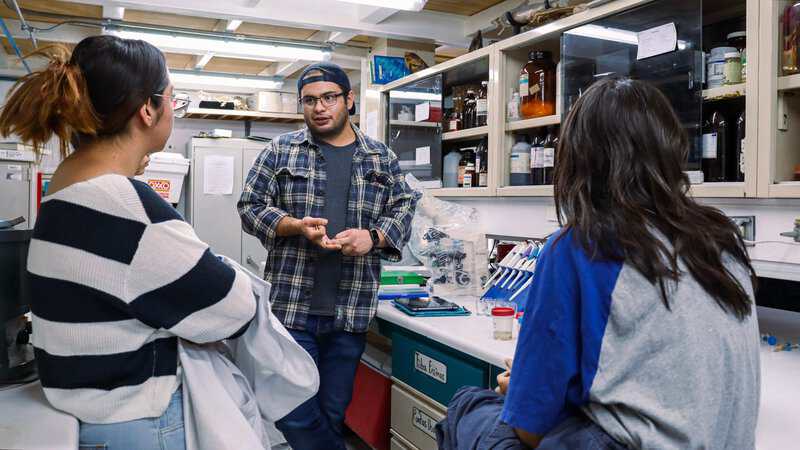
Innovation Scholars is a structured experiential-learning initiative that embeds undergraduates from 15 private Minnesota colleges into the research and innovation workflows of Mayo Clinic, NASA, and a growing network of partner organizations. It is not a shadowing exercise or a credentialing shortcut. Students contribute to two distinct competency tracks: advancing scientific breakthroughs by engaging with genuine research questions, and assessing product viability in the marketplace by applying business and policy analysis to evaluate whether a discovery is commercially feasible.
That dual focus is rarer than it sounds at the undergraduate level. Most university research programs train students to generate scientific knowledge. Most business programs train students to commercialize it. Innovation Scholars asks participants to do both simultaneously — a structure that mirrors the actual workflow of innovation economies, where moving a laboratory finding to a marketable product requires people who can speak both languages fluently.
The 15 participating colleges span Minnesota’s geography and institutional diversity, and that is a deliberate design choice. Students at smaller private institutions often lack the research infrastructure — the core facilities, the faculty grant portfolios, the industry partnerships — that gives peers at flagship research universities a structural advantage when entering the STEM job market. By anchoring the program in those smaller colleges, Innovation Scholars addresses an equity dimension in STEM access that purely university-based programs frequently overlook.
The term STEM pipeline — widely used by the National Science Foundation and state workforce agencies — refers to the structured sequence of education and experience that moves individuals from early interest in science, technology, engineering, or mathematics into credentialed professional roles. Innovation Scholars functions as a deliberate intervention within that pipeline, inserted at the undergraduate stage before graduate or professional training narrows a student’s trajectory.
Why a Hospital and a Space Agency Make an Unlikely but Logical Partnership
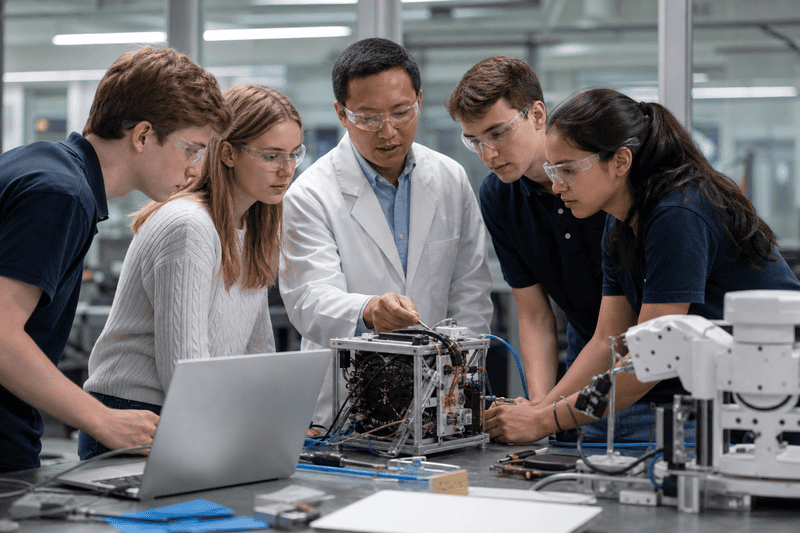
The pairing of Mayo Clinic and NASA invites an obvious question: what does a world-renowned medical center share with a federal space agency, and what does either institution have to do with training undergraduates in Minnesota? The answer lies in the degree of scientific overlap between the two organizations and in the pedagogical value of forcing students to work across that overlap.
Both Mayo Clinic and NASA operate at the frontier of life sciences, materials science, imaging technology, and data analytics. NASA’s history of technology transfer — the process by which federally funded space research becomes a commercial or medical product — provides a direct institutional bridge to Mayo Clinic’s core interest in translational research, defined as moving a scientific discovery from the laboratory into patient care. Advances in water filtration, telemedicine infrastructure, and medical imaging have all drawn on research developed in aerospace contexts. The pipeline runs in both directions: diagnostic and sensor innovations developed in clinical settings have informed instrument design for remote exploration environments.
For students, the pedagogical logic is equally compelling. The analytical skills required to assess whether a new medical diagnostic tool is clinically viable are structurally similar to those required to evaluate whether a sensor designed for a Mars rover can survive the regulatory and manufacturing pathway to commercial use. Training students to apply the same reasoning framework across two such different domains builds what workforce researchers call transferable scientific reasoning — the capacity to solve novel problems rather than execute familiar procedures.
This cross-sector training philosophy aligns with published findings from major STEM education bodies. The Association of American Colleges and Universities and the National Academies of Sciences have both indicated that students who train across multiple applied contexts tend to demonstrate stronger problem-solving adaptability than those trained within a single domain — a finding that reinforces the program’s structural logic.
The Minnesota Workforce Gap This Program Is Designed to Fill
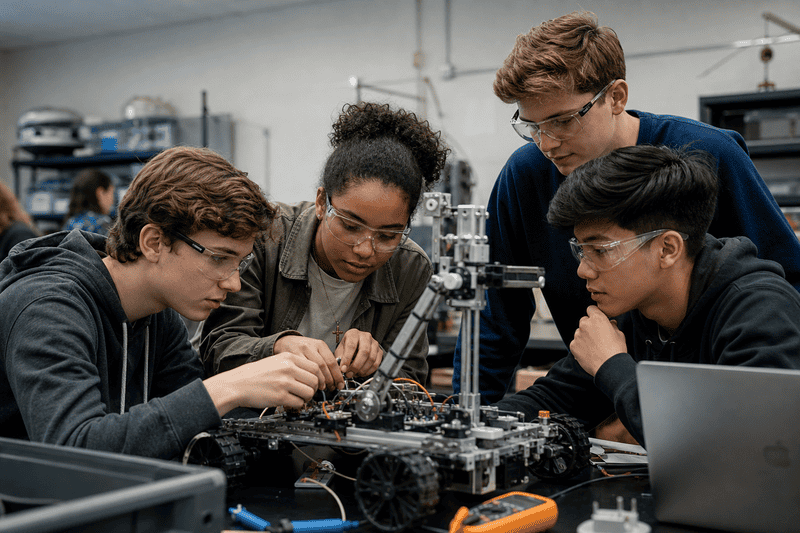
Minnesota’s economy is disproportionately dependent on STEM-intensive industries. The state is home to major medical-device manufacturers, large integrated health systems, agricultural biotechnology firms, and aerospace contractors. Minnesota’s Office of Higher Education and the Department of Employment and Economic Development have both identified life sciences and technology as high-demand, high-wage sectors where employer demand consistently outpaces the supply of credentialed graduates — a structural mismatch that conventional university pipelines alone have not closed.
The National Science Foundation’s workforce reports have identified a specific and persistent bottleneck in the U.S. innovation economy: the inability of STEM graduates to translate research findings into applied products. Scientists who can run an experiment but cannot assess its commercial pathway, or communicate its significance to a non-specialist audience, represent incomplete value in an economy that rewards the full innovation cycle. Innovation Scholars addresses this gap directly by making market-viability assessment a core competency alongside scientific research — not an elective skill appended after primary training is complete.
The program’s structure also positions graduates as what workforce researchers describe as T-shaped professionals: individuals who possess deep expertise in one scientific discipline and broad competency across adjacent fields including communication, regulatory affairs, ethics, and commercialization. This profile is increasingly what STEM employers report seeking, particularly in sectors such as medical devices and aerospace, where products must navigate complex regulatory environments before reaching end users.
How This Model Compares to Other STEM Programs
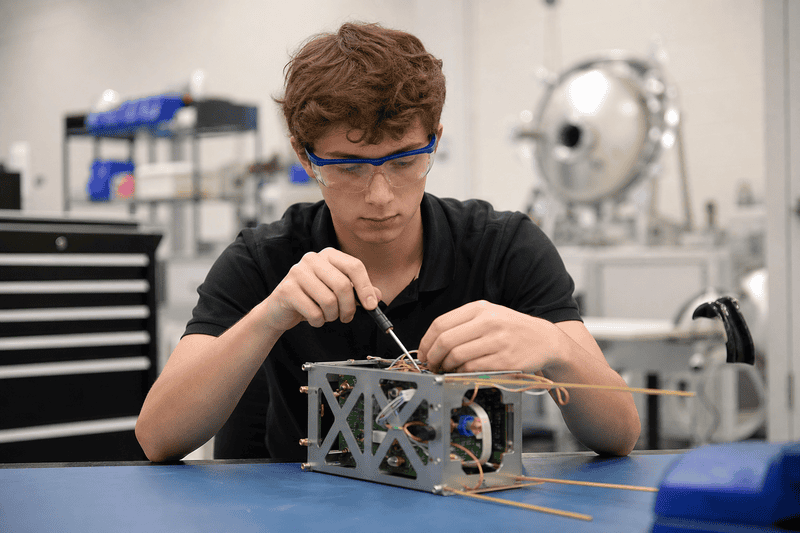
NASA operates several formal college research and education programs, including the NASA Minority University Research and Education Project and the Space Grant Consortium, which funds STEM education activities across all 50 states. These are substantial programs with broad reach. What distinguishes the Innovation Scholars model is that it explicitly co-locates NASA’s research engagement with a private health system, creating a cross-sector training environment that federal programs alone do not replicate.
Mayo Clinic’s own education portfolio is extensive, encompassing the Mayo Clinic Alix School of Medicine and a network of residency and fellowship programs that train physicians and scientists at the graduate and post-graduate levels. The Innovation Scholars partnership extends Mayo’s educational reach to undergraduates well before graduate or professional training begins — an earlier intervention that workforce researchers generally consider higher-leverage, because it shapes the decision to pursue advanced STEM education in the first place.
Compared to purely industry-sponsored internship programs, Innovation Scholars is organized around research and innovation rather than operational or administrative tasks, aligning it more closely with the National Science Foundation’s Research Experiences for Undergraduates model. Unlike those programs, it is privately administered and specifically designed to bridge multiple institutional partners rather than a single university-lab relationship.
Emerging evidence from analogous hybrid academic-industry programs suggests that students who complete applied research experiences before graduation are more likely to pursue graduate STEM education and to remain employed within the regional workforce. Long-term outcome data specific to Innovation Scholars has not been independently published — a gap in the current evidence base and a clear opportunity for the program’s next phase.
Twenty Years In: What 1,000 Students Actually Represents
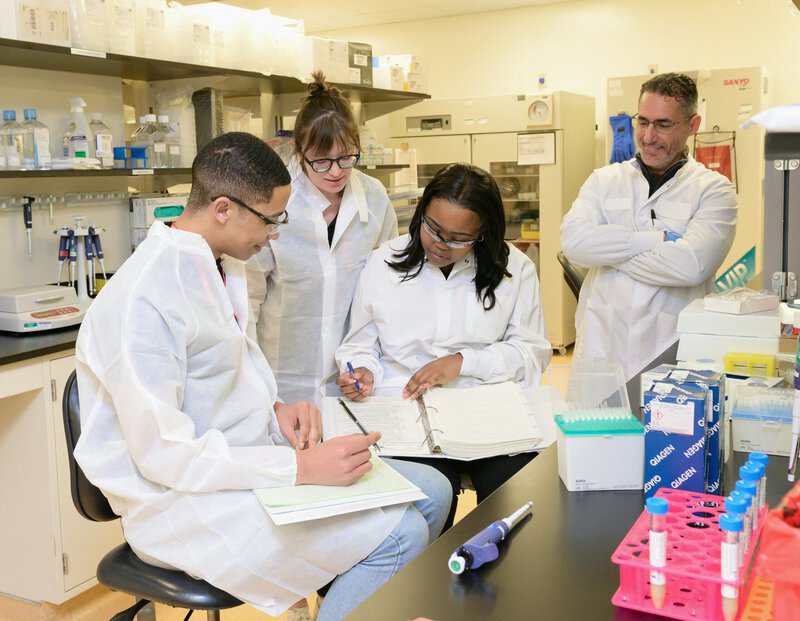
Over two decades, Innovation Scholars has brought more than 1,000 Minnesota private-college students into active work with Mayo Clinic, NASA, and partner organizations — a threshold that carries real significance beyond the round number. A program with 1,000 alumni now distributed across the workforce has, for the first time, the longitudinal depth necessary to begin tracing career outcomes: where participants work, whether they remained in Minnesota, which industries absorbed them, and how training at the intersection of healthcare and aerospace research shaped their professional trajectories.
That data does not yet exist in published form, and its absence is worth naming directly. The 20-year milestone is a natural inflection point at which the institutions involved have both the opportunity and an arguable responsibility to commission independent longitudinal research. Without it, the program’s impact on Minnesota’s STEM workforce remains a compelling case study rather than a replicable evidence base — a distinction that matters to policymakers deciding where to direct workforce development funding.
Scaling this model also faces structural constraints that deserve honest acknowledgment. Embedding student researchers into active projects at institutions like Mayo Clinic and NASA requires supervisory time, project flexibility, and institutional appetite that not all research units can sustain consistently. The program’s durability over two decades reflects a form of organizational commitment from both anchor partners that cannot be replicated simply by announcing a new partnership without equivalent infrastructure behind it.
Policymakers tracking Minnesota’s STEM workforce data have reason to pay close attention. Programs anchored in real institutional partnerships — designed around employer needs rather than credential frameworks built in isolation — reflect the direction recommended by the National Academies’ 2021 report Closing the Opportunity Gap in STEM and echoed in the workforce provisions of the CHIPS and Science Act. If the first 20 years of Innovation Scholars proved the concept, the next 20 years will test whether a regional partnership between a clinic, a space agency, and 15 small colleges can become a replicable national template for building place-based STEM talent pipelines — and whether any serious STEM workforce strategy can afford to keep its anchor institutions working in isolation at all.