
An estimated $40 trillion in assets is now formally committed to some form of fossil fuel divestment worldwide — yet atmospheric carbon concentrations continue to rise. When Ethos, one of Switzerland’s most influential shareholder engagement bodies, formally excluded companies developing new oil and gas projects from all its investment solutions, it crystallised a question that climate finance researchers have been wrestling with for a decade: does selling fossil fuel shares actually reduce carbon emissions, or does it simply move stock certificates from one wallet to another?
When Engagement Hits Its Limits: The Ethos Decision
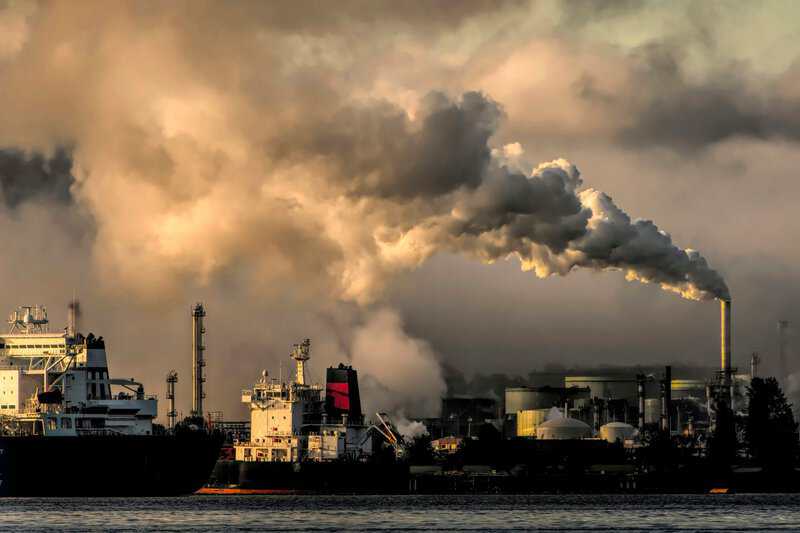
Ethos did not arrive at exclusion quickly. The organisation spent years attempting to drive change from inside boardrooms — voting against management, filing shareholder resolutions, and engaging in direct dialogue with oil and gas executives. Only after that process failed to produce meaningful shifts in corporate strategy did Ethos escalate to formal divestment.
The move builds on a layered exclusion history with clear internal logic. Companies generating at least 5% of their turnover from coal have faced Ethos screening since 2017. Operators of unconventional fossil fuel sources, including oil sands, were excluded from 2020. The updated Ethos exclusion criteria now extend the boundary to all companies developing new oil and gas projects, as well as coal mining companies — a deliberate step that closes the gap between Ethos’s stated climate ambitions and its portfolio construction rules.
That escalation trajectory matters scientifically, not just ethically. A 2023 meta-analysis by the Principles for Responsible Investment found no consensus on which strategy — engagement or divestment — reduces real-world emissions faster, but concluded that the two approaches are likely complements rather than substitutes. Divestment, the authors argued, provides the escalation mechanism that gives engagement its teeth. Without a credible willingness to sell, the threat of exit loses its coercive force. Ethos’s policy shift is, in that sense, a demonstration that the threat was always genuine.
What Divestment Actually Does — and Does Not Do — to Carbon
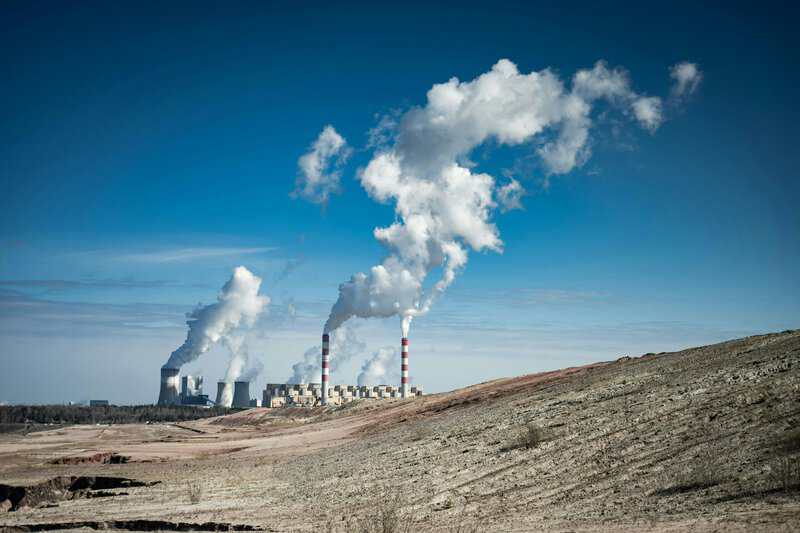
To understand why divestment’s climate impact is debated rather than settled, it helps to understand what selling shares on a public stock exchange does and does not accomplish. When an institutional investor sells fossil fuel stocks, it does not destroy capital for the company in question — it transfers ownership to another buyer. The company’s operations continue unaffected. This is why the Network for Greening the Financial System, in a 2023 review, described the direct emissions impact of a single divestment act as close to zero in isolation. The mechanism, if it works at all, is indirect.
The central indirect pathway runs through what economists call the cost of capital — the rate of return a company must offer investors to attract financing. The theory holds that if enough large investors exclude fossil fuel stocks, those stocks become harder to sell at high prices, valuations fall, and it becomes more expensive for oil and gas companies to raise equity to finance new drilling. Projects that were marginally profitable at a low cost of capital become uneconomic, and reserves stay in the ground. The theory is coherent. The empirical evidence for it, however, is conditional and sector-specific.
Research by Heinkel, Kraus, and Zechner found that a meaningful rise in the cost of capital for a polluting firm requires roughly 20% of its investor base to divest — below that threshold, the effect is negligible. Empirical work by Berk and van Binsbergen estimated that even large-scale ESG divestment campaigns have shifted fossil fuel firms’ cost of capital by only a few basis points — too small, they argued, to deter projects with high expected returns. Counter-evidence comes from coal: a Carbon Tracker Initiative analysis found that coal company valuations have been structurally depressed relative to their cash flows since coordinated divestment campaigns scaled up after 2015, consistent with a genuine cost-of-capital effect in that sub-sector. European pension funds’ coordinated exclusion of coal between 2015 and 2022 is associated with a marked decline in coal companies’ price-to-earnings ratios relative to broader energy indices, though establishing clean causality remains difficult given simultaneous shifts in energy policy and gas prices.
The Leakage Problem: Divestment’s Unresolved Empirical Challenge

The most serious scientific objection to divestment as a climate tool is what researchers call the leakage problem. When a responsible institutional investor sells fossil fuel shares, someone else typically buys them — and that buyer may be a sovereign wealth fund, a private equity firm, or a retail investor operating in a jurisdiction with weaker environmental accountability. The underlying extraction continues; only the ownership changes hands.
Research by Ansar, Caldecott, and Tilbury at the University of Oxford found evidence of this dynamic in the coal sector: as European institutional investors exited, ownership migrated toward Asian state-linked entities and private markets where ESG reporting requirements are lower. The finding raises an uncomfortable question — whether divestment, in some cases, shifts emissions accountability rather than reducing emissions themselves.
Private market leakage sharpens the problem further. When publicly listed companies face sustained divestment pressure, they have sometimes responded by selling carbon-intensive assets to private buyers, removing those assets from public ESG reporting frameworks entirely. Researchers at the Rocky Mountain Institute have argued that coordinated divestment — paired with policy advocacy and accompanied by transparent asset-retirement conditions — can mitigate leakage. They acknowledged, however, that unilateral action by individual institutions cannot close the leakage gap on its own.
This is precisely where the scale of an institution like Ethos matters. Ethos advises on the voting rights of assets held by Swiss pension funds and foundations — giving its decisions a reach that extends well beyond its own balance sheet. Even so, Ethos is acting in a market where coordination among global institutional investors remains incomplete, which means its exclusion alone is unlikely to eliminate leakage risk. The Ethos exclusion update carries its greatest weight as a coordination signal — an invitation to peer institutions to escalate on similar timelines.
Engagement vs. Divestment: What the Research Actually Shows

The rival strategy to divestment — staying invested and using shareholder votes to pressure management — has its own evidence base. A landmark study by Dimson, Karakaş, and Li, published in the Review of Financial Studies, found that coordinated ESG engagement by institutional investors led to statistically significant improvements in target companies’ environmental scores. The effect was concentrated, however, among firms already facing reputational pressure, suggesting that engagement works best when companies have something to lose from public scrutiny.
Ethos’s own trajectory implicitly tests this finding. The organisation engaged extensively before divesting, and its conclusion — that dialogue failed to effect change — is consistent with evidence that engagement loses effectiveness when companies perceive no credible escalation risk. If management believes an investor will never sell, resolutions become procedural rather than consequential.
A study published in Nature Climate Change by Trencher and colleagues examined university divestment campaigns and found stronger effects on institutional reputation and policy lobbying than on direct emissions reductions, suggesting that divestment’s most potent near-term channel may be normative and political rather than financial. Stigmatising an industry, shaping the regulatory environment, and signalling to other investors that escalation is legitimate may matter as much as any direct cost-of-capital effect.
On bond markets — the debt instruments that finance most large oil and gas infrastructure — the research is thinner and the findings less encouraging. Analysis by MSCI found that ESG-screened bond funds have so far had minimal measurable impact on corporate borrowing costs for fossil fuel issuers, partly because bond markets are less concentrated than equity markets and absorb divestment pressure more diffusely. This gap between equity and debt market dynamics represents one of the clearest practical limitations of divestment strategies as currently implemented.
What the Broader Scientific Consensus Says

The Intergovernmental Panel on Climate Change Sixth Assessment Report identifies shifting financial flows away from fossil fuels as a necessary condition for limiting global warming to 1.5°C above pre-industrial levels. It does not identify divestment alone as sufficient, and its authors consistently emphasise that financial-sector action reduces emissions most effectively when it reinforces — and is reinforced by — binding regulatory policy on fossil fuel supply. The Network for Greening the Financial System echoes this framing: no single financial mechanism, whether divestment, green bonds, carbon pricing, or ESG scoring, is sufficient on its own.
The scientific picture is therefore neither the activist claim that divestment starves fossil fuels of capital nor the industry rejoinder that it is purely symbolic. Current evidence suggests divestment exerts a real but modest and highly conditional cost-of-capital effect — strongest in the coal sector, strongest when action is coordinated across large institutional investors, and strongest when it is accompanied by credible policy pressure.
Seen in that light, the Ethos decision is best understood not as a claim to have solved the divestment effectiveness debate, but as a considered institutional judgment that the conditions for engagement had been exhausted. It contributes to the normative stigmatisation process that research identifies as divestment’s most robust near-term climate mechanism, and it lends credibility to future escalation by peer institutions operating under similar governance mandates.
The leakage problem remains the field’s most important unresolved empirical question. Answering it requires systematic tracking of who purchases divested assets and what happens to extraction rates afterward — data that is currently patchy, often proprietary, and rarely disclosed. Until that data improves, the science of fossil fuel divestment effectiveness will remain what it is today: promising in theory, documented in the coal sector, and still unproven at the scale and speed the climate crisis demands.