14. Horses can become aggressive, too.
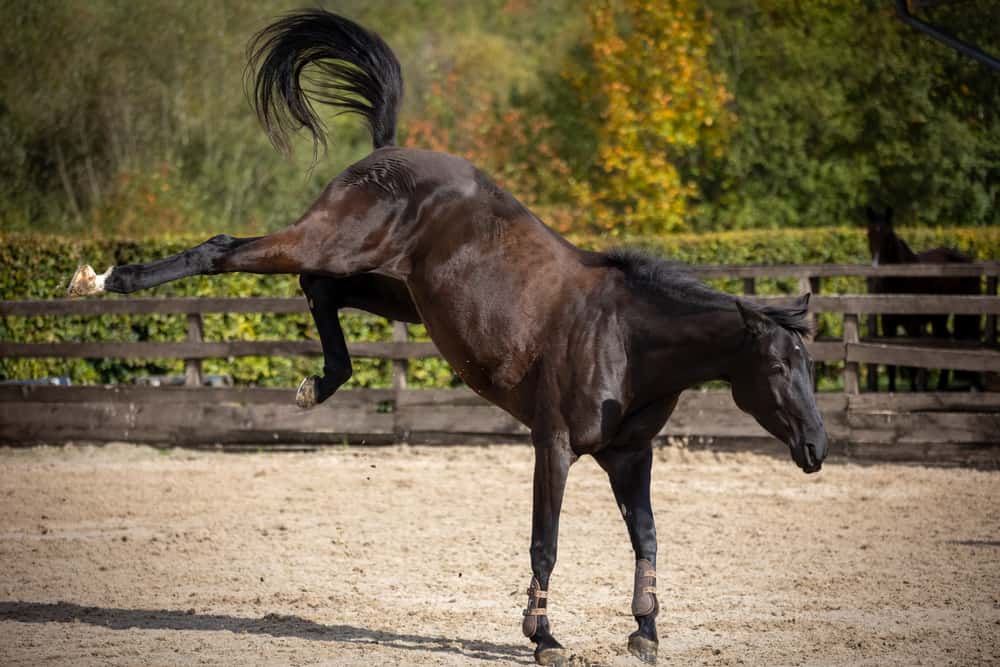
Horses are gentle giants, but their size can be responsible for inflicting severe damage to a person quickly if they feel threatened or are frightened. People consider horses to be flight animals. Of course, that has nothing to do with actual flying, and it means horses will choose to flee a situation rather than confront it. They are often in enclosed spaces or stalls while iterating with humans, if not outside, which can lead to aggression when they feel threatened. Be sure always to have an exit strategy if you know you will be around a horse you are unfamiliar with. Make sure you never stand in front of an aggressive horse. Instead, stand to the left side and out of the way entirely (via Benton). If an attack is inevitable, use force and noise to drive the horse away from the size, to minimize kicking, using whatever you have available.
There are plenty of signs to watch out for that indicate aggression if you are near an unfamiliar horse. These common aggressive behaviors may include eyes wide and focused on a target, flared nostrils, and ears pushed back against their head. A raised tail, living their front feet off the ground or stamping hard, a raised tail, and a dropped head with an open mouth are other signs to be on the lookout for, as well.