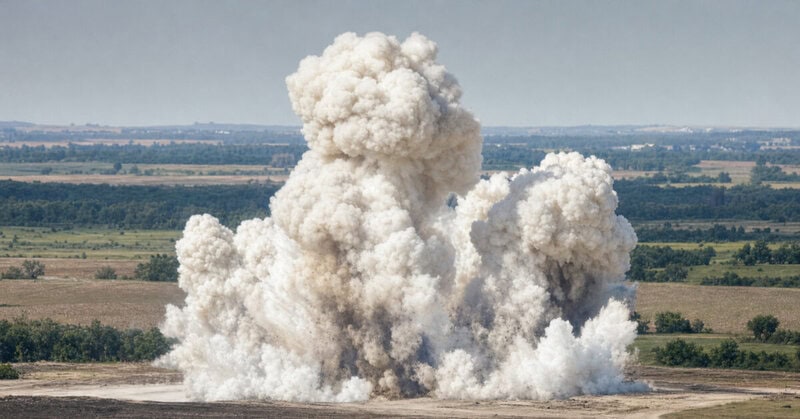
On a clear day in Middletown, Iowa, the U.S. Army touched off 68 barrels — nearly 10,000 pounds — of dangerously degraded explosive material, sending white plumes billowing across a landscape that also happens to be some of the most productive farmland in the United States. The substance inside those barrels was lead azide, a compound so sensitive it can detonate from a sharp sound or a single spark. What happened next has drawn NASA research aircraft into the skies above the Iowa corn belt and put a generation of farmers on edge.
What Is Lead Azide? A Plain-Language Primer on a Compound Built to Kill
Lead azide — chemical formula Pb(N₃)₂ — is classified as a primary explosive, a distinction that matters enormously when discussing safety. Unlike secondary explosives such as TNT, which require a separate initiating device to set them off, a primary explosive needs only a small input of energy — heat, friction, or mechanical shock — to trigger a full detonation. That extreme sensitivity is precisely what makes lead azide useful in detonators and ammunition primers, where a tiny electrical or percussive impulse must reliably initiate a larger explosive charge. It has been a standard primary explosive in military detonators for decades.
The compound carries a dual hazard that sets it apart from most industrial chemicals. On one side is its explosive violence; on the other is the well-documented toxicity of lead, a heavy metal the U.S. Centers for Disease Control and Prevention (CDC) has formally determined has no safe blood level in humans. Lead azide fuses both threats into a single substance: it can cause lethal blast and fragmentation injuries while simultaneously dispersing a persistent neurotoxin across the surrounding environment.
Age makes lead azide still more dangerous. As the compound deteriorates, it can form copper or zinc azide crystals at the points where the material contacts its metal container. Those secondary crystals are, if anything, even more shock-sensitive than the parent compound — meaning a deteriorating stockpile becomes progressively more likely to detonate spontaneously from handling, vibration, or atmospheric changes. That degradation chemistry is a key reason the U.S. Army ultimately concluded that its 68 barrels of aging material at the Iowa Army Ammunition Plant could not be safely loaded onto trucks and driven across public highways to an alternative disposal site.
Why Iowa, Why Now: The Legal and Logistical Limbo Before the Blast
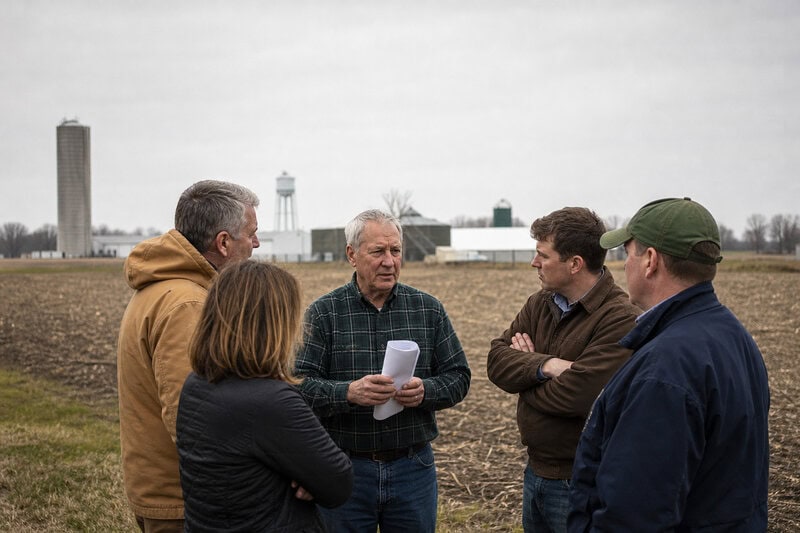
The decision to detonate did not come quickly or without controversy. The detonation plan spent a significant period in legal limbo, facing regulatory review and organized community opposition before authorities cleared the way for the controlled blast at the Iowa Army Ammunition Plant in Middletown. During that interval, a University of Wisconsin-Madison expert was consulted specifically to assess the risks involved — an acknowledgment by all parties that the science of lead-azide-specific dispersion was not fully settled.
Federal hazardous-waste transport regulations impose strict requirements on the movement of shock-sensitive explosives across public roads. The Army’s core dilemma was straightforward: moving nearly five tons of deteriorating primary explosive through populated areas carried its own catastrophic risk profile. On-site detonation, while not without environmental consequences, was the option military and regulatory officials judged least likely to produce an uncontrolled disaster. At nearly five tons of material, this was a disposal operation with no close modern precedent in the continental United States.
Farmers and residents near Middletown were not persuaded that the choice between two difficult options had been made transparently. Community members questioned whether regulators had fully modeled lead dispersion pathways, soil contamination risk, and long-term effects on the water table before approving the blast. Those concerns proved serious enough to attract federal scientific resources that rarely appear over Iowa farm country.
The Detonation: What the White Plumes Actually Contained
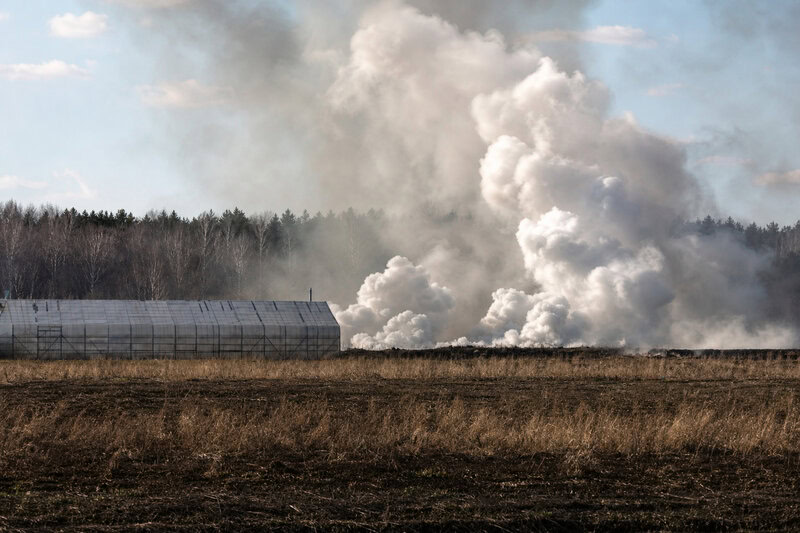
Video footage of the blast shows white plumes rolling across the detonation site — a visual signature consistent with what chemistry predicts. When lead azide detonates, the molecule Pb(N₃)₂ breaks down into its constituent elements: nitrogen gas and lead. The nitrogen releases as relatively inert N₂ and exits the site rapidly, posing no lasting environmental concern. The lead component is an entirely different matter.
The detonation converts solid lead azide into fine metallic lead particles and lead oxide dust. Particle size determines how far these materials travel: coarser fragments settle close to the blast site, while fine respirable particles can be lofted on wind currents and deposited across a considerably wider area. The precise particle-size distribution produced by this specific event — and therefore the geographic footprint of lead deposition — remains a subject of ongoing monitoring rather than settled fact.
What is not in dispute is the persistence of whatever lead does settle. The U.S. Environmental Protection Agency (EPA) states unequivocally that lead does not biodegrade; once deposited in topsoil, it can remain there indefinitely, available for uptake by crops and grazing livestock. Research published in the journal Environmental Science & Technology has found that lead deposited in topsoil from industrial or military sources can remain bioavailable — meaning living organisms can absorb it — for decades in the absence of active remediation. For Iowa farmers whose livelihoods depend on the chemical integrity of their soil, that timeline is not an abstraction.
NASA’s Role: Why a Space Agency Is Watching an Iowa Farm County

NASA deployed research aircraft and satellite remote-sensing instruments to monitor both the atmospheric plume and the surface aftermath of the Iowa detonation — a deployment that surprised many observers but reflects a growing interagency model for environmental emergency response. The capabilities NASA brought to bear were originally developed for applications such as wildfire smoke tracking and precision agricultural monitoring, and they translate directly to the problem of mapping where a toxic plume traveled and what it left behind.
Multispectral and hyperspectral imaging sensors can detect heavy-metal surface concentrations and vegetation stress signatures across large geographic areas in a fraction of the time that manual soil sampling would require. The agency’s involvement alongside Army and EPA monitoring reflects a broader federal interagency framework for responding to industrial and military environmental emergencies — one in which space-agency sensors provide spatial coverage that ground teams alone cannot achieve rapidly enough to guide early decision-making.
It is important, however, to be precise about what remote sensing can and cannot do. Satellite and airborne data can flag spectral anomalies consistent with surface contamination and identify areas of vegetation stress that may indicate heavy-metal uptake — information that tells regulators where to send soil-sampling crews first. Those tools cannot replace laboratory analysis of actual soil samples, measured in parts per million, against established EPA screening thresholds. Remote sensing is a triage instrument, not a final answer. Scientists including the University of Wisconsin-Madison expert consulted on the Iowa case have noted that lead-azide-specific dispersion data remains limited enough that pre-blast modeling carried meaningful uncertainty.
Lead Poisoning and Farmland: What the Science Actually Says

The CDC and the World Health Organization both classify lead as a potent neurotoxin for which no safe exposure threshold has been identified, particularly in children. In agricultural settings, the exposure pathways multiply: lead-contaminated topsoil transfers to crop surfaces and, depending on soil chemistry, can be taken up into edible plant tissue; it can migrate into irrigation water drawn from shallow wells; and it accumulates in the tissue of grazing livestock that ingest contaminated forage. Each pathway represents a potential route into the human food supply.
The soil-persistence data underscores why Iowa farmers’ concerns are scientifically grounded rather than merely precautionary. Lead contamination from military and industrial sources has been documented persisting in agricultural soils for generations at biologically significant concentrations. The deep, organic-rich topsoil of the Iowa corn belt — valued precisely because of those characteristics — is an effective medium for retaining deposited metals, which amplifies rather than diminishes the risk compared with shallower or sandier soils elsewhere.
Risk is not uniform across the landscape. Farmers immediately downwind of the Iowa Army Ammunition Plant face meaningfully different exposure profiles than those several miles away or in a different wind sector. That spatial variability is exactly why NASA’s ability to produce rapid, wide-area maps of potential contamination is scientifically valuable rather than merely symbolic — it allows regulators to allocate ground-sampling resources where the risk gradient is steepest rather than sampling arbitrarily or at random.
Whether the Army’s pre-blast environmental modeling adequately predicted actual plume dispersion is a question that independent scientists, including the University of Wisconsin-Madison expert who publicly assessed the Iowa risks, have identified as unresolved. The answer depends on post-blast sampling results that, at the time of publication, were still being compiled and analyzed.
Remediation Options: What Cleaning Up Lead-Contaminated Farmland Actually Involves
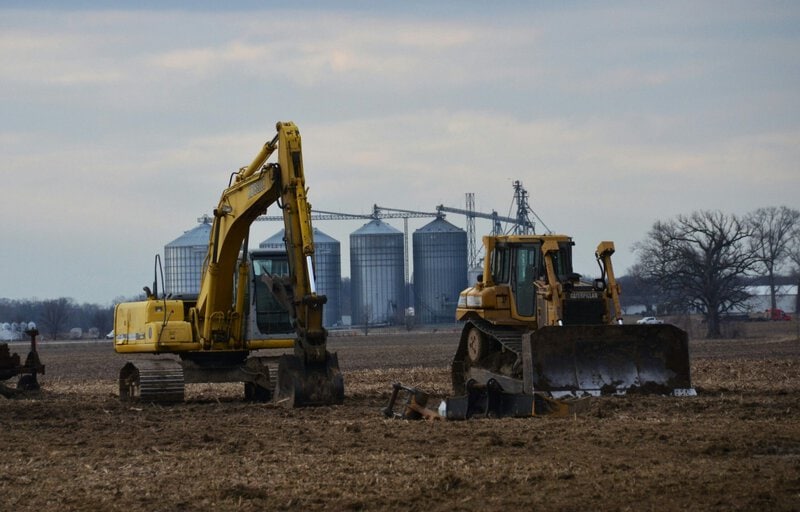
Post-blast soil and water sampling around the Iowa Army Ammunition Plant will be compared against EPA Regional Screening Levels for lead: 400 parts per million for residential soil and 800 parts per million for industrial land use. Exceeding those thresholds triggers legal requirements for remediation, the nature and cost of which scale with the extent and concentration of contamination found.
Remediation options span a wide range depending on severity. Heavily contaminated zones may require physical soil removal or engineered capping — expensive interventions that render agricultural land unusable during treatment and potentially for years afterward. Lower-concentration areas may be candidates for phytoremediation, a technique in which lead-accumulating plant species such as sunflowers are grown specifically to draw heavy metals out of the soil over successive growing seasons. Phytoremediation was studied extensively following contamination events in the Chernobyl exclusion zone, and peer-reviewed literature supports its effectiveness at reducing bioavailable lead concentrations — though the process typically requires years to decades and is not a rapid fix for farmland under active commercial production.
The costs of either approach — physical remediation or long-cycle phytoremediation — would be substantial relative to the agricultural value of the land involved, and neither option restores a farm’s productive capacity on the timescale of a single growing season. That economic reality gives farmers’ alarm a practical urgency that extends well beyond abstract concern about contamination.
Accountability and the Unanswered Questions That Will Define What Comes Next
An accountability question looms over the entire process. Unlike private industrial sites that enter the federal Superfund program with established legal liability frameworks, the Iowa Army Ammunition Plant occupies a legally complex position in which the Army functions as both the entity responsible for the contamination and a federal actor with authority over the base property. Environmental law scholars have noted in analogous military-site contamination cases that this dual role can complicate independent oversight and slow remediation timelines — a pattern that community members near Middletown have already cited as grounds for skepticism about the monitoring process.
The Army’s detonation of nearly five tons of lead azide in Iowa will ultimately be evaluated against two competing safety imperatives: the acute, immediate danger of leaving a deteriorating primary explosive in place, and the chronic, diffuse environmental risk of dispersing lead across agricultural land that contributes to the national food supply. Neither imperative is illegitimate, and reasonable people examining the same facts reached different conclusions about which risk deserved greater weight.
What the Iowa case makes clear is that the United States has not yet developed a fully satisfactory framework for resolving that tension transparently — one that integrates community input, independent scientific review, and binding post-event monitoring requirements before a detonation decision is finalized. With aging military munitions stockpiles distributed across dozens of installations nationwide, the pressure to build such a framework will only intensify. Iowa may be the event that finally forces the question into federal policy discussions where it belongs.