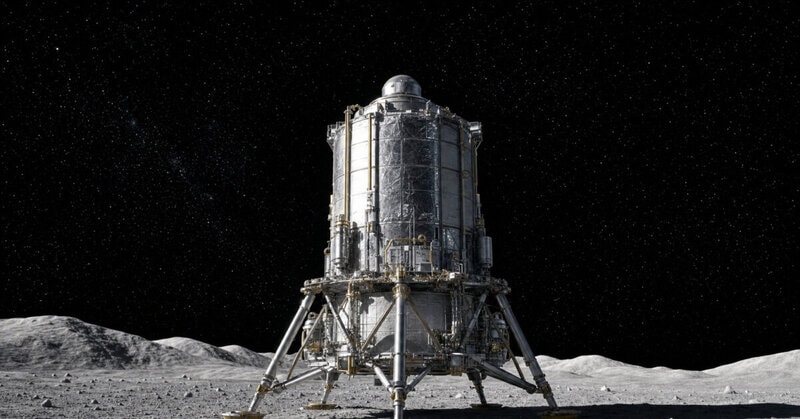
A single lunar night lasts roughly 354 hours — nearly 15 Earth days — during which surface temperatures plunge to minus 173 degrees Celsius (minus 280 degrees Fahrenheit). For any crew attempting to live and work on the Moon, that fortnight of darkness is not an inconvenience; it is an existential engineering problem, and NASA is now betting that nuclear fission is the only credible answer.
Why Solar Power Alone Cannot Keep the Lights On
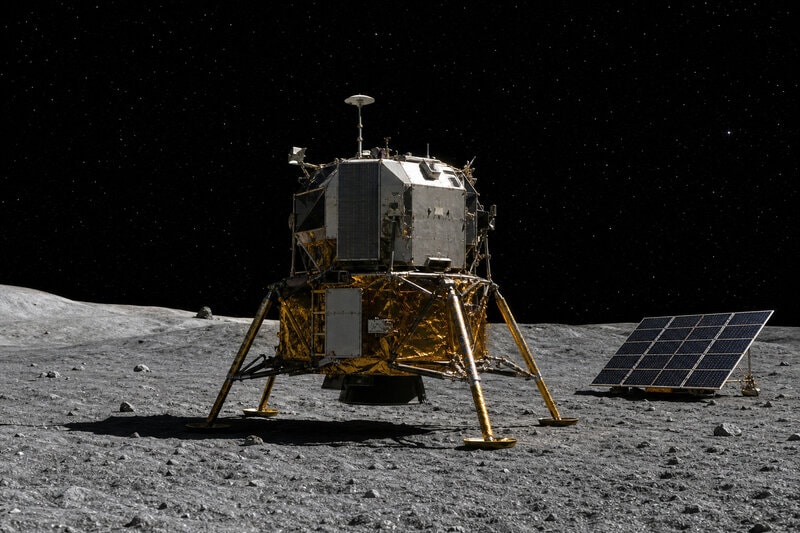
Solar panels are the workhorse of modern space exploration. They power the International Space Station, drove the Curiosity and Perseverance rovers across Mars, and have been refined over decades into lightweight, reliable hardware. But their fundamental limitation is straightforward: they require sunlight, and the Moon periodically offers none.
Unlike Earth, the Moon has no meaningful atmosphere to retain heat or scatter ambient light. Energy supply on the lunar surface is effectively binary — full illumination during the day, near-total darkness at night. NASA’s Artemis program is targeting the lunar south pole for sustained human presence, partly because the region harbors water-ice deposits that could support life-support systems and fuel production. But that same geography carries a steep energy penalty: some crater floors near the south pole receive sunlight less than 10 percent of the time.
The obvious workaround — storing solar energy in batteries to bridge the night — collapses under basic physics and economics. Batteries capable of supplying the continuous power a crewed outpost requires across a 354-hour blackout would be prohibitively heavy. Every kilogram delivered to the lunar surface demands significant propellant expenditure, making mass one of the most consequential design constraints in any Moon architecture. A battery bank large enough to sustain human life for two weeks simply cannot be justified on those terms.
These compounding limitations have led mission planners and engineers to a single leading candidate: nuclear fission, which generates heat by splitting atoms and requires no sunlight, no atmosphere, and no favorable orbital geometry whatsoever.
What Fission Power Actually Means — in Plain Language
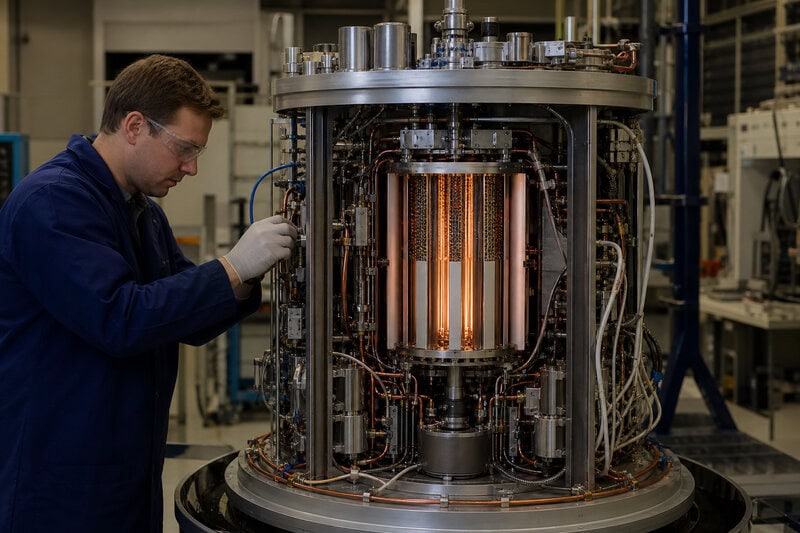
Nuclear fission is the process of splitting heavy atomic nuclei — typically uranium-235 — to release large quantities of heat. That heat is then used to drive a generator and produce electricity, following the same fundamental thermodynamic principle as a coal or natural gas power plant, but without any combustion, carbon emissions, or dependence on an external fuel supply once the reactor is loaded.
A fission surface power system is a compact, self-contained reactor engineered specifically for planetary environments. It is categorically distinct from the large reactors inside nuclear submarines or terrestrial power stations. The scale is far smaller, the design priorities are different — mass, autonomy, and reliability in a vacuum take precedence over raw output — and the operational context is unlike anything a commercial reactor must handle.
The specific system NASA is now pursuing is called Lunar Reactor-1, or LR-1. According to NASA, LR-1 is designed to produce 20 kilowatts of electrical power — an output the agency describes as sufficient to power approximately 16 average homes, and enough to run life-support systems, scientific instruments, lighting, and communications for a small crewed outpost continuously, day and night, through every lunar cycle.
To convert fission-generated heat into electricity, LR-1 would likely rely on a Stirling engine or a thermoelectric converter. Both approaches have been validated in terrestrial and deep-space applications, and both offer the kind of robustness a system operating in hard vacuum, with minimal human servicing, demands.
LR-1: What NASA Is Actually Building and by When
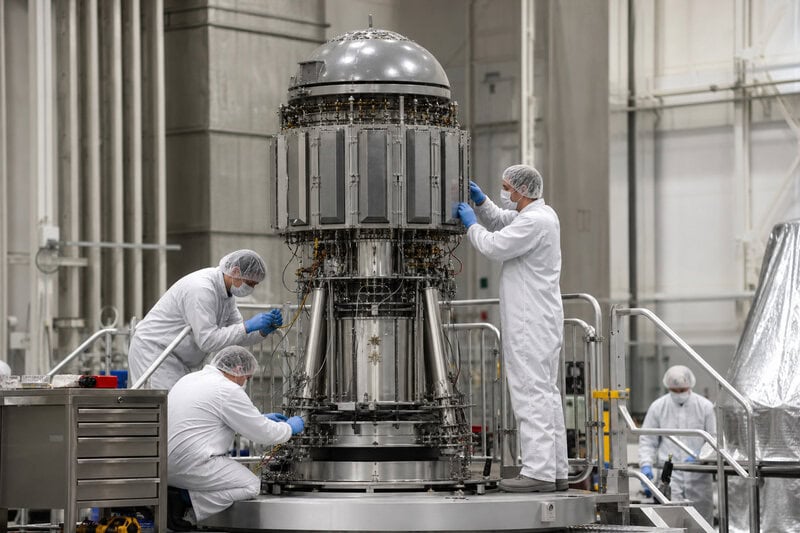
NASA has issued a formal request for proposals titled Space Power and Reactor Capabilities, inviting private aerospace and energy companies to partner on advancing LR-1 through technology development, ground testing, and eventual flight readiness. As reported by NucNet, the agency’s target is to have LR-1 flight-ready by 2030 — a deadline that places this among the most compressed nuclear hardware schedules in modern history.
The name Lunar Reactor-1 is not incidental. It signals institutional intent: this is planned as the first unit in a potentially scalable architecture, with multiple reactors networked together to support a larger, more permanent lunar outpost over time. NASA’s long-range planning documents suggest that a Mars surface mission would require 40 kilowatts or more of continuous power — achievable in principle by deploying two or more LR-1-class reactors operating in parallel.
The project builds directly on earlier collaboration between NASA and the Department of Energy. The Kilopower project — whose ground-demonstration hardware carried the name KRUSTY, for Kilowatt Reactor Using Stirling TechnologY — completed successful reactor tests at the Nevada National Security Site in 2018, establishing key proof-of-concept data for small fission systems intended for space applications. That program moved from initial concept to a working reactor test in under four years, offering a precedent for what focused investment and institutional urgency can accomplish.
Detailed coverage of the LR-1 initiative notes that the competitive field for the request for proposals is expected to include major aerospace prime contractors alongside specialized nuclear engineering firms, leaving the final design approach genuinely open at this stage.
The Engineering Obstacles That Still Need Solving
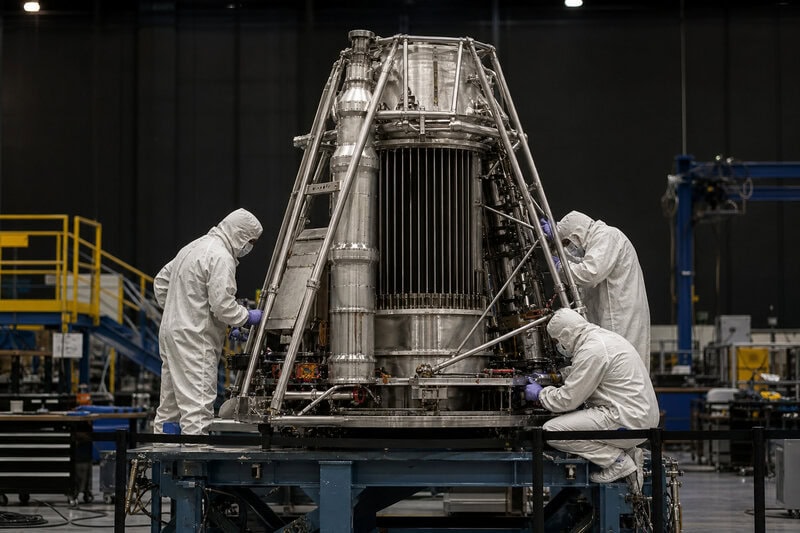
The 2030 deadline is ambitious, and the obstacles between concept and flight-ready hardware are substantial. Engineers working on lunar fission power must contend with several interlocking challenges that have no clean precedent in either commercial nuclear or conventional spacecraft design.
- Heat rejection in vacuum: Without an atmosphere to carry heat away, LR-1 must shed waste thermal energy through large radiator panels exposed to the lunar environment. Those panels must function reliably for years despite dust accumulation from the fine, abrasive regolith that blankets the Moon’s surface and the ongoing threat of micrometeorite damage.
- Radiation shielding: Enough shielding to protect astronauts and sensitive electronics from reactor radiation adds significant mass; too little exposes crew members to doses that exceed NASA’s established career exposure limits. Finding the optimal tradeoff between protection and weight is an active area of engineering research with no settled answer.
- Autonomous deployment: The reactor must survive launch loads, the lunar landing sequence, and remote deployment — most likely with minimal or no human intervention — before it generates a single watt of useful power. This demands a level of autonomous reliability that has not yet been demonstrated in a flight nuclear system.
- Regulatory and treaty compliance: Launching a nuclear reactor into space triggers review under the Outer Space Treaty of 1967 and domestic U.S. policy frameworks governing nuclear launches. These legal requirements add a layer of process and documentation that the project timeline must accommodate alongside the hardware development itself.
Why This Matters Far Beyond the Moon
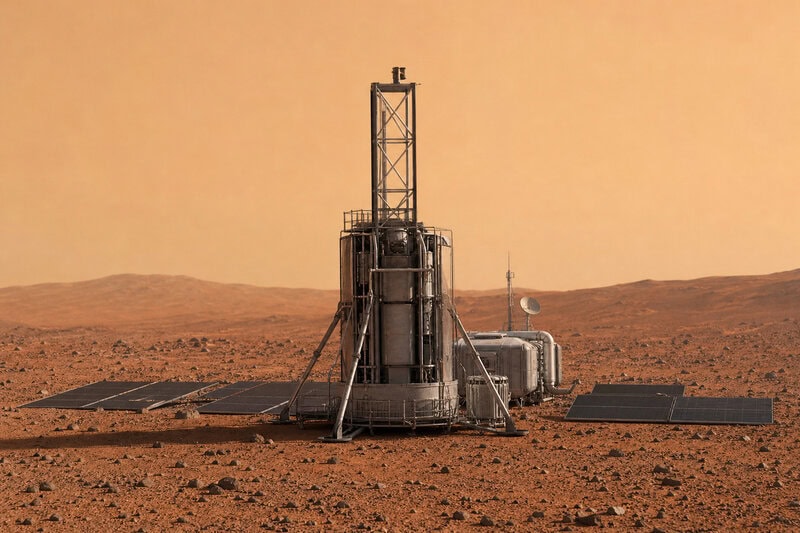
A validated lunar fission power system would not simply solve one problem for one mission. It would serve as the technology template for human Mars exploration, where solar irradiance is approximately 43 percent of Earth’s levels and global dust storms — like the one that ended NASA’s Opportunity rover mission in 2018 — can blanket the planet for months at a time. A reactor that works through a lunar night can work through a Martian winter.
Nuclear power in space exploration is not a new concept. Radioisotope thermoelectric generators — devices that convert heat from radioactive decay into electricity, without fission — have powered missions including Cassini at Saturn and New Horizons past Pluto. The Soviet Union flew dozens of nuclear-powered reconnaissance satellites during the Cold War. But LR-1 would be categorically different: the first fission reactor specifically designed to sit on a planetary surface and provide sustained baseload power for human habitation. That is a qualitative step beyond anything previously flown.
The compact fission designs being developed for lunar applications have also drawn interest from researchers exploring microreactors for remote communities and disaster-response scenarios on Earth — locations where conventional grid infrastructure is unavailable or has been destroyed. Whether space-heritage nuclear hardware will translate cleanly into civilian terrestrial applications remains an open and genuinely contested question, but the engineering work being done for LR-1 is not irrelevant to that conversation.
What Comes Next — and What Remains Uncertain
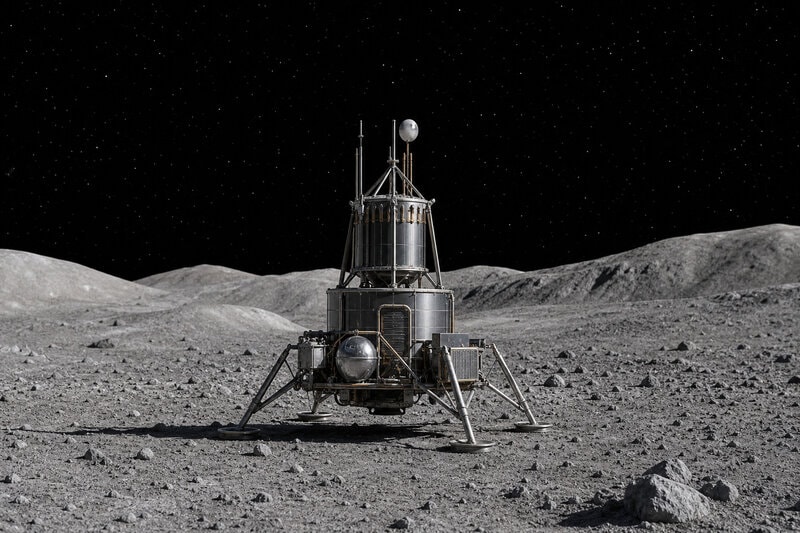
NASA has not yet selected industry partners under the Space Power and Reactor Capabilities solicitation, and several significant questions about the program remain officially unresolved. Whether LR-1 will fly as part of a crewed Artemis payload or as a precursor robotic mission has not been confirmed — a distinction with meaningful consequences for cost, risk tolerance, and scheduling relative to planned human lunar landings.
The 2030 flight-readiness target is demanding. Historical nuclear hardware programs have frequently taken longer than initially projected, and the combination of space qualification, radiation testing, regulatory review, and launch certification represents a genuinely complex critical path. At the same time, the Kilopower demonstration offers a legitimate counterexample: a working reactor test achieved in roughly four years from concept, suggesting that aggressive timelines are not automatically unrealistic when institutional priority and funding are aligned.
The larger strategic reality is difficult to dispute. The Moon’s energy environment — 354 hours of darkness, temperatures that would destroy unheated electronics, solar panels that deliver nothing for half of every lunar month — is not a problem that can be engineered around with incremental improvements to existing technology. Most planetary scientists and mission architects agree on this point, regardless of their position on broader questions about the pace or feasibility of Artemis.
Without a credible solution to the lunar night energy problem, no long-duration human presence on the Moon is achievable. LR-1 is not one option among several; it is the foundational prerequisite for everything that follows. It is, in that sense, the keystone of the entire lunar south pole architecture — and the urgency behind it is as simple as the darkness that makes it necessary.