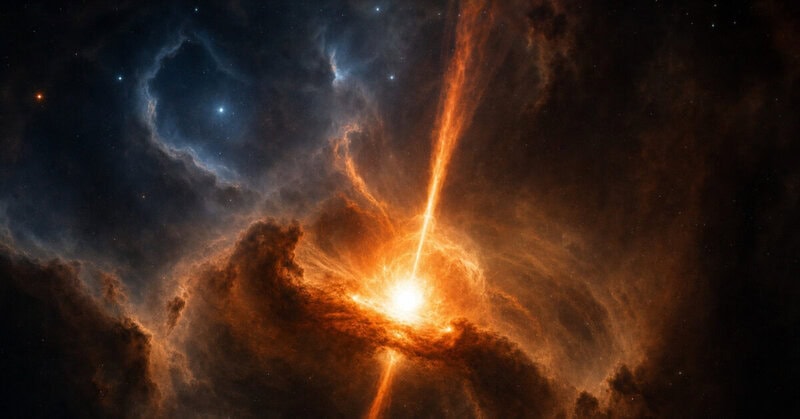
Deep inside a dense cloud of gas and dust, a star not yet fully born is erupting with X-ray flares powerful enough to outshine the Sun — and NASA has translated that violent energy into something you can actually hear. The result is genuinely unsettling: a rising, shimmering tone that sounds less like a nature documentary and more like a signal from somewhere uncharted.
NASA Converted Baby Star Energy Into Audio — Here Is What That Means
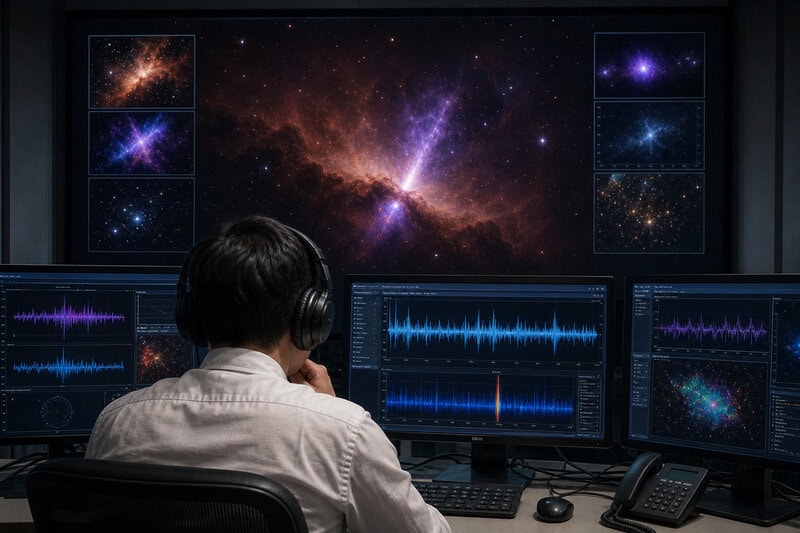
NASA’s Chandra X-ray Observatory has released a dedicated collection of audio tracks derived from astronomical data captured around newborn stars, drawing from star-forming regions both within the Milky Way and in galaxies beyond it. The project is part of Chandra’s ongoing Universe of Sound initiative, which has previously produced audio translations of black holes, supernova remnants, and galaxy clusters. This latest release focuses specifically on protostars — stars still in the earliest stages of formation — and the sounds they produce, once translated, carry an eerie, otherworldly quality that is anything but incidental.
Precision matters here. These tracks are not radio signals intercepted by an antenna, and they are not recordings of pressure waves traveling through space — sound cannot propagate through the near-vacuum of interstellar space. What NASA has created are sonifications: structured audio translations that map measurable properties of telescope data onto musical parameters. Brightness in an image corresponds to volume. Position across the frame corresponds to timing. The energy level of incoming photons corresponds to pitch. The result is a coherent audio landscape built directly from the data, not from artistic imagination alone.
The stakes extend well beyond novelty. Sonification is a recognized scientific and accessibility tool, one that allows both trained researchers and members of the public — including blind and low-vision individuals — to perceive information that the human eye alone may struggle to parse in a complex astronomical image.
What Is a Baby Star, and Why Can Chandra See One When Hubble Cannot?
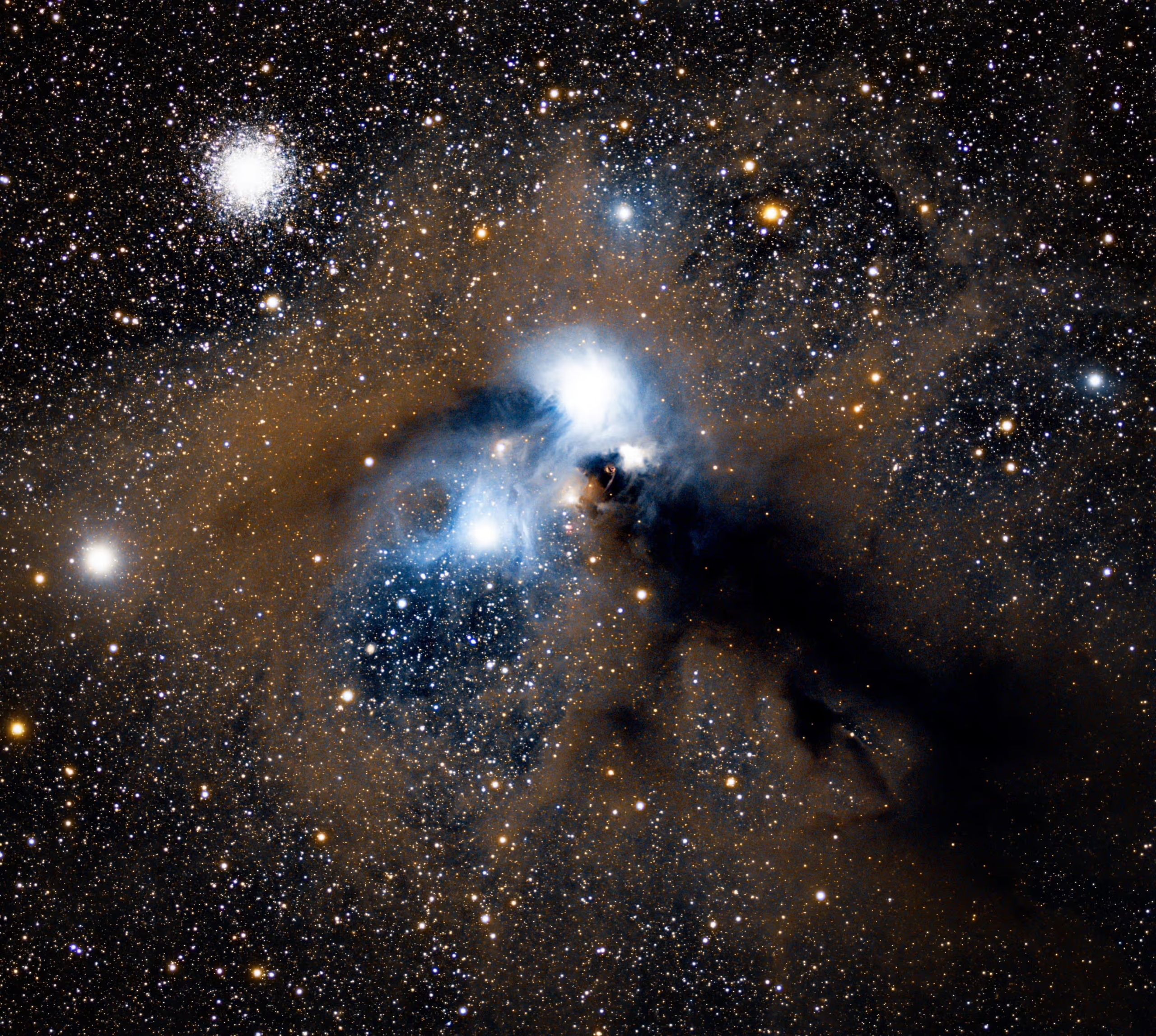
A protostar is a very young star still accumulating mass from the surrounding cloud of gas and dust that formed it. Typically less than 100,000 years old, a protostar is an infant by cosmic standards — our own Sun is roughly 4.6 billion years old. The core challenge for astronomers is that protostars are buried deep inside the same dense molecular clouds that gave birth to them. Those clouds absorb and scatter visible light so thoroughly that optical telescopes, including the Hubble Space Telescope, cannot see through them.
X-ray observatories like Chandra operate at much higher photon energies, allowing them to pierce that dusty veil and observe what is happening at the heart of these stellar nurseries. What they find is anything but quiet. During this early, violent phase of stellar development, baby stars blast out powerful jets of plasma and emit intense X-ray flares generated when magnetic field lines snap and reconnect — a process called magnetic reconnection. This activity produces the raw high-energy data that Chandra collects and that researchers later convert into sound.
It is worth distinguishing established science from areas still under active investigation. That protostars emit X-rays is well-documented across decades of Chandra observations and published astrophysical literature. The precise mechanisms driving the most energetic individual flares, however, remain an open research question, with studies ongoing in peer-reviewed journals including The Astrophysical Journal.
How Sonification Works: Turning High-Energy Light Into Sound
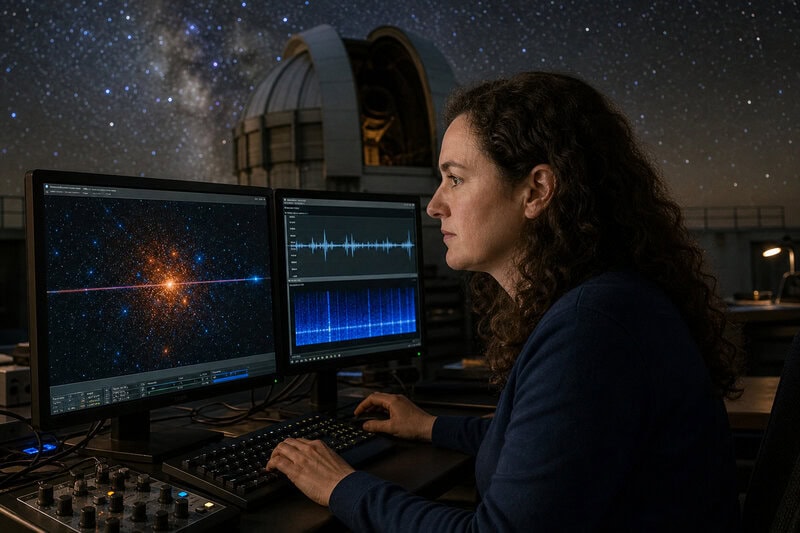
The sonification process begins with a telescope image — in Chandra’s case, a map of where X-ray photons landed on the detector, often combined with optical or infrared data from other observatories. The image is then scanned from left to right, like reading a page. Sound plays from the left audio channel when a bright source appears on the left side of the image, and from the right when the source sits on the right. A dense cluster of young stars packed into one corner produces a momentary rush of overlapping tones; a lone, faint source drifting at the edge of the frame arrives as a quieter, isolated note.
NASA’s Chandra X-ray Center, based at the Smithsonian Astrophysical Observatory in Cambridge, Massachusetts, leads the sonification project. The center collaborates with musicians and data scientists to establish the translation parameters — decisions about which frequency range maps to which photon energy, for instance — that shape the final sound. Those parameter choices are human-defined, which raises an important editorial point: different mapping decisions applied to identical data would produce different sounds. This does not undermine the project’s scientific value, but it does mean these tracks are accurately described as audio translations of stellar energy data rather than as objective recordings of what a star sounds like.
Each track in the collection is paired with a visual guide showing which part of the image is being played at any given moment. The experience is designed to be both heard and watched simultaneously, reinforcing the connection between the visual data and the audio output.
Why This Matters Beyond the Wow Factor
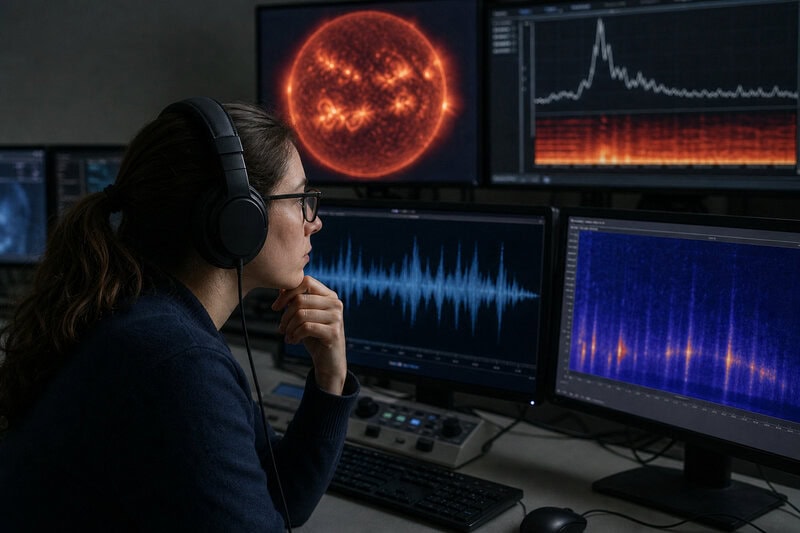
The scientific case for sonification is more substantive than it might initially appear. The human auditory system is acutely sensitive to subtle changes in rhythm, pitch, and timing — in some contexts more sensitive than the visual system is to equivalent changes in a plotted graph. Researchers in several fields have reported detecting anomalies in complex datasets through audio representations that visual inspection had missed. Whether sonification will become a standard peer-reviewed analytical method, rather than primarily an outreach tool, remains an open and actively debated question among astronomers; some advocates argue strongly for its scientific utility, while others consider that case unproven at scale.
The accessibility dimension, however, is well-established and significant. NASA’s own documentation for the Universe of Sound project frames accessibility as a primary motivation — on equal footing with scientific outreach — rather than a secondary consideration. Sonification allows blind and low-vision individuals to engage with NASA’s astronomical imagery as genuine scientific content, following the structure and detail of an image in real time rather than relying on a verbal description alone.
- Data exploration: Audio representations can surface patterns in high-dimensional datasets that static images compress or obscure.
- Inclusive access: Sonification provides substantive engagement with observatory data for audiences who cannot access visual representations.
- Public communication: Translating telescope data into a sensory format humans respond to emotionally can broaden genuine interest in astrophysics research.
What Does a Star Actually Sound Like? Managing Expectations Honestly
The question what does a star sound like deserves a careful answer. Stars do produce real acoustic pressure waves — our own Sun’s internal oscillations are studied through a well-developed discipline called helioseismology, and those oscillations reveal information about the Sun’s internal structure that no surface observation could provide. But those pressure waves exist inside the star itself; they are a wholly different phenomenon from the Chandra sonifications, and conflating the two would mislead audiences about the nature of both sound and space.
The haunting, otherworldly quality that listeners perceive in the Chandra baby star tracks is real and reproducible. It emerges directly from the structure of the underlying data: the clustering of bright young stellar sources, the energy distribution of X-ray photons across the detector, the contrast between dense star-forming cores and quieter surrounding regions. It is not the product of post-production enhancement or deliberate dramatization. The data itself, translated faithfully through the established mapping parameters, produces those unsettling rising tones and abrupt silences.
For editorial accuracy: these tracks should be described as sonified X-ray data or audio translations of stellar energy signatures. Describing them as recordings of a star’s sound overstates what is happening and misleads audiences about the fundamental physics involved.
How to Listen, and What Comes Next
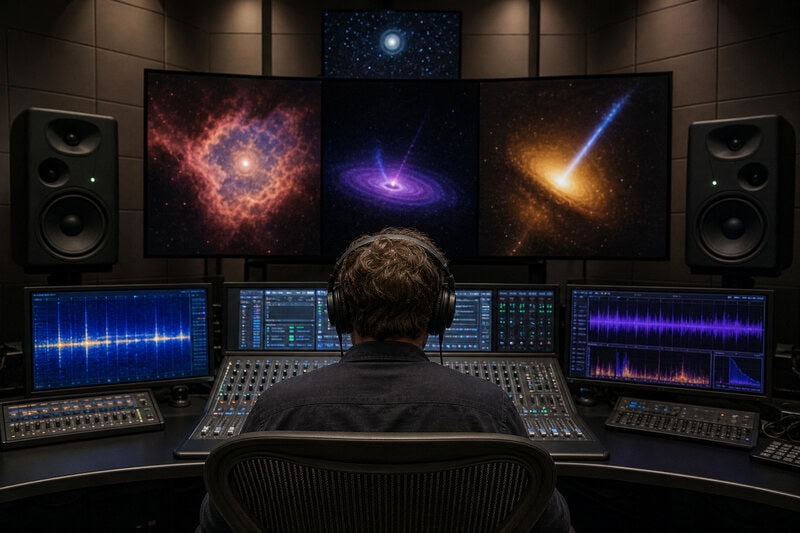
The full collection of baby star sonifications, along with visual guides and explanatory notes for each target, is available free through NASA’s Chandra X-ray Observatory. NASA’s official release page for the baby star album provides direct access to the tracks alongside the scientific context needed to understand what each one represents.
Chandra itself was launched in July 1999 and remains NASA’s premier X-ray observatory. Its continuously expanding data archive supplies new targets for sonification as the Universe of Sound project grows to encompass more exotic objects, including magnetars — neutron stars with extraordinarily powerful magnetic fields — and colliding galaxies. The broader NASA sonification effort now spans multiple missions, with data from the James Webb Space Telescope and the Hubble Space Telescope also being translated into audio under related projects. That expansion indicates the approach is becoming institutionalized across the agency rather than remaining a single-observatory experiment.
As NASA’s next generation of observatories comes online and the archive of translated data deepens, the Universe of Sound project is positioned to give the public — and potentially working researchers — an entirely new sensory dimension through which to experience the cosmos: not as silent images on a screen, but as something that can, in a carefully defined and scientifically grounded sense, be heard.