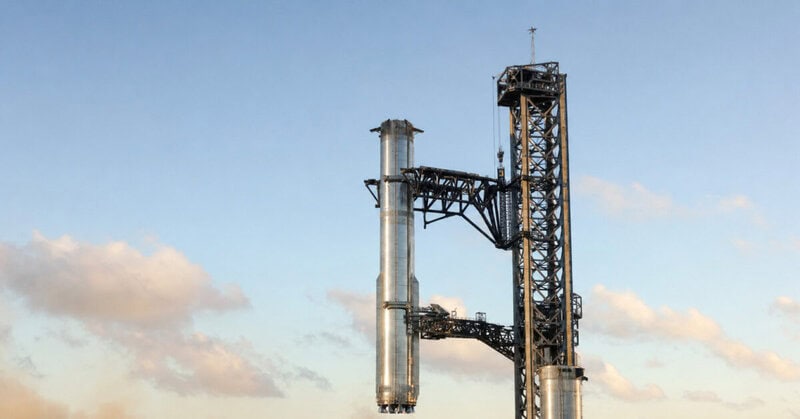
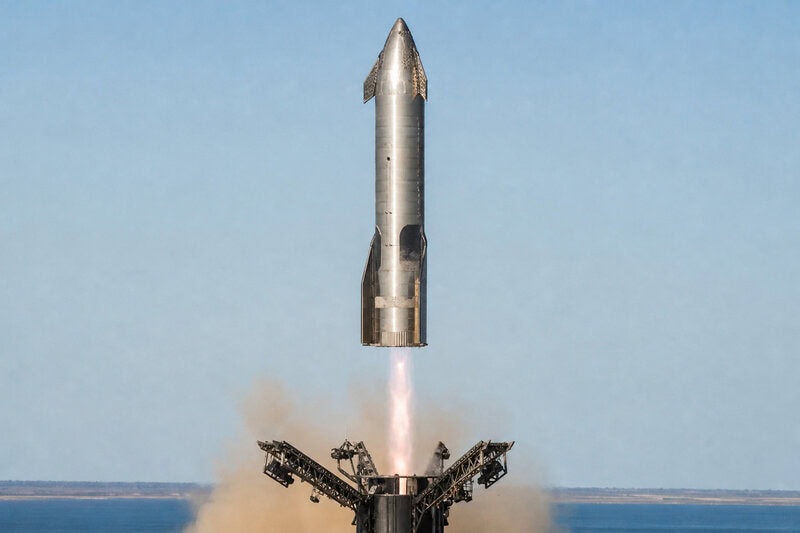
At the precise moment a 165-foot-tall spacecraft descended toward the Texas coast on November 14, a pair of massive mechanical arms reached out and caught it — not on a landing pad, not on legs, but suspended in mid-air, gripped by steel. After 22 and a half hours in flight, SpaceX’s Starship upper stage, known as Ship, was snatched from the sky by the hydraulically actuated “chopstick” arms at Pad 2 of the company’s Starbase facility in Boca Chica, Texas, in what Space.com described as a landmark achievement in spaceflight history.
A Philosophical Departure From Every Rocket That Came Before
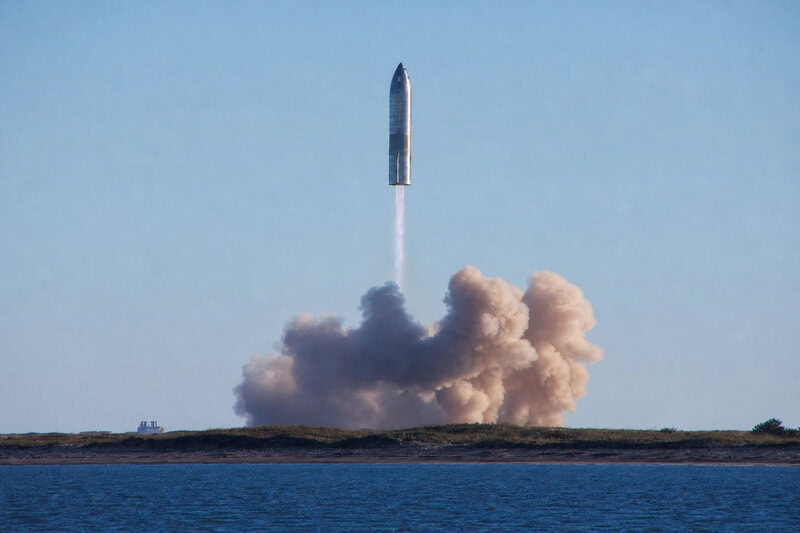
Starship is the largest and most powerful rocket ever built, standing roughly 400 feet tall in its fully stacked configuration. Its upper stage alone is approximately the height of a 16-story building. What happened on November 14 was not simply a successful test — it was the demonstration of a reusability architecture that no orbital-class vehicle had ever attempted in full. SpaceX did not just recover a rocket; it demonstrated a reusability philosophy that could fundamentally reshape the economics of reaching orbit.
Every rocket before Starship either discarded its upper stage entirely — letting it burn up in the atmosphere or sink into the ocean — or, in the case of SpaceX’s own Falcon 9, recovered only the first-stage booster while still expending the upper stage. Catching both stages of a super-heavy-lift vehicle and returning them intact to their launch infrastructure is the missing piece that aerospace engineers and economists have long identified as the threshold for truly transformative reductions in launch cost.
The core tension in achieving this is straightforward to state and enormously difficult to solve: rockets are not designed to be caught. They are designed to survive the brutal physics of launch — the acoustic shock, the aerodynamic pressure, the thermal extremes — and re-engineering that survival logic into a system that can also serve as a precision catch target required solving problems that had no prior industrial playbook.
What Actually Happened: The Flight and the Catch
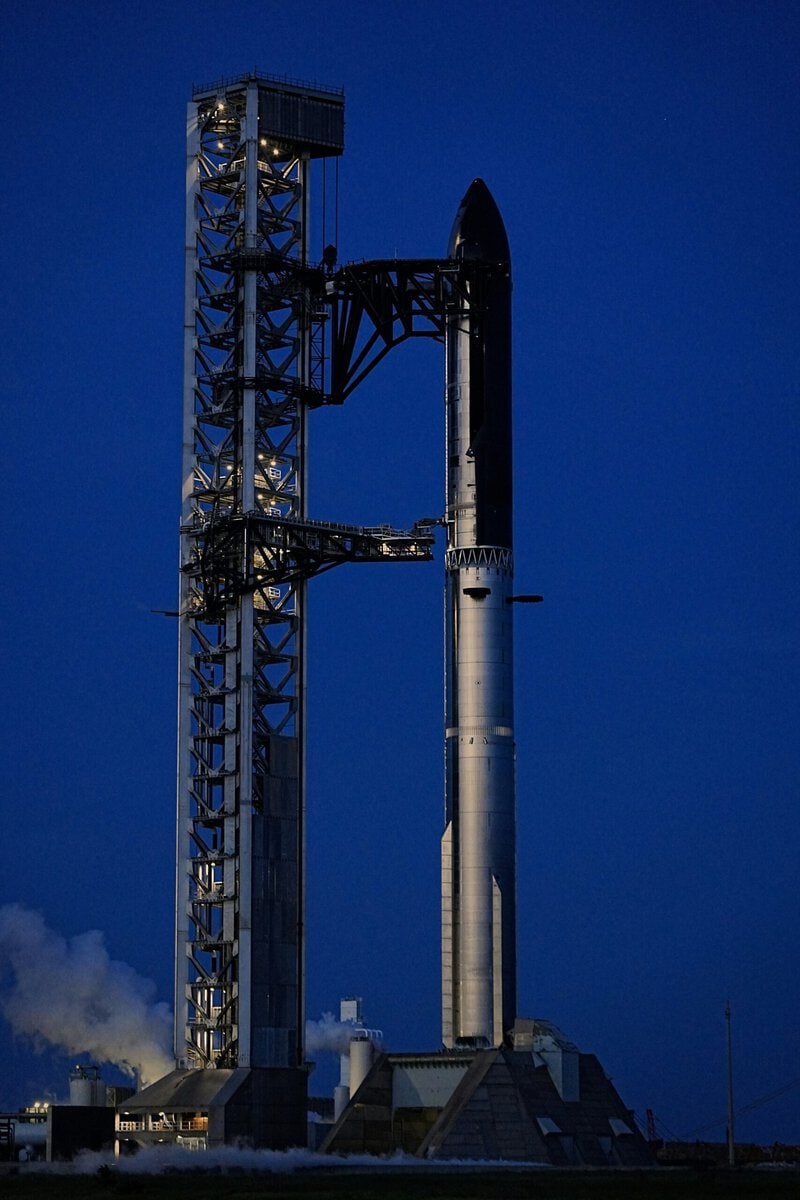
Ship completed its mission profile over 22 and a half hours before re-entering Earth’s atmosphere and returning to Starbase. The vehicle executed a hypersonic re-entry, decelerating from orbital velocities using a combination of its heat shield and four large aerodynamic control flaps, before transitioning to a vertical orientation for the final descent. The BBC confirmed the catch was performed by the mechanical arm system integrated into the launch tower, with the arms intercepting the vehicle in the final moments of its descent.
“Mechazilla” is SpaceX’s informal name for the hydraulically actuated catch-arm system built into the launch and integration tower at Pad 2. The arms themselves are colloquially called “chopsticks” because of their parallel, pincer-like geometry — two massive steel appendages that close around the vehicle’s hull rather than relying on the rocket to land on its own structure. This distinction is not cosmetic; it reflects a deliberate engineering decision with significant downstream consequences for how quickly the vehicle can be reused.
This event was distinct from SpaceX’s earlier chopstick catches of the Super Heavy booster — the first stage — which had been demonstrated in prior test flights. Catching the upper stage presented a separate and more complex engineering challenge: Ship travels faster, reaches higher temperatures on re-entry, and carries the payload bay. It is, in every measurable sense, the harder half of the problem. The November 14 flight represented a continued cadence of increasingly ambitious Starship test flights, each expanding the demonstrated envelope under SpaceX’s iterative build-test-learn development approach.
The Chopstick Arms: Mechanical Design and How the Catch Works
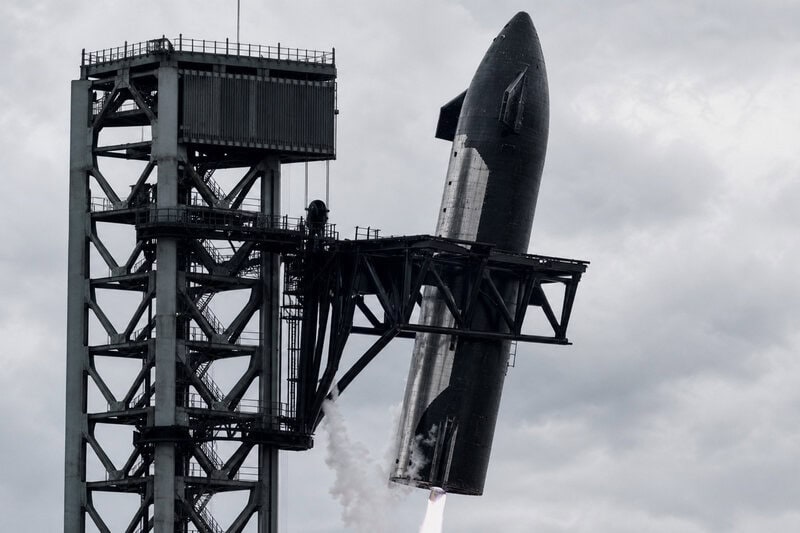
The catch arms are massive hydraulically driven appendages mounted on the Mechazilla tower. They must be strong enough to arrest the momentum of a vehicle weighing hundreds of tonnes at the moment of contact, while remaining precise enough to intercept a moving target within a positional window measured in centimeters. These two requirements — brute structural strength and fine positional accuracy — pull against each other in engineering terms, and resolving that tension is one of the system’s central design achievements.
The guidance challenge is best understood as a closed-loop control problem. Onboard sensors on Ship continuously transmit position and velocity data to ground systems during the final descent. Those data feeds drive real-time corrections to the arm actuators, allowing the catch point to be adjusted in the final seconds before contact. The system cannot rely on a pre-programmed trajectory alone; it must respond dynamically to actual vehicle behavior, which varies with atmospheric conditions, residual propellant mass, and thermal state.
The absence of landing legs on Ship is not an oversight — it is a core feature of the economic argument. Eliminating legs saves mass directly and allows the vehicle to be re-stacked on the Super Heavy booster for the next flight, compressing turnaround time. The catch architecture also redistributes risk in a deliberate way: a failed catch damages the tower rather than destroying the rocket, concentrating consequences in ground infrastructure that can be repaired without losing the vehicle. This reflects a broader SpaceX philosophy of treating ground infrastructure as the expendable element rather than the spacecraft.
Re-entry Physics: Why Catching the Upper Stage Is Harder Than Catching the Booster
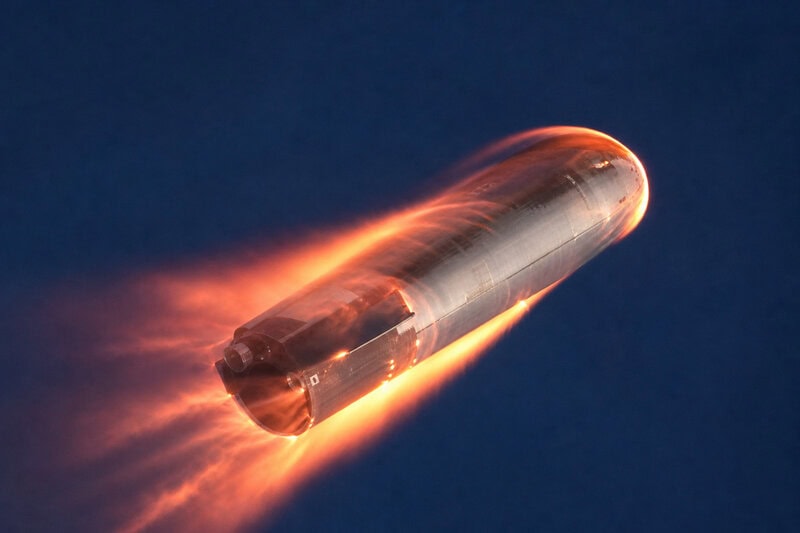
The Super Heavy booster separates from Ship at relatively low altitude and velocity, well within the atmosphere, and returns to the launch site on a comparatively benign trajectory. Ship, by contrast, completes a full orbital or near-orbital trajectory and re-enters the atmosphere at hypersonic speeds — velocities exceeding five times the speed of sound — and must dissipate vastly more kinetic and thermal energy before the catch window can open. The difference between these two re-entry profiles is not incremental; it represents a categorically different engineering problem.
SpaceX’s thermal protection system for Ship consists of ceramic hexagonal tiles covering the vehicle’s windward surface — analogous in principle to the tiles used on NASA’s Space Shuttle, but redesigned for a stainless-steel hull and a distinctive “belly-flop” re-entry profile in which the vehicle falls broadside to the atmosphere to maximize drag and distribute heating. The tiles must maintain structural integrity throughout re-entry for the catch to be physically possible at all; a failure that compromises the hull ends the mission before the arms can play any role.
Ship uses four large aerodynamic control flaps — two forward, two aft — to manage attitude during re-entry. Precise flap authority must be maintained across hypersonic, supersonic, and subsonic flight regimes, with continuous coordination to deliver the vehicle to the correct catch attitude and position. The control challenge spans an enormous range of dynamic pressures and aerodynamic behaviors within a single flight.
An important limitation applies here: while hypersonic aerodynamics is a well-established field, the specific thermal and structural behavior of SpaceX’s tile system on a stainless-steel hull at Starship’s scale remains proprietary and has not been subject to independent peer review. What November 14 proved is that the system survived one re-entry. How many re-entries the tiles can sustain before requiring refurbishment or replacement remains an open engineering question.
Where Starship Fits in the Broader Reusability Landscape
NASA, the European Space Agency, and independent aerospace analysts broadly agree that full and rapid reusability represents the most credible path to dramatically reducing per-kilogram launch costs. SpaceX’s Falcon 9 settled the first phase of that debate: booster reusability is commercially viable, and the aerospace industry’s initial skepticism gave way within roughly three years to treating propulsive booster landings as routine. The Falcon 9 upper stage, however, remains expendable — and that expendability represents the remaining structural cost gap in the current launch market.
Starship’s architecture attempts to close that gap entirely. Space industry analysts, including those referenced in NASA’s Human Landing System contract documentation for the Artemis program, have noted that full Starship reusability could reduce launch costs by an order of magnitude compared to current expendable vehicles. Those projections, however, depend on flight-rate assumptions — the number of flights per vehicle per year — that remain unproven at operational scale.
SpaceX has stated an ambition of achieving 24-hour turnaround between Starship flights. That goal is not a demonstrated capability. The gap between a successful catch and a certified, rapid-reuse operational system involves years of additional structural testing, thermal protection validation, propellant system inspection protocols, and regulatory approval from the Federal Aviation Administration. The catch on November 14 is a necessary proof of concept; it is not a sufficient one.
What This Means for NASA, the Moon, and the Competitive Landscape
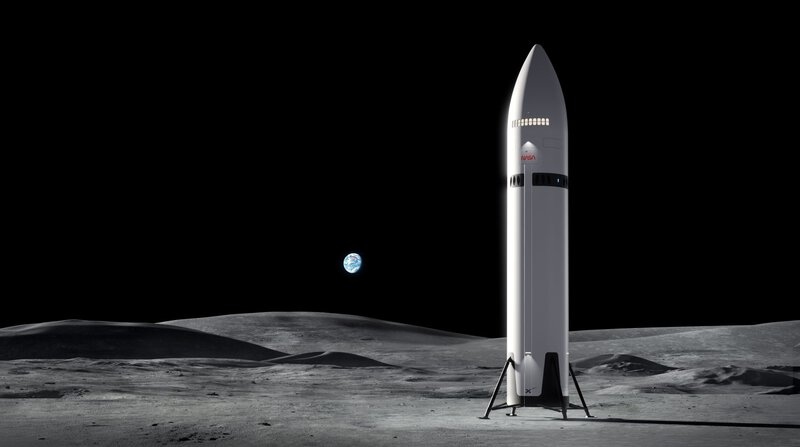
The stakes extend well beyond SpaceX’s own ambitions. Starship is NASA’s selected Human Landing System for the Artemis program, the United States’ effort to return astronauts to the lunar surface. The credibility of that mission timeline is now materially linked to Starship’s demonstrated reusability, and the November 14 upper-stage catch directly reduces technical risk in the Artemis program by confirming that Ship can survive re-entry and be recovered intact. Before astronauts board a Starship bound for the Moon, NASA will require extensive additional demonstration flights and independent certification of the vehicle’s reliability.
Beyond Artemis, a fully reusable Starship would allow SpaceX to launch its Starlink satellite constellation at dramatically lower marginal cost per flight, reinforcing a vertical integration advantage that competitors and regulators are monitoring closely. The economics of the commercial launch market could shift materially if Starship reaches its stated reusability targets — a prospect that has drawn attention from both rival launch providers and antitrust-focused policy observers.
China’s space agency and private Chinese launch companies are actively developing their own large reusable vehicles. SpaceX’s successful upper-stage catch extends the United States’ demonstrated lead in this specific capability, though the gap between a test catch and an operational reusable system means the competitive picture will continue to evolve.
Significant milestones remain before Starship reaches operational status: heat shield durability across multiple flights, in-orbit propellant transfer (required for the lunar mission architecture), and FAA licensing for non-test commercial operations are all open items. Video documentation of the catch has allowed engineers and analysts worldwide to begin examining the final approach and contact dynamics in detail, which will inform the next phase of testing.
A Turning Point, With Work Still to Do
Catching the Starship upper stage closes the last major theoretical gap in full-stack reusability for a super-heavy-lift vehicle. Both stages of the world’s largest rocket have now demonstrated the ability to return to their launch infrastructure intact — a combination that, as of November 13, 2024, had never been achieved by any rocket anywhere. The historical parallel most aerospace engineers reach for is the first successful Falcon 9 booster landing in December 2015, an event the industry received with skepticism before it became operationally routine within three years. Whether Starship follows a similar arc remains to be seen.
Space.com’s characterization of November 14 as a landmark achievement reflects mainstream aerospace opinion, not SpaceX promotional framing. But translating a successful test catch into a reliably reusable operational system will require sustained flight cadence, independent structural analysis, and regulatory scrutiny that is still years away from completion. The engineering that made the catch possible — the closed-loop guidance, the hydraulic precision, the heat shield that survived re-entry, the flap control across the hypersonic envelope — represents genuine progress on one of the hardest problems in applied aerospace.
The arms caught the rocket. Now the harder work — proving it can happen again, and again, and again — begins.