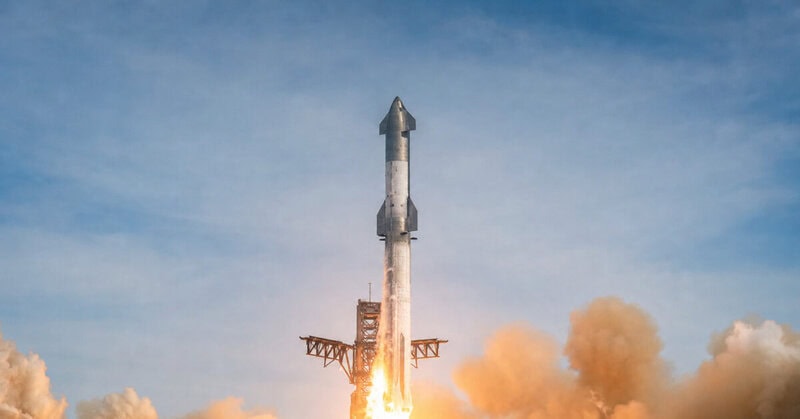
The ground shakes before you even register the sound. When SpaceX’s Starship lifts off — a vehicle standing taller than the Statue of Liberty, generating more thrust than any rocket in history — it does not merely impress. It quietly rewrites the rules of what space access is supposed to look like, and in doing so, raises an uncomfortable question for everyone still invested in the old way of doing things: what happens to NASA’s own rocket when a private company builds something far more powerful?
The Rocket That Makes Everything Else Look Small
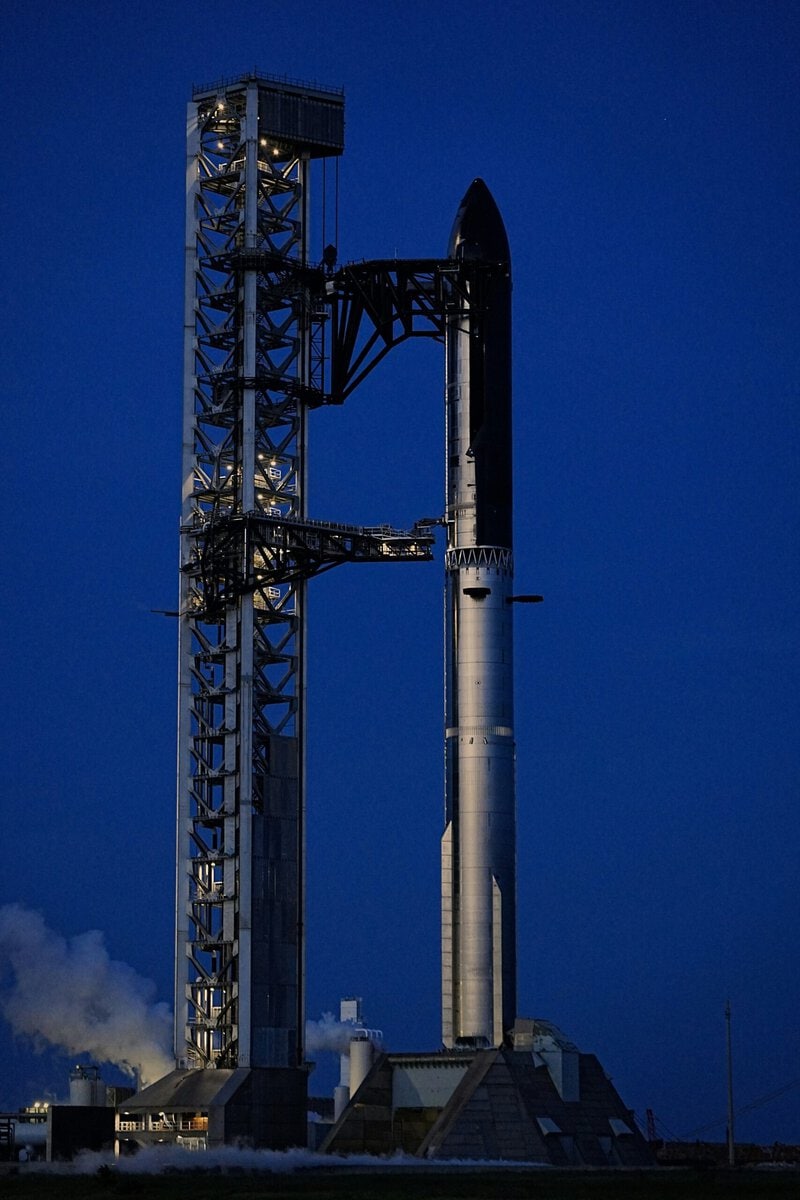
SpaceX recently launched its biggest, most powerful Starship yet on a test flight — an upgraded version of a vehicle that was already without peer. The sheer scale of the machine is difficult to absorb. Starship’s two-stage configuration, the Super Heavy booster stacked beneath the Starship upper stage, produces thrust figures that dwarf anything NASA’s Space Launch System can offer. In its fully operational form, Starship is designed to haul roughly three times the payload to orbit that SLS Block 1 can manage, fundamentally rewriting what the phrase “super heavy-lift” even means.
That capability gap sets up the central tension of this moment in spaceflight. If a private company now operates the most powerful rocket ever flown, what exactly is NASA’s own rocket still for? The answer turns out to be more complicated than a simple David-versus-Goliath story. It reaches into politics, philosophy, national strategy, and a genuinely difficult question about how America should get to space — and who should be calling the shots when it does.
Two Rockets, Two Very Different Philosophies
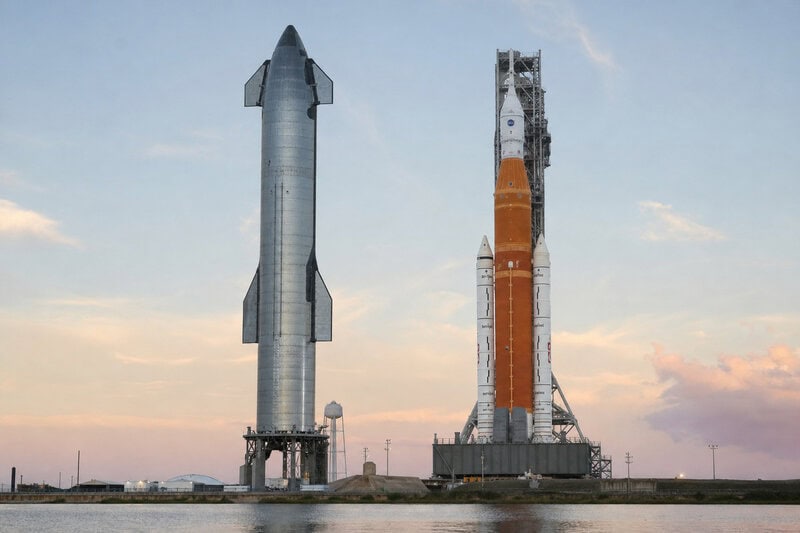
Starship is a fully reusable, two-stage vehicle built on a single core belief: that rapidly reusing hardware is the only path to making space genuinely affordable at scale. SpaceX’s model is to build, test, fail, learn, and iterate faster than any government program ever has. The result is a rocket that is not treated as a precious, irreplaceable artifact but as a piece of infrastructure meant to fly again and again.
SLS operates from an entirely different set of assumptions. It is an expendable rocket — meaning it is destroyed on every flight — descended from Space Shuttle heritage and built through a traditional government procurement model that prizes reliability, political continuity, and the preservation of existing industrial capacity. Neither philosophy is irrational given its origins, but the cost consequences are stark.
NASA has spent an estimated $4 billion or more per SLS launch when development and infrastructure costs are factored in. SpaceX has publicly targeted Starship costs in the tens of millions per flight once the vehicle achieves full reusability. Even if the real mature cost lands somewhere between those figures, the gap is almost impossible to responsibly ignore. Independent analysts and NASA’s own Inspector General have flagged SLS costs as unsustainable for a program supposed to enable routine access to the Moon.
NASA’s Moon Plans Already Run Through Starship
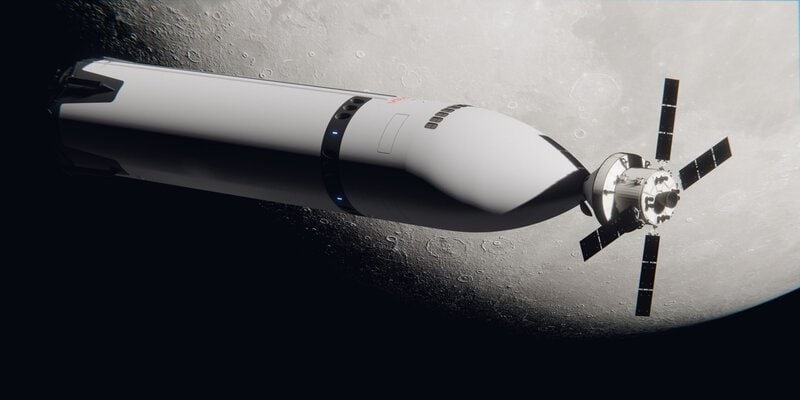
The most revealing data point in this debate is not a number — it is an architectural choice NASA has already made. The Artemis program, NASA’s flagship effort to return astronauts to the lunar surface, relies on Starship as its Human Landing System. The plan splits the mission: SLS and the Orion capsule carry the crew from Earth to lunar orbit, and a Starship variant then descends to the Moon’s surface and brings the crew back up.
That dependency is an implicit acknowledgment from NASA that its own rocket cannot complete the job alone. NASA is counting on Starship to actually land astronauts on the Moon, filling a capability gap that SLS was never designed to close. The irony is sharp and worth sitting with: the government’s rocket gets astronauts part of the way there, and the private rocket completes the mission.
So Why Does SLS Still Exist? The Honest Answer
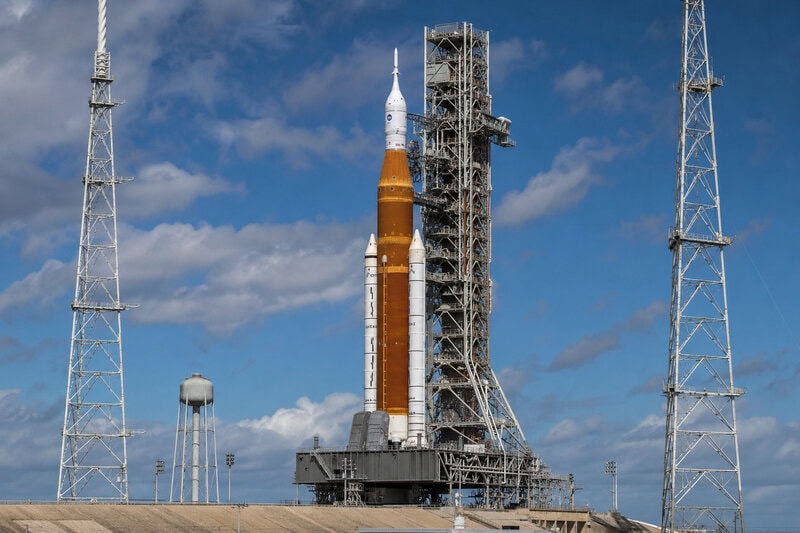
Understanding why SLS continues to receive funding requires looking beyond engineering and into the realities of how large government programs actually work. SLS represents tens of billions of dollars already spent and thousands of jobs distributed across Congressional districts that have powerful representation on the committees that control NASA’s budget. Political and economic inertia is a real force in space policy, and dismissing it as mere corruption misses how genuinely complicated the tradeoffs are.
Beyond politics, there are legitimate strategic arguments for maintaining a government-owned heavy-lift capability. Relying entirely on a single private vendor for crewed national missions carries what planners call sovereign risk — the exposure that comes from having no alternative if that relationship breaks down. Redundancy has genuine value, even when it is expensive.
There is also the matter of certification and heritage. SLS is a known, tested system that has carried the Orion capsule around the Moon. Starship, despite its remarkable progress, is still in active test-flight development and has not yet carried a single crew member. In human spaceflight, reliability timelines and safety certification matter enormously. A rocket that is potentially far cheaper is not automatically better if it has not yet completed the certification process required for crewed missions.
The Cost Comparison Nobody in Washington Wants Aired Publicly
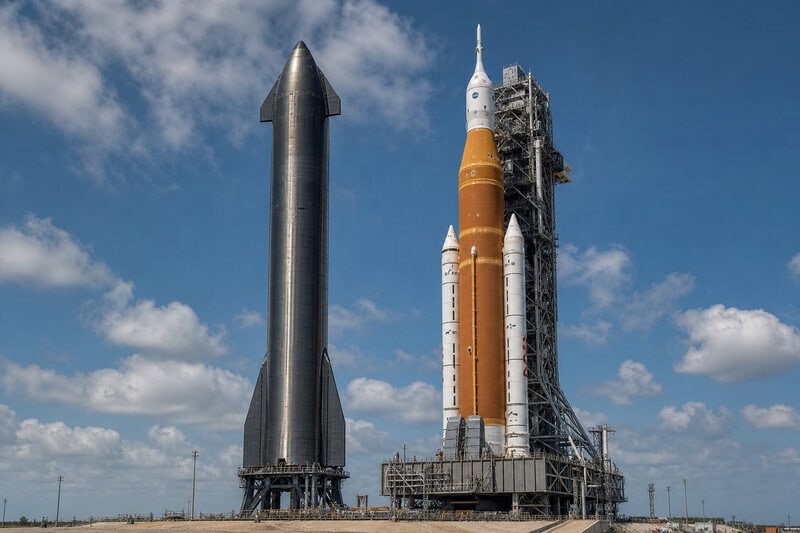
Even so, the financial arithmetic is brutal for SLS supporters. Even conservative projections show SLS costing many multiples more per launch than a mature, reusable Starship would. NASA’s Inspector General has repeatedly described SLS costs as unsustainable for a program meant to build lasting lunar infrastructure rather than produce a handful of historic moments.
Meanwhile, SpaceX’s rapid iteration model has already produced an upgraded, more capable Starship in less time than SLS has managed a second launch. As SpaceX charges ahead with increasingly powerful hardware, the contrast with NASA’s slower, costlier development cadence is becoming harder to explain to the public — and to budget committees that are increasingly aware of it.
The uncomfortable question for policymakers, one that tends to stay unasked in formal hearings, is this: at what point does continuing to fund SLS represent an expensive jobs program rather than a genuine sovereign space capability? It is a question that neither supporters nor critics have been willing to put squarely on the record.
What SpaceX Can Do That NASA Cannot — and Vice Versa
Framing this story as SpaceX versus NASA misunderstands what each organization actually is. SpaceX is a hardware company. It builds rockets, flies them, and pursues the commercial opportunities that flow from doing so faster and cheaper than anyone else. NASA is a science, exploration, and standards body. It defines missions, manages international partnerships, sets safety certification requirements, and carries a public mandate to explore on behalf of all of humanity, not on behalf of shareholders.
What NASA’s future increasingly looks like is a procurement agency for space services rather than an in-house rocket builder — following the model of Commercial Crew, which successfully ended American reliance on Russian Soyuz vehicles for ISS crew transport by certifying and buying rides from private providers. That transformation is already underway and, by most assessments, accelerating.
What NASA retains that no commercial company can fully substitute: scientific mission architecture, international agreements, the safety standards that make crewed exploration legitimate in the eyes of the public and Congress, and a commitment to exploration as a human endeavor rather than a business case. Those are not trivial things, and they do not disappear simply because a private company builds a bigger rocket.
What the Next Few Years Will Decide
The next Artemis missions will function as a live test of whether the split SLS-plus-Starship architecture actually works in practice. Success will validate the hybrid model; complications will fuel arguments on every side. If Starship achieves the full reusability and high launch cadence SpaceX is pursuing, the political pressure on Congress to wind down SLS after existing contractual commitments expire will become very difficult to resist.
NASA’s most plausible future is a hybrid: government-certified commercial vehicles handling most heavy-lift work, with NASA’s identity and budget increasingly focused on science leadership, deep-space mission definition, and the kind of long-horizon thinking that markets alone will not fund. That is not a diminished NASA — it is a differently shaped one, with its authority resting more on what it knows and governs than on what it builds and launches.
For anyone watching from outside the industry, this story is worth following for a reason that has nothing to do with rockets specifically. It is a preview — perhaps the clearest one available — of how governments and private companies will negotiate responsibility for the most ambitious, most expensive, and most consequential human endeavors of the century ahead. Space is simply where that negotiation is happening first, and loudest, and with the highest stakes attached to getting it wrong.