
Sixty-six million years ago, as Tyrannosaurus rex stalked the floodplains of what is now North Dakota, a small, feathered creature with a beak like a parrot was doing something no other dinosaur had ever been confirmed to do — eating fruit as its primary food source. Meet Infernogallus jamesi, better known by its extraordinary nickname: the “hell chicken.”
A Dinosaur Unlike Any Other
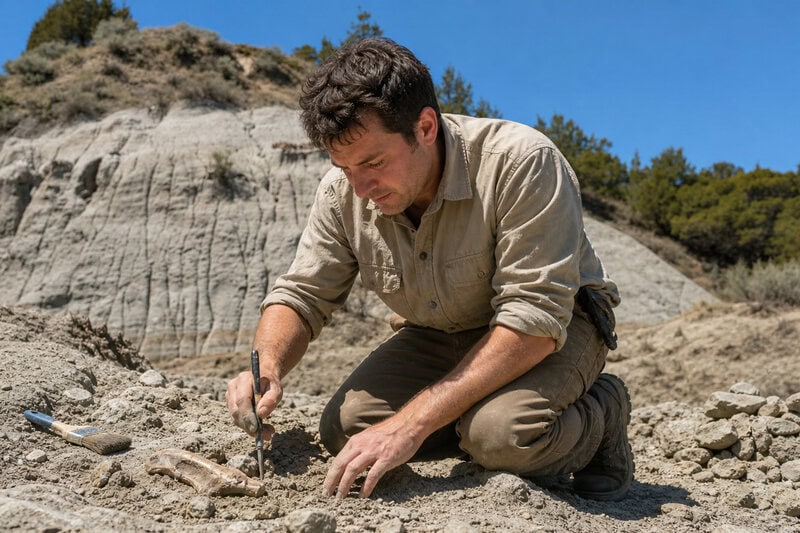
Paleontologists working in North Dakota’s famous Hell Creek Formation have unearthed a genuinely singular animal. Infernogallus jamesi is a small, feathered, bipedal dinosaur that lived at the very end of the Cretaceous period, approximately 66 million years ago — and it has earned a place in the history books not because of its size or ferocity, but because of what it was eating.
According to researchers, Infernogallus jamesi is the first known dinosaur identified as a primary fruit-eater, a dietary strategy scientists call frugivory. That distinction alone makes it a landmark discovery. In a world dominated by meat-eaters, plant-browsers, and generalist omnivores, the hell chicken was quietly occupying a niche that paleontologists had never before confirmed in the dinosaur fossil record — one that raises new questions about how ecologically complex Cretaceous ecosystems really were.
Why ‘Hell Chicken’? Breaking Down the Name
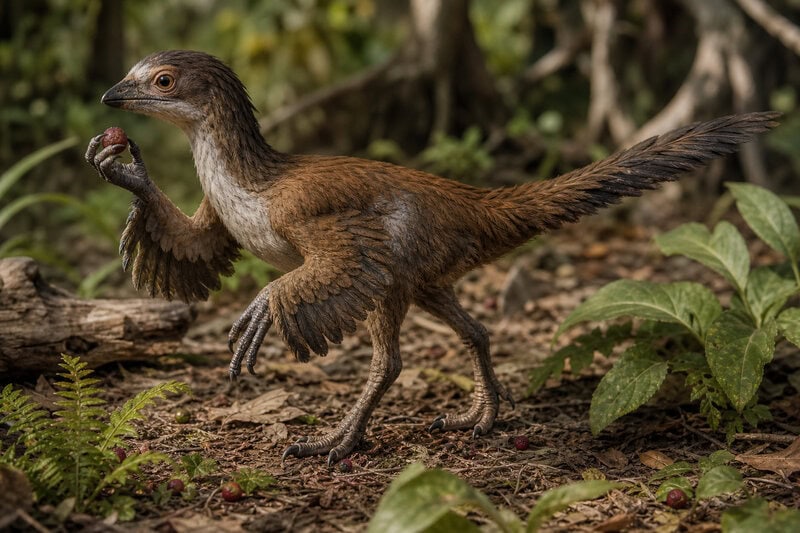
Infernogallus combines the Latin infernus (hell) with gallus (chicken or rooster), a deliberate nod to the Hell Creek Formation — one of the most celebrated and productive dinosaur fossil sites on Earth. Stretching across North Dakota, Montana, and Wyoming, the Hell Creek Formation represents the final chapter of the age of non-avian dinosaurs, dating to the end of the Cretaceous period just before the asteroid impact that ended the Mesozoic era.
The species name jamesi honors the individual or institution credited with the find. The “chicken” portion of the name is more than comic relief: Infernogallus was a feathered, bipedal, genuinely bird-like animal — far closer in body plan to a modern bird than to the lumbering giants most people picture when they think of dinosaurs.
What Kind of Dinosaur Was It?
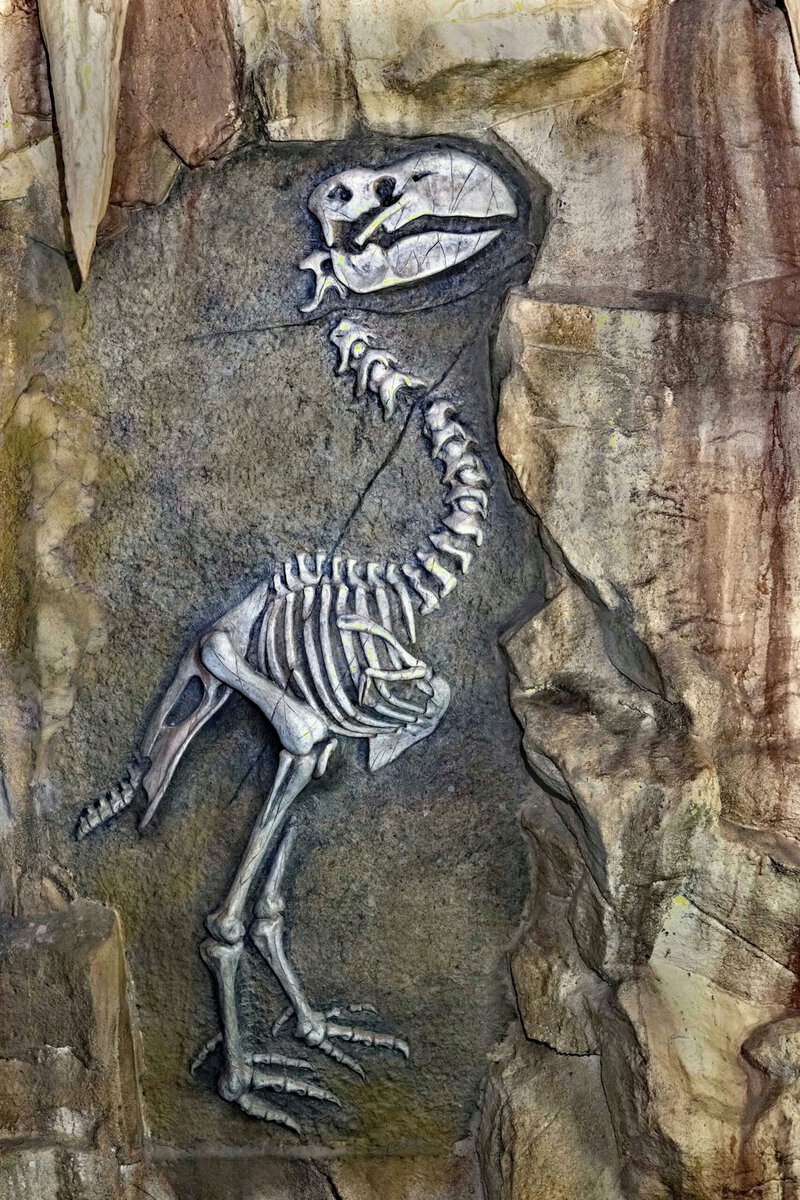
Infernogallus jamesi belonged to a group called oviraptorosaurs — bird-like, two-legged dinosaurs recognized for their beaks, feathered bodies, and relatively compact frames. Oviraptorosaurs are among the closest non-avian relatives of modern birds, and multiple species are known to have brooded their eggs in a posture nearly identical to that of a nesting bird today.
At roughly 12 kilograms — about 26 pounds — Infernogallus was approximately turkey-sized, small by dinosaur standards but entirely in keeping with the oviraptorosaur body plan. Its feathered body and upright bipedal stance would have made it look strikingly familiar to a modern observer. Discover Magazine notes that its beak bore a striking resemblance to that of a parrot — a detail that turns out to be central to understanding how this animal fed.
The Diet That Changes Everything
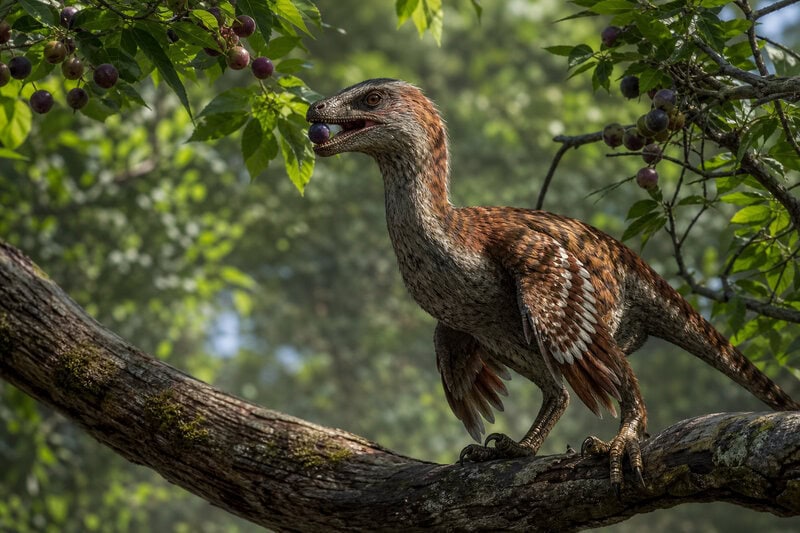
The defining revelation about Infernogallus jamesi is not its appearance — it is what it was eating. Researchers describe it as the first known dinosaur whose primary diet was fruit, making it a dedicated frugivore in a world where that dietary category had never been confirmed in non-avian dinosaurs. Science Alert describes frugivory as an extremely rare dietary specialization among dinosaurs, which is precisely what makes this find so significant.
Most dinosaurs fall into relatively clean dietary categories: carnivore, herbivore, or generalist omnivore. The hell chicken occupied something different — a highly specialized niche focused on fruit, the kind of ecological role filled today by toucans, fruit bats, and certain primates. Its parrot-like beak and specialized oral musculature appear to have been purpose-built for gripping, crushing, and processing fruit, a toolkit with no confirmed parallel elsewhere in the non-avian dinosaur fossil record.
The implication is not a minor footnote. It suggests that the dietary diversity of Cretaceous dinosaurs was far richer and more nuanced than scientists had previously appreciated.
How Do Scientists Reconstruct a Dinosaur’s Diet?
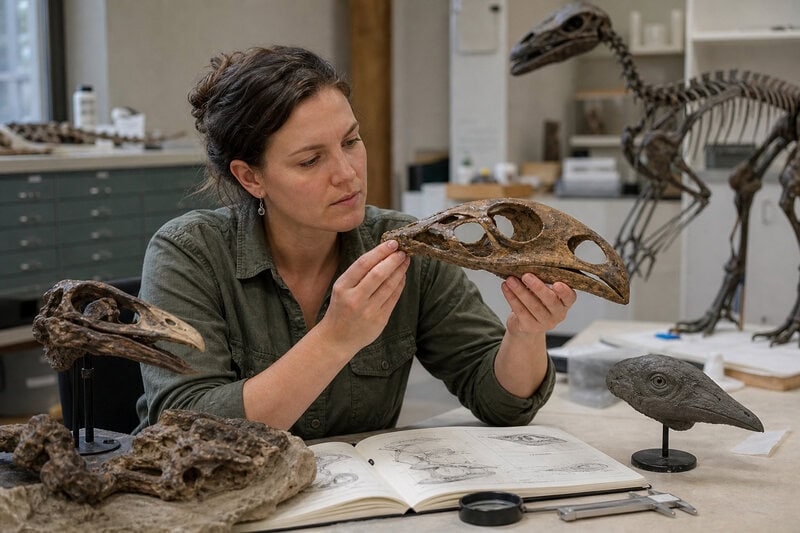
Determining what an animal ate 66 million years ago is a genuinely difficult scientific challenge, and the methods matter. Researchers draw on multiple independent lines of evidence: the shape of the skull and beak, the attachment points and inferred size of jaw muscles, patterns of wear on tooth or beak surfaces, and — in rare cases — fossilized gut contents. No single clue is treated as definitive; the case is built from the convergence of several independent indicators pointing in the same direction.
For Infernogallus, the strongest indicators came from the distinctive shape of its parrot-like beak and evidence of specialized oral musculature, both of which pointed toward a fruit-focused diet. Comparisons with living animals proved essential: parrots, fruit bats, and frugivorous primates all display convergent anatomical adaptations for processing fruit that mirror what researchers found in this dinosaur’s skull. Futurity reports that the combination of morphological evidence built a compelling enough case for researchers to make a primary frugivory claim — a significant and carefully guarded scientific threshold.
It is worth being transparent about the limits of this evidence. Fossilized soft tissue and gut contents are rarely preserved, so dietary reconstructions at this level of specificity always carry some degree of uncertainty. The researchers’ claim rests on anatomical inference and comparative biology rather than direct evidence of consumed fruit — which makes it persuasive, but not beyond all revision as more specimens come to light.
What This Tells Us About the Cretaceous World
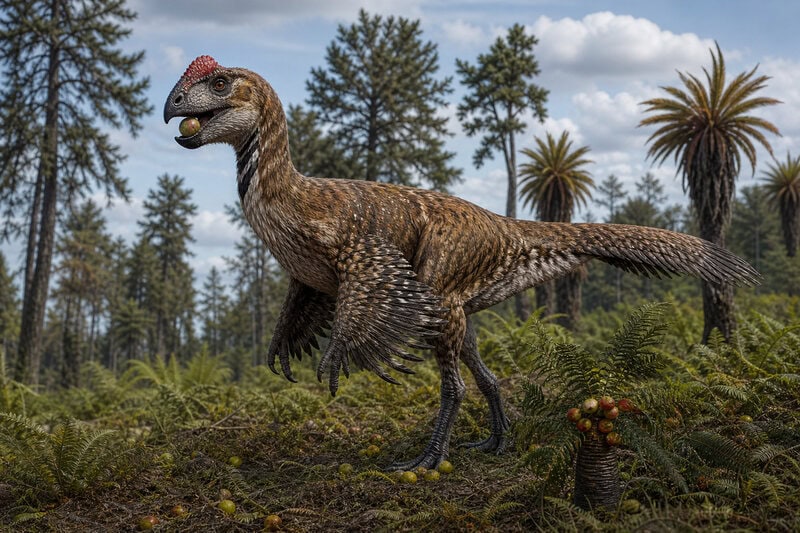
To understand why a fruit-eating dinosaur matters, it helps to understand the world it lived in. Flowering plants — angiosperms, including fruit-bearing species — were relative newcomers in geological terms, having diversified rapidly in the tens of millions of years before the mass extinction. By 66 million years ago, fruits were an increasingly abundant and calorie-rich resource across many ecosystems.
The emergence of a fruit-specialist dinosaur suggests that some animals were already developing tight relationships with fruiting plants, relationships that parallel the co-evolutionary partnerships between birds and fruit trees that persist today. When a bird eats a fruit and disperses its seeds, that is a partnership refined over millions of years of mutual dependence. The hell chicken raises the possibility that such relationships began earlier than previously thought — and with non-avian dinosaurs, not just birds, as one of the key participants.
- Infernogallus jamesi lived at the very end of the Cretaceous, meaning it survived right up until the asteroid impact 66 million years ago.
- Its existence suggests Cretaceous ecosystems supported more dietary specialists than the fossil record has previously revealed.
- A dedicated fruit-eater in this ecosystem implies a level of ecological complexity — and plant diversity — that scientists are still working to fully map.
Why the Hell Chicken Deserves Attention
Infernogallus jamesi is a vivid reminder that the story of dinosaurs is far from complete. Genuinely surprising new species continue to emerge from formations that have been studied for more than a century, and each one has the potential to revise what scientists thought they understood. The hell chicken’s unique anatomy and inferred frugivorous diet add a significant new chapter to the already-fascinating story of oviraptorosaurs — one of paleontology’s most underappreciated dinosaur groups.
Its discovery also challenges a long-held assumption: that dedicated frugivory, as a primary dietary strategy, belonged exclusively to mammals and birds in the Mesozoic era. The hell chicken appears to have carved out a specialized ecological role at a time when the very plants it depended on were still reshaping global ecosystems.
Small, feathered, and equipped with a beak built for fruit rather than flesh, Infernogallus jamesi may be the least physically imposing dinosaur ever pulled from the Hell Creek Formation. But its implications for understanding Cretaceous ecology, plant-animal co-evolution, and the hidden dietary diversity of the dinosaur family tree are significant. The hell chicken is a reminder that some of paleontology’s most consequential discoveries arrive not as apex predators, but as small creatures quietly eating fruit in the shadow of giants.