
Inside a 115-million-year-old bone from Brazil, scientists believe they have found something that challenges what paleontology assumed about the limits of preservation: chemically confirmed traces of dinosaur blood. If the evidence holds, it ranks among the most significant discoveries in the history of fossil science.
A Secret Hidden Inside an Ancient Bone
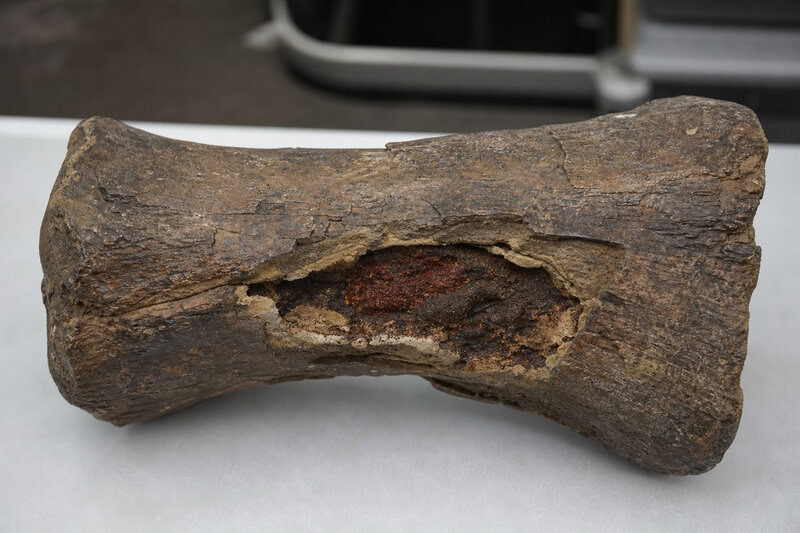
The fossil belongs to Aratasaurus, a small, agile meat-eating dinosaur from the theropod lineage — the same broad family that includes Velociraptor and, eventually, modern birds. Its remains were recovered in Brazil and passed through standard cataloguing processes until modern analytical techniques turned attention to what lay hidden inside the bone itself.
What researchers found were structures that closely resemble red blood cells, accompanied by chemical signatures consistent with ancient biological material. The team describes the evidence as chemically confirmed, meaning they did not simply observe suggestive shapes under a microscope — they identified molecular markers pointing to the biological origin of those structures. According to the research team, this represents the strongest evidence yet of red blood cells preserved inside a dinosaur fossil.
The stakes of that claim are difficult to overstate. Soft biological tissues — blood, proteins, cellular structures — were long assumed to degrade completely within tens of thousands of years. The idea that any such material could persist for 115 million years sits far outside established assumptions, and many scientists, on first encountering such claims, have reached instinctively for the word impossible.
Why the Science Is So Hard to Believe
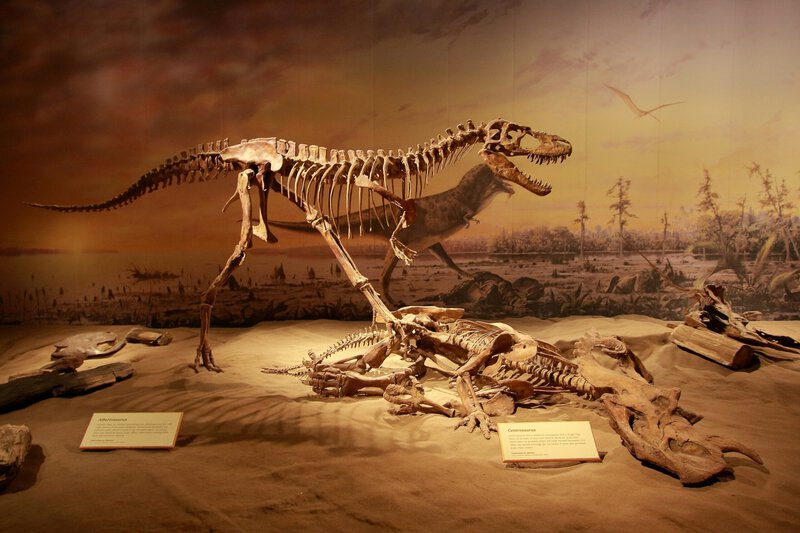
Conventional preservation science drew a firm line: mineralized bone can endure geological time, but the soft biological matter inside cannot. Proteins unravel, cells rupture and dissolve, and organic molecules break down through hydrolysis and oxidation long before anything approaching a million years passes. The timescales involved in soft tissue survival at this scale were considered flatly incompatible with chemistry as scientists understood it.
That framework has been under growing pressure for two decades, and the Aratasaurus discovery adds significant new weight to the challenge. Scientists now openly acknowledge that the finding forces a rethink of what fossilization can actually lock away, and how far biological information can travel across deep geological time before it disappears entirely.
Scientific skepticism remains healthy and appropriate here. Extraordinary claims require extraordinary evidence, and the debate over ancient soft tissue preservation has been genuinely contentious for years. Researchers in this field are not asking audiences to simply accept a conclusion — they are presenting chemical evidence and inviting rigorous scrutiny, which is how science is supposed to work.
Mary Schweitzer and the Work That Changed Everything
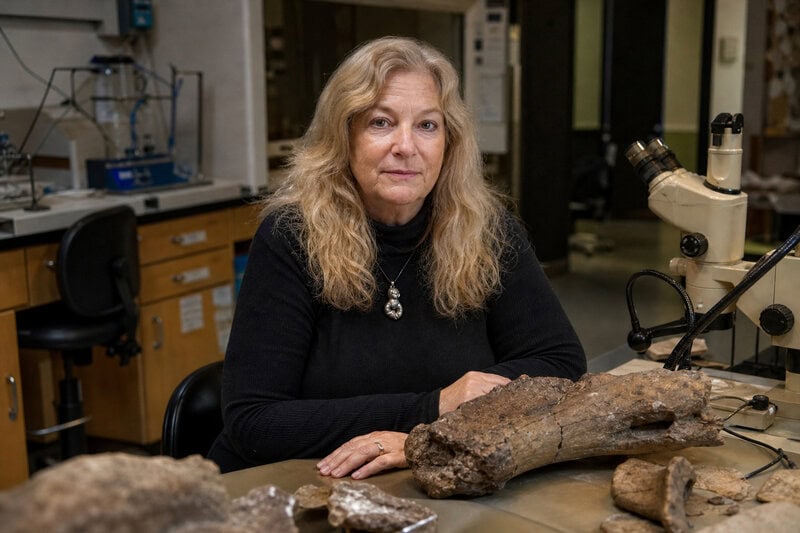
The Aratasaurus find does not emerge from nowhere. It is the latest development in a story that began in earnest with the work of paleontologist Mary Schweitzer, whose findings of what appeared to be soft tissue preserved inside dinosaur bones sent shockwaves through the scientific community. When Schweitzer first reported what looked like flexible, translucent tissue recovered from a Tyrannosaurus rex femur, the initial response from many colleagues ranged from deep skepticism to outright dismissal.
Over time, as independent researchers replicated findings and new analytical techniques confirmed the presence of biological molecules, the scientific community was forced to reckon seriously with the evidence. The Schweitzer saga transformed paleontology’s assumptions about what fossilization preserves and established, critically, that researchers investigating ancient soft tissue are not operating on the scientific fringe. Each confirmed discovery since has built on that foundation, and the Aratasaurus find arrives with analytical tools and methodological rigor that were simply unavailable to earlier researchers.
How Does Soft Tissue Survive at All?
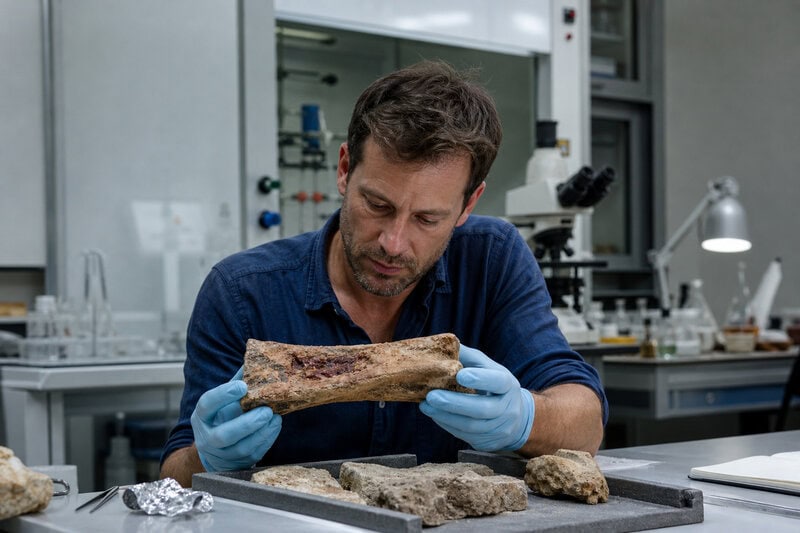
This is the question that continues to genuinely bewilder the scientists who study it most closely, and there is no single tidy answer. Several hypotheses are under active investigation, and the honest position is that no one theory fully accounts for all the cases of ancient soft tissue discovered so far.
The leading candidate involves iron. Hemoglobin — the protein that carries oxygen in red blood cells — releases iron when an organism dies. That iron may act as a natural fixative, essentially doing what laboratory preservatives do to biological specimens, hardening and stabilizing surrounding tissues against the chemical processes that would otherwise destroy them. Experimental work has provided some support for this hypothesis, though researchers treat it as a partial explanation rather than a complete one.
Environmental conditions at the burial site also matter considerably. Rapid burial in low-oxygen sediment, specific mineral chemistry in surrounding rock, and anoxic or dry conditions are all thought to slow biological decay dramatically. Fossilization itself is not a single uniform process — in some cases minerals replace biological structures atom by atom, but researchers believe that in cases like this, something closer to original or near-original biological material may persist in chemically altered form.
- Iron from hemoglobin may stabilize surrounding tissue after death, acting as a natural fixative.
- Rapid burial in oxygen-poor sediment can dramatically slow the chemical processes of decay.
- Mineral chemistry in the surrounding environment may help encapsulate and protect biological structures.
- Dry or anoxic conditions reduce the microbial activity that would otherwise consume organic material.
Scientists are transparent about the uncertainty here. How soft tissue could survive to this degree, across timescales this vast, still bewilders the researchers who study it most closely. That candor is not a weakness in the science — it reflects an investigation proceeding honestly.
What Ancient Dinosaur Blood Could Actually Teach Us
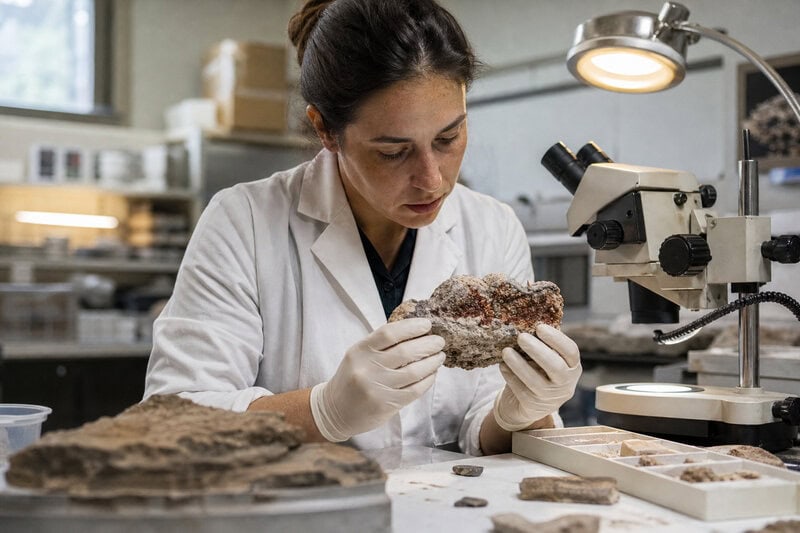
Beyond the wonder of the discovery lies a set of genuinely valuable scientific questions. Preserved red blood cells, if confirmed, carry information about dinosaur physiology that fossilized bone alone cannot provide. The size, shape, and structure of blood cells are linked to metabolic rate and oxygen-carrying capacity — meaning researchers could potentially extract new clues about whether theropods like Aratasaurus were warm-blooded, fast-metabolizing hunters, or something physiologically more complex than the outdated cold-blooded reptile model suggested.
The broader implication for paleontology may be just as significant: if soft tissue can survive 115 million years under the right conditions, then fossils long assumed to be purely mineralized may still contain biological information that no one has yet thought to look for. The field may need to revisit specimens already sitting in museum collections with entirely new questions in mind.
It is equally important to be clear about what this discovery does not mean. It does not put scientists anywhere near sequencing dinosaur DNA or reconstructing living animals. The material is degraded far beyond anything that would permit genetic reconstruction — the scenario depicted in Jurassic Park remains fiction. But the scientific reality, in its own quieter way, is extraordinary enough to stand without embellishment.
The Bigger Question This Find Forces Science to Ask
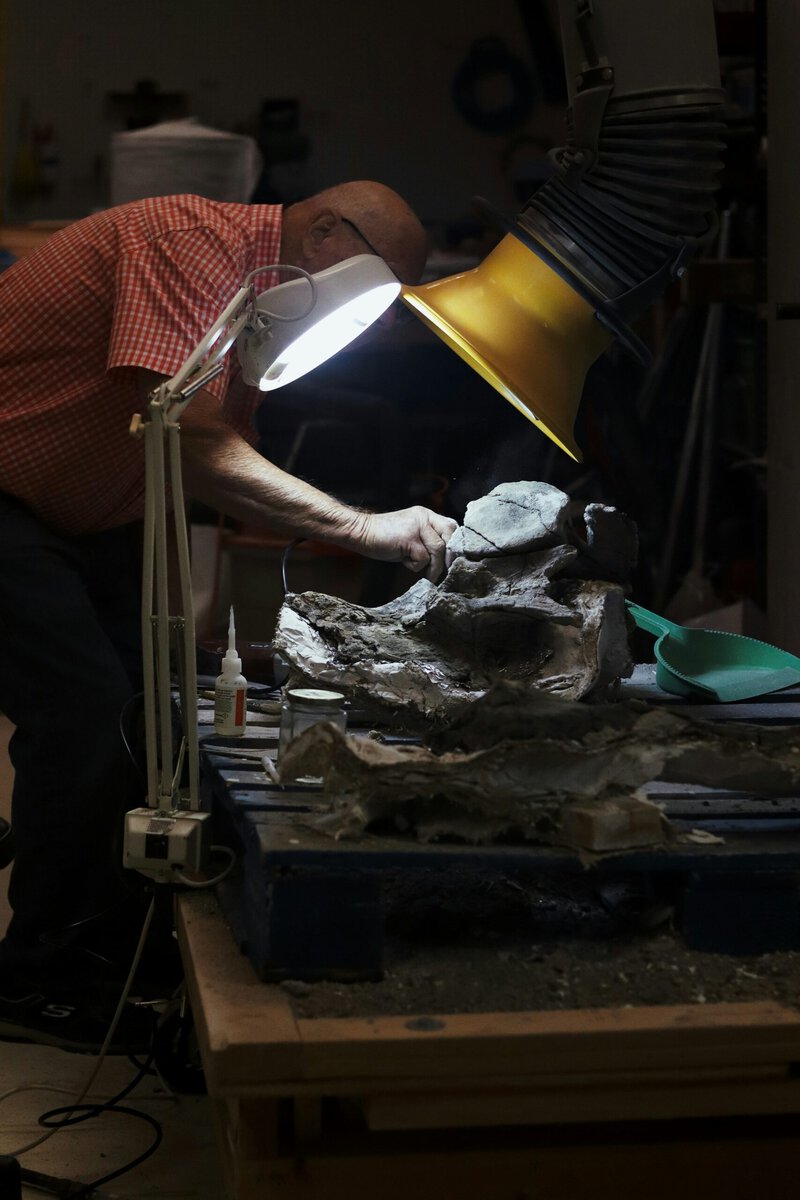
The Aratasaurus discovery is not really about one small dinosaur from Brazil. It is about how much biological information the fossil record may still be concealing inside bones that scientists have already catalogued, measured, and moved on from. Chemically confirmed traces of ancient blood in a dinosaur fossil push the known boundary of biological preservation further than many researchers believed possible, and that boundary may move again as techniques improve and more specimens are examined with fresh eyes.
What makes this moment feel genuinely alive is something the researchers themselves model: honest bewilderment. The scientists involved are not standing behind this find with the composed confidence of people who fully understand what they have found. They are, by their own admission, as astonished as anyone. In a field that deals in timescales too vast for human intuition and processes too slow for direct observation, that admission of amazement is not a gap in knowledge — it is an invitation to keep looking.