
For decades, the ozone layer has been held up as one of environmental policy’s clearest victories — a hole that was opening, that the world noticed, and that international cooperation began to close. So when NOAA and NASA announced that the 2026 Antarctic ozone hole ranks among the ten largest in 48 years of continuous monitoring, and the largest seen in roughly a decade, the reaction was understandable: wait, weren’t we supposed to be past this?
A Record That Wasn’t Supposed to Happen
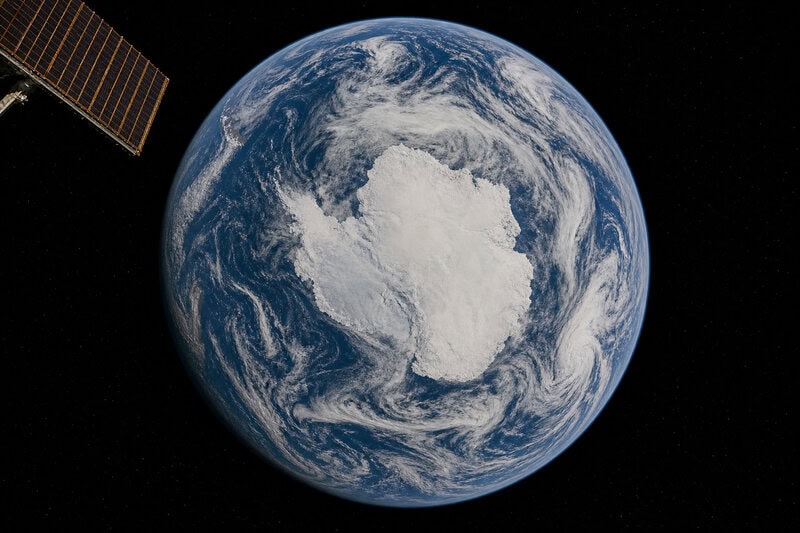
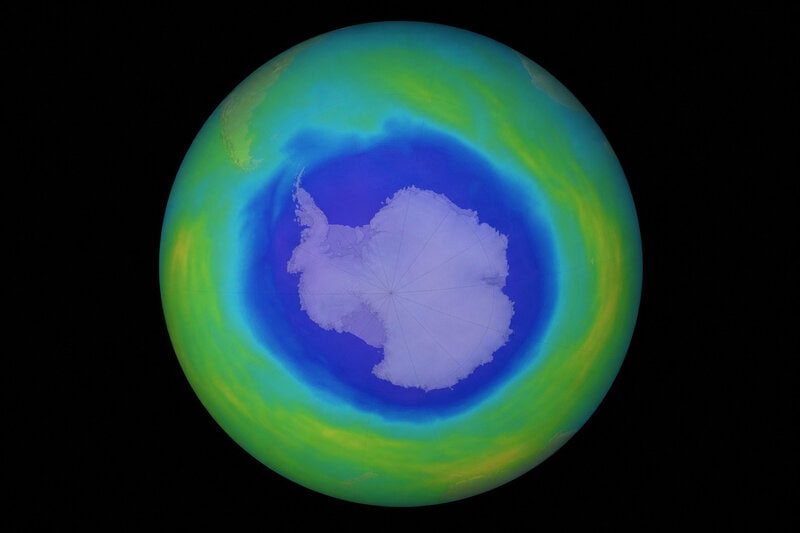
The numbers are striking. According to NOAA and NASA’s official analysis, the 2026 ozone hole became the seventh-largest on record across 48 years of satellite and ground-based measurements — placing it squarely in historic company, not merely brushing the edge of the top ten. For context, the 2023 ozone hole ranked only 16th largest. A jump from 16th to 7th in a single annual cycle is the kind of statistical leap that stops atmospheric scientists in their tracks.
The central tension is real and worth sitting with: if the chemistry driving ozone destruction is slowly improving — and the science says it is — how does 2026 produce a hole this large? The answer requires separating two forces that are always at work simultaneously: the long-term chemical story, which is genuinely encouraging, and the year-to-year meteorological story, which can still produce jarring surprises. Conflating those two stories is where most public misunderstanding originates.
What NOAA and NASA Actually Measured
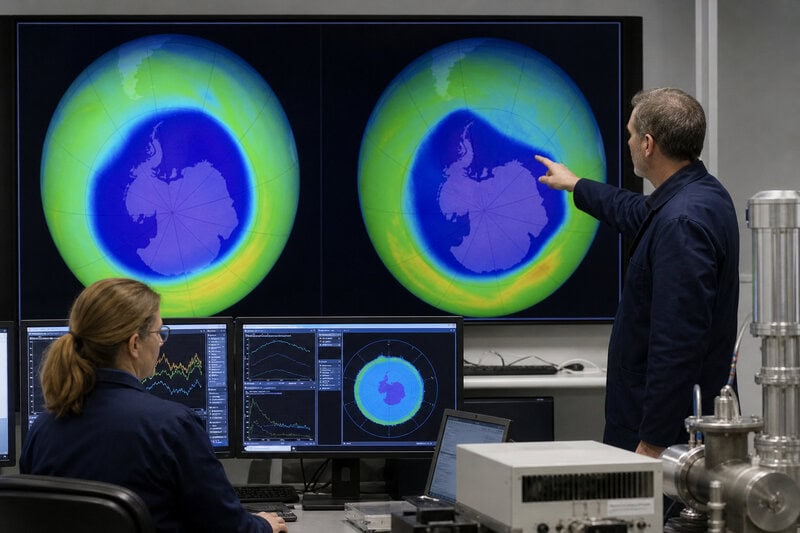
The official measurements released by NOAA and NASA carry an important nuance that tends to get lost in headlines. The 2026 hole was vast in geographic area — that is what earns it the seventh-place ranking. But it was not as chemically deep as the worst holes on record. Depth, in this context, refers to how severely ozone is depleted within the hole itself. The most catastrophic holes in history weren’t just large in extent; they were also chemically extreme, with ozone stripped away to alarming concentrations throughout the column.
The fact that 2026’s hole was big but not maximally deep is not a minor footnote. It is evidence that the underlying chemistry is improving even when the headline number looks grim. Chlorine and bromine compounds — the ozone-depleting substances that the Montreal Protocol targeted — are still present in the stratosphere, but their concentrations are declining. That decline shows up not primarily in area, which is heavily driven by temperature and atmospheric dynamics, but in how thoroughly the chemistry can destroy ozone within a given region. A hole can be wide without being catastrophically deep, and that distinction matters enormously for interpreting what 2026 actually means.
The 2026 ozone hole dataset compiled by NASA contributes to a 48-year observational record that gives scientists the statistical baseline needed to interpret any single season in proper context. Without that continuity, every large year would look like a catastrophe. Within it, researchers can identify what is genuine signal and what is meteorological noise.
The Polar Vortex: The Engine Behind the Size
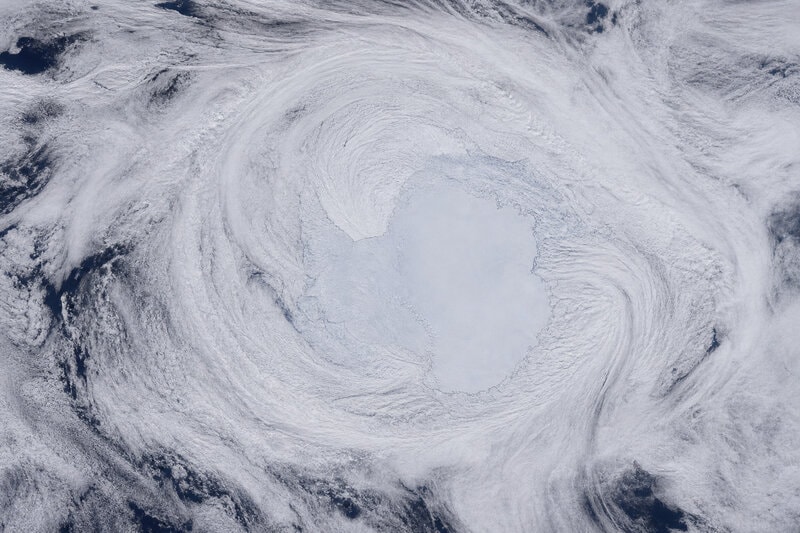
To understand why 2026’s hole grew so large, it helps to understand the polar vortex — not the loose, colloquial version that shows up in winter weather headlines, but the stratospheric phenomenon that directly governs ozone chemistry over Antarctica.
Each southern winter, a powerful mass of frigid stratospheric air spins tightly over Antarctica, effectively sealing the region off from warmer air at lower latitudes. Inside this spinning chamber, temperatures drop low enough to form polar stratospheric clouds, and it is on the surfaces of those clouds that chlorine chemistry accelerates dramatically. The stronger and more stable the polar vortex, the colder the temperatures, the more extensive those clouds become, and the larger the zone where ozone destruction can run at full speed.
In 2026, an unusually powerful polar vortex maintained exceptionally cold conditions for longer than typical, expanding the geographic area where ozone-depleting reactions could occur. Think of it as a reaction chamber: the vortex doesn’t create the chemicals, but it creates the conditions in which those chemicals can do maximum damage. This is the meteorological driver — distinct from the chemical driver — and 2026 had an aggressive version of the former even as the latter continues its slow, measurable improvement. Understanding that distinction is essential to reading this year’s result correctly.
So Is the Ozone Layer Actually Recovering?
Yes — and the scientific consensus on this point is firm. Long-term recovery of the ozone layer remains on track, according to NOAA, NASA, and international scientific assessments. The Montreal Protocol, the 1987 treaty that phased out the production of ozone-depleting substances, is still working. Stratospheric chlorine levels are lower than they were at their peak. The trend line, measured over decades rather than individual years, points consistently toward recovery.
What 2026 illustrates is a concept scientists call natural variability. Year-to-year ozone hole size is heavily influenced by meteorology — by whether a given year’s polar vortex is strong or weak, persistent or disrupted. A single large year does not erase or reverse the decades of chemical recovery that monitoring programs have documented. Recovery is real; it is simply not linear, and it is not visible on an annual timescale.
The area-versus-depth finding reinforces this point directly. If stratospheric chlorine were not declining, a hole this large would almost certainly also be this deep. The fact that it isn’t — that the 2026 hole is vast in area but not at record depletion levels — is a quiet confirmation that the underlying chemistry is moving in the right direction, even when the headlines suggest otherwise. Calling the recovery stalled misreads what the data actually shows. Variable is the more accurate word.
Why 2026 Feels Different From Recent Years
Part of what makes 2026 feel jarring is the decade-long gap since anything comparable appeared. The last time the ozone hole reached this scale was roughly a decade ago. In the years since, hole sizes have been more moderate, reinforcing a public narrative of steady, visible improvement. Then 2026 broke that streak emphatically, and the contrast is striking precisely because the recent baseline had been so reassuring.
Scientists and observers have also raised questions about whether the 2022 eruption of Hunga Tonga — an underwater volcano that injected an extraordinary amount of water vapor directly into the stratosphere — may have contributed to multi-year atmospheric changes that set up conditions favorable to a large 2026 hole. Water vapor in the stratosphere can enhance the formation of polar stratospheric clouds, the very clouds that accelerate ozone-destroying chemistry. Researchers are still analyzing these potential lagged effects, and 2026 is generating new research questions rather than providing settled answers. The honest position is that the connection remains a subject of active investigation, not an established conclusion.
What 48 Years of Monitoring Actually Tells Us
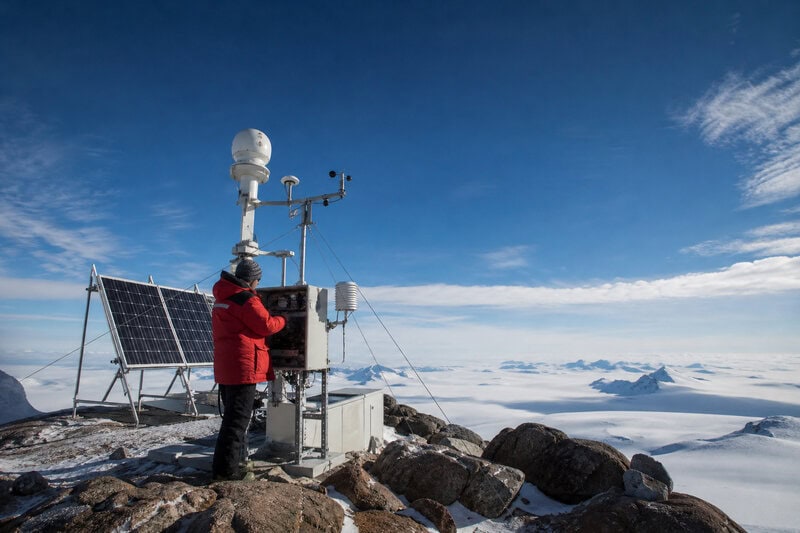
It is worth pausing to appreciate the data infrastructure that makes any of this analysis possible. Forty-eight years of unbroken NOAA and NASA monitoring — combining satellite observations with ground-based instruments — represents a scientific achievement that underpins everything researchers know about the ozone hole, including the fact that it is recovering. Without that long record, 2026 would look catastrophic in isolation. Within it, the picture is more nuanced: a large but explainable outlier in a dataset that still trends toward improvement.
The same monitoring network now tracking the 2026 result is what confirmed recovery was happening in the first place. This is how environmental science works at its best — continuous observation sustained long enough to separate real signals from the inherent noisiness of a dynamic planetary system. NOAA’s ongoing ozone monitoring program remains one of the most consequential sustained observational efforts in atmospheric science precisely because a single year’s reading, without decades of context, tells you almost nothing reliable. The 48-year archive is not background detail; it is the entire basis for confident interpretation.
What Comes Next
If emissions of ozone-depleting substances continue to decline under the Montreal Protocol — and current trajectories suggest they will — full ozone layer recovery is still expected by mid-century, though timelines vary by region and altitude. The Southern Hemisphere’s ozone layer tends to recover more slowly than other regions, which is why the Antarctic hole remains the benchmark measurement scientists watch most closely.
The honest answer to why the ozone hole is still large in 2026 has two separate parts that must be kept distinct. Chemistry: improving slowly, measurably, and in accordance with what the Montreal Protocol promised. Meteorology: unpredictable year to year, capable of producing dramatic outliers even as the chemical baseline gets cleaner. Conflating those two answers generates unnecessary alarm. Keeping them separate produces a clearer and more accurate picture of where things actually stand.
The ozone story remains simultaneously one of humanity’s greatest environmental policy successes and an ongoing reminder that planetary systems don’t heal on a human schedule or in a straight line. Scientists will be watching the 2027 season closely to determine whether 2026 was a one-off spike driven by an unusually strong polar vortex, or whether it signals a pattern that warrants deeper investigation. That is exactly the kind of question that 48 years of monitoring infrastructure was built to answer — and why maintaining that infrastructure matters as much now as it did when the first measurements were taken.