
On November 1, 1962, the Soviet Union launched a spacecraft toward Mars and, for a few months, dared to believe it might actually arrive. Then, without warning, it went silent — and was never heard from again.
A Rocket Aimed at Mars Vanished Into the Dark
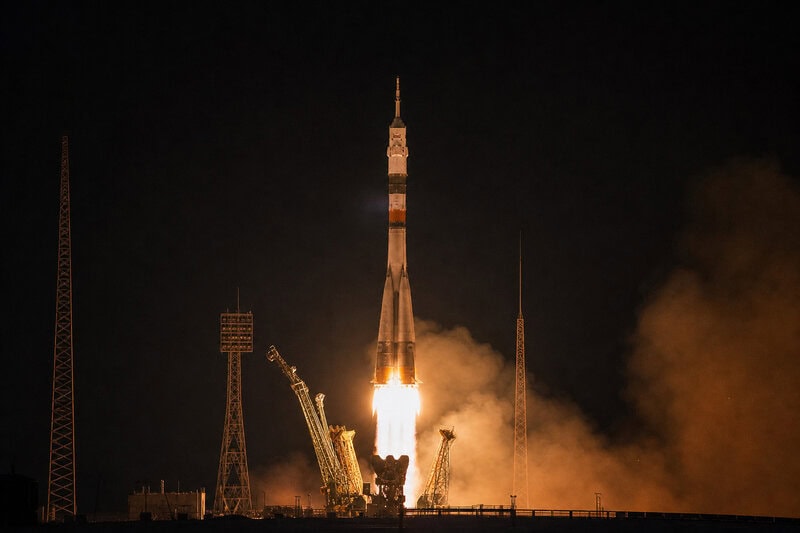
Mars 1 holds a distinction that no subsequent failure can take away: it was the first spacecraft in human history deliberately aimed at the Red Planet. Launched at the height of the Space Race, when the United States and Soviet Union were staking national prestige on every rocket that cleared the launchpad, Mars 1 was ambitious, technically sophisticated, and ultimately tragic. It became what no mission controller ever wants to report: a ghost ship — drifting silently through the solar system on a trajectory toward a planet it would pass without saying a word.
No distress signal preceded the silence. No final transmission offered a clue. One day Mars 1 was sending data home; the next, it was gone. Its fate remains unknown to this day, and the spacecraft itself is believed to still be orbiting the sun somewhere beyond Earth — a Cold War relic circling quietly in the dark.
The Space Race Reaches for Mars
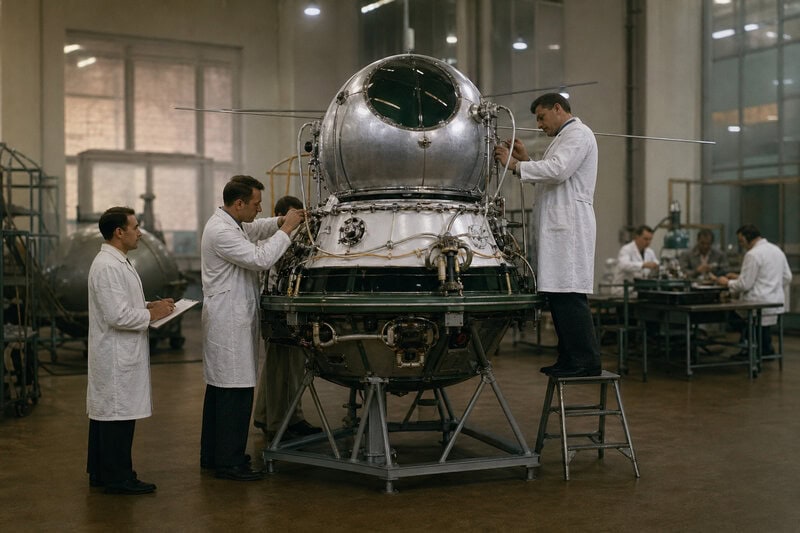
By 1962, the Space Race had grown far larger than a competition over Earth orbit. Both superpowers were eyeing the planets as the next frontier of Cold War rivalry, and the Soviet space program had every reason to feel confident. It had shocked the world with Sputnik in October 1957 and stunned it again when cosmonaut Yuri Gagarin became the first human in space in April 1961. The Soviets did not intend to stop there.
Mars launch windows — the narrow periods when the orbital geometry of Earth and Mars aligns favorably for an interplanetary trajectory — made 1962 a critical year for any nation serious about reaching the Red Planet. Miss the window, and the next opportunity would be roughly two years away. The Soviets had already attempted earlier Mars probes in 1960 and 1962, all of which failed before escaping Earth’s gravity or shortly after. Mars 1 represented their most technically advanced and serious attempt yet.
The Americans were moving on a parallel track. A review of the Space Race timeline makes clear just how compressed and frenetic this period of planetary exploration was — both nations launching probes in rapid succession, racing to claim firsts before the other side could.
What Was Mars 1?
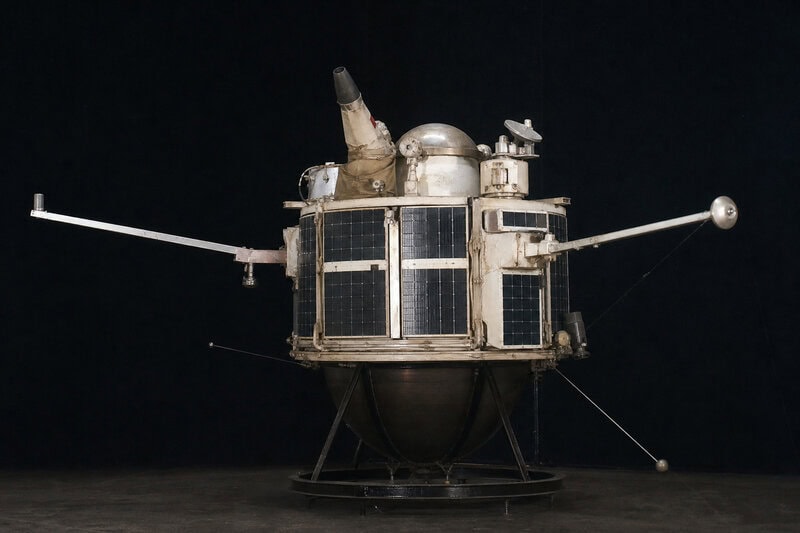
Mars 1 was a roughly 900-kilogram spacecraft designed to fly past Mars, photograph its surface, and collect scientific data during the journey. It carried instruments to measure interplanetary magnetic fields, cosmic radiation levels, and micrometeorite density — information that would help engineers on both sides understand what deep space actually looked like between the planets, and how to design spacecraft capable of surviving it.
The spacecraft represented a genuine engineering leap for its era. It was equipped with a solar panel power system and an attitude-control system engineered specifically for deep-space operations — technologies that were experimental at the time and far from proven. The Soviet government was proud enough of the achievement that a commemorative postage stamp dated November 3, 1962, celebrated the launch of a space rocket to Mars, reflecting just how significant the mission was considered within the USSR.
Mars 1 launched aboard a Molniya rocket from the Baikonur Cosmodrome in present-day Kazakhstan. A separate upper stage boosted the spacecraft onto its interplanetary trajectory after achieving Earth parking orbit — a staging approach that was itself at the frontier of Soviet rocketry at the time.
The Journey Begins — and the Clock Starts Ticking

After a successful launch and insertion into a Mars-bound trajectory, Mars 1 began transmitting data back to Soviet ground controllers. For months, the spacecraft performed largely as intended. It returned readings on interplanetary magnetic fields and radiation levels along its path — genuinely useful science, gathered in regions of space no instrument had ever sampled before.
Engineers tracked the spacecraft carefully, but deep-space communication in 1962 was fragile, experimental, and operating at the very edge of what the technology of the era could accomplish. Ground stations had limited range and precision. The distances involved were staggering. And everyone involved understood, even if they did not say it openly, that a great deal could go wrong at any moment.
Controllers maintained intermittent contact over more than 60 communication sessions. By March 1963, Mars 1 had traveled roughly 106 million kilometers from Earth. Then its radio transmitter fell permanently silent.
What Went Wrong
The leading explanation for the loss of contact is a failure in the spacecraft’s attitude-control system. Specifically, the pressurized gas used to orient the spacecraft in flight is believed to have leaked or been exhausted. If that system malfunctioned, the spacecraft’s antenna would drift out of alignment with Earth — and without a correctly oriented antenna, no signal could reach ground stations, even if other systems aboard were otherwise functioning normally.
Soviet scientists were never able to re-establish contact. Mars 1 continued on its pre-programmed trajectory, and in June 1963, it passed within roughly 193,000 kilometers of Mars — closer than the Moon is to Earth. But the spacecraft was silent and unresponsive, unable to return a single image or data point from the encounter it had been built and launched to achieve.
Its current location is unknown. Scientists believe Mars 1 entered a long solar orbit after its Mars flyby, and that it continues to circle the sun today, more than six decades after launch — a ghost of the most audacious technological competition in modern history.
Mars 1 in the Broader History of Early Mars Exploration
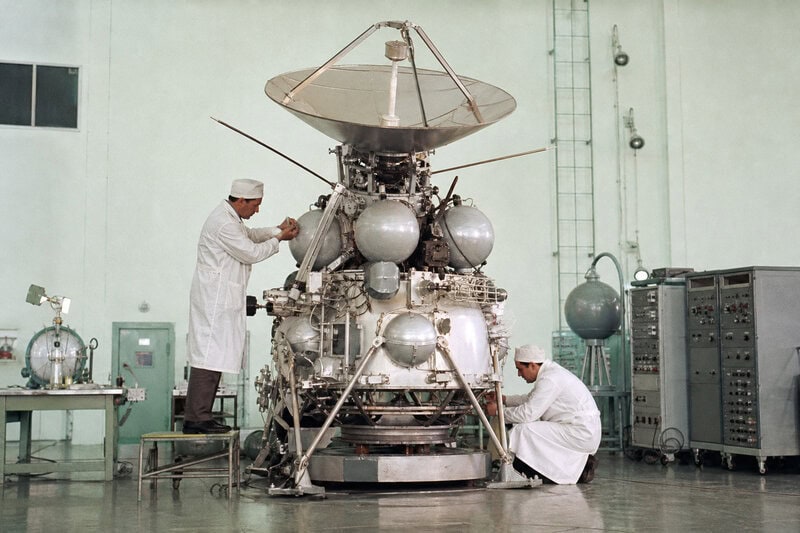
Mars 1 was not the last early casualty of the drive to reach the Red Planet. The history of first-generation Mars probes is, in large part, a history of failure — on both sides of the Iron Curtain. The planets did not yield their secrets easily, and the technology of the early 1960s was being pushed far beyond anything it had been proven capable of doing.
American engineers were absorbing parallel lessons. Mariner 2 had already scored a landmark success on December 14, 1962, becoming the first successful planetary spacecraft when it flew past Venus and entered solar orbit — a milestone that demonstrated interplanetary missions could work in principle, even as Mars probes on both sides continued to fail.
The first genuinely successful Mars mission would not arrive until NASA’s Mariner 4, which flew past Mars in July 1965 and returned the first close-up photographs ever taken of the Martian surface. Those 22 grainy, stark, and scientifically revolutionary images were only possible because of everything engineers had learned — sometimes painfully — from missions like Mars 1. Even the data Mars 1 transmitted before contact was lost contributed to the early scientific understanding of interplanetary space, giving the mission a legacy that extends beyond its own failure.
Why Mars 1 Still Matters
More than 60 years after its launch, Mars 1 remains historically significant for reasons that reach beyond its own mission record. It was the first human-made object ever dispatched on a deliberate course toward another planet. That fact belongs permanently in the record of what our species has done, regardless of what followed.
Its loss helped engineers on both sides of the Space Race reckon honestly with the brutal technical demands of deep-space communication and long-duration spacecraft reliability. Attitude-control systems, antenna-pointing mechanisms, and onboard redundancy all received renewed attention in missions that came after. Every Mars mission that followed — from Mariner 4 to the Viking landers, from Mars Pathfinder to the Perseverance rover operating on the Martian surface today — inherited hard lessons that trace back, at least in part, to early failures like Mars 1.
Somewhere beyond Earth, a Soviet spacecraft launched during one of the tensest decades in modern history is still silently making its way around the sun. It never completed its mission. But it started something that humanity has never stopped pursuing.