
A single paragraph written nearly 2,000 years ago by a Roman-Jewish historian is once again at the center of one of academia’s longest-running arguments — and a bold new book claims that paragraph may be far more genuine than most scholars have ever been willing to admit.
A 2,000-Year-Old Text Divides Scholars Again
Buried inside Antiquities of the Jews, a sweeping historical work completed around 93 CE by the first-century historian Josephus, sits what many researchers consider the oldest known description of Jesus by a non-Christian writer. The passage, known as the Testimonium Flavianum, has been analyzed, disputed, defended, and dissected for generations. Now, a new book by Fairfield University scholar T.C. Schmidt — titled Josephus and Jesus: New Evidence — is reigniting the debate with fresh claims about the text’s authenticity that are already drawing attention across the academic community.
The argument over whether this ancient account of Jesus is genuine, forged, or somewhere in between has never been fully resolved. Schmidt’s research represents a direct challenge to the cautious middle-ground position that most modern scholars have settled into — and it arrives at a moment when new computational and linguistic tools for analyzing ancient texts are giving historians capabilities they have never had before.
Who Was Josephus, and Why Does His Account Matter?
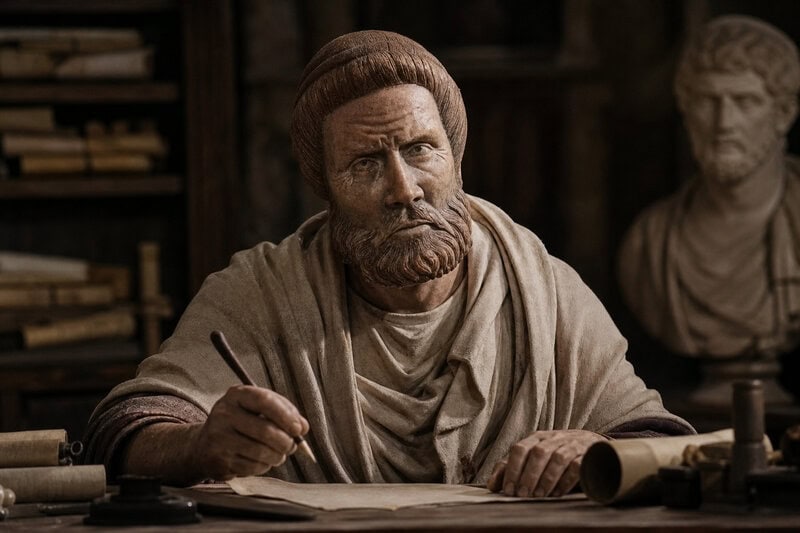
Josephus was a first-century Roman-Jewish historian born around 37 CE whose surviving works are among the most valuable records of the ancient Near East. He witnessed the Jewish-Roman War firsthand, later surrendering to Roman forces and living under imperial patronage in Rome. His two major surviving works — The Jewish War and Antiquities of the Jews — document Jewish history, politics, and society with a level of detail that archaeologists and historians still rely on today. Critically, his books were not religious texts. They were attempts to document the world around him for a Roman audience, written by a man whose loyalties and self-interest were bound up with Rome, not with any emerging religious movement.
That context is precisely what makes the Testimonium Flavianum so significant in historical Jesus scholarship. Early Christians had an obvious and powerful motivation to write about Jesus. Josephus did not. He was Jewish, writing for Romans, with no apparent theological stake in promoting or defending the Christian movement. A reference to Jesus in his work would therefore carry a kind of independent weight that no gospel or epistle can provide — it would be an outsider’s observation, not a believer’s testimony.
If the passage is genuine, it constitutes significant evidence that a historical figure named Jesus existed, was publicly known, and left a recognizable impact on people around him. If it was tampered with — or invented wholesale — it becomes a cautionary tale about how ancient history gets written, copied, and shaped by the hands that preserve it.
The Forgery Accusation: Where the Doubt Started

When early scholars first scrutinized the Testimonium Flavianum closely, many concluded it was simply a forgery. Their reasoning was straightforward: the passage as it has survived reads less like a neutral historical record and more like a statement of Christian faith. It calls Jesus “the Christ,” describes his resurrection as a matter of fact, and uses language that sounds unmistakably creedal — the kind of phrasing a Christian believer would use, not a Jewish historian writing for a Roman audience.
The suspicion deepened when scholars considered how the text had been transmitted. The Testimonium Flavianum survived almost exclusively through Christian copyists working centuries after Josephus died. Those scribes had both the opportunity and, arguably, the motivation to adjust a passage that mentioned their faith’s central figure. The idea that they would have allowed an unflattering or even neutral account of Jesus to pass through their hands unchanged struck many researchers as unlikely.
This early skepticism cast a long shadow over how scholars approached all early references to Jesus from outside the biblical tradition, raising broader questions about what historians can trust when the chain of custody for a text runs through communities with strong interests in its content.
The Modern Consensus — and Its Limits
Over time, the total-forgery position gave way to a more nuanced view. The mainstream position among scholars today is that the Testimonium Flavianum is partially authentic — meaning Josephus did write something about Jesus, but that later Christian scribes inserted or substantially altered key phrases to make the passage more theologically satisfying.
This is sometimes called the interpolation theory. The idea is that the obviously Christian-sounding lines — the references to Jesus as the Christ, the matter-of-fact treatment of the resurrection — were added by later hands, while a more neutral historical core survived underneath those additions. Strip away those suspected insertions, the argument goes, and what remains looks more like something Josephus might actually have written.
It is a reasonable compromise, and it has held as the dominant view for decades. But it is still a theory built on inference and linguistic analysis rather than direct manuscript evidence. As the scholarly record on Josephus and Jesus makes clear, fierce disagreement persists even among those who accept partial authenticity — disagreement about exactly which lines are original, which were inserted, and how much of Josephus’ actual voice survives in the text we have today. A tenth-century Arabic version of the passage, discovered in the 1970s in a work by the bishop Agapius, offers a notably more neutral rendering of the text and has added a further layer of complexity to the debate without settling it.
What Schmidt’s New Research Actually Claims
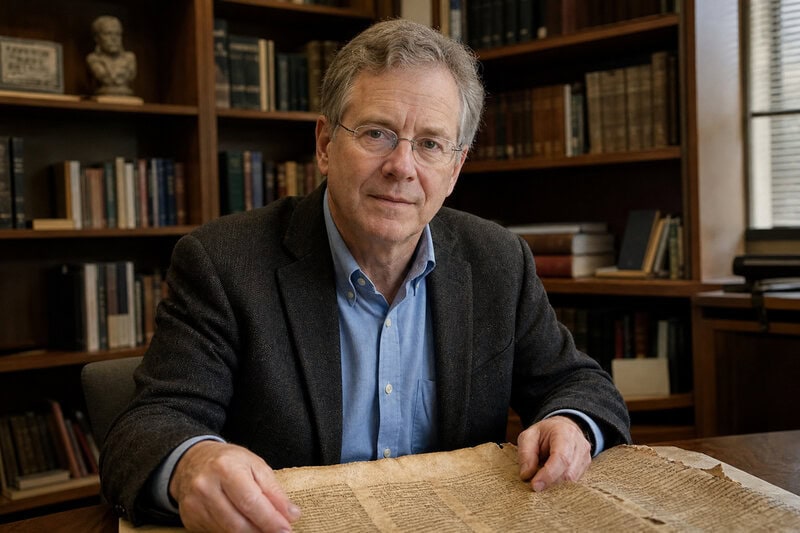
Into that unsettled landscape comes T.C. Schmidt’s Josephus and Jesus: New Evidence, which takes a position more assertive than the partial-authenticity consensus. According to the research, the passage may hold together as genuinely Josephan to a greater degree than most scholars have been willing to accept. Schmidt challenges the long-held assumption that Christian writers substantially rewrote the original account, presenting new textual and historical analysis in support of that argument.
Schmidt’s approach engages directly with the manuscript tradition and the linguistic patterns found throughout Josephus’ writing — essentially asking whether the Testimonium Flavianum, when examined against the full body of Josephus’ work, looks like something he would have written or something a later editor grafted onto his text. The answer Schmidt offers leans toward authenticity in ways that go beyond where most of his peers have been willing to go.
Importantly, the research does not claim to end the debate. What it does claim, and what supporters of the work have echoed, is that the evidence Schmidt presents is significant enough to demand serious scholarly attention. Early reviews of the book have noted the rigor of the analysis while acknowledging that it will not go unchallenged by a field accustomed to treating this question with deep caution.
Why This Debate Is So Hard to Settle
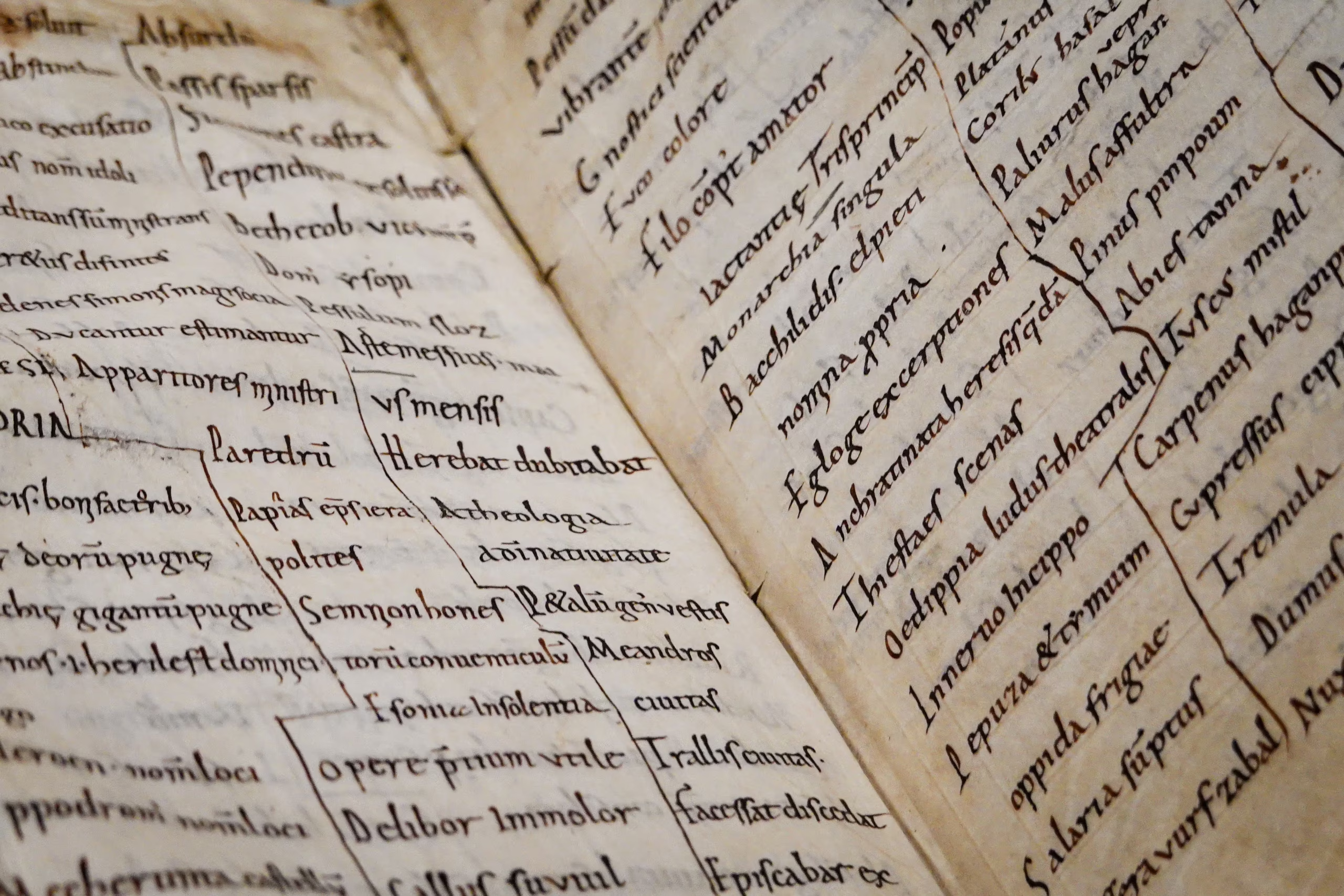
Part of what makes authenticating any ancient text about Jesus so difficult is the fundamental problem of sources. There is no original manuscript of Josephus. Every version we have is a copy of a copy, produced centuries after his death, almost always by Christian scribes. Establishing what Josephus actually wrote requires working backward through layers of transmission, comparing manuscripts against one another, and making probabilistic judgments about what a particular writer would or would not have said given his known style, vocabulary, and context.
That process involves linguistic analysis, historical context, manuscript lineage, and careful attention to scribal habits — and experts can weigh the same evidence very differently. The problem does not resolve cleanly, which is precisely why the Testimonium Flavianum has remained contested across so many generations of scholarship.
The cultural stakes also help explain why the debate generates so much heat. The authenticity of an ancient account of Jesus touches questions that extend well beyond academic history. It intersects with matters of faith, with questions about how we construct reliable knowledge of the ancient world, and with broader debates about the historical record for one of the most studied figures in human history. Few scholarly disputes carry that combination of technical difficulty and existential weight simultaneously.
What Comes Next for Historical Jesus Scholarship
Schmidt’s book is already drawing responses from researchers, ensuring that the conversation around the Testimonium Flavianum will continue well beyond its publication. Whether the academic community ultimately finds his arguments persuasive enough to shift the consensus remains to be seen — scholarly opinion moves slowly, and the partial-authenticity position has deep roots and considerable institutional backing.
What is changing, however, is the toolkit available to historians who want to interrogate ancient texts. Computational linguistics, improved manuscript analysis, and new methods for comparing textual patterns across large bodies of ancient writing are giving scholars ways to approach these questions that simply did not exist a generation ago. Those tools may not deliver a definitive verdict on the Testimonium Flavianum, but they are enabling more precise and reproducible questions than traditional close reading alone ever permitted.
If Schmidt’s argument gains traction, the implications extend well beyond one disputed paragraph. It could reshape how historians weight Josephus as a source across historical Jesus scholarship more broadly, and it could reopen questions about other early texts that have been treated as effectively settled for decades. After nearly 2,000 years, a single passage still has the power to challenge what we think we know about one of history’s most examined figures — and the scholars who study it show no sign of walking away from that challenge anytime soon.