
On 13 April 2029, a roughly 375-metre asteroid named Apophis will pass just 32,000 kilometres above Earth’s surface — closer than the geostationary satellites that carry television signals and weather data — making it the closest confirmed approach of an asteroid this large in recorded history. New visibility analyses suggest that up to 90% of humanity could step outside and watch it cross the night sky with the naked eye, a celestial event with no modern precedent and one that will never repeat itself in our lifetimes.
A Rock the Size of Three Football Fields — and Entirely Safe to Watch
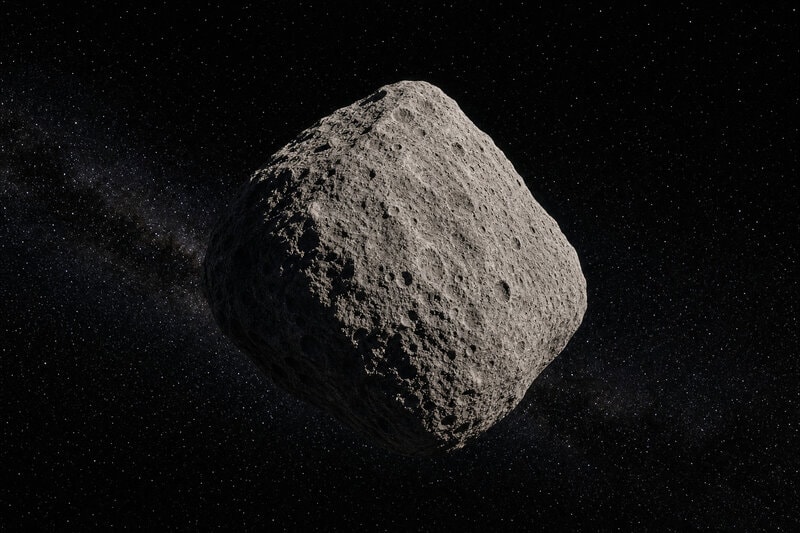
The most important finding deserves unambiguous statement at the outset: NASA’s Center for Near Earth Object Studies (CNEOS) and ESA’s Planetary Defence Office have both formally removed Apophis from their respective risk lists, following ultra-precise radar measurements taken in March 2021 when the asteroid passed within 17 million kilometres of Earth. Those observations ruled out any impact for at least the next 100 years with a confidence level that scientists describe as definitive. The 2029 flyby is not a threat — it is a spectacle, and among the most extraordinary natural events any living person is likely to witness.
Apophis (formally designated 99942 Apophis) is a near-Earth asteroid, a category NASA defines as any asteroid whose orbit brings it within 1.3 astronomical units of the Sun — close enough that gravitational interactions with Earth become periodically significant. At roughly 375 metres across, it sits in a particularly consequential size bracket: too small on its own to cause a global catastrophe, but large enough to devastate an area comparable to a major country if it ever did impact. That combination of size and orbital proximity places it firmly among the bodies that planetary-defence agencies prioritise and monitor most carefully.
Apophis belongs to the S-type, or silicaceous, asteroid class — composed primarily of silicate rock and metallic minerals. That composition matters beyond mere classification: it determines how sunlight pressure, through a mechanism called the Yarkovsky effect, subtly nudges the asteroid’s orbit over decades, a factor that trajectory analysts at JPL must account for in long-range predictions. Its discovery in 2004 by astronomers Roy Tucker, David Tholen, and Fabrizio Bernardi at Kitt Peak National Observatory initially triggered a record-high impact-probability calculation, briefly placing Apophis as the most dangerous known asteroid. Further observations systematically reduced that risk, and the 2021 radar campaign eliminated it entirely for the foreseeable future.
How Close Is 32,000 Kilometres — Really?
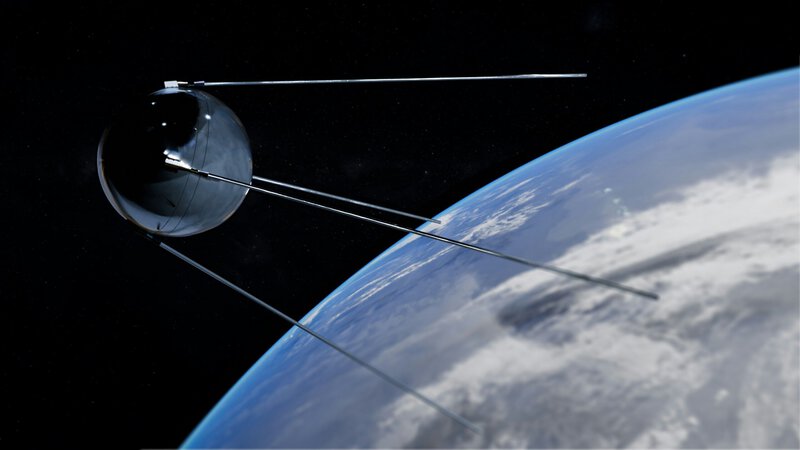
The figure 32,000 kilometres can feel abstract until placed in context. Geostationary satellites — the spacecraft that relay broadband internet, weather imagery, and broadcast television — orbit at approximately 35,786 kilometres above Earth’s surface. Apophis will pass roughly 3,800 kilometres closer to Earth than those satellites on 13 April 2029, briefly entering the orbital neighbourhood where much of humanity’s communications infrastructure operates.
Measured against other familiar distances, 32,000 kilometres is approximately 2.5 times the circumference of the entire Earth — a figure that sounds vast until you consider that the Moon sits nearly 12 times farther away, at an average distance of 384,400 kilometres. NASA’s Jet Propulsion Laboratory describes the 2029 encounter as the closest approach of an asteroid of this size ever observed, a designation that applies not only to the era of modern telescopes but to any approach that can be reconstructed from historical records. ESA’s planetary-defence office confirms the encounter is entirely safe: Apophis will thread through a region of space that scientists have precisely mapped, and its post-flyby orbit has already been computed and confirmed to introduce no new impact risk for the foreseeable future.
One scientific nuance is worth understanding. During any close planetary approach, a small body can potentially pass through what trajectory analysts call a “gravitational keyhole” — a specific, narrow region of space roughly the width of a city block — which could theoretically redirect it onto a collision course with Earth in a subsequent encounter. Post-2021 observations have eliminated all known keyholes associated with Apophis for any future date within the next century, according to JPL. The established scientific consensus, shared by every major space agency that has analysed the trajectory data, is unambiguous: Apophis poses no impact threat in the coming century.
What the Sky Will Actually Look Like on 13 April 2029
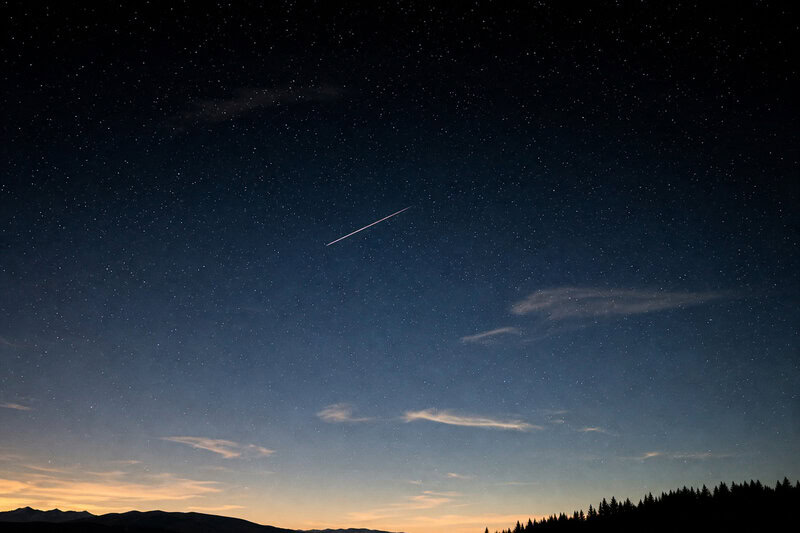
At closest approach, Apophis is expected to brighten to approximately magnitude 3.1 on the astronomical magnitude scale — comparable to a moderately bright star visible from a reasonably dark location. More striking than its brightness will be its motion: the asteroid will move visibly across the sky fast enough for the naked eye to detect its progress against background stars over the course of minutes, an experience qualitatively unlike anything most people have witnessed from an asteroid. Stars are effectively stationary to the unaided eye; Apophis will not be.
The asteroid will be best positioned for observers across a broad swath including Western Europe, Africa, and parts of the Middle East during the peak viewing window, where geometry and timing align most favourably for naked-eye observation. Observers in the Americas and across much of Asia will see a less optimally timed pass, with local visibility depending heavily on the precise timing of closest approach relative to local night-time hours, as well as sky transparency and light pollution. Preliminary visibility analyses suggest up to 90% of the global population could potentially observe Apophis at some point during its approach window — though this figure assumes clear skies, sufficiently dark conditions, and knowledge of where to look, making it an optimistic upper bound rather than a guaranteed outcome for every observer.
For those with even a modest pair of binoculars — 7×50 or 10×50 are well suited to the task — the experience will be sharper and more dramatic, revealing the asteroid’s motion with unmistakable clarity. Observers with access to a 6-inch or larger telescope may detect subtle brightness variations caused by the asteroid’s rotation and irregular shape as it tumbles through space. No special expertise is required; the primary obstacle for casual observers will be light pollution, and even a short drive away from urban centres can make the difference between a barely perceptible smudge and a crisp, moving point of light.
An Unrepeatable Natural Laboratory: What Scientists Will Learn
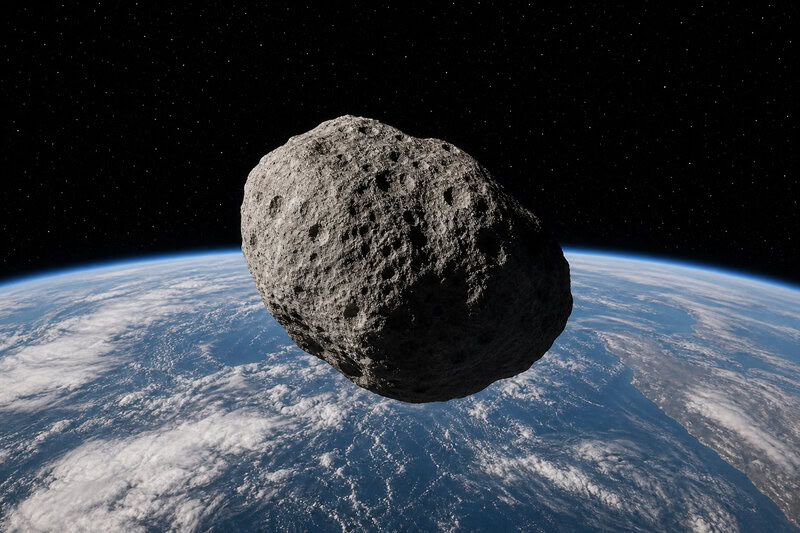
Beyond the public spectacle, the 2029 flyby represents a scientific opportunity that planetary researchers describe as irreplaceable. The extreme proximity will allow Earth’s gravity to produce measurable tidal forces on Apophis — the same stretching and compressing effect the Moon exerts on Earth’s oceans — potentially triggering landslides on the asteroid’s surface and exposing fresh subsurface material never previously subjected to the space environment. Research modelling published in the journal Icarus has explored how such tidal interactions could alter surface morphology in ways directly observable before and after the flyby.
Ground-based radar facilities including NASA’s Goldstone Solar System Radar and international radio telescope networks will achieve surface resolution of Apophis at scales of a few metres during the encounter, producing topographic maps of unprecedented detail for an S-type asteroid of this size. That data will allow direct comparison of before-and-after surface conditions, providing empirical measurements of tidal effects that have previously only been modelled theoretically.
Two spacecraft are being positioned to observe Apophis at close range. NASA’s OSIRIS-APEX — already in transit following its successful sample-return mission to asteroid Bennu — is being redirected to rendezvous with Apophis around the flyby date, with the potential to provide in-situ measurements of surface changes induced by Earth’s gravitational pull. ESA’s proposed Ramses mission is similarly aimed at the 2029 encounter window. The Planetary Society notes that planetary scientists regard the 2029 encounter as a dress rehearsal for understanding how tidal interactions between Earth and small bodies work in practice — data that directly informs the models used in planetary-defence deflection planning, where understanding an asteroid’s physical response to gravity is essential.
The scientific return extends beyond the flyby itself. Pre-encounter observations are already refining models of Apophis’s internal structure — whether it is a solid monolith, a fractured body, or a loosely bound “rubble pile” — because the degree to which tidal forces reshape its surface will depend critically on that internal architecture. The answer matters enormously for planetary defence: a rubble-pile asteroid responds very differently to a kinetic impactor than a coherent rock mass does, and Apophis will provide the closest and most detailed test case for those models ever obtained.
How to Prepare: Watching the Asteroid of the Century
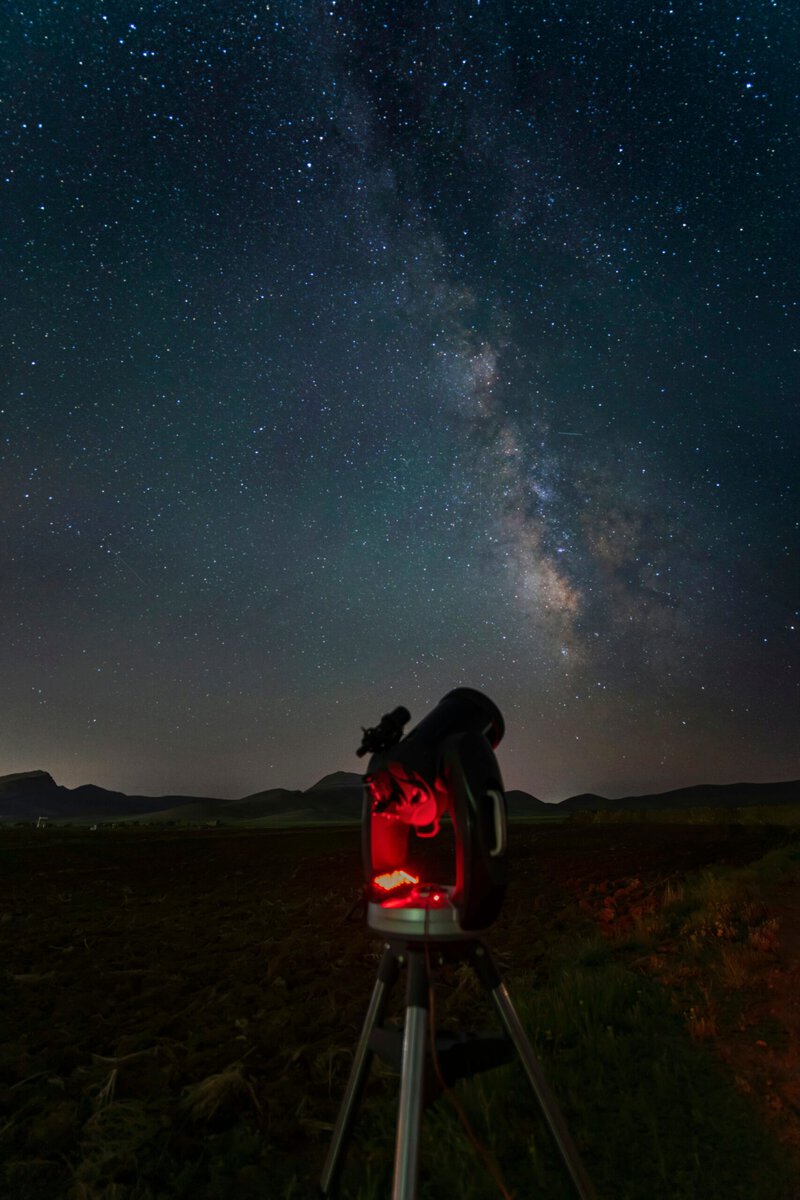
The peak viewing window on 13 April 2029 will last several hours, and the experience requires almost no preparation beyond awareness and clear skies. Exact local rise and set times, along with precise sky coordinates, will be published by the International Astronomical Union’s Minor Planet Center and incorporated into major planetarium applications well in advance of the event. The single most practical step any observer can take today is to set a calendar reminder for early 2029 to consult updated visibility charts specific to their location.
Light pollution remains the primary obstacle for casual observers. Moving even 20 to 30 kilometres away from a city centre to a darker-sky site can dramatically improve contrast and make Apophis unmistakably obvious rather than frustratingly marginal. Public star parties, observatory open nights, and live-streamed telescope feeds are already being planned by astronomy societies worldwide for the evening of 13 April 2029. Organisations including the International Dark-Sky Association and the Royal Astronomical Society are among those expected to coordinate global public-observation events, meaning that even observers without any equipment of their own will have accessible options for witnessing the flyby.
For the prepared observer, the checklist is straightforward: identify your nearest dark-sky site in advance, download a planetarium app and practise locating moving objects before the night itself, and if possible attend a local astronomy club event where members with telescopes can help orient newcomers. Schools, science museums, and planetariums across every continent are expected to mount public programmes, many of them free, making this one of the most broadly accessible astronomical events in living memory.
Scientists are already describing the Apophis flyby as one of the most significant astronomical events of the 21st century — not because it poses any danger, but because it offers something genuinely rare: a chance for the entire human population to look up at the same moving point of light and understand, viscerally, that our planet shares its neighbourhood with ancient, tumbling rocks that occasionally pass close enough to remind us of the dynamic solar system we inhabit. 13 April 2029 is worth marking on the calendar now.