
The United States aerospace and defense sector is projected to face a shortage of one million skilled technical workers — a gap so consequential that NASA has formally declared it critical enough to build an entirely new national infrastructure to address it. The agency’s response: a $10.5 million investment in seven state-based aerospace workforce hubs, seeding what officials describe as the most deliberate overhaul of the aerospace talent pipeline in a generation.
The Shortage Is Real: Why NASA Is Sounding the Alarm Now

The projected one-million-worker shortfall cited by NASA’s Hubs Initiative refers specifically to the aerospace and defense skilled technical workforce — a category that includes avionics specialists, composite fabricators, precision machinists, and systems integrators. This is not a shortage of scientists or executives. It is a shortage of the people who physically build, test, wire, and maintain the hardware that gets spacecraft off the ground.
Three structural forces are converging to create this gap simultaneously. First, an aging incumbent workforce is retiring faster than it can be replaced. Second, a post-pandemic enrollment dip in career and technical education (CTE) programs — the training track most likely to produce these workers — has thinned the pipeline entering from below. Third, demand is accelerating sharply from both government and commercial space programs at precisely the wrong moment.
A note on the one-million figure: it reflects industry and government planning projections rather than a precise, audited census count. It is best understood as a directional estimate, not a definitive measurement. That said, the directional conclusion — that the shortage is real, structural, and growing — is widely corroborated by aerospace employer associations and federal labor market data, and it is the figure NASA itself has used to justify the scale of this intervention.
The urgency is not abstract. NASA’s Artemis lunar program, next-generation satellite constellations, and a surge in commercial launch activity all require trained technical workers on timelines that four-year degree pipelines alone cannot satisfy. Developing an aerospace engineer through a traditional university pathway takes four to six years at minimum. Community college CTE credentials, by contrast, can place workers in aerospace careers in two years or less — a speed advantage the hub model is explicitly designed to exploit.
What a NASA Hub Actually Is — and How It Works

The term “hub” can be misleading. These are not new schools or physical facilities. NAS_Hubs — NASA Aerospace Skilled Technical Workforce Hubs — are federally funded coordinating bodies designed to connect existing community colleges, K-12 CTE programs, aerospace employers, and regional workforce development organizations under a single strategic framework. They are less institutions than connective tissue: organizational infrastructure that makes existing pieces work together in ways they have not before.
Each hub operates under a cooperative agreement with NASA, a designation that carries specific meaning. Unlike a standard grant — where an agency funds a project and steps back — a cooperative agreement makes NASA an active collaborator in shaping curriculum alignment, employer partnerships, and strategic priorities. The agency is at the table, not simply writing checks.
The geographic design is intentional. Hubs are state- or regionally focused so that workforce pipelines reflect the specific industry clusters in each area. An aerospace hub in coastal Florida serves a fundamentally different employer base than one in the inland Mojave Desert of California, and the initiative is structured to honor that difference rather than impose a uniform national template.
The CTE emphasis is the mechanism that makes speed possible. Community college and high school CTE programs can move students from enrollment to industry-recognized credentials in one to two years. By anchoring the hub model to these institutions, NASA is deliberately choosing a faster lever over a more prestigious one — and that choice reflects a clear-eyed assessment of what the industry actually needs and when.
The Seven Hubs: A National Map in Early Formation
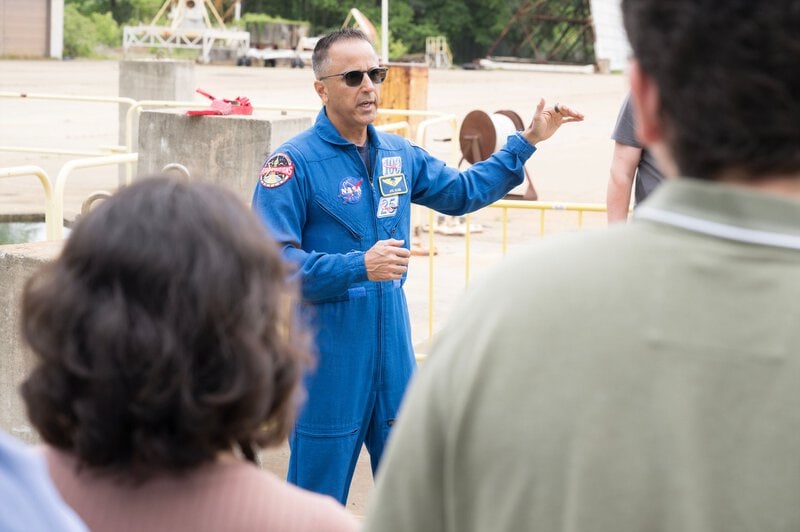
Seven institutions have received awards in this inaugural cohort, funded through NASA’s approximately $10.5 million allocation. The most publicly documented recipient is Antelope Valley College (AVC), a community college located in Lancaster, California — at the center of one of the densest aerospace corridors in the United States.
AVC’s hub illustrates what this architecture looks like in practice. The college sits in a region that hosts Edwards Air Force Base, a facility with deep historical roots in flight testing and aeronautical research, along with dozens of aerospace contractors and manufacturers. AVC’s hub coordinates NASA collaboration, aerospace industry partners, K-12 CTE programs, and regional workforce development organizations — a multi-stakeholder architecture that models the full vision of what the initiative is designed to build nationally.
The solicitation structure matters for understanding the initiative’s future scope. Because NASA issued a cooperative agreement solicitation seeking proposals from eligible institutions, additional state- or regionally focused institutions can apply in future rounds. The original solicitation describes a framework intended to expand — meaning the seven current hubs represent a floor, not a ceiling.
One transparency gap is worth naming directly: as of this writing, NASA has not released a comprehensive public list of all seven awarded institutions beyond confirmed recipients such as AVC. Readers seeking the full cohort should consult NASA’s official workforce development announcements directly rather than relying on secondary sources.
Why Community Colleges Are the Strategic Core

The decision to anchor the hub model in community colleges is not incidental — it reflects a deliberate theory of change about who is most likely to close this gap and how quickly.
Community colleges already serve the demographic most underrepresented in aerospace: first-generation college students, adult learners returning to the workforce after career disruptions, and students from lower-income households who cannot absorb four or more years of tuition and foregone wages. By meeting these students where they already are, the NAS_Hub model creates pathways to aerospace careers that traditional university recruitment has consistently failed to reach.
CTE programs at community colleges are also structurally faster to update than university curricula. When an aerospace employer identifies a skills gap — say, a shortage of workers trained on composite materials fabrication for next-generation airframes — a community college can redesign a certificate program in months. A university often requires years of curriculum review. In a sector where technology evolves rapidly enough that employers report skills gaps even at the point of hiring new graduates, that agility is a meaningful competitive advantage.
The hub model formalizes what many community colleges were already attempting informally. Institutions like AVC had pre-existing relationships with local aerospace employers built through advisory boards, internship programs, and faculty drawn directly from industry. The NAS_Hub structure funds, formalizes, and scales those relationships — converting an informal handshake into a documented, resourced partnership with explicit employer commitments.
This approach reflects a broader federal consensus that community colleges are among the fastest available levers for closing skilled technical workforce gaps in science and engineering fields — a conclusion also visible in the National Science Foundation’s Advanced Technological Education initiative, which has supported community college STEM workforce development for decades and provides a useful precedent for evaluating the NAS_Hub model’s long-term potential.
Who Benefits — and How to Find Out If Your State Is Involved
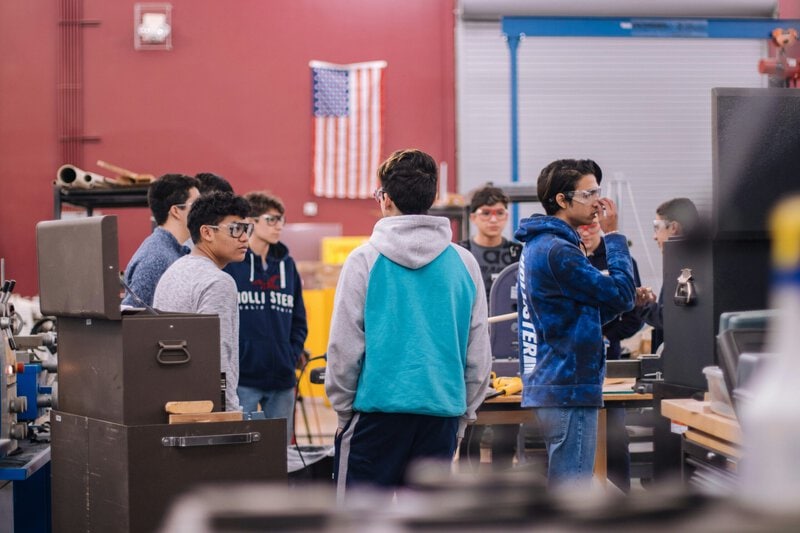
The most direct beneficiaries are students already enrolled in — or considering — community college CTE programs in aerospace-adjacent fields: aircraft maintenance technology, precision manufacturing, electronics and avionics technology, and engineering technology associate degree programs. These are the students whose credentials the hubs are specifically designed to connect to employer hiring pipelines.
High school students in CTE pathways are also significant beneficiaries, though one step removed. A functioning hub can create articulation agreements — formal credit-transfer arrangements — that allow students to count high school CTE coursework toward community college credentials, compressing the overall time and cost of entering the aerospace workforce.
Aerospace employers benefit in a less visible but economically meaningful way. A more standardized, regionally coherent talent supply reduces the per-hire training burden that industry groups frequently cite as one of the most significant hidden costs in workforce planning. When a hub certifies that graduates have mastered a defined set of competencies, employers spend less time and money on post-hire remediation.
For readers who want to know whether this initiative is active in their state: NASA’s Space Workforce Development resources and individual state workforce development boards are the most reliable starting points. Given that seven hubs do not cover all fifty states, many readers will find their region is not yet part of the first cohort — but the solicitation structure means that could change in future award rounds.
What Comes Next: Limits, Potential, and Open Questions
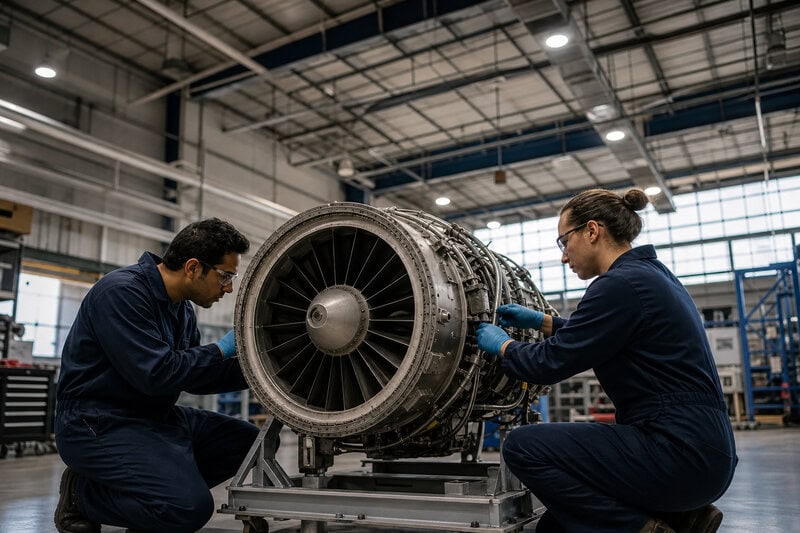
The NAS_Hub initiative is early-stage by almost any measure. Seven hubs across a nation of fifty states means the vast majority of the country is not yet covered. Long-term scalability depends on factors that remain unresolved: sustained federal funding across budget cycles, consistent employer commitment from both government contractors and commercial space companies, and policy continuity across administrations — none of which can be assumed.
The most important unanswered question is one of measurement. NASA and independent researchers will eventually need to track whether students who move through hub-connected programs actually enter aerospace careers — and remain in them — at higher rates than students from non-hub institutions. That outcome data does not yet exist at scale, because the hubs are too new to have produced graduates. The initiative is structurally coherent on paper; whether it performs as designed is a question the next several years will begin to answer.
The commercial space sector’s involvement is promising in principle but not guaranteed in practice. Companies like SpaceX, Blue Origin, and hundreds of smaller contractors and suppliers have strong economic incentive to participate — the workforce shortage costs them directly. But cooperative agreement structures do not compel private-sector engagement, and voluntary participation depends on whether companies find the hub framework useful enough to invest their own time and hiring commitments into it. That alignment of incentives is plausible; it is not automatic.
For anyone tracking NASA aerospace workforce trends or federal technical workforce development policy: the NAS_Hub initiative represents a structurally sound, modestly funded first step toward a genuinely national talent infrastructure. It is ambitious in vision, provisional in proof, and worth monitoring closely as the first cohort of institutions matures, produces graduates, and begins generating the outcome data that will determine whether this investment becomes the foundation for something transformative — or a promising pilot that never fully scales.