
In roughly one out of every nine officer-involved shootings examined by researchers at the Johns Hopkins Center for Gun Violence Solutions, the death was classified as “suicide by cop” — a label that can alter coroner rulings, shape departmental use-of-force reviews, and redefine how a family understands the death of someone they loved. What the research found next challenges a deeply held assumption: that label has less to do with the victim’s psychiatric history than with the specific, observable details of how the encounter with police began and escalated.
The Label That Changes Everything

The term “suicide by cop” carries enormous legal and social weight, yet it exists in a definitional vacuum. It is used by law enforcement agencies, medical examiners, journalists, and policymakers — often interchangeably and inconsistently — without any agreed-upon medical or legal standard governing when it applies. A new study from the Johns Hopkins Center for Gun Violence Solutions has taken one of the more rigorous quantitative looks at what actually predicts when a shooting receives that classification. Its answer reframes a conversation that has long been dominated by clinical assumptions about mental illness.
The stakes of getting this right are not abstract. A “suicide by cop” classification can function as a mitigating factor in reviews of police conduct, influence whether a death is recorded in national use-of-force databases as a homicide or something else, and determine the kind of grief a family is permitted — or expected — to carry. When the architecture of a single encounter shapes that outcome more than years of documented mental health history, the implications extend far beyond any individual case.
What “Suicide by Cop” Actually Means — And What It Doesn’t
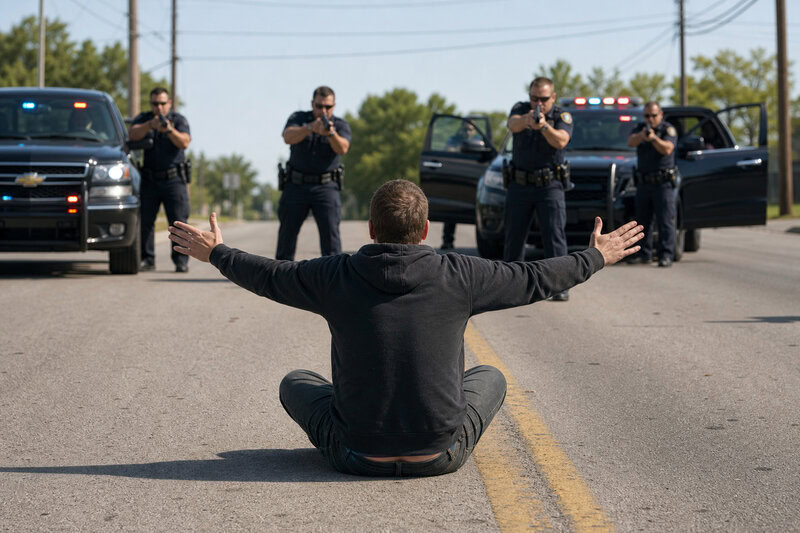
“Suicide by cop” (SbC) is an informal phrase used to describe situations in which a person is believed to have deliberately provoked lethal force from a law enforcement officer with the intent to die — effectively using police as an instrument of self-destruction. The phrase is widely recognized, but its boundaries are poorly defined. As reporting from Call to Mind has noted, the classification is, in a meaningful sense, in the eye of the beholder.
“There’s no established medical or legal definition of suicide by cop,” said James Drylie, a professor at Kean University in New Jersey, meaning its application varies widely across jurisdictions, investigators, and institutions. The same incident, reviewed by different agencies or examiners, could plausibly receive different classifications — with consequences that ripple outward into statistics, policy responses, and the lived experiences of surviving family members.
It is also worth being precise about what SbC is not. The term is not synonymous with “mental health crisis,” “suicide attempt,” or “officer-involved shooting,” though all four categories can and do overlap. A person experiencing a psychiatric emergency may be shot by police without any evidence of suicidal intent. Conversely, someone with no documented mental health history could, in principle, meet the behavioral criteria investigators use to apply the SbC label. The Johns Hopkins research helps clarify that these categories are distinct — and that conflating them produces misleading conclusions.
Early scholarly attention to the phenomenon, including foundational work indexed in PubMed, helped establish that SbC existed as a recognizable pattern of behavior. What the field has struggled with ever since is building a consistent, evidence-based standard for identifying it after the fact.
By the Numbers: How Common Is This Classification?
The study found that suicide by cop accounted for 11 percent of all officer-involved shootings examined — 46 cases in total — and 13 percent of all officer-involved justifiable homicides in the dataset. These figures provide a useful anchor, but they should be interpreted carefully.
Even a small percentage-point shift in how such incidents are classified can affect national use-of-force databases, mental health intervention funding allocations, and the legal standards courts apply when evaluating whether a given shooting was justified. Classification is not a bureaucratic afterthought; it is a consequential act with downstream effects on policy and accountability.
At the same time, honest accounting requires acknowledging what these numbers cannot tell us. Because “suicide by cop” lacks a universal definition, researchers and agencies count it differently, meaning the true national prevalence remains contested. The figures represent one carefully bounded dataset, not a settled epidemiological estimate. Raw percentages reveal only how often the label is applied — not whether it is applied consistently, accurately, or through a process that holds up to scrutiny. That question of consistency is precisely what the new study set out to investigate.
The Core Finding: How the Scene Unfolded Matters More Than Mental Health History
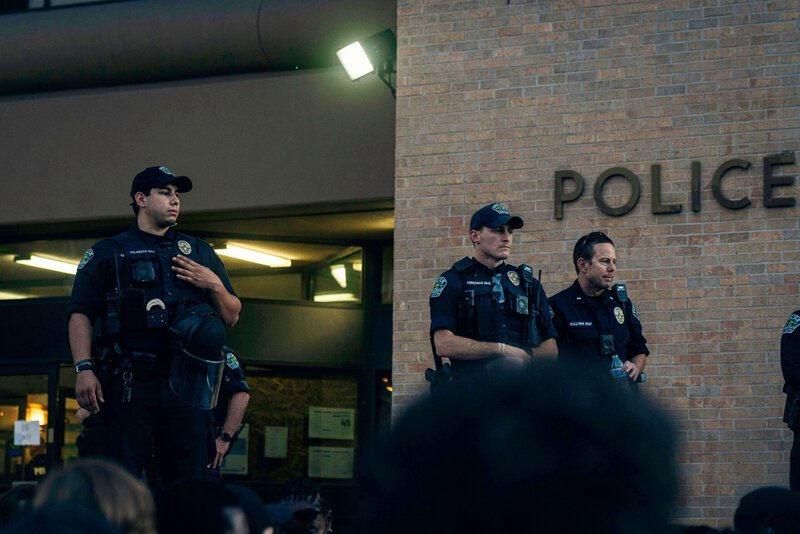
The headline result of the Johns Hopkins research is both clear and consequential: police encounter details — how the situation started, how it escalated, and what behavioral cues were present in the moment — influenced “suicide by cop” classifications more than a person’s documented mental health history. In other words, what happened during the encounter was a stronger predictor of the label than who the person was before the encounter began.
The mechanism, explained in plain terms, works like this: investigators and reviewers reconstructing a shooting after the fact rely heavily on observable, documentable evidence. Body camera footage, officer statements, physical positioning, and the sequence of events are all concrete and codeable. A person’s psychiatric history — even when formally documented — is a different kind of evidence, more diffuse and harder to weight against the immediate choreography of a deadly confrontation.
Specific scene factors that appear to influence classification include whether the person advanced toward officers, made explicit verbal statements of intent to die, or manipulated the situation in ways that appeared designed to provoke a lethal response. These are behavioral proxies for suicidal intent that are rooted entirely in the encounter itself, not in any prior clinical assessment.
The popular assumption that SbC labels are primarily applied to people with known serious mental illness turns out to be less supported by the data than the alternative. This does not mean mental health is irrelevant to understanding these incidents — it means mental health history is a weaker predictor of classification than encounter dynamics. That is a more limited finding than some advocates on either side of the debate might prefer, and it is important not to overstate it.
Why Encounter Dynamics Are Such Powerful Classifiers
The dominance of encounter mechanics in SbC classification reflects a deeper problem in forensic investigation: determining suicidal intent after a person is dead is inherently speculative. In the absence of a written note, a prior expressed plan, or a direct verbal statement to officers, reviewers fall back on behavioral proxies. Those proxies are, almost by definition, rooted in what happened during the encounter — making the encounter itself the primary evidentiary record.
There is also an institutional dimension worth acknowledging. A “suicide by cop” classification can, in some contexts, serve as a mitigating factor in use-of-force reviews, suggesting that the officer’s response was effectively compelled by the subject’s own lethal intentions. The Johns Hopkins research stops short of attributing deliberate bias to this dynamic, and that caution is appropriate given the current state of the evidence. But the institutional incentive exists, and it operates within the same evidentiary environment that makes scene behavior so salient.
This dynamic is not unique to SbC research. In other forensic and investigative contexts, it is well documented that the framing and availability of evidence shape conclusions — a principle studied extensively in wrongful-conviction literature. Applying investigative-tunnel-vision frameworks directly to SbC classification would overstate what the current research supports, but the structural parallel is worth noting for researchers designing future studies.
What This Means for Crisis Response Policy
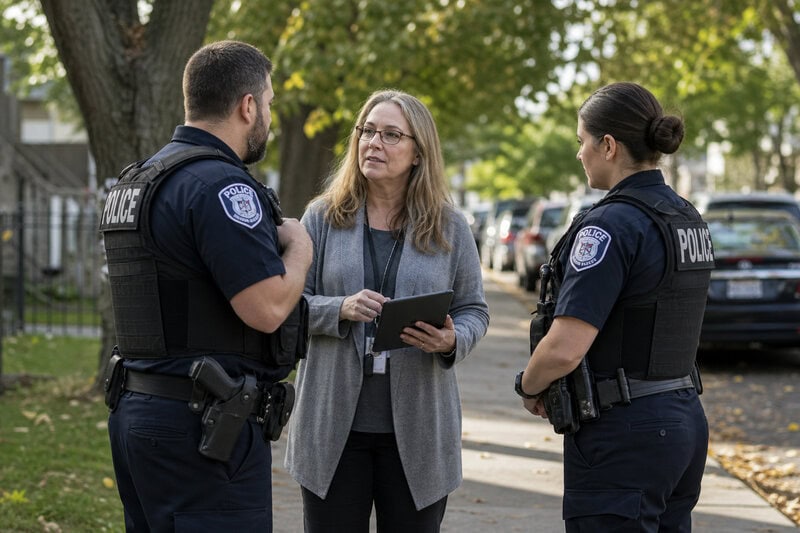
If “suicide by cop” labels are driven more by how encounters unfold than by who the person was beforehand, then interventions aimed at changing encounter dynamics may have more policy leverage than post-hoc diagnostic screening. De-escalation training, co-responder programs that pair officers with mental health clinicians, and crisis negotiation protocols are all designed to alter the architecture of a confrontation before it becomes lethal. This research provides an evidence-based argument that the structure of the encounter itself is a critical variable — regardless of the caller’s psychiatric history.
Many U.S. jurisdictions are actively debating how to restructure police response to mental health calls, and that debate has often focused on whether a person in crisis has a documented psychiatric condition. The Johns Hopkins findings suggest that framing may be incomplete. If classification — and perhaps outcome — is shaped by how a scene unfolds, then the scene itself deserves at least as much policy attention as the individual’s diagnosis.
Two important cautions apply here. First, even if encounter dynamics predict the SbC label, that does not automatically mean that changing those dynamics would prevent the underlying suicidal intent. The label and the intent are not the same thing, and conflating them in policy design could produce interventions that affect classification without meaningfully reducing harm. Second, because there is no universal definition of SbC and no standardized national tracking system, larger multi-jurisdictional studies are needed before these findings can responsibly be generalized into national policy recommendations. The Johns Hopkins researchers themselves frame their work with appropriate caution, and that caution should travel with the findings.
A High-Stakes Label With No Legal Home
A term that influences coroner rulings, departmental accountability reviews, survivor family grief, and public perception of police conduct remains undefined in any legal or medical code. The Johns Hopkins Center for Gun Violence Solutions study makes that gap harder to ignore by demonstrating, quantitatively, that the label’s application is shaped more by the mechanics of a police encounter than by the mental health history that public discourse most readily associates with it.
The research contribution is specific but significant: it identifies encounter dynamics as a dominant predictor of SbC classification, grounds that finding in a defined dataset with transparent methodology, and exposes the inferential instability that results from applying a high-stakes label without a governing standard. That is not a complete answer to the problem, but it is a more rigorous foundation than the field has previously had.
The label “suicide by cop” is not simply a neutral description of a tragic event. It is a classification decision, shaped by the observable architecture of a police encounter, applied through an informal and inconsistent standard, with consequences that extend far beyond the moment of the shooting itself. If how a scene unfolds determines whether a death is called a suicide, a homicide, or something in between, then the urgent task — for researchers, lawmakers, medical examiners, and police departments alike — is to build the definitional and data infrastructure that this high-stakes label currently, and conspicuously, lacks.